
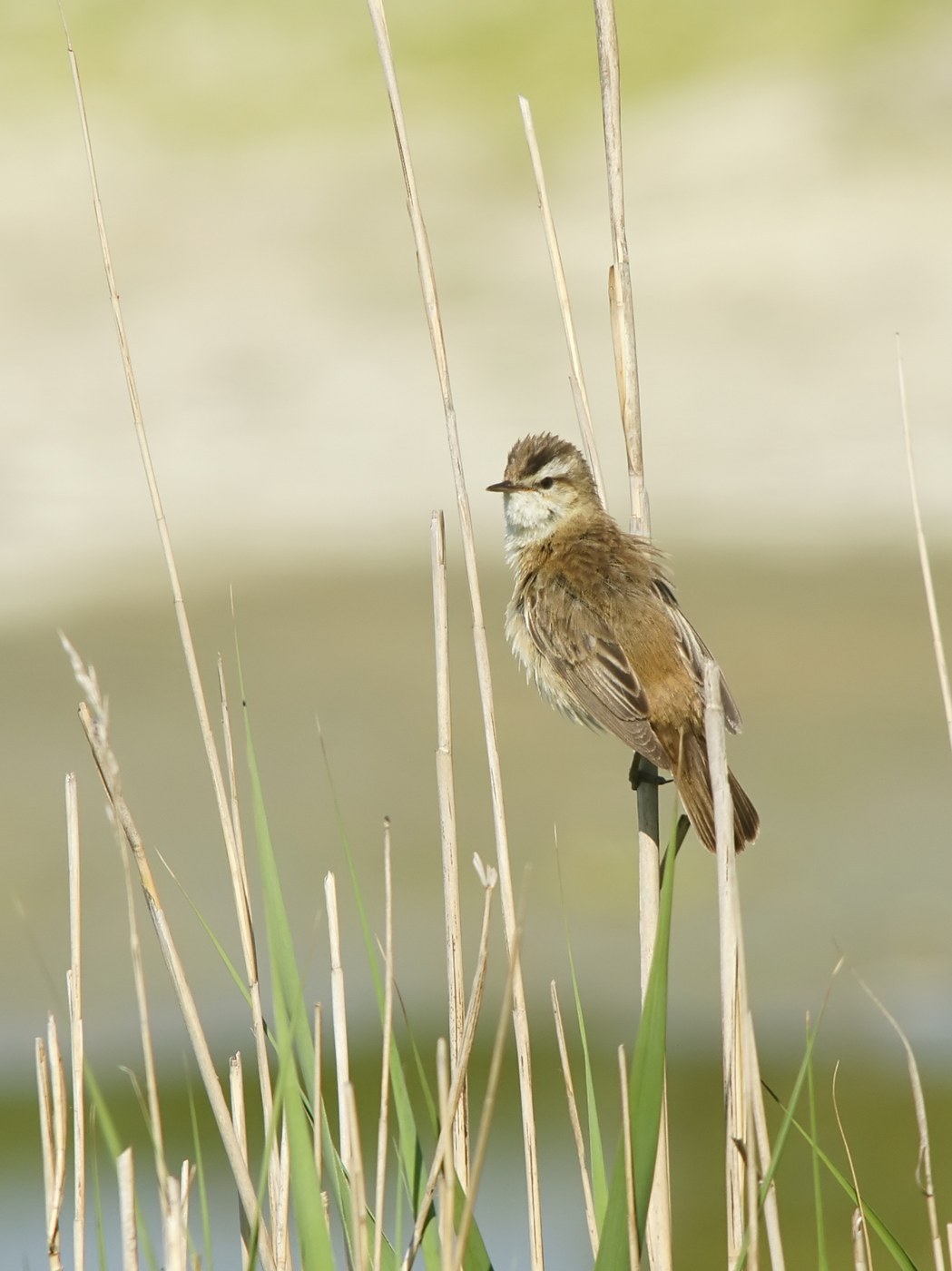
Sedge Warbler
Acrocephalus schoenobaenus
A streaky wetland warbler with a bold cream eyebrow stripe, known for its fast, chattering, mimicry-rich song often delivered in a brief fluttering song-flight.
- Size
- 12-13 cm (4.7-5 in) long, 17-21 cm wingspan
- Habitat
- wetlands, reedbeds, and scrub near water including marshes and ditches
- Type
- songbird
Spotted a bird like this?
Identify any bird from a photo, free.
Overview
The Sedge Warbler is a streaky, brown-and-buff wetland warbler, easily distinguished from its close relative the Reed Warbler by a bold, prominent cream or buff supercilium (eyebrow stripe) that runs above a darker eye-stripe. The crown and back are heavily streaked with dark brown, while the rump is plain and unstreaked.
It is an energetic and vocal bird, frequently singing from within reeds or low waterside vegetation, and males often punctuate their song with a short, fluttering song-flight, rising a short distance before parachuting back down.
Sedge Warblers are accomplished mimics, weaving snatches of other birds' calls and songs into their own fast, scratchy, ever-varying song.
How to identify it
Key field marks
- Heavily streaked crown and back
- Bold, prominent cream or buff supercilium above the eye
- Unstreaked, plain rump (contrasts with streaked back)
- Buffy underparts, paler on the throat
- Rounded wings and a fairly short tail
Similar species
- Eurasian Reed Warbler: plain, unstreaked upperparts with no supercilium, warmer uniform brown tone, and a more rhythmic, repetitive song.
- Grasshopper Warbler: also streaked but shows streaking on the undertail coverts too and gives an entirely different mechanical reeling song.
- Aquatic Warbler (rare): shows a pale central crown stripe in addition to the supercilium, a much rarer species than Sedge Warbler across most of its range.
Habitat & range
Sedge Warblers breed across much of Europe and into western Asia, occupying wetland habitats including reedbeds, marshes, ditches, and scrubby vegetation bordering rivers, lakes, and wet grassland, often in somewhat drier or more varied waterside vegetation than the Reed Warbler.
They are long-distance migrants, wintering in sub-Saharan Africa, notably in the Sahel zone, and are known for rapidly fattening up at key stopover wetlands before making long non-stop flights during migration.
The species arrives on breeding grounds in April and quickly establishes territories in suitable waterside scrub and reed fringe.
Behavior & voice
Voice
The song is fast, scratchy, and highly varied, mixing harsh chattering notes with more musical trills and frequent mimicry of other bird species. It is often delivered from a low perch or during a brief, fluttering song-flight above the vegetation. The call is a hard "tuc" or churring note.
Feeding
Sedge Warblers feed on insects and spiders gleaned from waterside vegetation, and build up substantial fat reserves before migration, sometimes nearly doubling their body weight at key staging wetlands.
Nesting and breeding
The nest is a deep cup built low in dense waterside vegetation such as reeds, sedges, or scrub. Clutches typically contain five to six eggs.
Frequently asked questions
How do you identify a Sedge Warbler?
Look for a streaky brown warbler with a bold cream eyebrow stripe and an unstreaked, plain rump, usually found in reeds or scrub near water.
How is a Sedge Warbler different from a Reed Warbler?
Sedge Warbler is streaked on the crown and back with a bold pale supercilium, while Reed Warbler is plain, unstreaked, warm brown with no eyebrow stripe.
What does a Sedge Warbler sound like?
Its song is fast, scratchy, and highly varied, frequently incorporating mimicry of other birds' calls, and is sometimes delivered during a brief fluttering song-flight.
Where do Sedge Warblers migrate to in winter?
They travel to sub-Saharan Africa, particularly the Sahel zone, often making long non-stop flights after fattening up at wetland stopover sites.
What habitat does the Sedge Warbler prefer?
It favours wetlands including reedbeds, marshes, ditches, and scrub bordering water, often in drier or more varied vegetation than the closely related Reed Warbler.
Sedge Warbler guides
In-depth guides for identifying, finding, and understanding Sedge Warbler.
Other birds you may enjoy

Black Redstart
13-14.5 cm (5.1-5.7 in) long, 23-26 cm wingspan

Black-throated Sparrow
12-14 cm (4.7-5.5 in) long, about 19-20 cm (7.5-8 in) wingspan

Greater Bird-of-paradise
Body about 43 cm; males with additional flank plumes up to 50 cm and long tail wires

Blue Tit
11-12 cm (4.3-4.7 in) long, 17-20 cm wingspan

Red-billed Quelea
11.5–13 cm long, wingspan about 20–22 cm
White-plumed Antbird
13-14 cm (5-5.5 in) long

Pyrrhuloxia
19-22 cm (7.5-8.7 in) long, 30 cm wingspan

Blue-gray Tanager
16-18 cm (6-7 in) long

Blackburnian Warbler
11-13 cm (4.3-5.1 in) long, 20-22 cm wingspan

Bluethroat
13-14 cm (5.1-5.5 in) long, 20-22 cm wingspan

Eurasian Nuthatch
12-14.5 cm (4.7-5.7 in) long, 22.5-27 cm wingspan

Wood Thrush
19-21 cm (7.5-8.3 in) long, about 33 cm (13 in) wingspan