
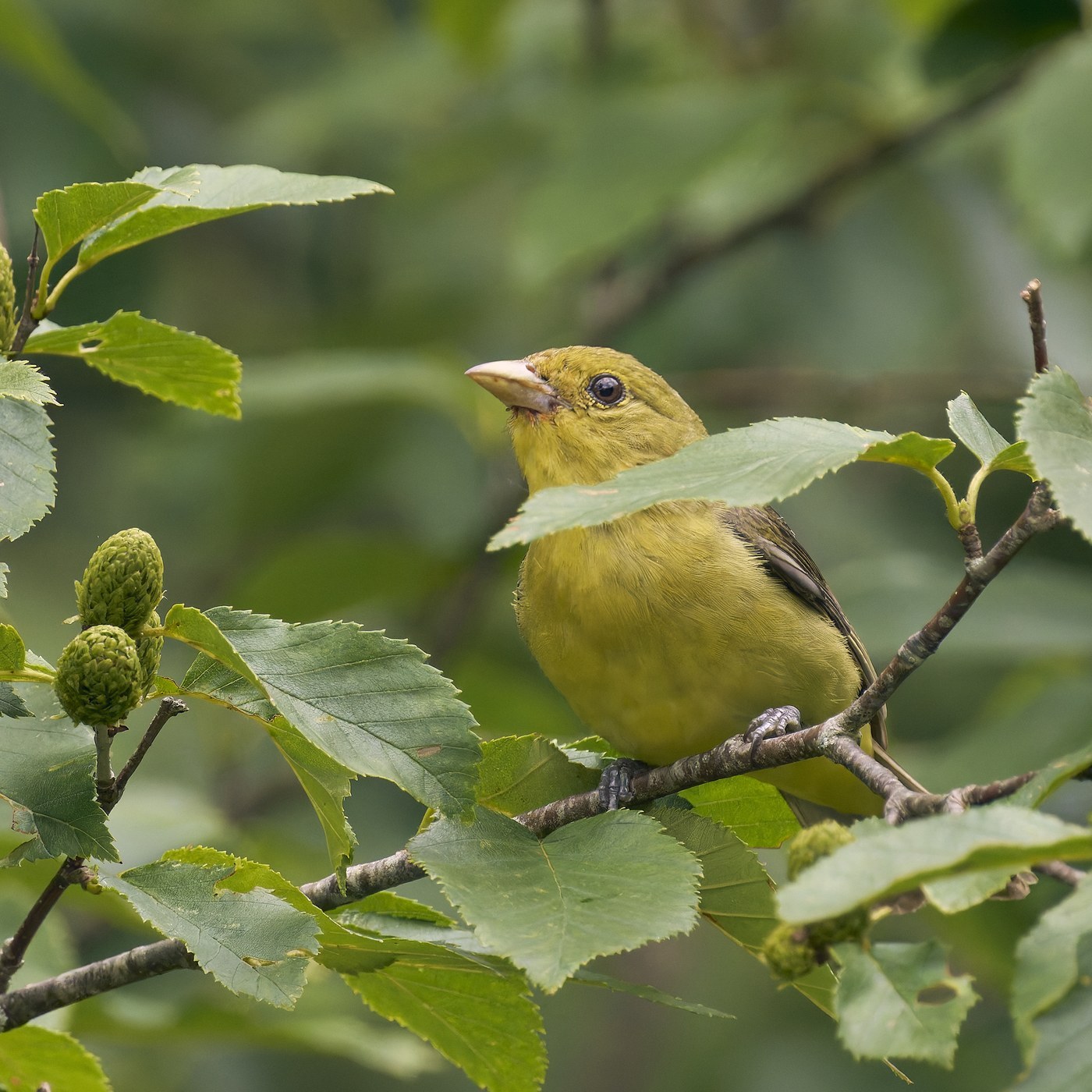
Scarlet Tanager
Piranga olivacea
A brilliant scarlet-and-black canopy songbird of mature eastern forests, whose vivid breeding male molts into olive-yellow plumage for the winter.
- Size
- 16-19 cm (6.3-7.5 in) long, 25-30 cm wingspan
- Habitat
- mature deciduous forest, particularly oak woodlands
- Type
- songbird
Spotted a bird like this?
Identify any bird from a photo, free.
Overview
The Scarlet Tanager is one of the most vividly colored birds of the eastern deciduous forest canopy, with breeding males showing an intense, fiery scarlet-red body sharply contrasted against jet-black wings and tail. This brilliant plumage is molted after breeding into a female-like olive-yellow body with duskier, blackish wings, a transformation that can catch birders off guard in late summer and fall. Females and immature birds are olive-yellow above and yellow below year-round, with dark olive-gray (not black) wings.
Despite its brilliant coloring, the Scarlet Tanager can be surprisingly difficult to spot as it forages high in the leafy canopy of mature forest, and it is often detected first by its distinctive burry, robin-like song or its sharp "chip-burr" call.
How to identify it
Key Field Marks
- Breeding male: fiery scarlet-red body with jet-black wings and tail
- Female/immature/non-breeding male: olive-yellow overall with dark olive-gray wings (not black)
- Stout, pale, slightly bulbous bill
- Molting males in fall may show a patchy mix of red and olive-yellow
Similar Species
- Summer Tanager male is entirely red with no black on the wings, unlike the Scarlet Tanager's contrasting black wings.
- Northern Cardinal has a crest and black face mask, both absent in Scarlet Tanager.
- Female Scarlet Tanagers resemble female Summer Tanagers but have darker, grayer (not pale) wings and a shorter, less elongated bill.
Habitat & range
Habitat
Breeds in mature deciduous and mixed forest, especially oak-dominated woodlands with a closed canopy, generally avoiding small forest fragments.
Range
Breeds across the eastern United States and southeastern Canada. Winters in the forests of the Andes foothills and Amazon basin in South America.
Migration
A long-distance nocturnal migrant that crosses the Gulf of Mexico or travels overland through Central America to reach South American wintering grounds.
Behavior & voice
Behavior
Scarlet Tanagers forage deliberately and often stay hidden in the dense canopy of tall trees, making them harder to see than their brilliant coloring would suggest. They are sensitive to forest fragmentation, generally requiring large tracts of unbroken forest to breed successfully.
Voice
The song is a burry, hoarse series of phrases often described as sounding like a robin with a sore throat; the distinctive call is a sharp "chip-burr."
Feeding
Feeds mainly on insects gleaned from foliage, including caterpillars, beetles, and wasps, supplemented with fruit, especially during migration.
Nesting & Breeding
The female builds a shallow, loosely constructed cup nest of twigs, typically placed on a horizontal branch well out from the trunk high in the canopy. She incubates 3-5 eggs alone.
Frequently asked questions
Why does the Scarlet Tanager change color?
After the breeding season, males molt from their brilliant scarlet-and-black breeding plumage into an olive-yellow plumage resembling the female, which they retain through fall and winter before molting back to red for the next breeding season.
Why is the Scarlet Tanager hard to see despite its bright color?
It forages high in the dense leafy canopy of mature forest, and its coloring can actually blend surprisingly well with dappled sunlight and shadow among the leaves.
How do you tell a Scarlet Tanager from a Summer Tanager?
Male Scarlet Tanagers have contrasting black wings and tail against a red body, while male Summer Tanagers are entirely red with no black.
Why are Scarlet Tanagers sensitive to forest fragmentation?
They generally require large, unbroken tracts of mature forest to breed successfully and experience higher nest predation and cowbird parasitism rates in small, fragmented woodlots.
Scarlet Tanager guides
In-depth guides for identifying, finding, and understanding Scarlet Tanager.
Other birds you may enjoy
Black Redstart
13-14.5 cm (5.1-5.7 in) long, 23-26 cm wingspan
Black-throated Sparrow
12-14 cm (4.7-5.5 in) long, about 19-20 cm (7.5-8 in) wingspan
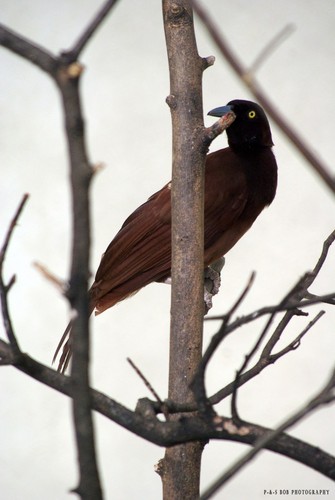
Greater Bird-of-paradise
Body about 43 cm; males with additional flank plumes up to 50 cm and long tail wires
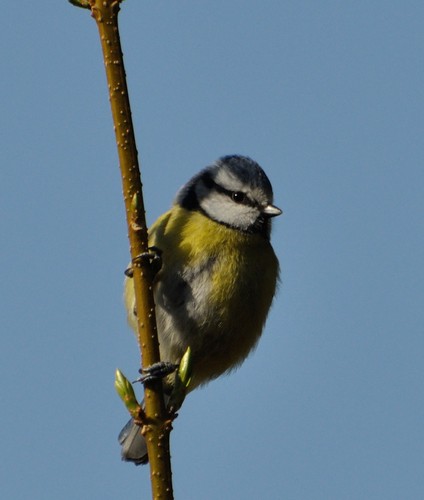
Blue Tit
11-12 cm (4.3-4.7 in) long, 17-20 cm wingspan

Red-billed Quelea
11.5–13 cm long, wingspan about 20–22 cm
White-plumed Antbird
13-14 cm (5-5.5 in) long
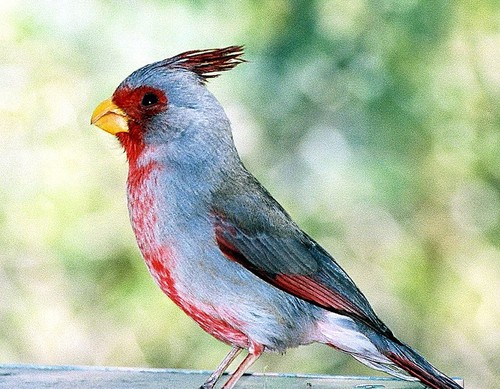
Pyrrhuloxia
19-22 cm (7.5-8.7 in) long, 30 cm wingspan
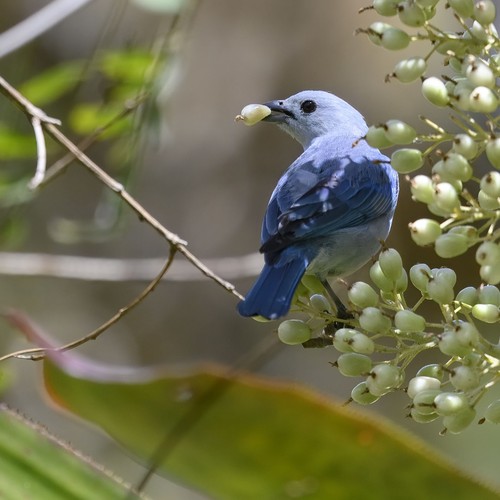
Blue-gray Tanager
16-18 cm (6-7 in) long
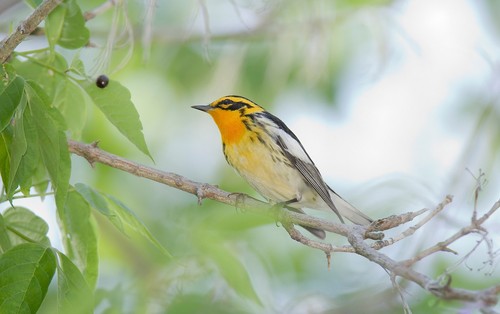
Blackburnian Warbler
11-13 cm (4.3-5.1 in) long, 20-22 cm wingspan
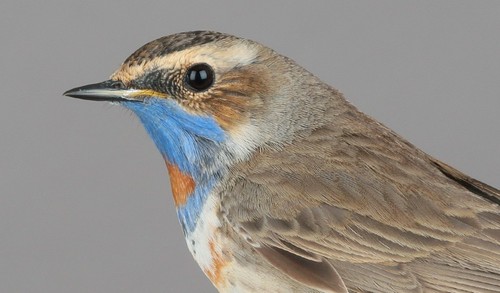
Bluethroat
13-14 cm (5.1-5.5 in) long, 20-22 cm wingspan
Eurasian Nuthatch
12-14.5 cm (4.7-5.7 in) long, 22.5-27 cm wingspan
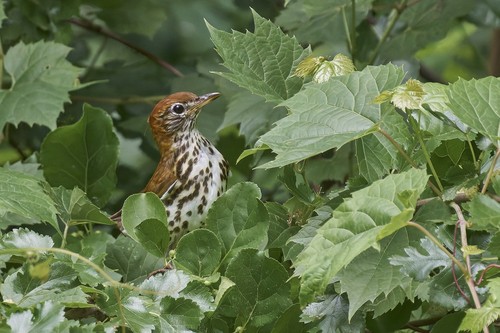
Wood Thrush
19-21 cm (7.5-8.3 in) long, about 33 cm (13 in) wingspan