
Scaled Quail
Callipepla squamata
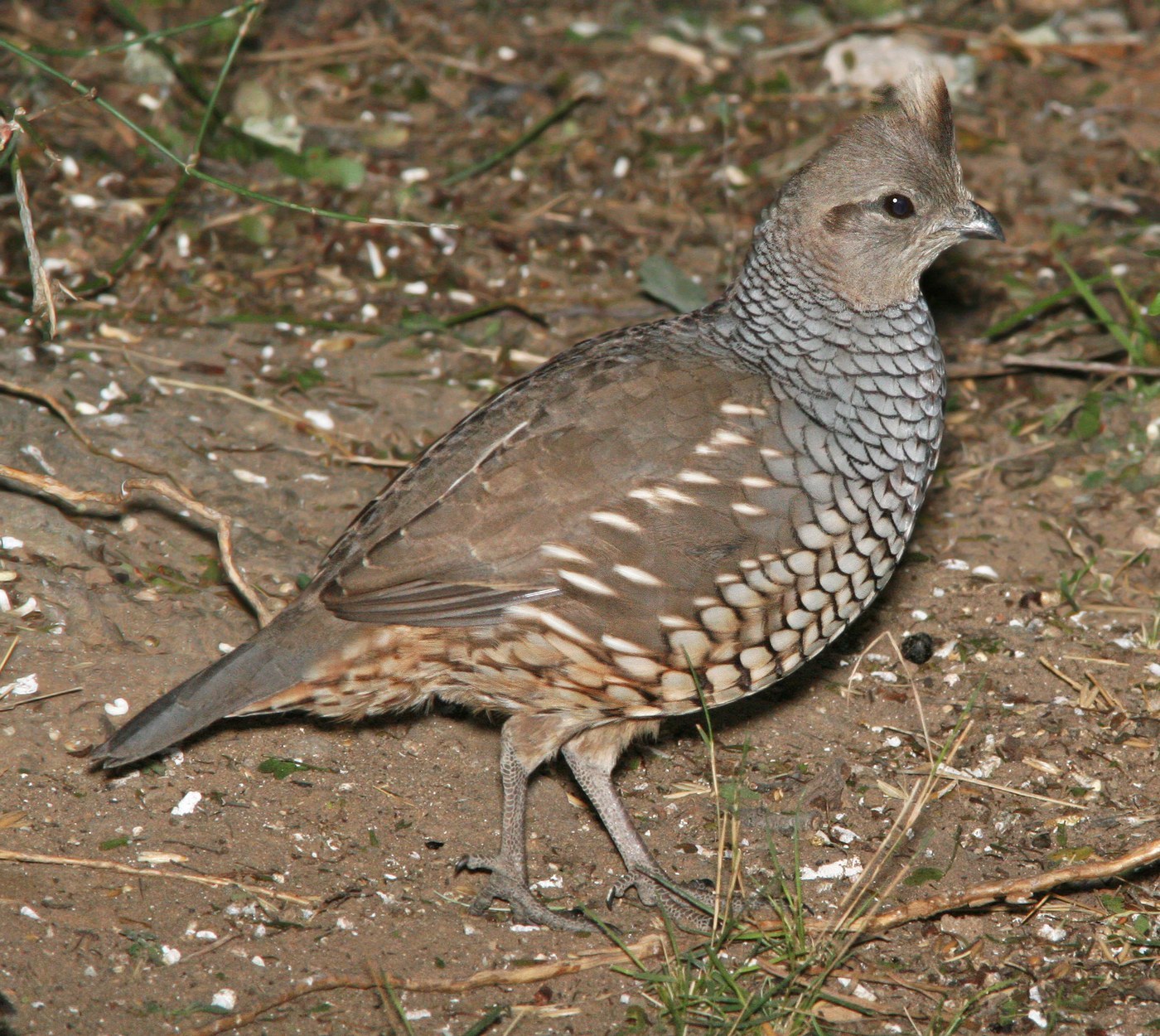
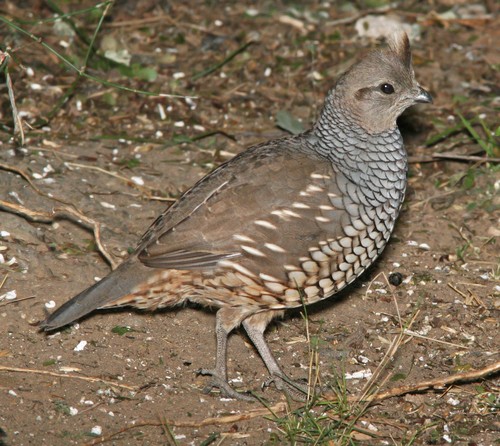
A bluish-gray desert quail nicknamed "cottontop" for its bushy white crest, with feathers edged to create a distinctive scaly look.
- Size
- 25-29 cm (10-11.5 in) long, 34-39 cm wingspan
- Habitat
- arid grasslands and desert scrub
- Type
- gamebird
Spotted a bird like this?
Identify any bird from a photo, free.
Overview
The Scaled Quail, often nicknamed the "cottontop" for the fluffy white tuft crowning its head, is a distinctively patterned quail of arid grasslands and desert scrub in the southwestern United States and northern Mexico. Its plumage is an overall bluish-gray, with each feather on the breast and back edged in dark, giving the bird a scaly appearance that provides its common name. Unlike its relatives, it lacks the forward-curving plume and bold facial markings, instead relying on its subtle scaled pattern and puffy white crest for identification.
How to identify it
Key Field Marks
- Overall bluish-gray plumage with dark feather edging creating a scaled appearance on the breast and back
- Bushy, cottony-white crest ("cottontop"), rather than a curved single plume
- Lacks the bold black-and-white or chestnut facial markings of related quail
- Plump body and short tail typical of quail
Similar Species
- Gambel's and California Quail both have a forward-curving black plume and bolder facial markings, lacking the overall scaled pattern.
- Northern Bobwhite has bold white eyebrow and throat stripes and lacks any crest.
Habitat & range
Habitat
Scaled Quail favor open, arid grasslands and desert scrub with scattered shrubs, cactus, and yucca, generally in flatter and more open terrain than related quail species.
Range
They are found across the southwestern United States, including Texas, New Mexico, Arizona, Colorado, and Oklahoma, extending south into northern Mexico.
Migration
Scaled Quail are nonmigratory, remaining resident year-round, though coveys may shift locally in response to food and water availability.
Behavior & voice
Behavior
Scaled Quail are strongly social and typically seen in coveys, running swiftly across open ground with their crest raised, and preferring to run rather than fly from danger, often not flushing until closely approached.
Voice
The common call is a loud, harsh, nasal "pe-cos" or similar two-syllable note, used for contact and to gather covey members.
Feeding
They forage on the ground for seeds, insects, and cactus fruit, often walking or running steadily through open grassland and scrub while feeding.
Nesting
A shallow scrape lined with grass is built on the ground under a shrub or clump of grass, and like other desert quail, breeding success is strongly tied to the timing and amount of seasonal rainfall.
Frequently asked questions
Why is the Scaled Quail called a 'cottontop'?
Its nickname comes from the fluffy, cotton-white crest on top of its head, which is quite different from the curved single plume of related quail species.
How do you identify a Scaled Quail?
Look for overall bluish-gray plumage with feathers edged in dark, creating a scaly pattern, along with a bushy white crest and the absence of bold facial markings.
Where do Scaled Quail live?
They inhabit open, arid grasslands and desert scrub across the southwestern United States and northern Mexico.
Do Scaled Quail fly often?
They generally prefer to run rather than fly, often sprinting away from danger across open ground and only flushing into flight when closely pressed.
Scaled Quail guides
In-depth guides for identifying, finding, and understanding Scaled Quail.
Other birds you may enjoy
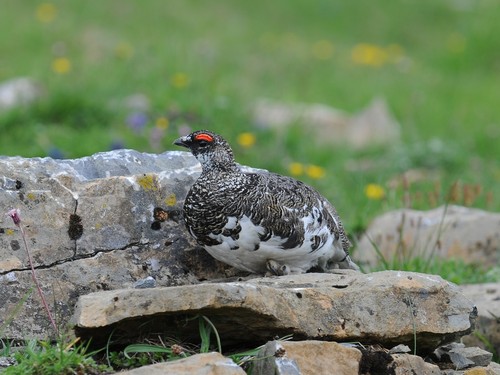
Rock Ptarmigan
34-36 cm (13-14 in) long
Congo Peafowl
Males about 64-70 cm long; females slightly smaller; no elaborate train
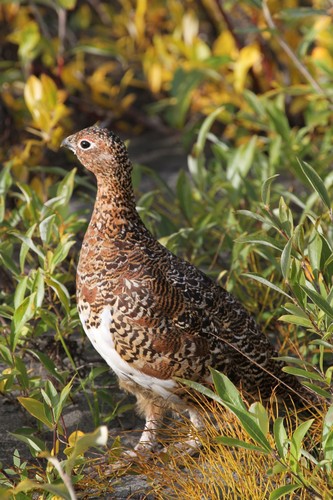
Willow Ptarmigan
37-42 cm (15-16.5 in) long
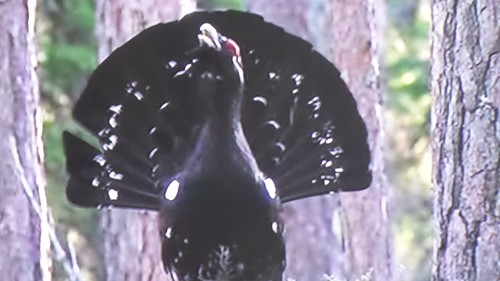
Western Capercaillie
male 74-90 cm (29-35 in), female 54-64 cm; male wingspan up to 125-130 cm
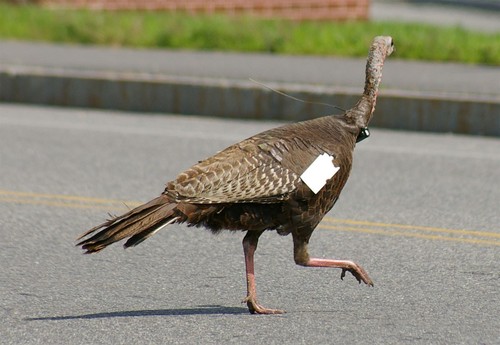
Wild Turkey
males 100-125 cm (39-49 in) long; females smaller, around 76-95 cm (30-37 in)
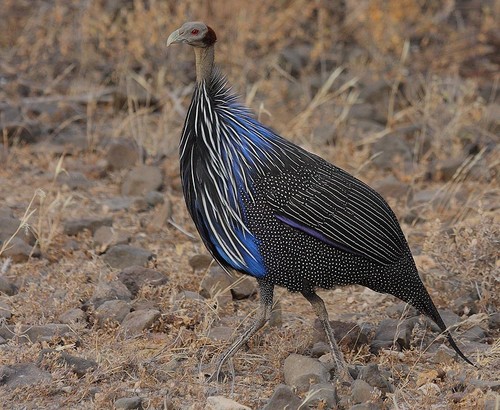
Vulturine Guineafowl
Length 61-71 cm, the largest guineafowl species, with a notably long neck and tail
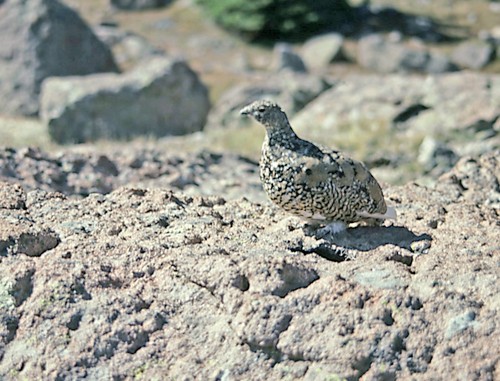
White-tailed Ptarmigan
30-33 cm (12-13 in) long; the smallest ptarmigan species
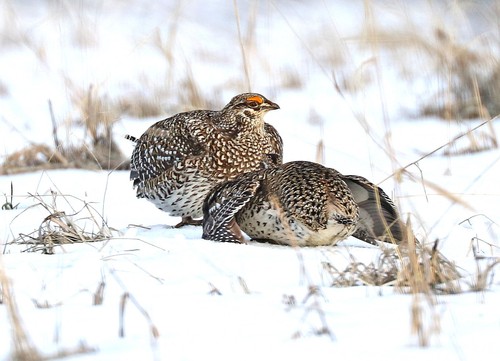
Sharp-tailed Grouse
38-48 cm (15-19 in) long
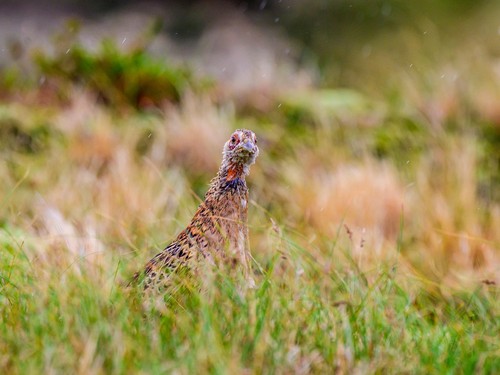
Ring-necked Pheasant
males 76-90 cm (30-35 in) long including a long tail; females smaller, 55-65 cm (22-26 in)
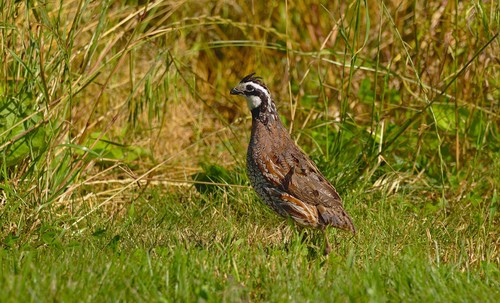
Northern Bobwhite
24-28 cm (9.5-11 in) long, 33-38 cm wingspan
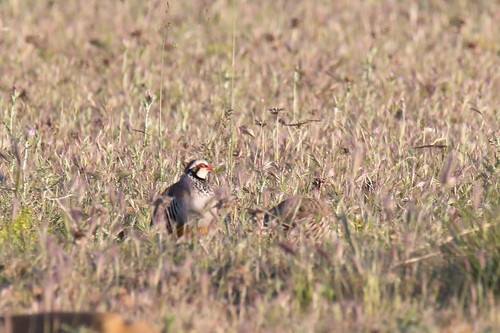
Red-legged Partridge
32-34 cm (13 in) long, 47-50 cm wingspan
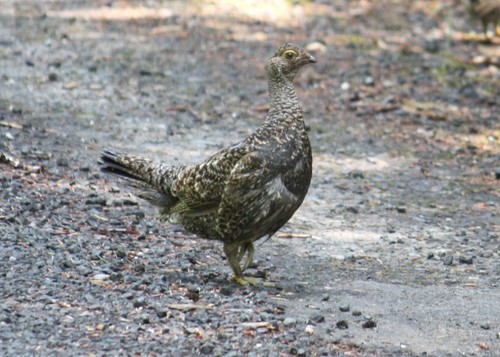
Sooty Grouse
43-48 cm (17-19 in) long; males larger than females