
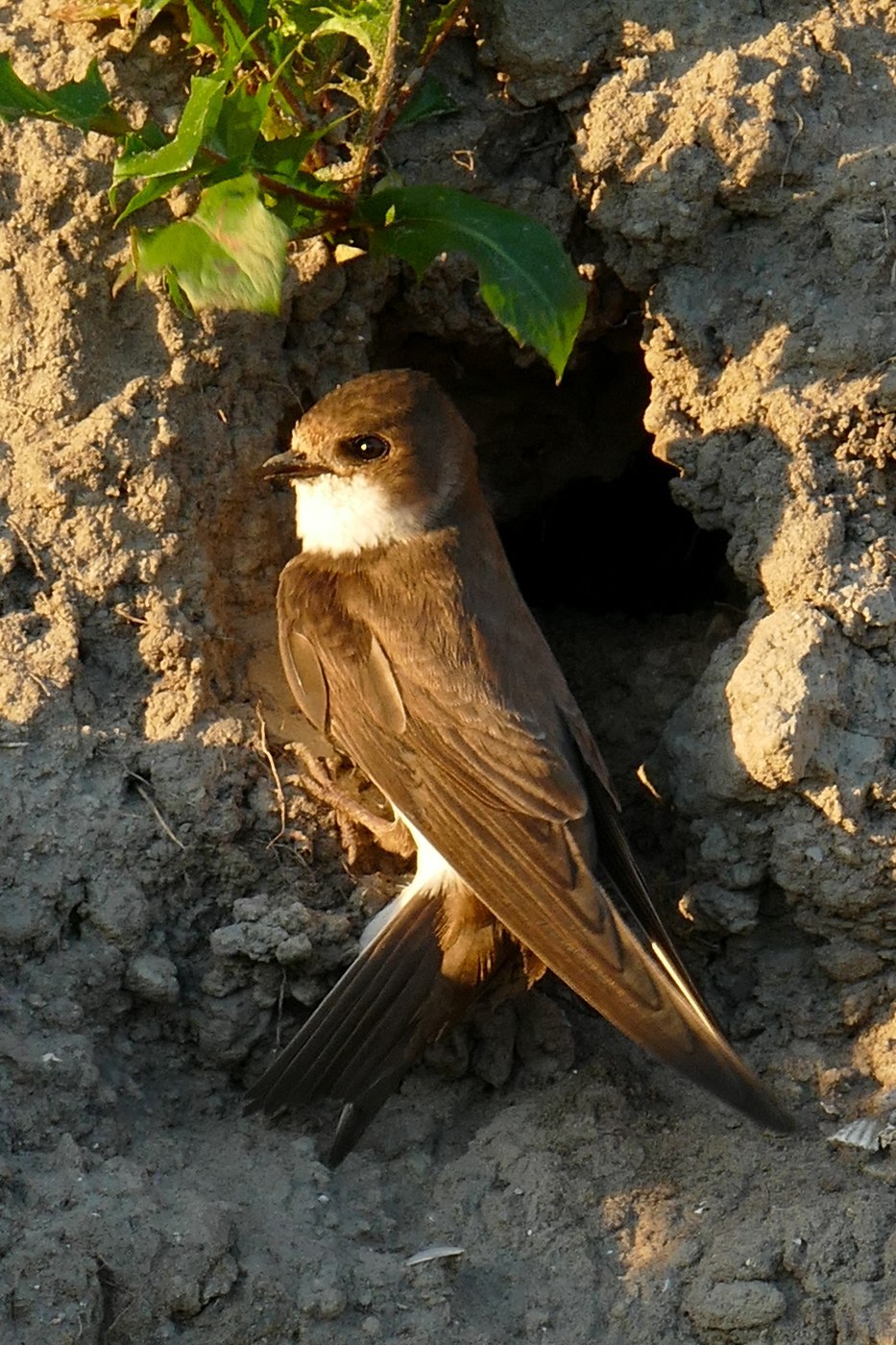
Sand Martin
Riparia riparia
A small brown-and-white swallow relative that nests colonially in burrows dug into sandy banks and cliffs.
- Size
- 12-13 cm (5 in) long, 26-29 cm wingspan
- Habitat
- sandy riverbanks, quarries, and coastal cliffs; forages over water and open country
- Type
- songbird
Spotted a bird like this?
Identify any bird from a photo, free.
Overview
The Sand Martin, known as the Bank Swallow in North America, is the smallest and plainest of the widespread swallow-family aerial insectivores. It is plain brown above and white below, with a distinctive brown breast band crossing the otherwise white underparts -- the easiest feature separating it from other small swallows and martins.
Its most notable trait is its nesting habit: Sand Martins excavate long burrows into vertical sandy or earthy banks, often in dense colonies of dozens to hundreds of pairs.
How to identify it
Key field marks
- Plain brown upperparts, white underparts with a distinct brown breast band
- Small size and slightly forked tail
- Fluttering, buoyant flight, often low over water
- Nests in colonies of round burrow entrances dug into sandy banks
Similar species
The House Martin is glossy blue-black above with a white rump and no breast band. The Barn Swallow is larger with a deeply forked tail and rufous throat. The brown breast band is the most reliable mark for Sand Martin.
Habitat & range
Range
One of the most widespread swallows in the world, breeding across Europe, Asia, and North America; winters in Africa, South America, and southern Asia depending on the population.
Habitat
Nests in vertical sandy or earthy banks along rivers, lakes, coastal cliffs, and man-made sites such as quarries and sand pits. Forages over water, wetlands, and open farmland.
Migration
A long-distance migrant; European and Asian populations winter mainly in sub-Saharan Africa and southern Asia, while North American populations winter in South America.
Behavior & voice
Behavior
Highly colonial, excavating burrows close together in suitable banks; colonies can be very dense where good nesting habitat is limited. Forms large pre-migration roosts in reedbeds.
Voice
A dry, buzzy twittering call and chattering song, typically given in flight or from perches near the colony.
Feeding
Catches flying insects over water and open ground, often foraging low and in loose flocks with other swallows and martins.
Nesting and breeding
Excavates a burrow up to a meter long into a sandy or earthy bank using bill and feet, with a nest chamber at the end lined with grass and feathers. Lays 4-5 white eggs; pairs may raise two broods.
Frequently asked questions
What is the difference between a Sand Martin and Bank Swallow?
They are the same species; Sand Martin is the name used in Europe and Asia, while Bank Swallow is the name used in North America.
How do Sand Martins build their nests?
They excavate burrows, sometimes over a meter long, into vertical sandy or earthy banks, nesting in dense colonies.
How can you identify a Sand Martin?
Look for plain brown upperparts and a distinct brown breast band across otherwise white underparts, smaller and plainer than other swallows.
Where do Sand Martins spend the winter?
Depending on the population, they winter in sub-Saharan Africa, southern Asia, or South America.
Sand Martin guides
In-depth guides for identifying, finding, and understanding Sand Martin.
Other birds you may enjoy

Black Redstart
13-14.5 cm (5.1-5.7 in) long, 23-26 cm wingspan

Black-throated Sparrow
12-14 cm (4.7-5.5 in) long, about 19-20 cm (7.5-8 in) wingspan

Greater Bird-of-paradise
Body about 43 cm; males with additional flank plumes up to 50 cm and long tail wires

Blue Tit
11-12 cm (4.3-4.7 in) long, 17-20 cm wingspan

Red-billed Quelea
11.5–13 cm long, wingspan about 20–22 cm
White-plumed Antbird
13-14 cm (5-5.5 in) long

Pyrrhuloxia
19-22 cm (7.5-8.7 in) long, 30 cm wingspan

Blue-gray Tanager
16-18 cm (6-7 in) long

Blackburnian Warbler
11-13 cm (4.3-5.1 in) long, 20-22 cm wingspan

Bluethroat
13-14 cm (5.1-5.5 in) long, 20-22 cm wingspan

Eurasian Nuthatch
12-14.5 cm (4.7-5.7 in) long, 22.5-27 cm wingspan

Wood Thrush
19-21 cm (7.5-8.3 in) long, about 33 cm (13 in) wingspan