
Sand Martin Identification Guide
A small, brown-and-white swallow (called Bank Swallow in North America) identified by its neat brown breast band and colonial nesting in burrows dug into sandy banks.
Read the full Sand Martin encyclopedia entry →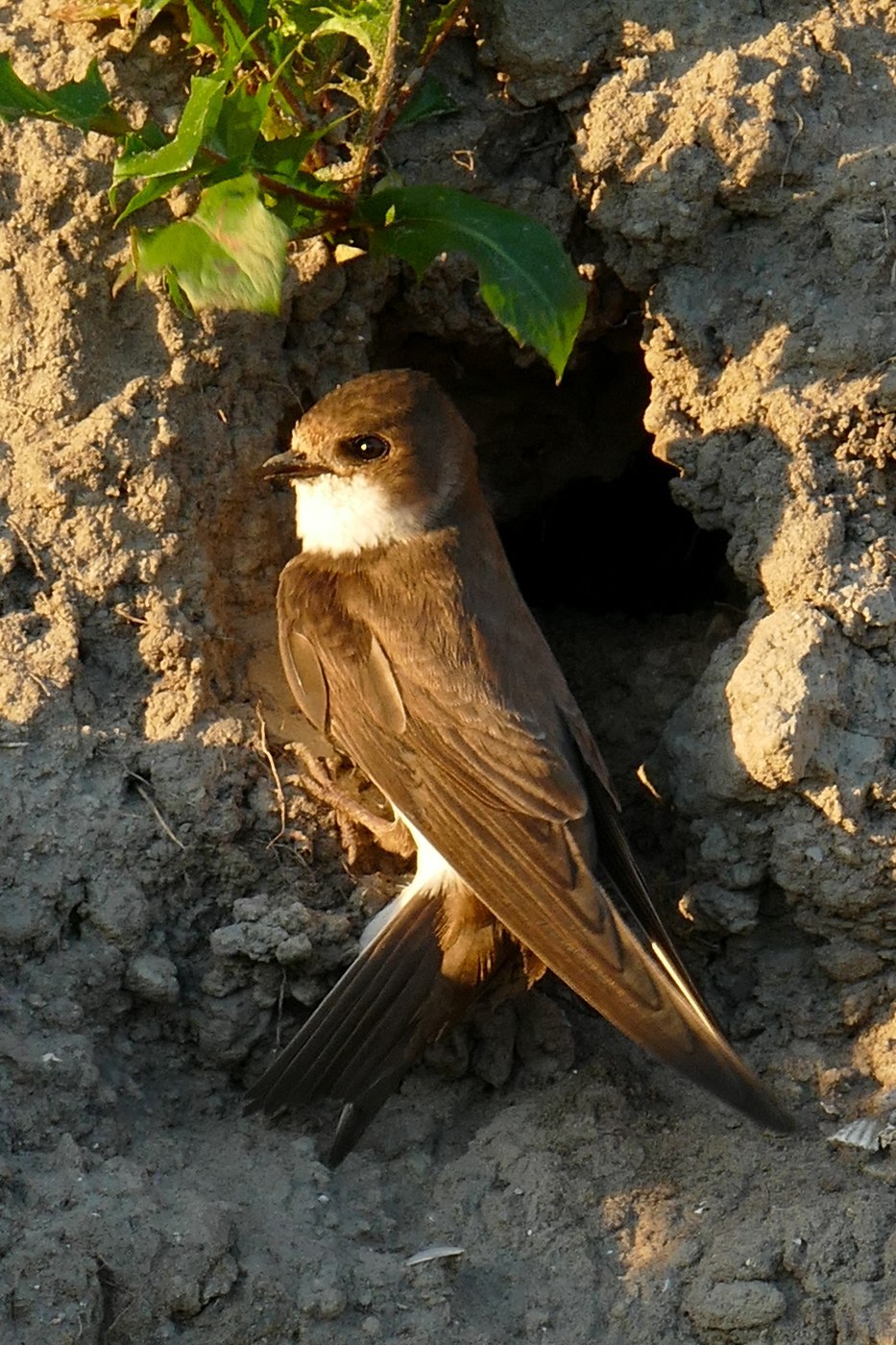
Key Field Marks
- Size & shape: The smallest swallow across most of its range, with a slim body, notched (not deeply forked) tail, and fast, fluttery flight interspersed with glides.
- Plumage: Plain brown above and white below, with a distinct narrow brown breast band crossing an otherwise clean white throat and belly — the single most diagnostic feature.
- Wings & flight: Wings are relatively long and pointed; flight is quicker and more fluttery/erratic than the smoother, more relaxed flight of Barn Swallow, often low over water snapping up insects.
- Bill & legs: Tiny bill; legs and feet are small and dark, adapted for clinging at burrow entrances rather than perching much.
- Colonial behavior: Highly social — nests in dense colonies of burrows excavated into vertical sandy or earthen banks, river cutbanks, quarries, and coastal bluffs; often seen swirling in large flocks near colonies.
Separating Sand Martin from Similar Species
- Barn Swallow: Much longer, deeply forked tail with streamers, chestnut throat/forehead, and glossy blue-black upperparts — far more colorful and elegant than the plain brown Sand Martin.
- House Martin: Glossy blue-black above with a bold white rump patch and clean white underparts (no breast band); tail is more forked.
- Northern Rough-winged Swallow (in the Americas): Similar plain brown-and-white pattern but lacks the crisp breast band, showing instead a diffuse brownish wash across the throat/breast that blends into the white belly; also solitary nester in burrows rather than colonial.
- Tree Swallow: Glossy greenish-blue above with clean white underparts and no breast band.
Where & When to See One
Sand Martin (known as Bank Swallow in North America) has one of the widest breeding distributions of any swallow, nesting across Europe, Asia, and North America wherever suitable sandy banks, river cutbanks, gravel pits, or coastal cliffs occur for burrow excavation. It is a long-distance migrant, wintering in sub-Saharan Africa (Old World birds) or South America (New World birds). Look for it over rivers, lakes, wetlands, and gravel pits in the breeding season, foraging low over water in loose flocks, and scan exposed sand or dirt banks for rows of round burrow entrances.
Voice
Calls include a dry, harsh, buzzy brrzt or tchirrp, often given in flight or chattering around the colony; less musical than many other swallows.
Frequently asked questions
What is the single best field mark for Sand Martin?
A crisp, narrow brown breast band crossing an otherwise white throat and belly, combined with plain brown upperparts and small size, distinguishes it from all other similarly patterned swallows.
Is Sand Martin the same bird as Bank Swallow?
Yes, Sand Martin and Bank Swallow are the same species (Riparia riparia); Sand Martin is the name used in Europe and much of the Old World, Bank Swallow in North America.
Where does Sand Martin nest?
It nests colonially in burrows it excavates itself into vertical sandy or earthen banks, such as river cutbanks, coastal bluffs, and gravel or sand quarries.
How do you tell Sand Martin from Northern Rough-winged Swallow?
Sand Martin shows a sharply defined brown breast band against a white throat, while Rough-winged Swallow has a diffuse dingy brown wash on the throat and breast that fades gradually into white, with no clean band.
When and where is the best time to see Sand Martins?
During the breeding season look near active burrow colonies along rivers, lakes, and gravel pits from spring through late summer; they depart for African or South American wintering grounds in autumn.