
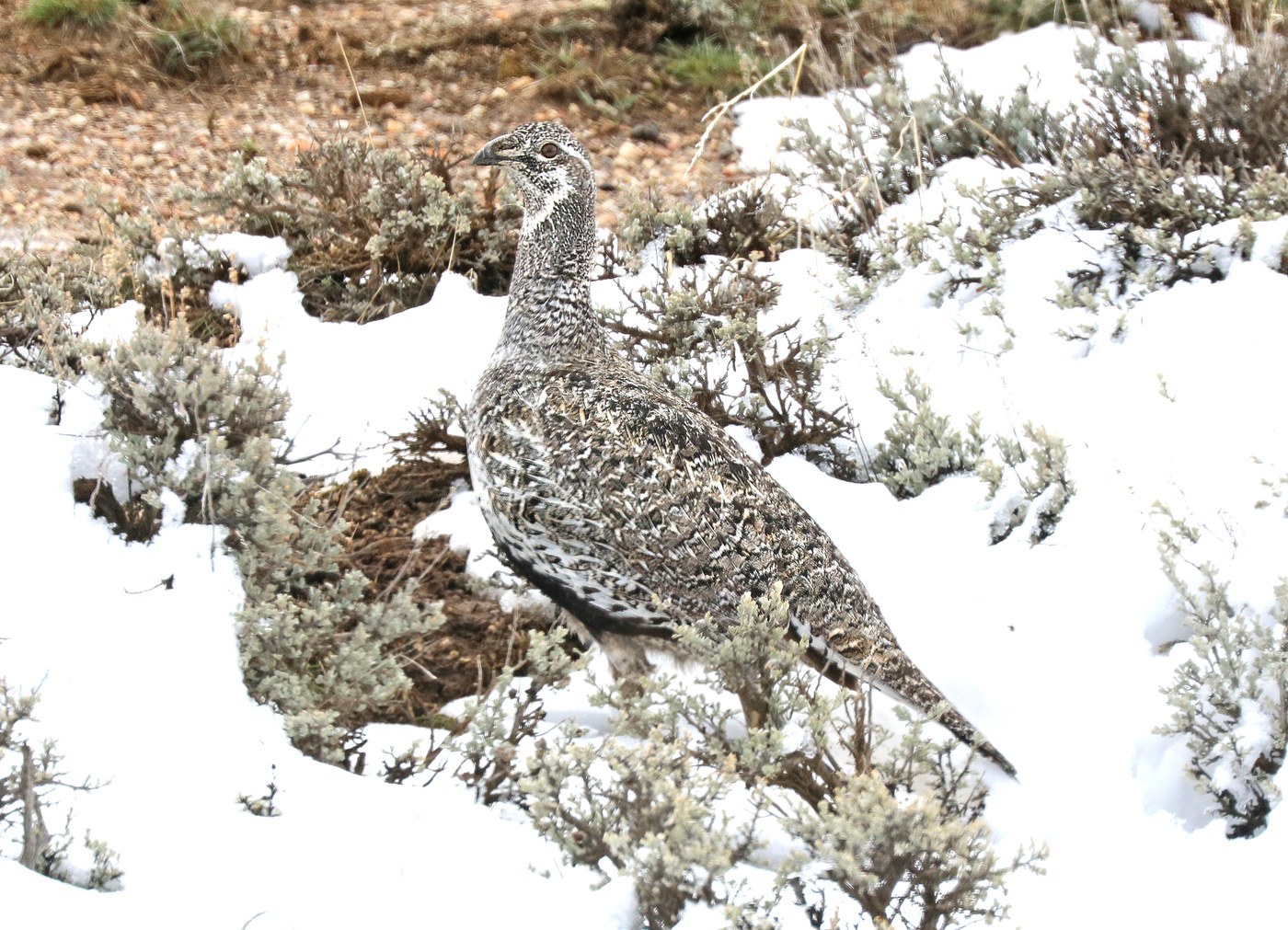
Sage Grouse
Centrocercus urophasianus
A large, sagebrush-dependent grouse known for the male's spectacular strutting display with inflated yellow air sacs on a lek.
- Size
- males up to 76 cm (30 in) long; females smaller, around 50-58 cm (20-23 in)
- Habitat
- sagebrush steppe and shrub-grassland of the interior western United States
- Type
- gamebird
Spotted a bird like this?
Identify any bird from a photo, free.
Overview
"Sage Grouse" is the traditional common name for the large grouse of the western sagebrush sea, historically treated as a single species before ornithologists split it in 2000 into two species: the widespread Greater Sage-Grouse (Centrocercus urophasianus) and the smaller, more range-restricted Gunnison Sage-Grouse (Centrocercus minimus) of southwestern Colorado and adjacent Utah. Both are large, mottled grayish-brown grouse with a long, spiky, pointed tail, a black belly patch, and, in males, a ruff of white breast feathers surrounding inflatable yellow-green air sacs used in an elaborate strutting courtship display.
Sage Grouse are considered an indicator species and umbrella species for the health of the sagebrush ecosystem, since their populations track the extent and quality of intact sagebrush habitat across the Intermountain West.
How to identify it
Key field marks
- Large, mottled gray-brown body with a black belly patch
- Long, spiky, pointed tail feathers
- Males show a white breast ruff and, during display, inflate bright yellow-green air sacs on the chest
- Found only in and near sagebrush habitat
Similar species
Sharp-tailed Grouse overlaps in range but is smaller, paler, lacks the black belly patch, and has a shorter, more pointed central tail without the spiky overall tail shape. Greater and Gunnison Sage-Grouse are best told apart by range and, in males, subtle differences in tail filoplume length and display sounds.
Habitat & range
Habitat and Range
Sage Grouse are obligate residents of sagebrush steppe, rarely found far from stands of big sagebrush, which provide both food and cover throughout the year.
Range
Historically found across much of the Intermountain West from southern Canada to California and New Mexico, the species' range has contracted significantly with the loss and fragmentation of sagebrush habitat, though sizable populations persist in Wyoming, Montana, Nevada, Idaho, and other western states.
Migration
Some populations undertake seasonal movements of tens of miles between distinct summer and winter ranges in response to snow depth and forage availability, while others are largely resident.
Behavior & voice
Behavior
Males gather at traditional communal display grounds called leks each spring, where they compete for the attention of visiting females through elaborate strutting displays.
Voice
During display, males produce a distinctive series of popping and swishing sounds by inflating and releasing air from their esophageal sacs, audible over long distances on quiet mornings.
Feeding
Sagebrush leaves make up the bulk of the diet, especially in winter when little else is available, supplemented by forbs and insects during the breeding season.
Nesting and breeding
Females nest on the ground under sagebrush cover, often at some distance from the lek, and raise the brood alone after mating with a dominant male at the lek.
Frequently asked questions
Is Sage Grouse one species or two?
It was historically treated as a single species but was split in 2000 into Greater Sage-Grouse and the smaller, geographically restricted Gunnison Sage-Grouse.
Why are Sage Grouse important to conservation?
They depend entirely on intact sagebrush habitat, so their populations serve as an indicator of the health of the broader sagebrush-steppe ecosystem in the western US.
What is the strange popping sound Sage Grouse make?
Displaying males inflate and release air from esophageal sacs on their chest, producing a distinctive popping and swishing sound as part of their courtship strut on the lek.
What do Sage Grouse eat?
Sagebrush leaves are the year-round dietary staple, supplemented by forbs and insects, especially during the breeding season.
Sage Grouse guides
In-depth guides for identifying, finding, and understanding Sage Grouse.
Other birds you may enjoy
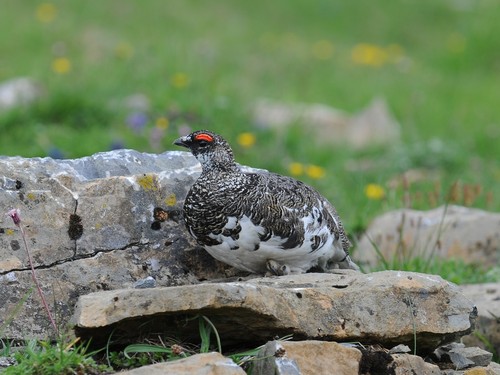
Rock Ptarmigan
34-36 cm (13-14 in) long
Congo Peafowl
Males about 64-70 cm long; females slightly smaller; no elaborate train
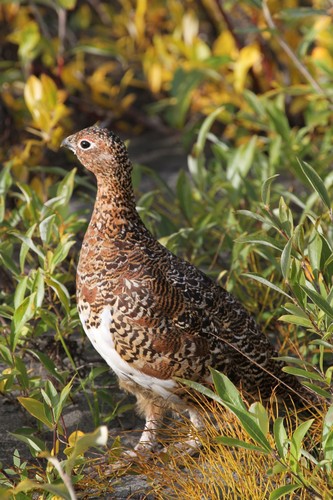
Willow Ptarmigan
37-42 cm (15-16.5 in) long
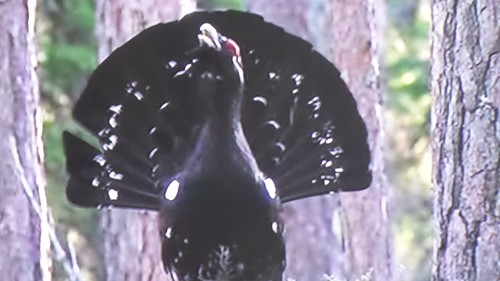
Western Capercaillie
male 74-90 cm (29-35 in), female 54-64 cm; male wingspan up to 125-130 cm
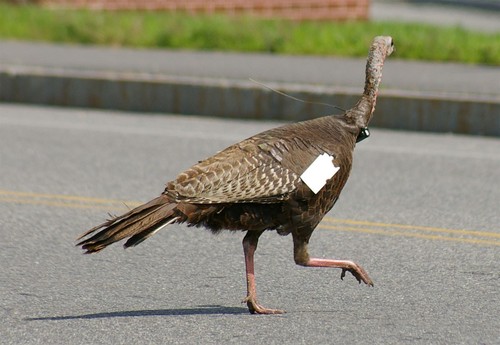
Wild Turkey
males 100-125 cm (39-49 in) long; females smaller, around 76-95 cm (30-37 in)
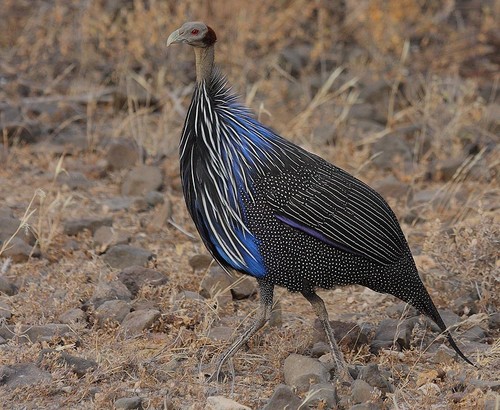
Vulturine Guineafowl
Length 61-71 cm, the largest guineafowl species, with a notably long neck and tail
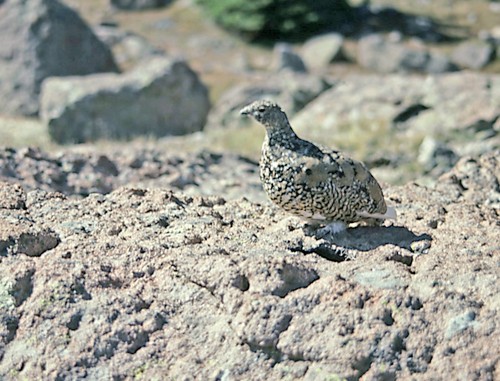
White-tailed Ptarmigan
30-33 cm (12-13 in) long; the smallest ptarmigan species
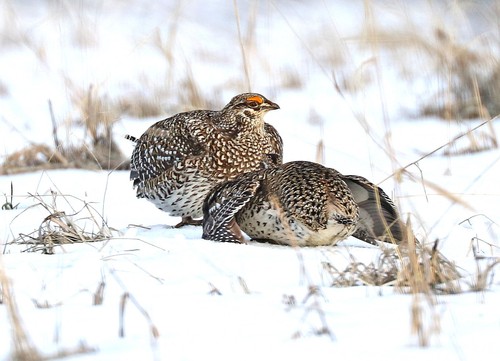
Sharp-tailed Grouse
38-48 cm (15-19 in) long
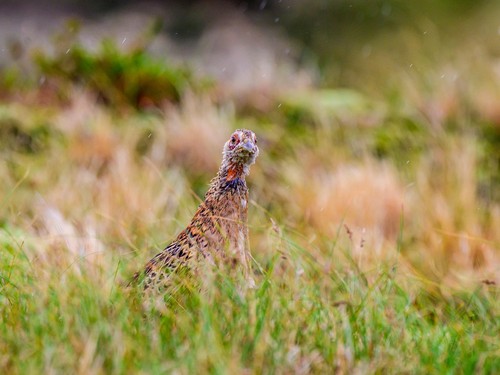
Ring-necked Pheasant
males 76-90 cm (30-35 in) long including a long tail; females smaller, 55-65 cm (22-26 in)
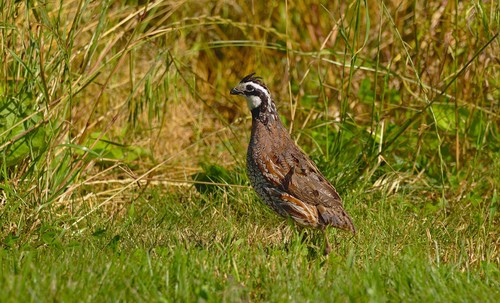
Northern Bobwhite
24-28 cm (9.5-11 in) long, 33-38 cm wingspan
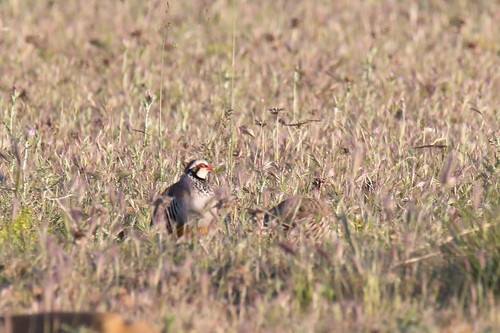
Red-legged Partridge
32-34 cm (13 in) long, 47-50 cm wingspan
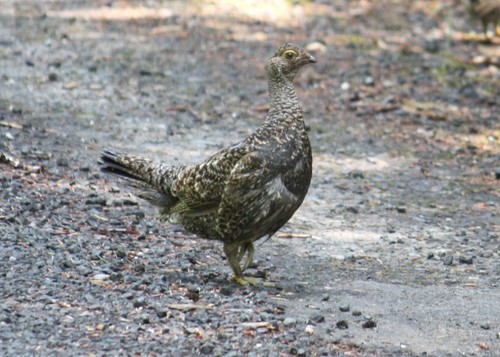
Sooty Grouse
43-48 cm (17-19 in) long; males larger than females