
Sage Grouse Identification Guide
North America's largest grouse, a sagebrush-obligate species famous for the male's elaborate strutting display with inflatable yellow-green chest air sacs at communal leks.
Read the full Sage Grouse encyclopedia entry →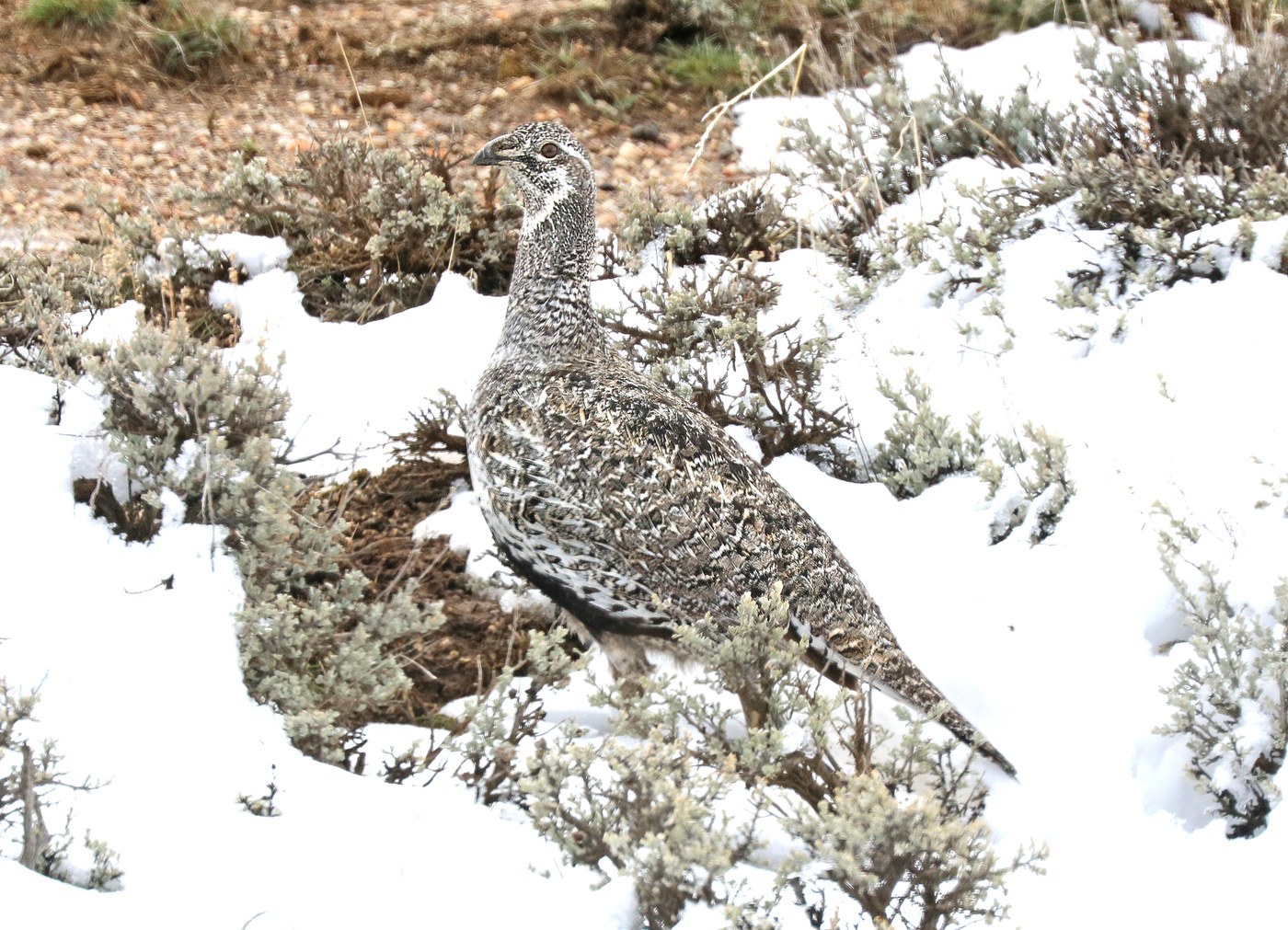
Key Field Marks
- Very large, heavy-bodied grouse with mottled gray, brown, and black cryptic plumage that blends closely with sagebrush habitat.
- Long, pointed, spiky tail feathers fan out dramatically during display; a solid black belly patch is a key feature in both sexes, though most visible on standing or displaying birds.
- Displaying male: inflates a pair of yellow-green air sacs on the chest, surrounded by fluffed white breast feathers and long filamentous black plumes on the neck, with pronounced yellow-green combs over the eyes.
- Female: considerably smaller and more uniformly cryptic mottled brown, lacking the ornamental chest plumage and inflatable air sacs, well camouflaged for incubating on the ground.
- Overall the largest grouse in North America, with males noticeably larger than females.
Similar Species
- Gunnison Sage-Grouse: smaller overall, with longer, denser filoplumes on the neck and a different, more restricted range centered on southwestern Colorado and adjacent Utah; display behavior is also subtly different (faster tail-feather swish).
- Sharp-tailed Grouse: smaller, with a shorter pointed tail, spotted (not solid black) underparts, and no inflatable air sacs; performs a different foot-stamping lek display.
- Dusky/Sooty Grouse: forest-dwelling, darker overall, lacking the pale mottled sagebrush-matching plumage and without communal lekking behavior of the same scale.
Habitat & Range
- Obligate sagebrush species found across the sagebrush steppe of the western United States and southwestern Canada, requiring large expanses of relatively intact sagebrush for both feeding (sagebrush leaves form the bulk of the winter diet) and nesting cover.
- Highly sensitive to habitat fragmentation from energy development, agriculture, and invasive grasses, contributing to significant range-wide population declines and conservation concern.
Behavior & Voice
- Famous for lek (communal courtship) displays each spring, where males gather at traditional open display grounds at dawn to strut, fan their tails, and inflate their air sacs, producing distinctive popping, gurgling, and swishing sounds audible over long distances.
- Females visit leks to select mates, then nest and raise young alone nearby in dense sagebrush cover.
Best Times & Approach Tips
- Visit a known lek site at dawn during peak display season (typically March–May, varying by region) for the best chance to witness the full courtship spectacle — many leks have designated viewing blinds or areas managed by wildlife agencies.
- Outside the lek season, look for birds feeding quietly in sagebrush flats at dawn or dusk, relying on their cryptic plumage to stay hidden until flushed.
Frequently asked questions
What is the best time to see Sage-Grouse displaying?
Visit a known lek at dawn during the spring breeding season (roughly March through May depending on latitude and elevation), when males gather to strut and inflate their chest air sacs.
How can I tell Sage-Grouse from Sharp-tailed Grouse?
Sage-Grouse is larger with a solid black belly patch and long spiky tail feathers, while Sharp-tailed Grouse is smaller, has spotted (not solid black) underparts, and lacks inflatable chest air sacs.
Why is Sage-Grouse considered a conservation priority?
It is an obligate sagebrush species highly sensitive to habitat loss and fragmentation from energy development, agriculture, and invasive plants, and its populations have declined substantially across much of its historic range.
Do female Sage-Grouse display at leks too?
No, only males perform the elaborate strutting display with inflated air sacs; females visit leks primarily to observe and choose a mate before nesting alone elsewhere.
What do Sage-Grouse eat in winter?
Sagebrush leaves make up the vast majority of the winter diet, an adaptation that ties the species tightly to intact sagebrush habitat year-round.