
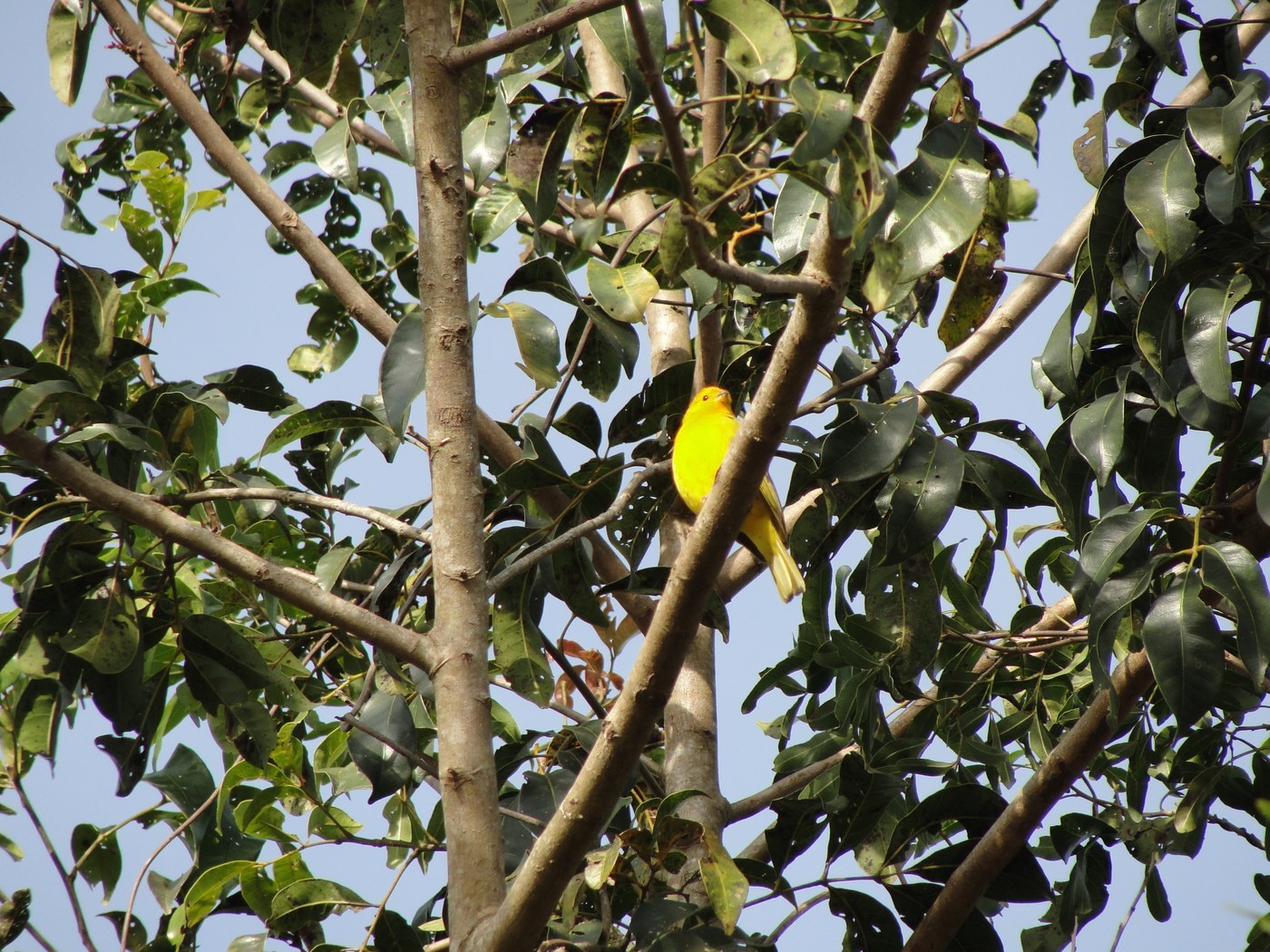
Saffron Finch
Sicalis flaveola
A bright yellow, open-country finch-like tanager with an orange-tinged crown in males, common in parks, savanna, and grassland across South America.
- Size
- 13-14 cm (5-5.5 in) long
- Habitat
- open grassland, savanna, parks, gardens, and agricultural land
- Type
- songbird
Spotted a bird like this?
Identify any bird from a photo, free.
Overview
The Saffron Finch is a bright, cheerful bird of open country, its plumage a strong yellow overall with an orange-toned wash on the crown in adult males, deepening toward the forehead, that gives the species its saffron-colored name. Females and immatures are duller and more olive-yellow, lacking the strong orange crown, and often show faint streaking on the back.
Despite its common name and finch-like conical bill, the Saffron Finch actually belongs to the tanager family rather than the true finches, a good example of how common names in birds do not always reflect true taxonomic relationships. Its build is compact with a stout, seed-cracking bill well suited to its largely granivorous diet.
Highly adaptable, the Saffron Finch thrives in human-modified landscapes such as parks, gardens, and farmland, and it has also been introduced successfully outside its native range, including in Hawaii and parts of the Caribbean.
How to identify it
Key field marks
- Bright yellow overall plumage
- Orange-tinged crown and forehead in adult males
- Stout, conical, finch-like bill
- Duller, more olive-yellow females and immatures, often faintly streaked above
Similar species
Grassland Yellow-Finch and other Sicalis species are similar in overall yellow coloring but generally lack the strong orange crown wash of adult male Saffron Finch and tend to be smaller or show different back streaking; range and habitat also help separate them.
Habitat & range
Habitat
The Saffron Finch favors open habitats including grassland, savanna, scrubby pasture, parks, gardens, and agricultural land, thriving especially in areas modified by humans.
Range
It is native to much of South America, including Colombia, Venezuela, the Guianas, Brazil, Bolivia, Paraguay, Uruguay, and Argentina, and has been introduced to Hawaii, Puerto Rico, and other areas outside its native range.
Migration
Most populations are sedentary residents, though some local movements may occur in response to seed availability and habitat conditions.
Behavior & voice
Behavior
Saffron Finches are often seen in pairs or small flocks foraging on the ground in open areas, and they can become quite tame in parks and gardens where they are regularly seen.
Voice
The song is a pleasant, varied series of sweet, buzzy warbling notes and trills, often delivered from an exposed perch such as a wire, fence, or treetop.
Feeding
It feeds mainly on grass and other seeds picked up from the ground, supplementing its diet with insects, especially when feeding young.
Nesting and breeding
Saffron Finches often nest in cavities, including old holes in walls, trees, or abandoned nests of other birds such as ovenbirds, where the female builds a lined nest cup and incubates the eggs.
Frequently asked questions
Is the Saffron Finch a true finch?
No, despite its name and finch-like bill, it is a member of the tanager family rather than the true finches.
How do you identify a male Saffron Finch?
Look for overall bright yellow plumage with an orange-tinged crown and forehead, distinguishing it from duller females.
What does the Saffron Finch eat?
Mainly grass and other seeds, along with some insects.
Where is the Saffron Finch found?
It is native to much of South America and has been introduced to Hawaii, Puerto Rico, and other areas.
Where does the Saffron Finch nest?
It often nests in cavities, including holes in walls or trees, or in abandoned nests built by other bird species.
Saffron Finch guides
In-depth guides for identifying, finding, and understanding Saffron Finch.
Other birds you may enjoy
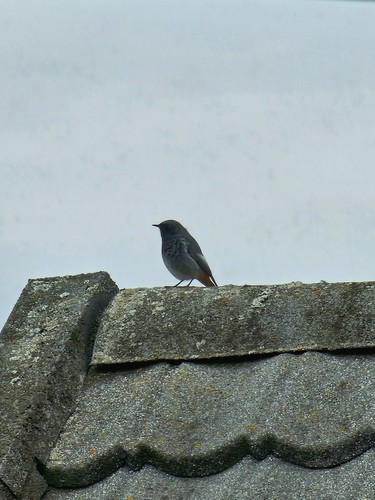
Black Redstart
13-14.5 cm (5.1-5.7 in) long, 23-26 cm wingspan
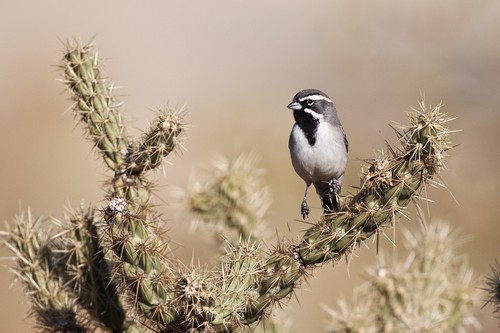
Black-throated Sparrow
12-14 cm (4.7-5.5 in) long, about 19-20 cm (7.5-8 in) wingspan
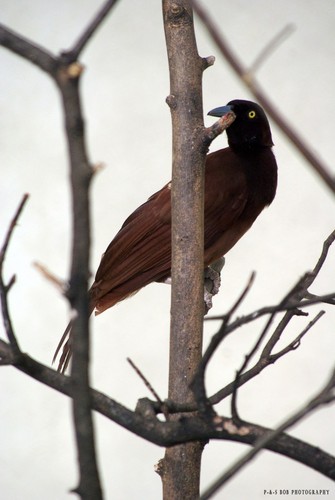
Greater Bird-of-paradise
Body about 43 cm; males with additional flank plumes up to 50 cm and long tail wires
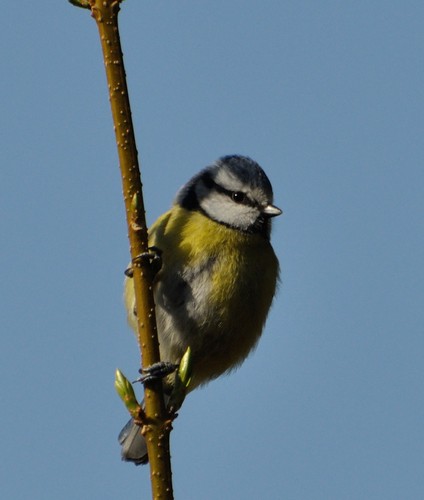
Blue Tit
11-12 cm (4.3-4.7 in) long, 17-20 cm wingspan
Red-billed Quelea
11.5–13 cm long, wingspan about 20–22 cm
White-plumed Antbird
13-14 cm (5-5.5 in) long
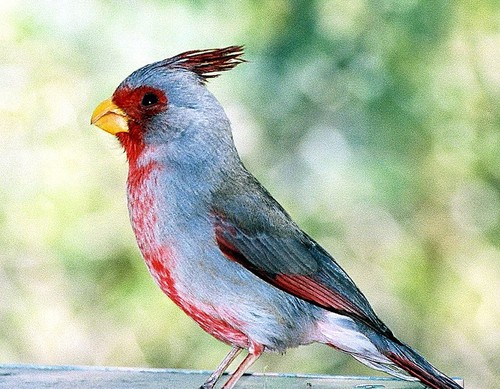
Pyrrhuloxia
19-22 cm (7.5-8.7 in) long, 30 cm wingspan
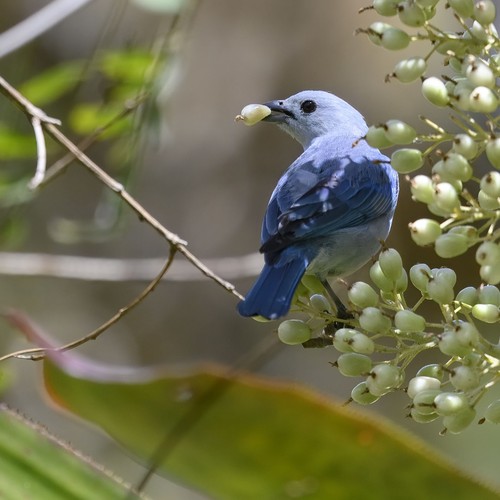
Blue-gray Tanager
16-18 cm (6-7 in) long
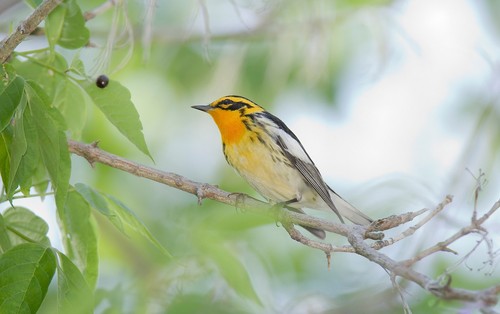
Blackburnian Warbler
11-13 cm (4.3-5.1 in) long, 20-22 cm wingspan
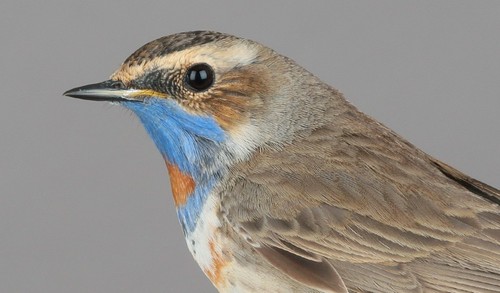
Bluethroat
13-14 cm (5.1-5.5 in) long, 20-22 cm wingspan
Eurasian Nuthatch
12-14.5 cm (4.7-5.7 in) long, 22.5-27 cm wingspan
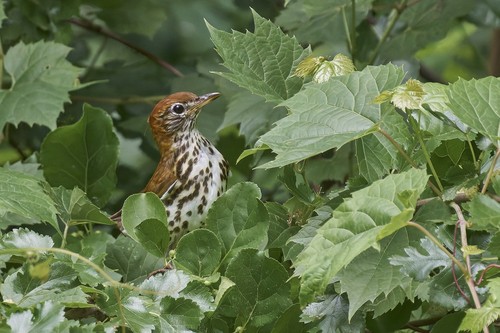
Wood Thrush
19-21 cm (7.5-8.3 in) long, about 33 cm (13 in) wingspan