
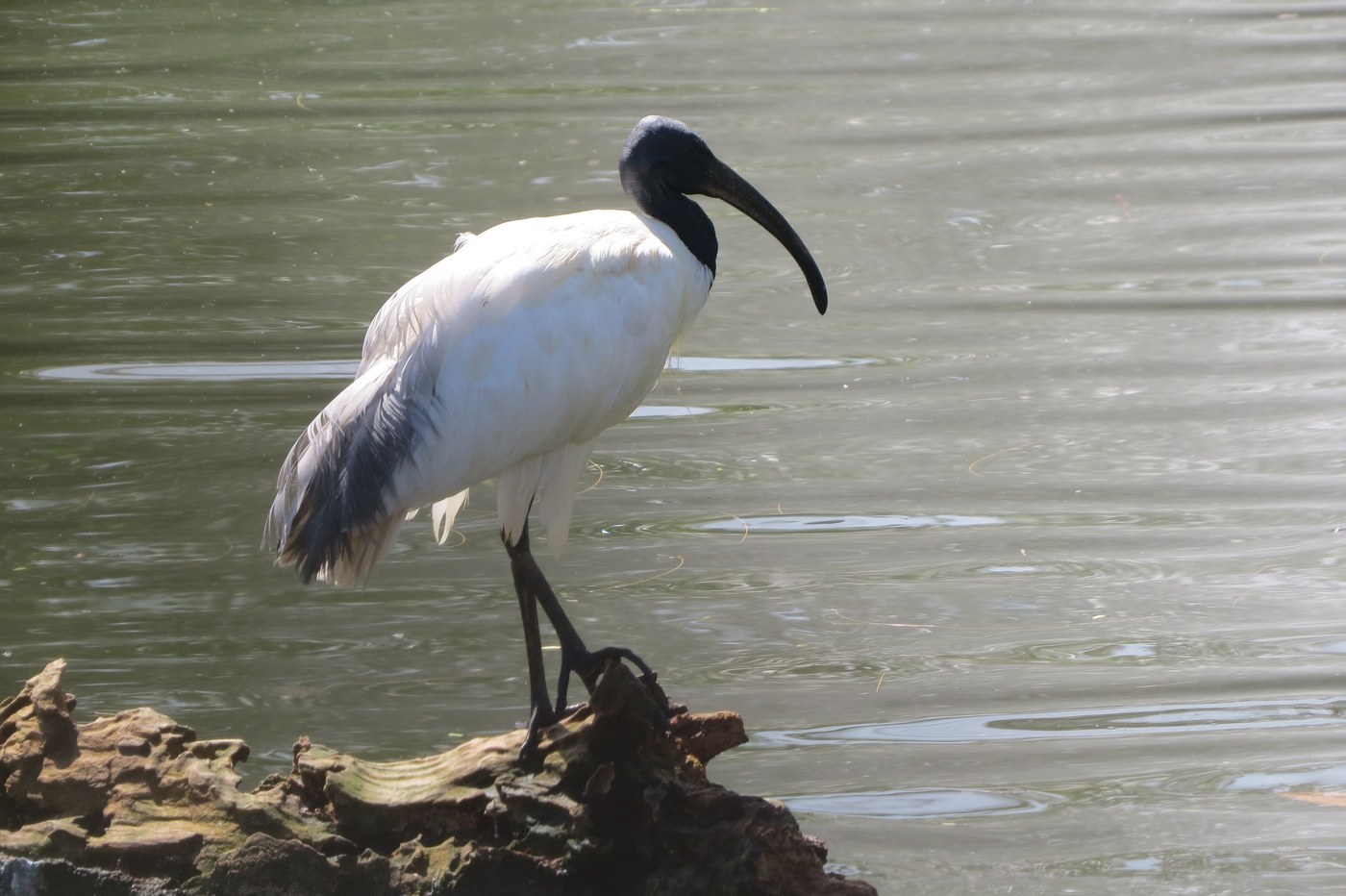
Sacred Ibis
Threskiornis aethiopicus
A striking white ibis with a bare black head and neck, revered in ancient Egypt, now widespread across African wetlands and farmland.
- Size
- 65-89 cm (26-35 in) long, 112-124 cm wingspan
- Habitat
- wetlands, farmland, and refuse sites across sub-Saharan Africa
- Type
- wading-bird
Spotted a bird like this?
Identify any bird from a photo, free.
Overview
The Sacred Ibis is a large, mostly white wading bird distinguished by its bare, featherless black head and neck, a stout, down-curved black bill, and black plumes trailing from the rear of the wings, which are visible as a black tuft over the tail. The wingtips also show black, most visible in flight.
This species holds deep cultural significance, having been mummified and worshipped in ancient Egypt as a symbol of the god Thoth, though it no longer breeds in Egypt today. It remains common and adaptable across much of sub-Saharan Africa, including in human-modified habitats.
How to identify it
Key field marks
- White body plumage with a bare black head and neck
- Stout, down-curved black bill
- Black plume tuft over the tail and black wingtips
- Black legs
Similar species
The Australian White Ibis is very similar in shape and pattern but occurs on a different continent; range alone usually separates the two. No native African ibis shares the same bare black head and white body combination.
Habitat & range
Habitat
Sacred Ibis use a broad range of wetlands, farmland, grasslands, and even rubbish dumps and urban areas, reflecting their opportunistic feeding habits.
Range and migration
The species is widespread across sub-Saharan Africa and parts of Iraq, with populations largely resident though capable of local nomadic movements; introduced populations have also become established in parts of Europe, where they are considered invasive.
Behavior & voice
Behavior
Sacred Ibis are gregarious, often foraging and roosting in large flocks, and are highly adaptable, readily exploiting human-altered landscapes including farmland and waste sites.
Voice
Generally quiet, with occasional low croaking or grunting notes given at breeding colonies.
Feeding
An opportunistic omnivore, it eats insects, small reptiles and amphibians, eggs and nestlings of other birds, and carrion, in addition to typical aquatic invertebrates.
Nesting and breeding
Colonial nester, building stick nests in trees or on the ground on islands, often in mixed colonies with other waterbirds; clutches typically contain 2-3 eggs.
Frequently asked questions
Why is it called the Sacred Ibis?
It was revered and mummified in ancient Egypt as a symbol associated with the god Thoth, though it no longer breeds there.
Where do Sacred Ibis live today?
Across sub-Saharan Africa in wetlands, farmland, and even urban waste sites; introduced populations also exist in parts of Europe.
What does a Sacred Ibis eat?
A wide range of food including insects, small vertebrates, eggs, and carrion, reflecting its opportunistic feeding habits.
How do you identify a Sacred Ibis?
Look for its white body, bare black head and neck, and down-curved black bill.
Sacred Ibis guides
In-depth guides for identifying, finding, and understanding Sacred Ibis.
Other birds you may enjoy
Demoiselle Crane
85-100 cm (33-39 in) long, 155-180 cm wingspan
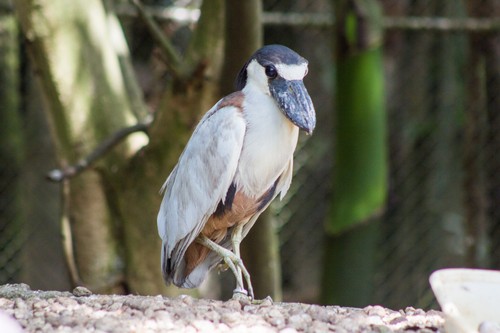
Boat-billed Heron
41-56 cm (16-22 in) long
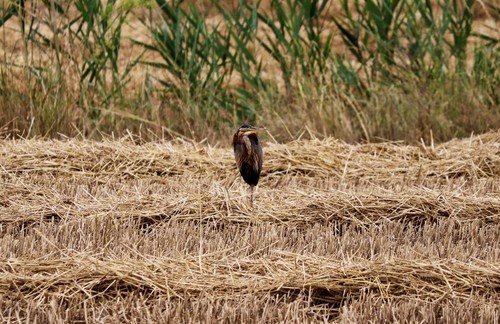
Purple Heron
78-90 cm (31-35 in) long, 120-152 cm wingspan
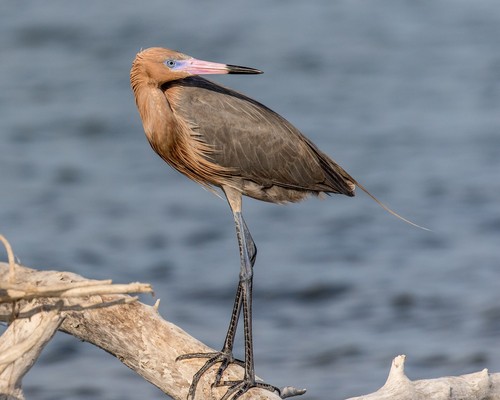
Reddish Egret
68-82 cm (27-32 in) long, 116-125 cm wingspan
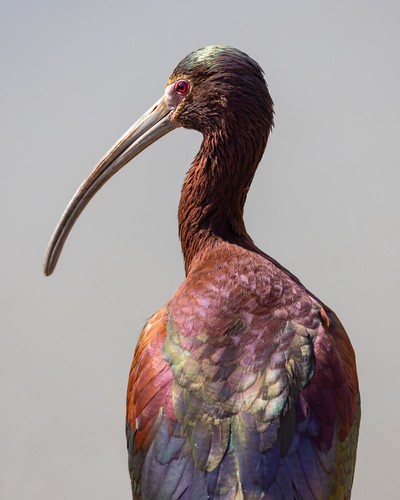
White-faced Ibis
46-56 cm (18-22 in) long, 88-93 cm wingspan
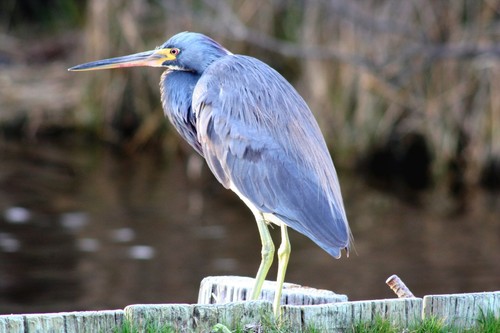
Tricolored Heron
61-76 cm (24-30 in) long, about 96 cm wingspan
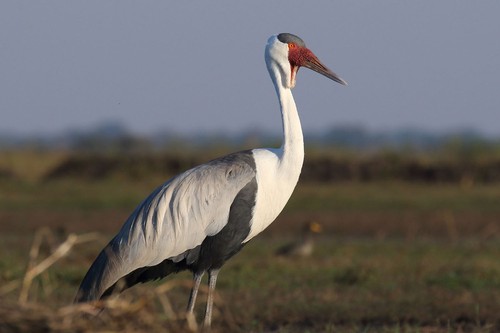
Wattled Crane
120-175 cm (47-69 in) tall, one of the tallest cranes, wingspan up to about 230 cm (7.5 ft)
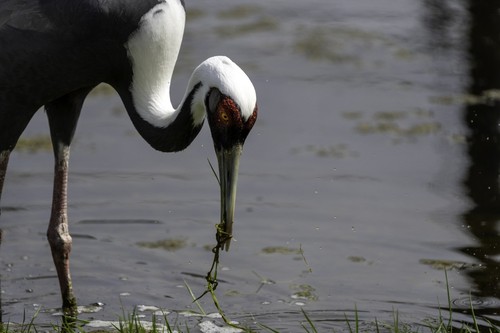
White-naped Crane
112-125 cm (44-49 in) long, 195-210 cm wingspan
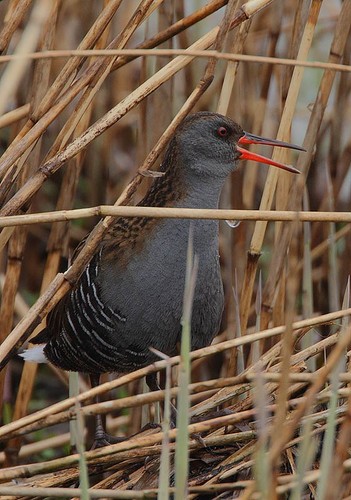
Water Rail
23-28 cm (9-11 in) long, wingspan 38-45 cm
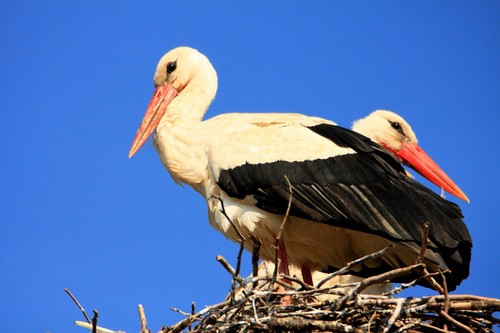
White Stork
100-125 cm (39-49 in) long, 155-215 cm wingspan
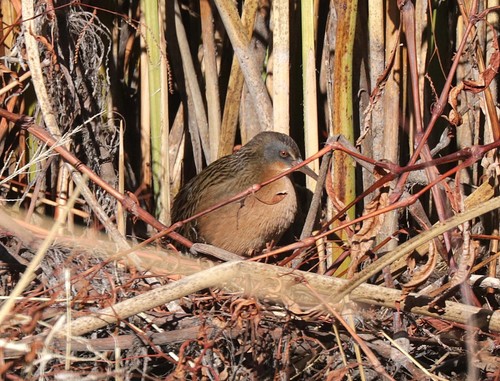
Virginia Rail
20-27 cm (8-11 in) long, wingspan 32-38 cm
Wattled Jacana
17-23 cm (7-9 in) long