
Sacred Ibis Identification Guide
A large white African ibis with a bare black head and neck and a long down-curved black bill, historically revered in ancient Egypt.
Read the full Sacred Ibis encyclopedia entry →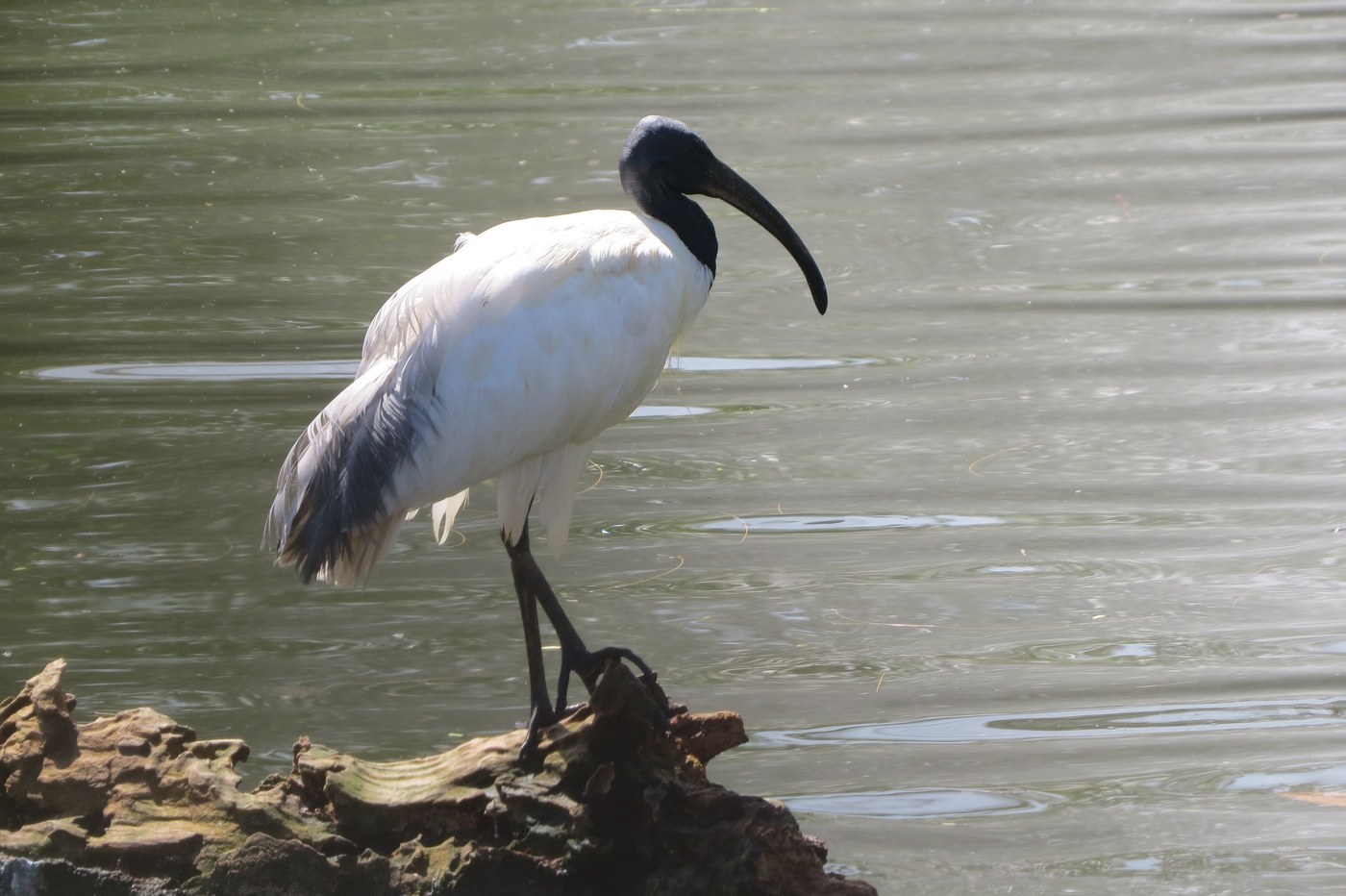
Key Field Marks
- Large wading bird with predominantly white body plumage, a bare black head, and a bare black neck lacking feathers.
- Long, thin, strongly down-curved black bill, ideal for probing mud and shallow water for prey.
- Legs are black; in flight, the wingtips show black trailing edges/tips against the white body.
- Adults show decorative drooping black plumes on the lower back and tertials that overhang the tail, most visible at rest and during display.
- Juveniles differ by having a feathered, dusky-whitish neck and duller overall plumage, lacking the ornamental back plumes of adults.
Similar Species
- Black-headed Ibis (Asian species): similar bare black head and neck but has more extensive gray in the wings and a different, non-overlapping native range in South and Southeast Asia.
- Wood Stork: much larger with a heavier, straighter bill and bare gray (not black) head/neck; different flight silhouette.
- Juvenile Sacred Ibis can be confused with other white ibis species at a glance, but the down-curved black bill and overall structure remain distinctive.
Habitat & Range
- Native to sub-Saharan Africa, inhabiting marshes, wetlands, mudflats, flooded fields, and farmland, often near human settlements and refuse sites.
- Also found locally along the Nile in parts of northeastern Africa; formerly bred in ancient Egypt where it held religious significance, though it is no longer native there today.
- Introduced populations have established (and in some cases been controlled/eradicated) in parts of Europe (e.g., France, Italy, Spain) and elsewhere, where it is considered invasive due to impacts on native bird colonies.
Behavior & Voice
- Forages by wading in shallow water and probing mud with its long bill for invertebrates, small fish, and amphibians; also scavenges at rubbish sites and farmland.
- Highly social, nesting and roosting colonially, often alongside herons, egrets, and other ibis species in trees.
- Generally silent apart from grunting and croaking notes given at breeding colonies.
Best Times & Approach Tips
- Look for it wading in African wetlands, floodplains, and rice fields, often in mixed-species groups with herons and storks.
- Where introduced and invasive (parts of Europe), local birding reports can indicate current colony locations, as control programs have reduced numbers in some areas.
Frequently asked questions
What is the most distinctive feature of the Sacred Ibis?
A bare black head and neck combined with a long, down-curved black bill set against otherwise white body plumage.
Is the Sacred Ibis still found in Egypt today?
No, despite its historical and religious significance in ancient Egypt (where it was mummified and depicted in art), the species no longer breeds there; its African range today is mainly sub-Saharan.
Why is the Sacred Ibis considered invasive in parts of Europe?
Introduced populations, originally from zoo or captive escapes, have established in places like France and Italy, where they can prey on eggs and chicks of native breeding birds, prompting control efforts.
How do juveniles differ from adults?
Juveniles have a feathered, dusky-white neck rather than bare black skin, and they lack the ornamental drooping plumes on the back and tertials seen in adults.
What habitat does the Sacred Ibis prefer?
Shallow wetlands, marshes, mudflats, flooded fields, and farmland, frequently near human activity where it can forage and scavenge.