
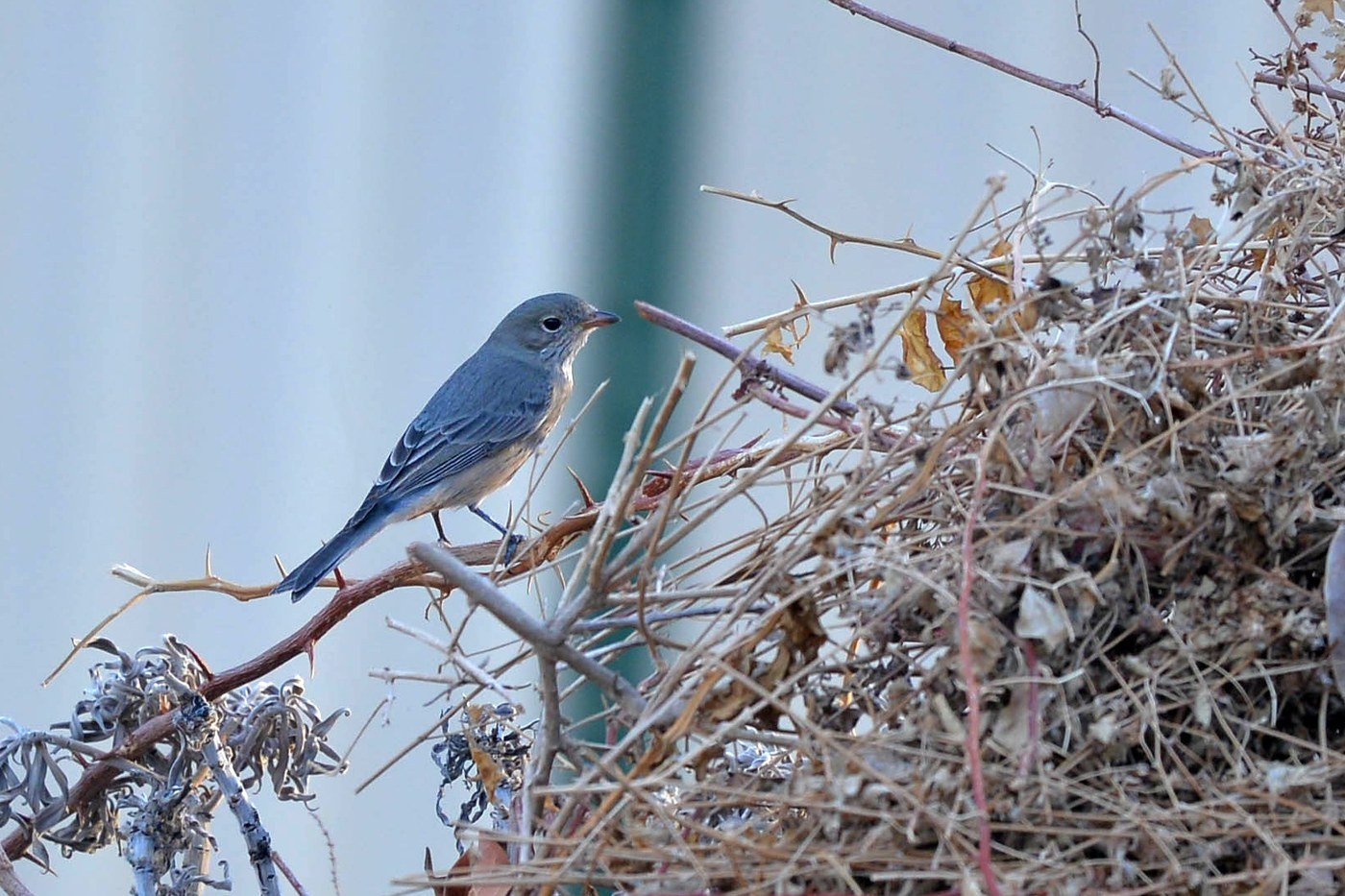
Rufous Whistler
Pachycephala rufiventris
A grey-backed, rufous-breasted songbird whose loud, cheerful, far-carrying whistled song is a signature sound of Australian woodlands.
- Size
- 16-18 cm (6-7 in) long
- Habitat
- woodlands, open forest, mallee, and mulga across most of Australia
- Type
- songbird
Spotted a bird like this?
Identify any bird from a photo, free.
Overview
The Rufous Whistler is a medium-sized songbird whose male displays a smart combination of grey upperparts, a black head and necklace-like breast band, a white throat, and warm rufous-orange underparts extending across the breast and flanks. Females and immatures are much duller, grey-brown above with pale, finely streaked underparts, lacking the male's bold pattern.
One of the most vocal and conspicuous of the whistlers, this species is renowned for its loud, rich, cheerful whistling song, which is delivered persistently through spring and summer and is one of the defining sounds of open woodland across much of the Australian mainland.
Widespread and adaptable, the Rufous Whistler occupies a very broad range of wooded habitats from wetter forests to arid mulga and mallee country, making it one of the most familiar and frequently encountered whistlers for birdwatchers across Australia.
How to identify it
Key field marks
- Male: grey upperparts, black head and breast band, white throat, rufous-orange underparts
- Female: plain grey-brown above, whitish underparts with fine dark streaking
- Straight, slightly hooked bill typical of whistlers
- Loud, rich, far-carrying whistled song, often with a sharp emphatic ending
Similar species
The male Golden Whistler has bright golden-yellow rather than rufous underparts and a more sharply defined black breast band. Female whistlers are notoriously similar across species, but the Rufous Whistler female tends to show finer streaking on a whiter breast than the more uniformly washed underparts of some other whistler females; range, habitat, and any accompanying male are the most reliable clues.
Habitat & range
Habitat
Rufous Whistlers occupy a very wide range of wooded habitats, including open eucalypt forest and woodland, mallee, mulga, and riparian vegetation, generally favouring drier and more open habitats than the Golden Whistler.
Range
The species is found across most of mainland Australia, including much of the arid and semi-arid interior, though it is absent from Tasmania and scarce in the wettest coastal rainforest.
Migration
Many populations, particularly in southern Australia, are migratory or partially migratory, moving north in winter and returning south to breed in spring and summer, while some more tropical and inland populations are more sedentary or nomadic.
Behavior & voice
Behavior
Rufous Whistlers forage actively through foliage and branches, often at low to mid heights, and males sing persistently and loudly from exposed perches to advertise territory, particularly during the breeding season.
Voice
Its song is a loud, rich series of ringing whistled phrases, often ending in a sharp, emphatic note; the male sings frequently and conspicuously through spring and summer.
Feeding
It feeds almost entirely on insects, gleaned from foliage, bark, and occasionally caught in brief aerial sallies.
Nesting and breeding
The nest is a neat, shallow cup of twigs, bark, and grass, built in a fork of a shrub or tree; both parents share incubation and feeding duties, and pairs often raise more than one brood across a season.
Frequently asked questions
How can I identify a male Rufous Whistler?
Look for its grey back, black head and breast band, white throat, and warm rufous-orange underparts.
What does the Rufous Whistler's song sound like?
It gives a loud, rich, ringing series of whistled phrases, often finished with a sharp, emphatic note, and sings frequently through spring and summer.
Do Rufous Whistlers migrate?
Many southern populations are migratory, moving north for winter and returning to breed in spring and summer, while some inland and tropical populations are more sedentary or nomadic.
Where do Rufous Whistlers live?
They occupy open woodland, mallee, and mulga habitats across most of mainland Australia, though they are absent from Tasmania.
What does a Rufous Whistler eat?
It feeds almost entirely on insects gleaned from foliage and bark.
Rufous Whistler guides
In-depth guides for identifying, finding, and understanding Rufous Whistler.
Other birds you may enjoy

Black Redstart
13-14.5 cm (5.1-5.7 in) long, 23-26 cm wingspan

Black-throated Sparrow
12-14 cm (4.7-5.5 in) long, about 19-20 cm (7.5-8 in) wingspan

Greater Bird-of-paradise
Body about 43 cm; males with additional flank plumes up to 50 cm and long tail wires

Blue Tit
11-12 cm (4.3-4.7 in) long, 17-20 cm wingspan

Red-billed Quelea
11.5–13 cm long, wingspan about 20–22 cm
White-plumed Antbird
13-14 cm (5-5.5 in) long

Pyrrhuloxia
19-22 cm (7.5-8.7 in) long, 30 cm wingspan

Blue-gray Tanager
16-18 cm (6-7 in) long

Blackburnian Warbler
11-13 cm (4.3-5.1 in) long, 20-22 cm wingspan

Bluethroat
13-14 cm (5.1-5.5 in) long, 20-22 cm wingspan

Eurasian Nuthatch
12-14.5 cm (4.7-5.7 in) long, 22.5-27 cm wingspan

Wood Thrush
19-21 cm (7.5-8.3 in) long, about 33 cm (13 in) wingspan