
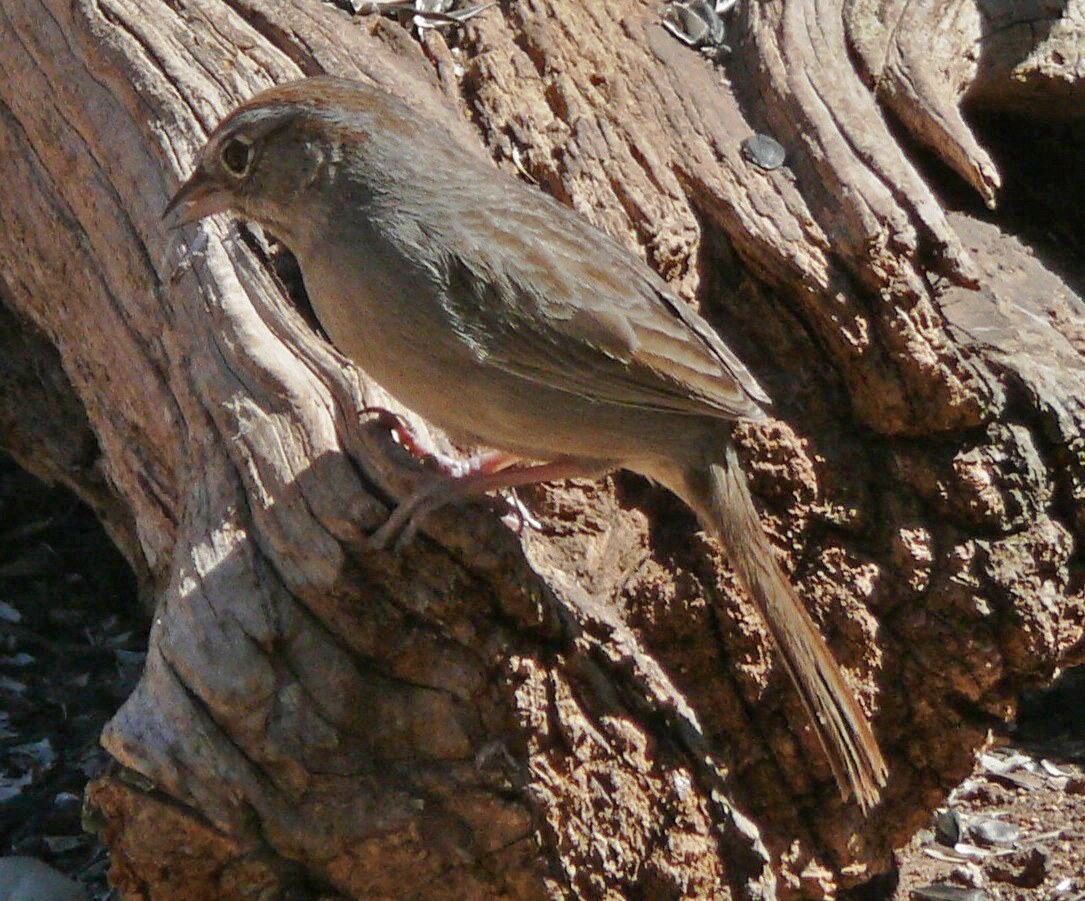
Rufous-crowned Sparrow
Aimophila ruficeps
A chunky, non-migratory sparrow of rocky hillsides marked by a rusty cap and a black-and-white striped face.
- Size
- 13-15 cm (5-6 in) long, about 19-20 cm (7.5-8 in) wingspan
- Habitat
- rocky, grassy hillsides with scattered shrubs and chaparral
- Type
- songbird
Spotted a bird like this?
Identify any bird from a photo, free.
Overview
The Rufous-crowned Sparrow is a stocky, ground-loving sparrow closely tied to a very specific habitat: dry, rocky, grass-and-shrub-covered hillsides. It is largely non-migratory, spending its entire life on the same patch of terrain, which makes it a reliable year-round resident wherever it occurs.
Adults show a warm rufous (rusty-red) crown contrasting with a plain gray face, set off by a bold black whisker (malar) stripe bordered with white. The underparts are unstreaked buffy-gray, and the back is brownish with fine dark streaking. The tail is notably long and rounded, often held cocked upward as the bird moves through low cover.
This species tends to skulk low in vegetation and can be difficult to see well, more often detected by its distinctive chattering calls than by sight.
How to identify it
Key Field Marks
- Rufous (rusty-red) crown contrasting with a gray face
- Bold black malar (whisker) stripe bordered by white
- Plain, unstreaked buffy-gray underparts
- Streaked brownish back
- Long, rounded tail, frequently cocked
Similar Species
- Chipping Sparrow: also has a rufous cap but shows a crisp black eyeline and white underparts, and is a more slender, active bird typically found in more open or wooded settings
- American Tree Sparrow: has a rufous cap plus a dark central breast spot and rufous eyeline, and occurs in different habitat and season
Habitat is a strong clue: Rufous-crowned Sparrows are almost always found on steep, rocky, grass-and-shrub hillsides rather than open fields or woodland edges.
Habitat & range
This species occupies dry, rocky slopes with a mix of grasses and scattered shrubs, including chaparral, coastal sage scrub, and rocky canyon country. It ranges across much of California, the Southwest, and south-central states, extending south through Mexico.
Rufous-crowned Sparrows are non-migratory, and pairs typically remain on or near the same territory throughout the year, defending small patches of steep, rocky terrain that are patchily distributed across the landscape, giving the species a naturally spotty overall distribution.
Behavior & voice
Behavior
This sparrow forages low, hopping among rocks and grass tussocks, and is often first noticed by its distinctive scolding or chattering calls rather than by sight, since it tends to stay hidden in cover.
Voice
The song is a jumbled, chattering warble, variable and somewhat scratchy. A distinctive call, often rendered as a nasal 'dear-dear-dear' or a dry churring rattle, is frequently given, especially when the bird is agitated.
Feeding
Diet consists mainly of seeds and insects gleaned from the ground and low vegetation, with insects more prominent during the breeding season.
Nesting and Breeding
The nest is a well-hidden cup of grass placed on or near the ground, often tucked beside a rock or under a shrub. Females lay 3-4 pale blue eggs, and pairs defend permanent territories year-round.
Frequently asked questions
What habitat does the Rufous-crowned Sparrow prefer?
It prefers dry, rocky, grass-covered hillsides with scattered shrubs, including chaparral and coastal sage scrub.
How do you tell a Rufous-crowned Sparrow from a Chipping Sparrow?
Rufous-crowned Sparrow has a plain gray face with a bold black-and-white whisker stripe and unstreaked buffy underparts, while Chipping Sparrow shows a black eyeline and cleaner white underparts.
Does the Rufous-crowned Sparrow migrate?
No, it is largely non-migratory and resident year-round on its territory.
What does the Rufous-crowned Sparrow sound like?
It gives a jumbled, chattering warble as a song and a distinctive nasal 'dear-dear-dear' scolding call.
Where is the Rufous-crowned Sparrow found?
It occurs on rocky hillsides across California, the Southwest, and south-central US, south into Mexico.
Rufous-crowned Sparrow guides
In-depth guides for identifying, finding, and understanding Rufous-crowned Sparrow.
Other birds you may enjoy
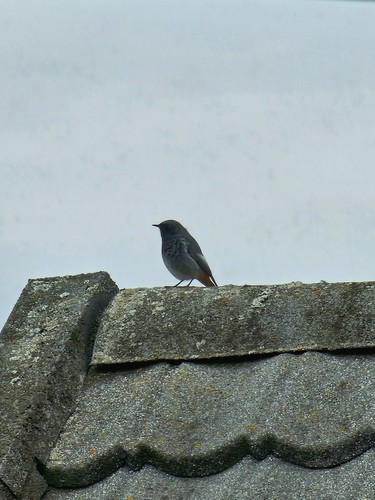
Black Redstart
13-14.5 cm (5.1-5.7 in) long, 23-26 cm wingspan
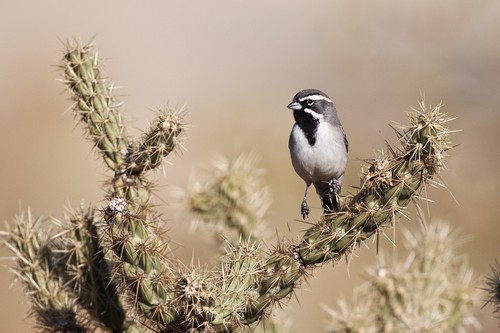
Black-throated Sparrow
12-14 cm (4.7-5.5 in) long, about 19-20 cm (7.5-8 in) wingspan
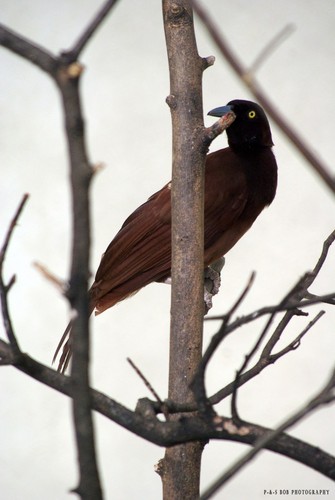
Greater Bird-of-paradise
Body about 43 cm; males with additional flank plumes up to 50 cm and long tail wires
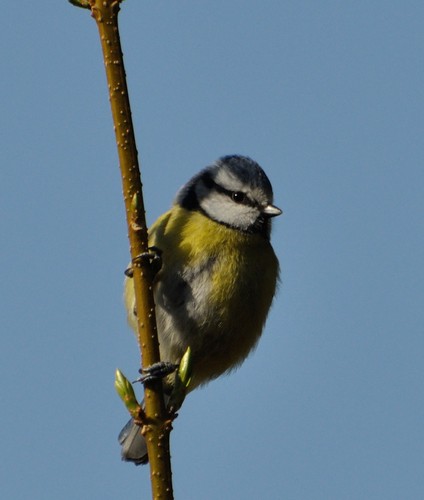
Blue Tit
11-12 cm (4.3-4.7 in) long, 17-20 cm wingspan
Red-billed Quelea
11.5–13 cm long, wingspan about 20–22 cm
White-plumed Antbird
13-14 cm (5-5.5 in) long
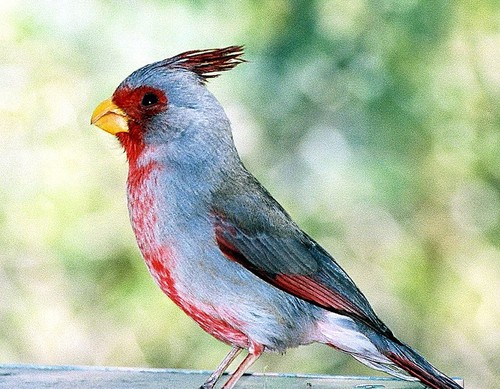
Pyrrhuloxia
19-22 cm (7.5-8.7 in) long, 30 cm wingspan
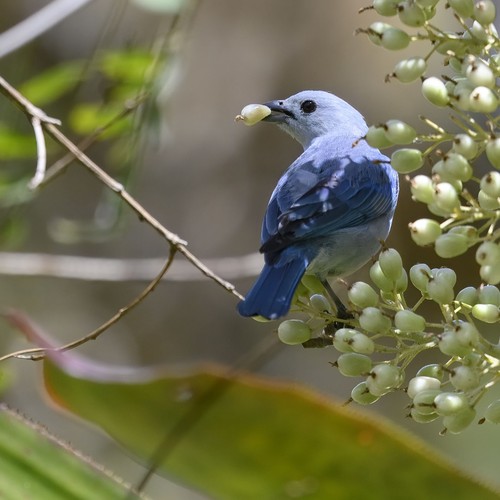
Blue-gray Tanager
16-18 cm (6-7 in) long
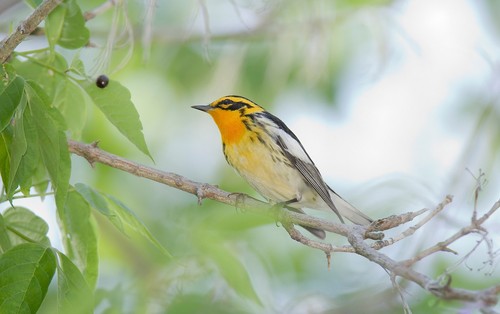
Blackburnian Warbler
11-13 cm (4.3-5.1 in) long, 20-22 cm wingspan
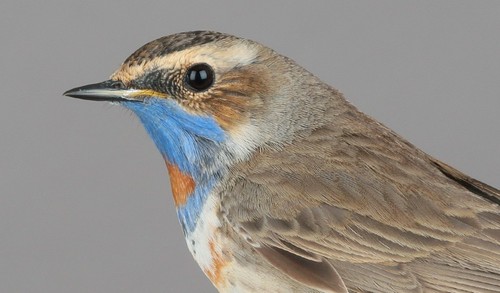
Bluethroat
13-14 cm (5.1-5.5 in) long, 20-22 cm wingspan
Eurasian Nuthatch
12-14.5 cm (4.7-5.7 in) long, 22.5-27 cm wingspan
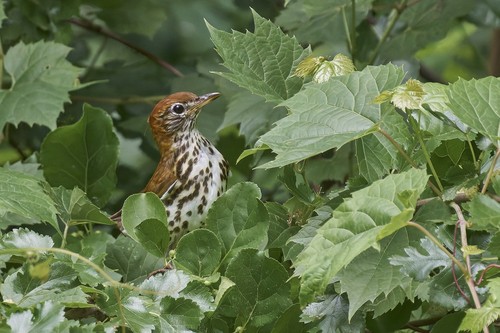
Wood Thrush
19-21 cm (7.5-8.3 in) long, about 33 cm (13 in) wingspan