
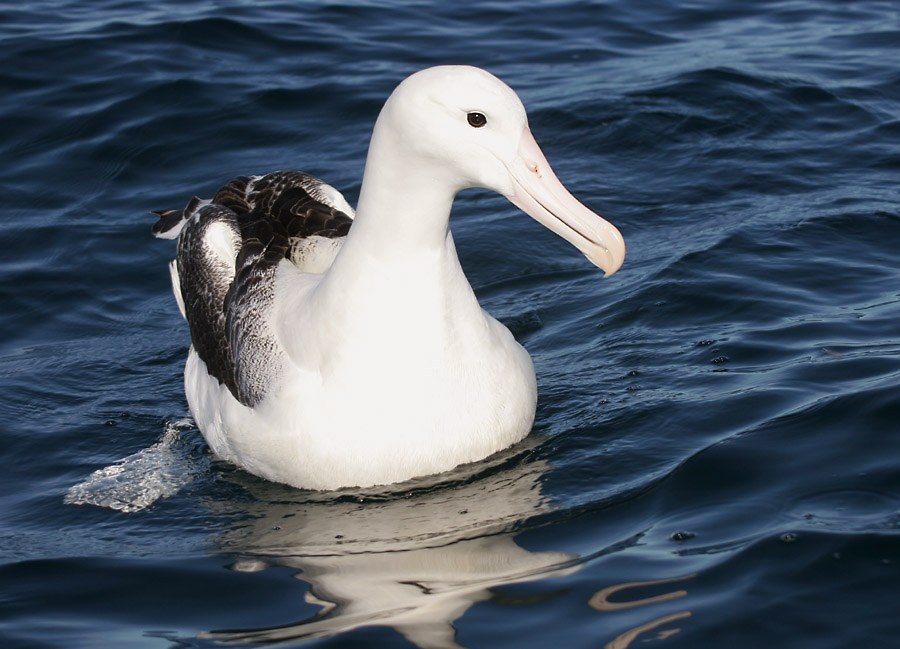
Royal Albatross
Diomedea epomophora
A huge white albatross of New Zealand waters, nearly the size of the Wandering Albatross, best known for the mainland colony at Taiaroa Head.
- Size
- 112-122 cm (44-48 in) long, wingspan up to 3 m (10 ft)
- Habitat
- open Southern Ocean, breeding mainly on islands near New Zealand
- Type
- seabird
Spotted a bird like this?
Identify any bird from a photo, free.
Overview
The Royal Albatross is one of the largest albatross species, rivaling the Wandering Albatross in size, with a wingspan approaching 3 meters (10 ft). Adults are largely white, with black upper-wing surfaces in the Southern subspecies, and a heavy, pale pink bill with a distinctive black line along the cutting edge of the upper mandible.
This magnificent seabird is closely associated with New Zealand, where its most famous colony at Taiaroa Head on the South Island is the only mainland albatross breeding site inhabited by humans nearby, allowing visitors a rare close view of nesting albatrosses.
Like other great albatrosses, Royal Albatrosses are supremely adapted for long-distance gliding flight, spending the vast majority of their long lives at sea.
How to identify it
Key field marks
- Large size with a mostly white body
- Black upperwing surfaces (in adult Southern Royal Albatross), contrasting with white underwing
- Pale pink bill with a fine black line along the cutting edge of the upper mandible
Similar species
- Wandering Albatross is extremely similar in size and overall whiteness but lacks the black cutting-edge line on the bill and shows a different, more variable upperwing molt pattern that whitens with age.
- Northern Royal Albatross, sometimes treated as a separate species, has more black on the upperwing than the Southern Royal Albatross even as an adult.
Habitat & range
Royal Albatrosses breed mainly on islands near New Zealand, including the Auckland, Campbell, and Chatham Islands, with a small, well-known mainland colony at Taiaroa Head near Dunedin. Nests are built on open, grassy or tussock-covered slopes exposed to strong winds needed for takeoff and landing.
Outside the breeding season, Royal Albatrosses range widely across the Southern Ocean, with some individuals crossing entire ocean basins on extended foraging trips before returning to New Zealand waters to breed.
Behavior & voice
Voice
Royal Albatrosses perform ritualized courtship displays at the colony involving bill-clacking, mutual preening, and loud braying calls, but are largely silent while at sea.
Feeding
They feed on squid, fish, and crustaceans taken from the ocean surface, and will also scavenge carrion, sometimes following fishing vessels for discarded catch.
Nesting and breeding
Pairs form enduring bonds and, like other great albatrosses, breed only every second year because chick-rearing takes close to a year to complete. A single egg is laid on a mound nest of vegetation and mud, with both parents sharing incubation and feeding duties.
Frequently asked questions
Where can you see Royal Albatrosses up close?
The colony at Taiaroa Head near Dunedin, New Zealand, is the world's only mainland albatross breeding site easily accessible for close viewing.
How big is a Royal Albatross?
It has a wingspan of up to about 3 meters (10 ft), making it one of the largest albatross species, close in size to the Wandering Albatross.
How do you tell a Royal Albatross from a Wandering Albatross?
Royal Albatrosses have a fine black line along the cutting edge of the upper bill that Wandering Albatrosses lack, along with differences in upperwing pattern.
How often do Royal Albatrosses breed?
Successful pairs typically breed only every other year, since raising a single chick takes close to a year.
What do Royal Albatrosses eat?
They feed mainly on squid, fish, and crustaceans, and will scavenge carrion at the ocean surface.
Royal Albatross guides
In-depth guides for identifying, finding, and understanding Royal Albatross.
Other birds you may enjoy
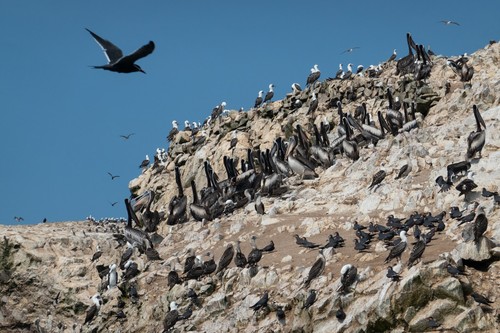
Peruvian Pelican
137-152 cm (54-60 in) long, up to 228 cm wingspan
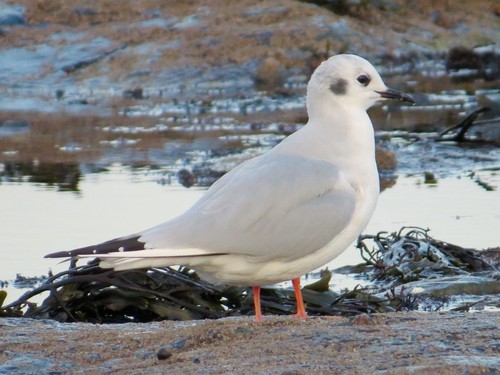
Bonaparte's Gull
28-33 cm (11-13 in) long, 76-84 cm wingspan
Brown Pelican
106-137 cm (42-54 in) long, 200-230 cm wingspan
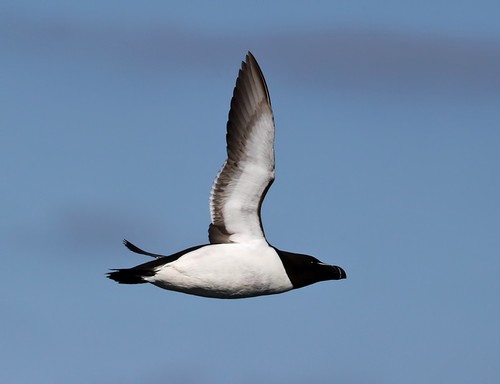
Razorbill
37-39 cm (15-15.5 in) long, 63-68 cm wingspan
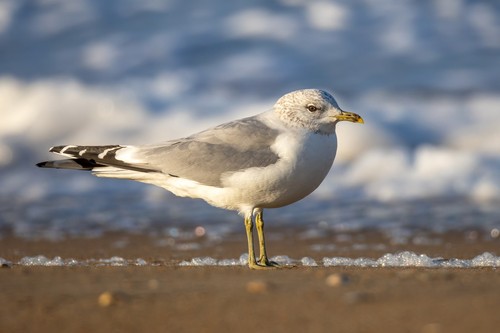
Common Gull
40-46 cm (16-18 in) long, 110-130 cm wingspan
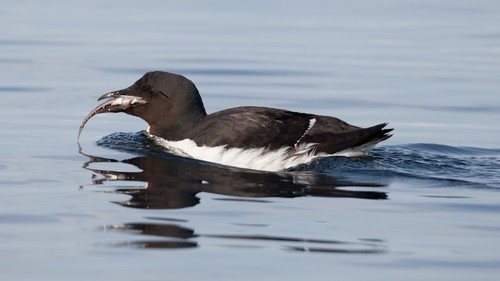
Thick-billed Murre
40-48 cm (16-19 in) long, 65-75 cm wingspan
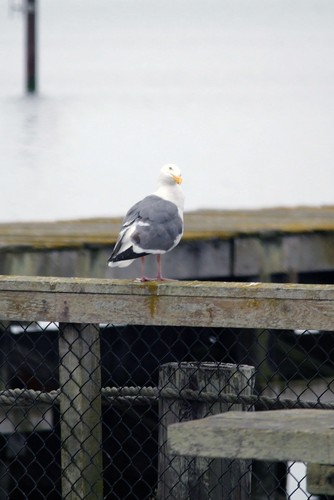
Western Gull
55-68 cm (22-27 in) long, 130-144 cm wingspan
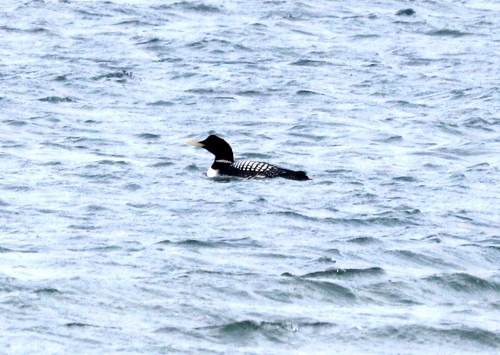
Yellow-billed Loon
76-97 cm (30-38 in) long, 135-152 cm wingspan
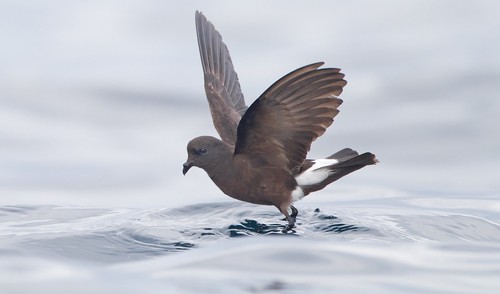
Wilson's Storm-Petrel
15-19 cm (6-7.5 in) long, wingspan 38-42 cm (15-16.5 in)
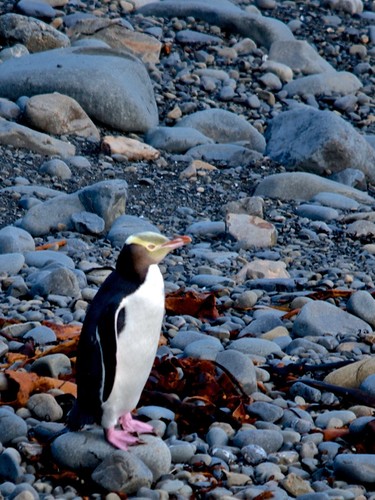
Yellow-eyed Penguin
62-79 cm (24-31 in) tall, 3-8.5 kg (6.6-18.7 lb)
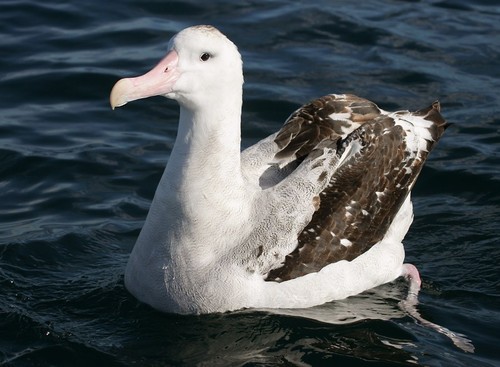
Wandering Albatross
107-135 cm (42-53 in) long, wingspan up to 3.5 m (11.5 ft)
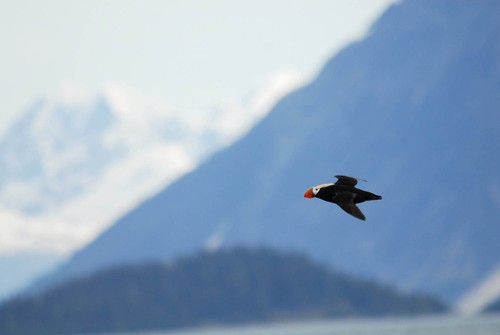
Tufted Puffin
35-41 cm (14-16 in) long, about 63-70 cm wingspan