
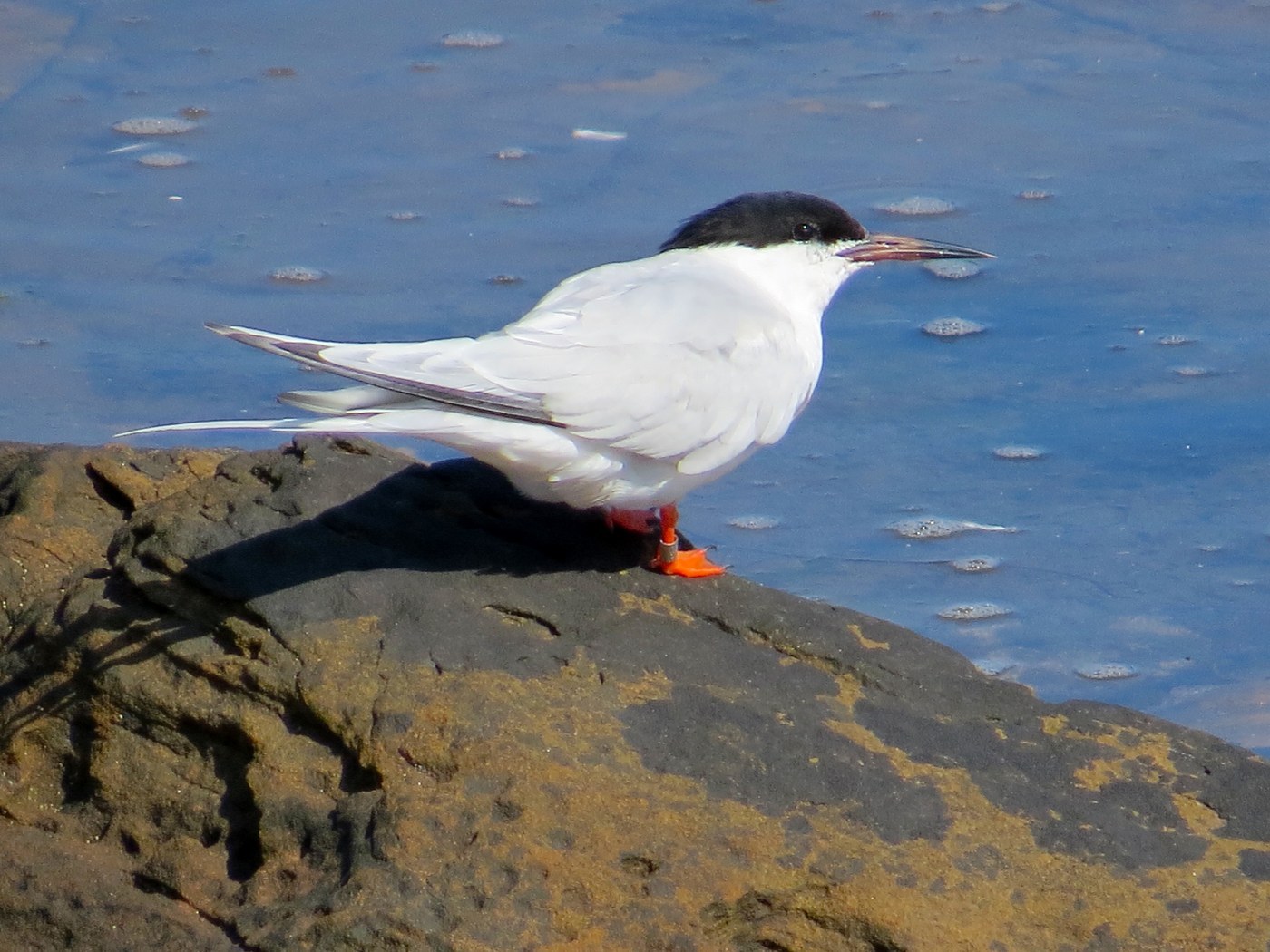
Roseate Tern
Sterna dougallii
A slender, pale tern with very long tail streamers and a faint rosy blush on the breast, prized by birders for its elegant, almost ghostly flight.
- Size
- 33-42 cm (13-16.5 in) long including tail streamers, 67-79 cm wingspan
- Habitat
- rocky and sandy offshore islands, coastal waters
- Type
- seabird
Spotted a bird like this?
Identify any bird from a photo, free.
Overview
The Roseate Tern is a graceful, pale seabird named for the subtle pink flush that can appear on its breast during the breeding season. It is one of the more localized terns, nesting in scattered colonies rather than being uniformly common across its range.
Appearance
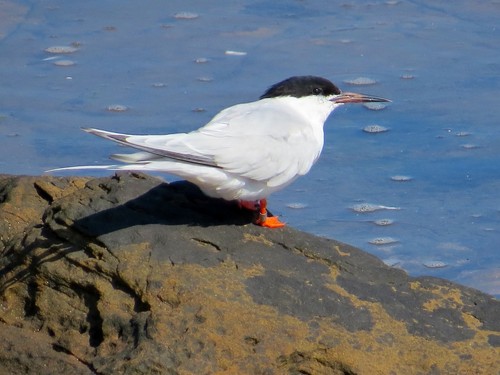
Adults in breeding plumage are very pale grey above and white below, with a glossy black cap, a mostly black bill that develops a red base as the season progresses, and orange-red legs. The tail is deeply forked with streamers that extend well beyond the folded wingtips at rest, giving the bird an elegant, long-tailed silhouette.
How to identify it
Key field marks
- Extremely pale, almost white, upperparts compared to other terns
- Long tail streamers projecting past the wingtips when perched
- Black bill with a red base in breeding season
- Faint pink wash on the underparts (often hard to see in the field)
- Fast, stiff-winged flight with rapid wingbeats
Similar species
Roseate Terns are often mistaken for Common Terns or Arctic Terns, but appear noticeably paler and whiter overall, with proportionally longer tail streamers and a more clipped, urgent flight. The bill is mostly black rather than mostly red or orange as in those species.
Habitat & range
Habitat and range
Roseate Terns breed in scattered colonies on rocky or sandy offshore islands across parts of the Atlantic, Indian, and Pacific coasts, often nesting alongside larger tern colonies for protection. Atlantic populations winter far south along the West African coast, while other populations are found around parts of Asia, Australia, and the Caribbean.
Because suitable predator-free island habitat is limited, breeding colonies tend to be small and highly localized, making the species sensitive to habitat changes even though its global status is not currently threatened.
Behavior & voice
Behavior
Roseate Terns are agile fliers that plunge-dive from height to catch small schooling fish such as sand eels, often diving more steeply and vertically than related terns. They frequently forage over deeper water farther offshore than some other tern species.
Voice
The most distinctive call is a soft, disyllabic "chi-vik," along with a harsher grating alarm call near the colony.
Nesting and breeding
Pairs nest on the ground, often tucked under vegetation, rocks, or driftwood for concealment, laying one to two eggs. They frequently nest in mixed colonies with Common or Sandwich Terns, benefiting from the larger colony's collective defense against predators.
Frequently asked questions
Why is it called the Roseate Tern?
It gets its name from the faint pink or rosy blush that can appear on the breast feathers during the breeding season.
How do you tell a Roseate Tern from a Common Tern?
Roseate Terns look noticeably paler and whiter, have longer tail streamers extending past the wingtips at rest, and a mostly black bill rather than red.
Where do Roseate Terns nest?
In scattered colonies on rocky or sandy offshore islands, often nesting alongside larger colonies of other tern species for safety.
What do Roseate Terns eat?
Primarily small schooling fish such as sand eels, caught by steep plunge-diving.
Are Roseate Terns rare?
The species is globally Least Concern, but many regional populations are small and localized, so it is uncommon or locally protected in several parts of its range.
Roseate Tern guides
In-depth guides for identifying, finding, and understanding Roseate Tern.
Other birds you may enjoy
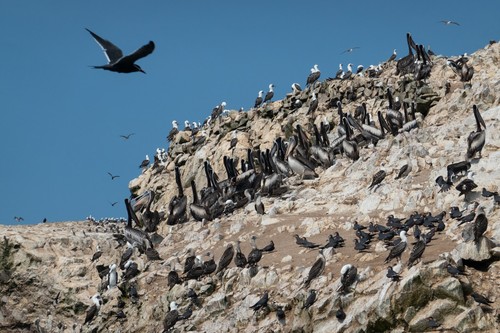
Peruvian Pelican
137-152 cm (54-60 in) long, up to 228 cm wingspan
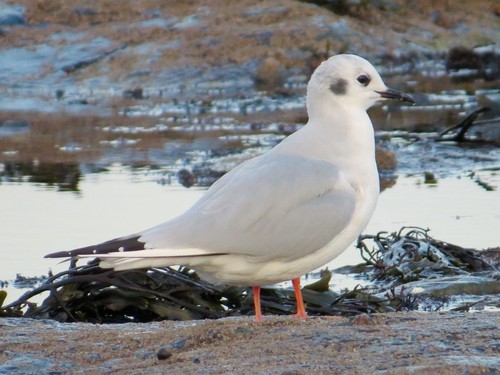
Bonaparte's Gull
28-33 cm (11-13 in) long, 76-84 cm wingspan
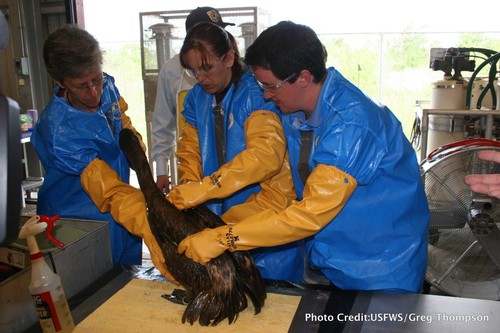
Brown Pelican
106-137 cm (42-54 in) long, 200-230 cm wingspan
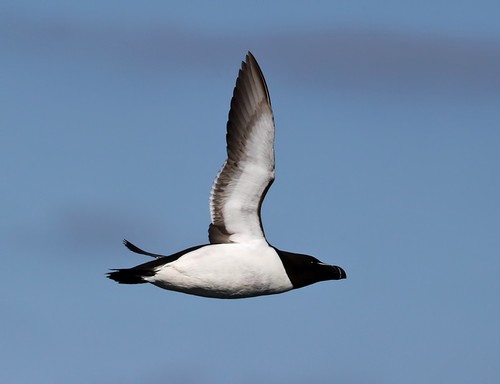
Razorbill
37-39 cm (15-15.5 in) long, 63-68 cm wingspan
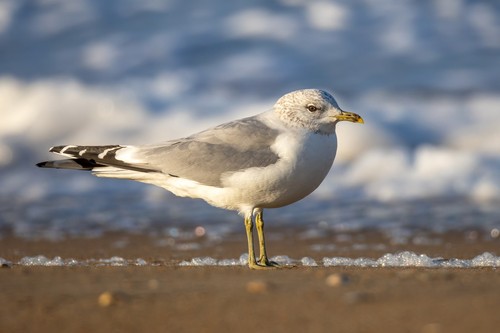
Common Gull
40-46 cm (16-18 in) long, 110-130 cm wingspan
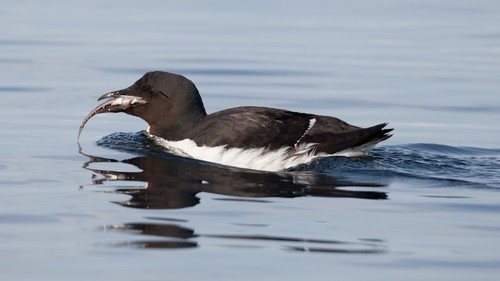
Thick-billed Murre
40-48 cm (16-19 in) long, 65-75 cm wingspan
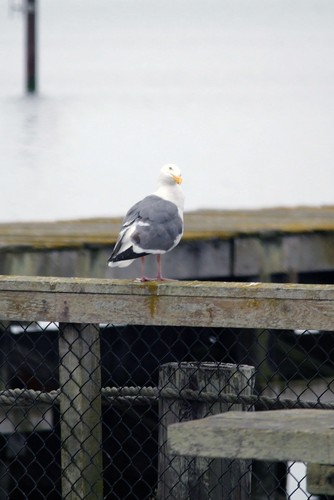
Western Gull
55-68 cm (22-27 in) long, 130-144 cm wingspan
Yellow-billed Loon
76-97 cm (30-38 in) long, 135-152 cm wingspan
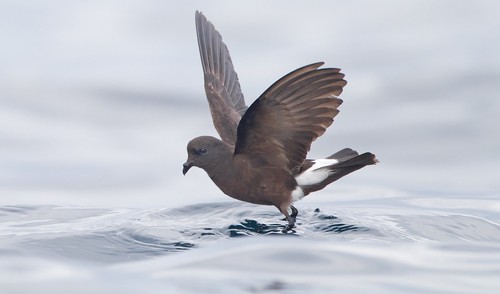
Wilson's Storm-Petrel
15-19 cm (6-7.5 in) long, wingspan 38-42 cm (15-16.5 in)
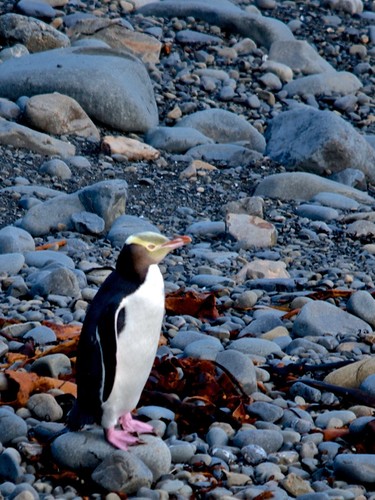
Yellow-eyed Penguin
62-79 cm (24-31 in) tall, 3-8.5 kg (6.6-18.7 lb)
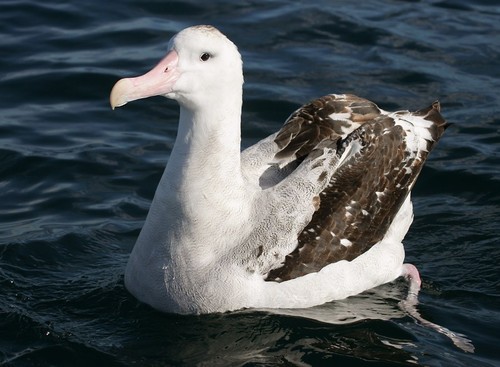
Wandering Albatross
107-135 cm (42-53 in) long, wingspan up to 3.5 m (11.5 ft)

Tufted Puffin
35-41 cm (14-16 in) long, about 63-70 cm wingspan