
Rockhopper Penguin
Eudyptes chrysocome
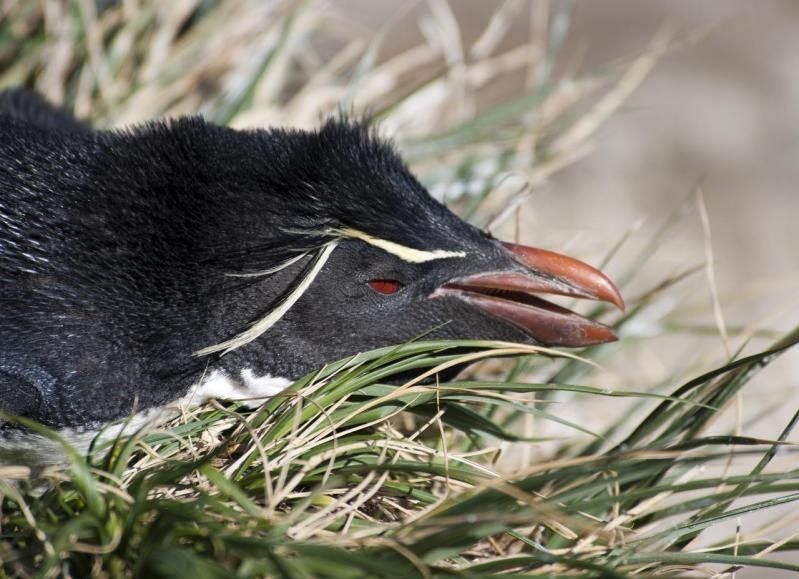
A small, feisty crested penguin known for hopping between boulders rather than waddling, with spiky yellow head plumes and red eyes.
- Size
- 45-58 cm (18-23 in) tall, 2-3.5 kg (4.4-7.7 lb)
- Habitat
- rocky, wave-battered subantarctic and cool-temperate islands
- Type
- seabird
Spotted a bird like this?
Identify any bird from a photo, free.
Overview
The Rockhopper Penguin is one of the smallest crested penguins, instantly recognizable by its punk-rock appearance: a spray of stiff yellow and black feather plumes above bright red eyes, set against a glossy black head and back and clean white underside.
True to its name, this species does not waddle across flat ground like many of its relatives. Instead, it navigates the steep, rocky, surf-lashed coastlines of its island homes by hopping with both feet together, bounding up cliffs and boulder fields to reach its nesting colonies.
Despite its small size, the Rockhopper is a tenacious and aggressive bird, quick to defend its nest site with sharp pecks and loud calls.
How to identify it
Key field marks
- Small size with a stubby reddish-orange bill
- Bright red eyes
- Yellow eyebrow-stripe that extends into long, drooping spiky plumes over each eye
- Black upperparts, white underparts, pink feet
Similar species
- Macaroni Penguin and Royal Penguin are larger with crests that meet in the middle of the forehead rather than staying separated.
- Fiordland and Snares Penguins lack the sharply defined yellow eyebrow stripe and have broader white cheek patches.
- Rockhopper Penguins are the smallest of the crested penguins, which helps separate them at a glance from their bulkier relatives.
Habitat & range
Rockhopper Penguins breed on remote, rocky subantarctic and cool-temperate islands scattered across the Southern Ocean, including the Falkland Islands, South Georgia, Tristan da Cunha, and islands off southern South America. Colonies are typically sited on steep, boulder-strewn slopes and cliffs above the surf line rather than on open beaches.
Outside the breeding season, birds disperse widely at sea, spending months foraging across cold, nutrient-rich Southern Ocean waters far from land.
Behavior & voice
Voice
Rockhoppers are noisy at their crowded colonies, giving loud, braying and throbbing calls used in mate recognition and territorial disputes.
Feeding
They are pursuit divers, chasing down krill, small fish, and squid in relatively shallow dives near the surface, often foraging within a day's swim of the colony during breeding season.
Nesting and breeding
Colonies are dense and can number in the tens of thousands of pairs, often shared with other seabirds such as albatrosses and shags. Pairs typically lay two eggs, but usually only the larger second egg produces a surviving chick. Chicks form creches for protection while both parents forage at sea.
Frequently asked questions
Why is it called a Rockhopper Penguin?
It gets its name from its habit of hopping with both feet together over rocky, boulder-strewn terrain instead of waddling like most other penguins.
How big is a Rockhopper Penguin?
It stands about 45-58 cm (18-23 in) tall and weighs roughly 2-3.5 kg (4.4-7.7 lb), making it one of the smallest crested penguin species.
Where do Rockhopper Penguins live?
They breed on rocky subantarctic and cool-temperate islands such as the Falklands, South Georgia, and Tristan da Cunha, and spend the rest of the year at sea.
What do Rockhopper Penguins eat?
They mainly eat krill, small fish, and squid, caught during shallow pursuit dives near their colonies.
How can I tell a Rockhopper Penguin apart from a Macaroni Penguin?
Rockhoppers are smaller with separated yellow eyebrow plumes, while Macaroni Penguins are larger and their orange crest feathers join together across the forehead.
Rockhopper Penguin guides
In-depth guides for identifying, finding, and understanding Rockhopper Penguin.
Other birds you may enjoy
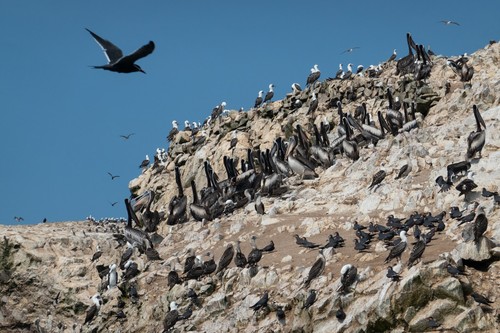
Peruvian Pelican
137-152 cm (54-60 in) long, up to 228 cm wingspan
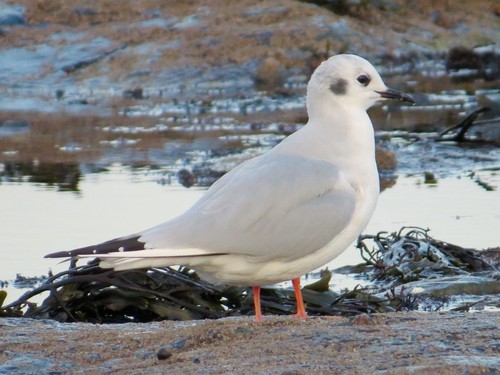
Bonaparte's Gull
28-33 cm (11-13 in) long, 76-84 cm wingspan
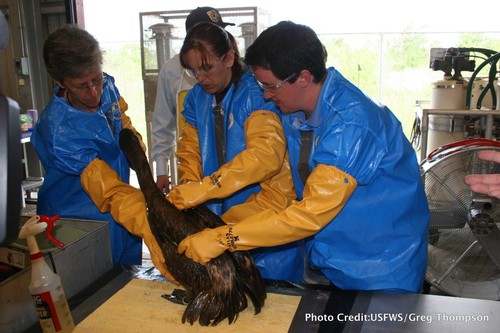
Brown Pelican
106-137 cm (42-54 in) long, 200-230 cm wingspan
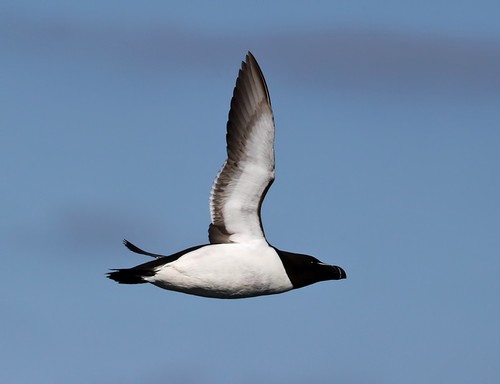
Razorbill
37-39 cm (15-15.5 in) long, 63-68 cm wingspan
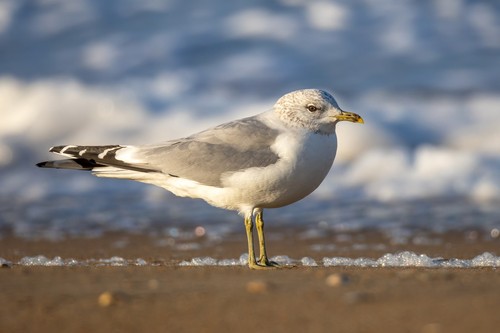
Common Gull
40-46 cm (16-18 in) long, 110-130 cm wingspan
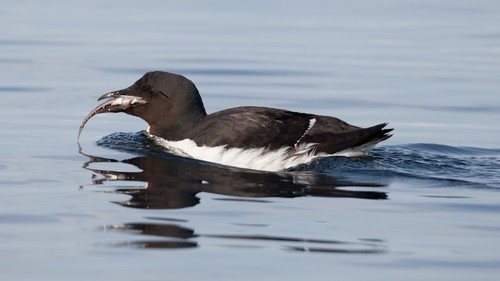
Thick-billed Murre
40-48 cm (16-19 in) long, 65-75 cm wingspan
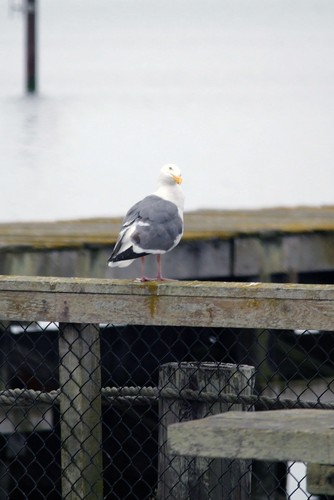
Western Gull
55-68 cm (22-27 in) long, 130-144 cm wingspan
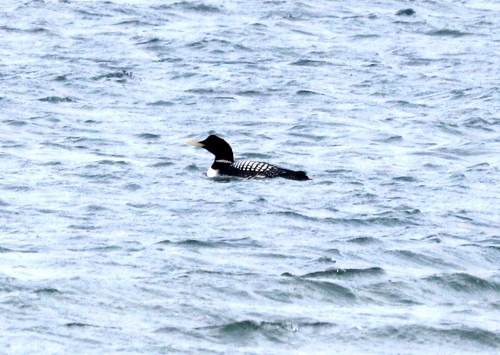
Yellow-billed Loon
76-97 cm (30-38 in) long, 135-152 cm wingspan
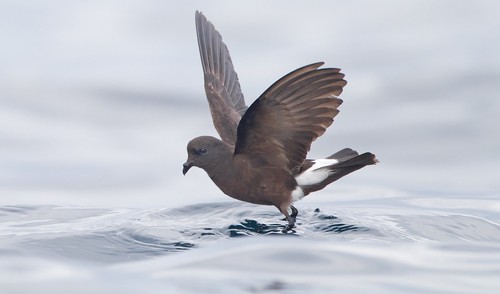
Wilson's Storm-Petrel
15-19 cm (6-7.5 in) long, wingspan 38-42 cm (15-16.5 in)
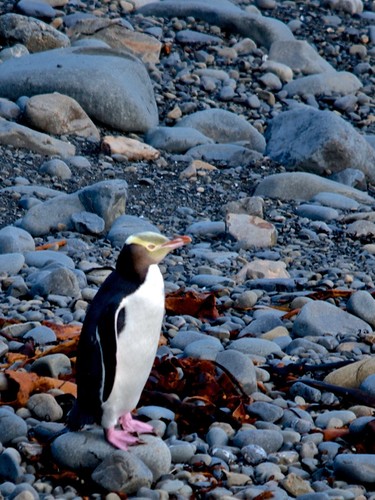
Yellow-eyed Penguin
62-79 cm (24-31 in) tall, 3-8.5 kg (6.6-18.7 lb)
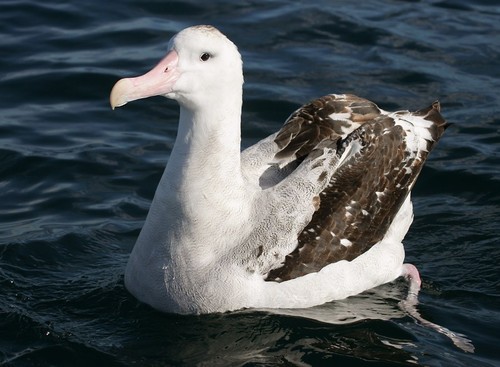
Wandering Albatross
107-135 cm (42-53 in) long, wingspan up to 3.5 m (11.5 ft)
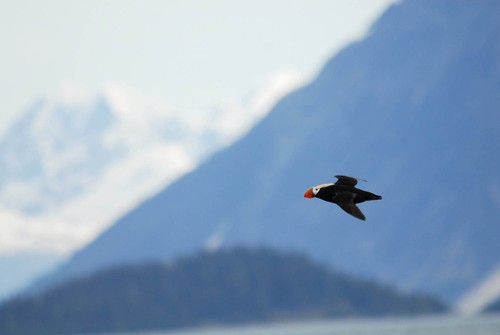
Tufted Puffin
35-41 cm (14-16 in) long, about 63-70 cm wingspan