
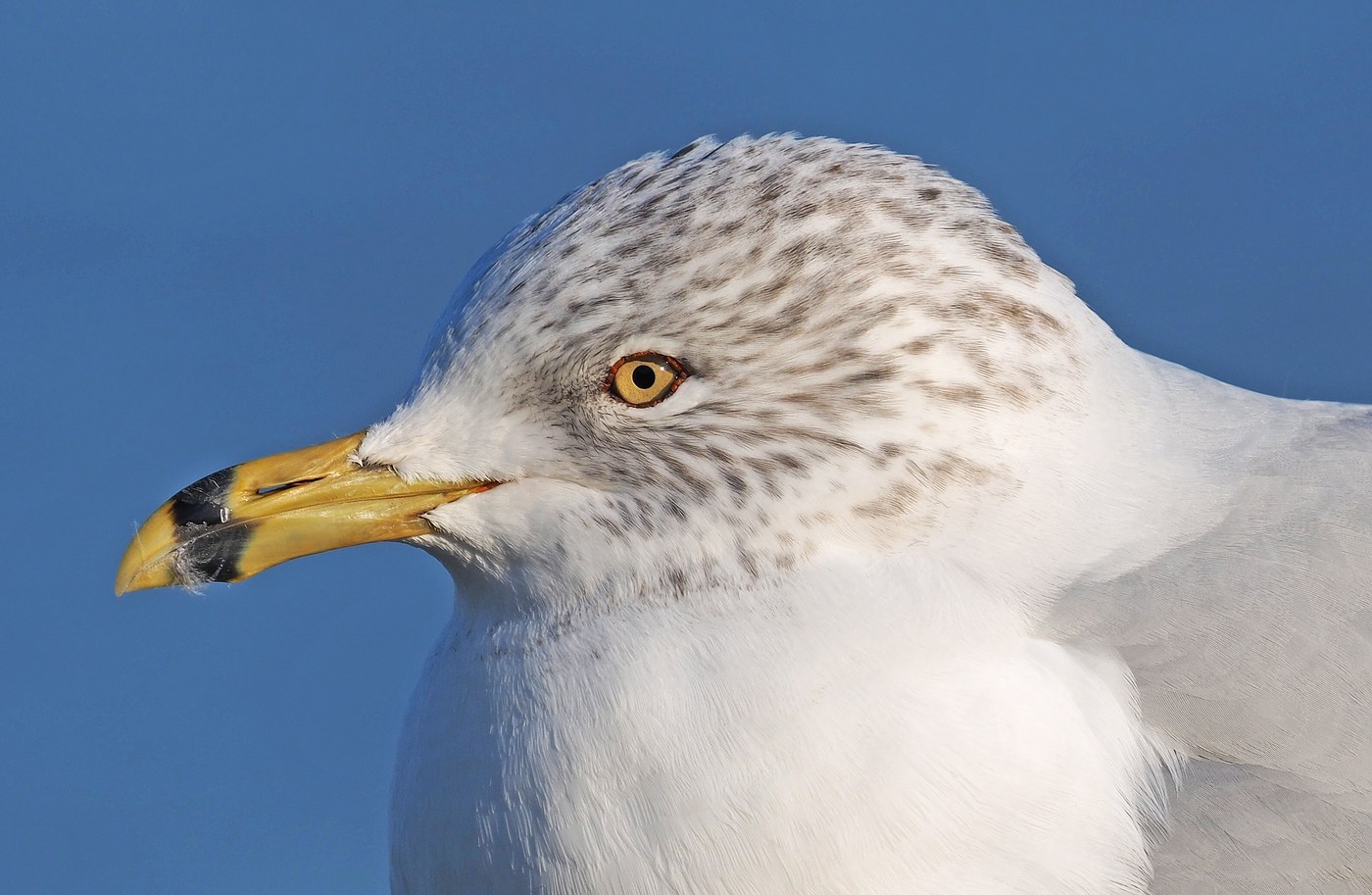
Ring-billed Gull
Larus delawarensis
A medium-sized, highly adaptable gull common far from the coast, easily told from larger gulls by its yellow legs and the black ring encircling its bill.
- Size
- 43-54 cm (17-21 in) long, 105-117 cm wingspan
- Habitat
- lakes, rivers, parking lots, landfills, and coastal areas
- Type
- seabird
Spotted a bird like this?
Identify any bird from a photo, free.
Overview
The Ring-billed Gull is a medium-sized, highly successful gull found across North America, equally comfortable on ocean coastlines, inland lakes, and parking lots and landfills far from any water at all.
Adults have a pale gray back and upperwings, black wingtips with small white spots, a white head and body, and — as the name suggests — yellow legs and a yellow bill encircled by a distinct black ring near the tip, a diagnostic feature that separates it from most other gulls at any distance.
How to identify it
Key field marks
- Yellow legs (a key distinction from the pink-legged Herring Gull)
- Yellow bill with a black ring near the tip — diagnostic
- Pale gray mantle and black wingtips with white spots
- Medium size, notably smaller than Herring Gull
- Bright yellow eye with a red orbital ring in adults
Similar species
- Herring Gull: larger, with pink legs and a red (not black-ringed) spot on the bill.
- California Gull (western North America): darker eye, red and black markings on the bill rather than a single black ring, slightly larger.
- Mew Gull: smaller, more delicate bill lacking the strong black ring.
Habitat & range
Habitat
Ring-billed Gulls are extremely adaptable, commonly found at inland lakes, rivers, farm fields, parking lots, landfills, and fast-food restaurant lots, as well as along ocean coastlines — more so than most other gull species.
Range and migration
They breed colonially across much of interior and coastal North America, including the Great Lakes and prairie lakes. Many populations migrate south for winter, when they become especially common and conspicuous in urban and suburban areas across much of the continental United States.
Behavior & voice
Behavior
Ring-billed Gulls are bold, adaptable, and highly tolerant of humans, often gathering in large numbers around parking lots, dumpsters, and picnic areas to scavenge food, and are among the most familiar "seagulls" to people who rarely visit the coast.
Voice
Calls include a shrill, high-pitched "kyow" and various chattering notes, generally higher-pitched than the deeper calls of the Herring Gull.
Feeding
Their diet is highly varied and opportunistic, including fish, insects, earthworms, and a large proportion of human food scraps in urban settings, along with agricultural pests taken from farm fields.
Nesting and breeding
Ring-billed Gulls nest in large, dense colonies, often on islands in lakes or rivers; both parents share incubation of the typically three-egg clutch and feeding of the chicks, which fledge after several weeks.
Frequently asked questions
How do you identify a Ring-billed Gull?
Look for a medium-sized gull with yellow legs and a yellow bill encircled by a distinct black ring near the tip — the feature that gives the species its name.
How is the Ring-billed Gull different from the Herring Gull?
Ring-billed Gull is smaller, with yellow legs and a black-ringed bill, while Herring Gull is larger, with pink legs and a red spot on the bill.
Why are Ring-billed Gulls so common in parking lots far from the ocean?
They are highly adaptable and opportunistic, readily exploiting food scraps and open habitat at inland lakes, landfills, and urban areas, not just coastal environments.
Where does the Ring-billed Gull breed?
In large colonies at inland and coastal sites across North America, especially around the Great Lakes and prairie lakes.
What do Ring-billed Gulls eat?
A broad diet including fish, insects, earthworms, and a substantial amount of human food scraps, especially in urban settings.
Ring-billed Gull guides
In-depth guides for identifying, finding, and understanding Ring-billed Gull.
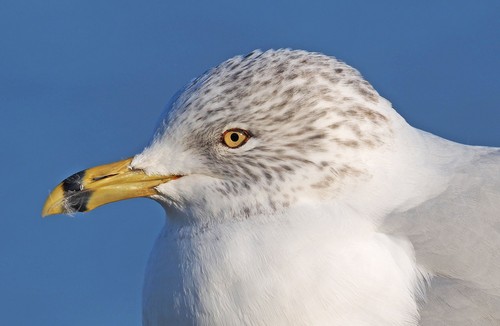
Ring-billed Gull identified by the community
Real birds identified with Bird Identifier.
Other birds you may enjoy
Peruvian Pelican
137-152 cm (54-60 in) long, up to 228 cm wingspan
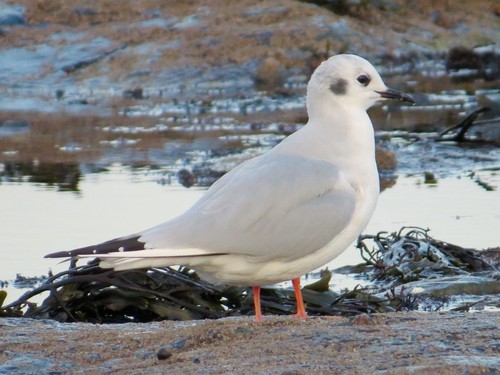
Bonaparte's Gull
28-33 cm (11-13 in) long, 76-84 cm wingspan
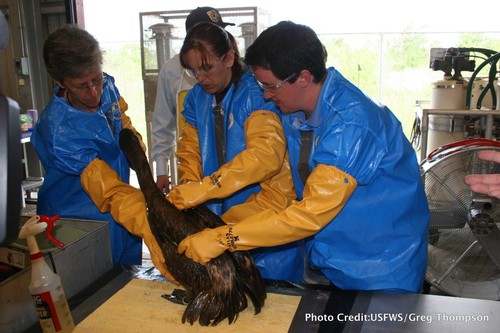
Brown Pelican
106-137 cm (42-54 in) long, 200-230 cm wingspan
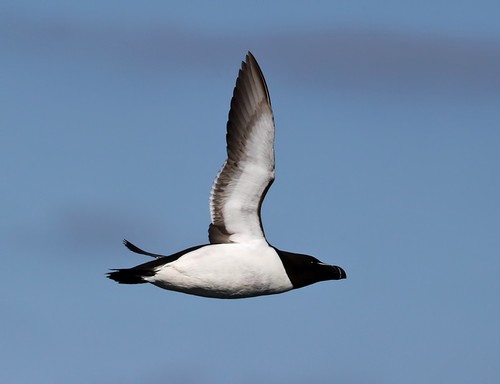
Razorbill
37-39 cm (15-15.5 in) long, 63-68 cm wingspan
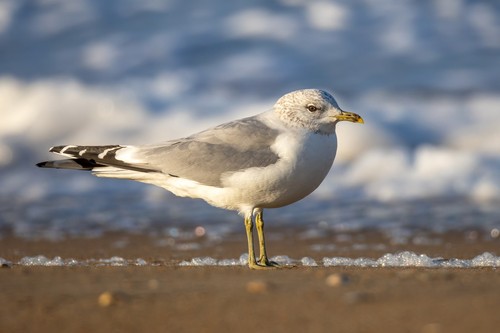
Common Gull
40-46 cm (16-18 in) long, 110-130 cm wingspan
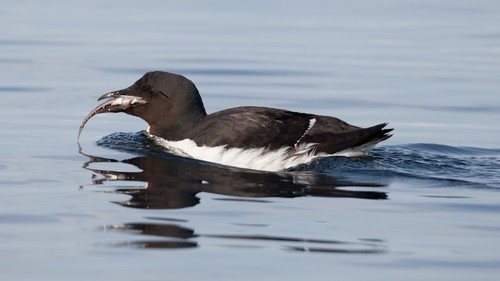
Thick-billed Murre
40-48 cm (16-19 in) long, 65-75 cm wingspan
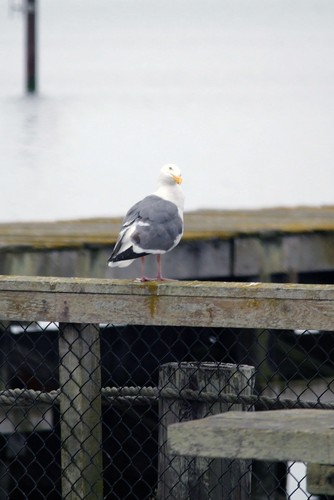
Western Gull
55-68 cm (22-27 in) long, 130-144 cm wingspan
Yellow-billed Loon
76-97 cm (30-38 in) long, 135-152 cm wingspan
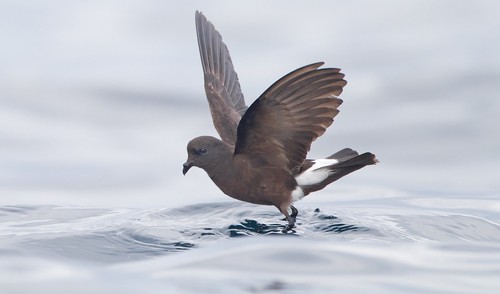
Wilson's Storm-Petrel
15-19 cm (6-7.5 in) long, wingspan 38-42 cm (15-16.5 in)
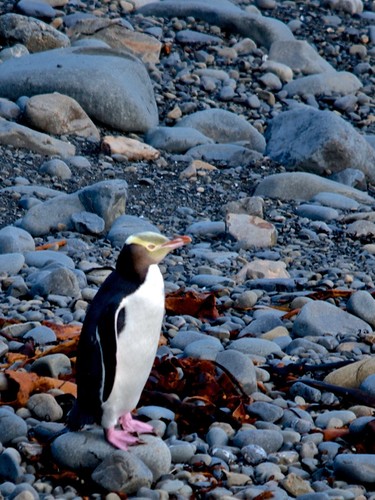
Yellow-eyed Penguin
62-79 cm (24-31 in) tall, 3-8.5 kg (6.6-18.7 lb)
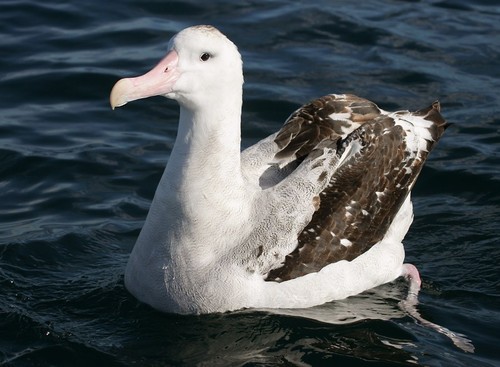
Wandering Albatross
107-135 cm (42-53 in) long, wingspan up to 3.5 m (11.5 ft)

Tufted Puffin
35-41 cm (14-16 in) long, about 63-70 cm wingspan