Ring-billed Gull Identification Guide
One of North America's most common and adaptable gulls, best recognized by its yellow legs and the black ring encircling its yellow bill, distinguishing it from the larger Herring Gull.
Read the full Ring-billed Gull encyclopedia entry →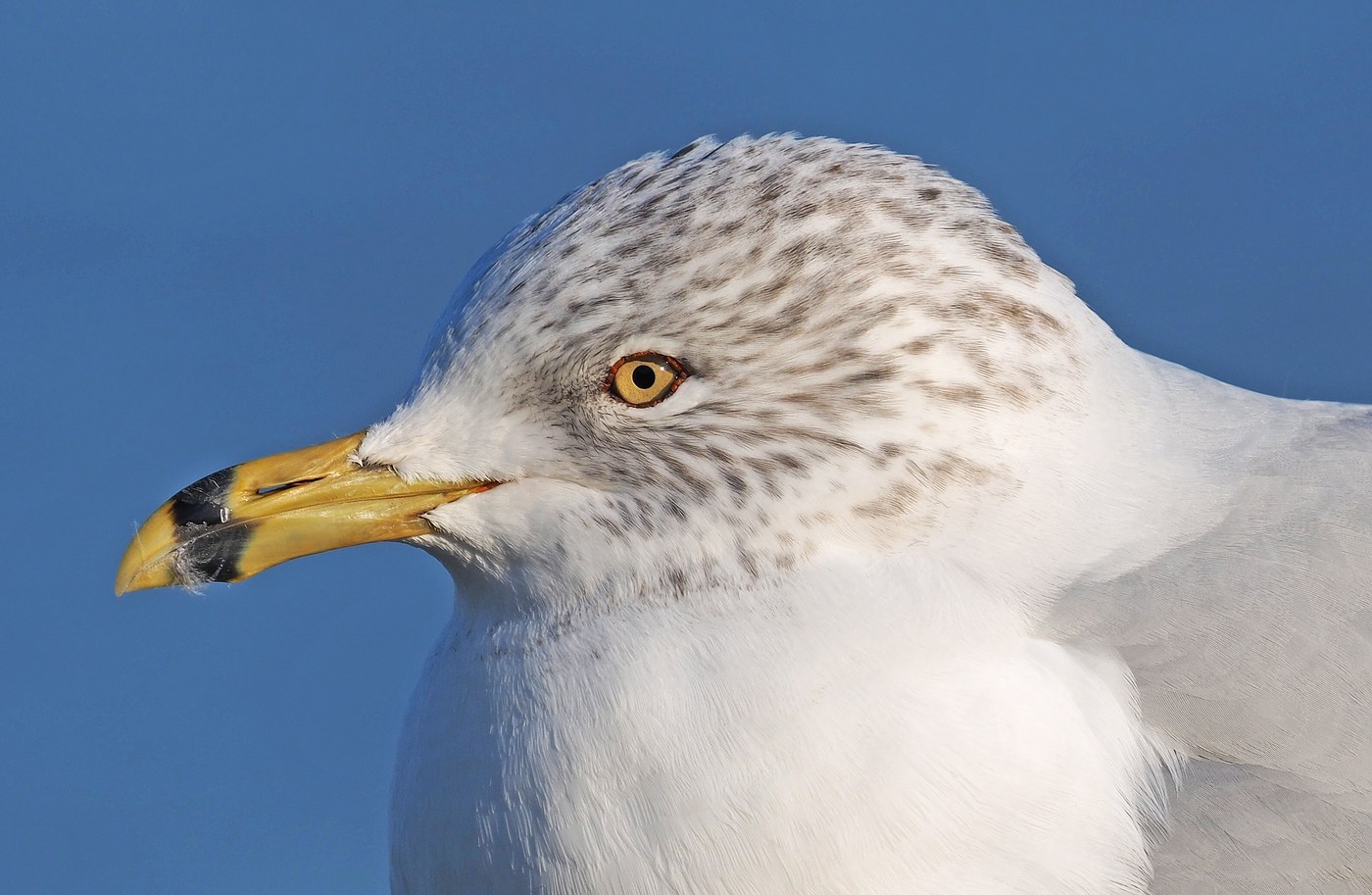
Key Field Marks
- Medium-sized gull, smaller and slimmer than a Herring Gull, with pale gray upperparts, white head and underparts, and a rounded head
- Adult: yellow bill crossed by a distinct black ring near the tip, pale yellow legs, and a pale eye with a red orbital ring
- Breeding adult: clean white head; non-breeding adult: light brownish streaking on the head and hindneck
- Immatures take about three years to reach adult plumage; first-winter birds show a checkered brown-and-white back, a pink bill with a sharply defined black tip, and pinkish legs, gradually becoming grayer and gaining the ringed bill and yellow legs with age
Separating Ring-billed Gull from Similar Species
- Herring Gull: larger and bulkier, with pink (not yellow) legs, a red spot (not a black ring) near the bill tip, and a heavier bill overall.
- California Gull: shows a darker eye, greenish-yellow legs, and typically both a red and black spot near the bill tip rather than a clean single ring; also slightly larger and longer-winged.
- Mew Gull / Short-billed Gull: smaller and daintier, with a more rounded head, shorter and unmarked bill (no black ring), and darker eye, plus a more restricted West Coast/interior range.
Habitat, Range & Season
- Extremely adaptable, found on lakes, rivers, reservoirs, coastlines, parking lots, landfills, and urban areas across much of North America
- Breeds colonially, often on islands in lakes and rivers across the northern and interior United States and Canada, especially around the Great Lakes and prairie lakes
- Widespread in winter across much of the continental U.S., including well inland at shopping centers, fields, and waterways far from natural wetlands
Behavior Notes
- Highly gregarious and often the most numerous gull in urban and suburban settings
- Readily scavenges human food and waste, frequently seen following farm machinery, at landfills, or begging at parking lots and fast-food locations
- Omnivorous diet also includes fish, insects, earthworms, and small invertebrates in natural settings
Voice
- High-pitched "kyow" calls and a laughing series of notes, typical gull vocalizations, often heard in noisy colonies or foraging flocks
Similar-Species Checklist
- Confirm yellow legs and a black ring around the bill for adults
- Compare size and bulk against the larger Herring Gull
- For immatures, note bill and leg color progression through the three-year maturation process
Frequently asked questions
How do I tell a Ring-billed Gull from a Herring Gull?
Ring-billed Gull is smaller with yellow legs and a black ring around the bill, while Herring Gull is larger with pink legs and a red spot (not a ring) near the bill tip.
Why are Ring-billed Gulls so common in parking lots?
They are highly adaptable scavengers that readily exploit human food sources, landfills, and open paved areas, making them one of the most familiar gulls in urban settings across North America.
How long does it take a Ring-billed Gull to reach adult plumage?
About three years, progressing from a mottled brown first-winter plumage with a pink, black-tipped bill to the clean gray-and-white adult plumage with a ringed yellow bill.
Where do Ring-billed Gulls breed?
They nest colonially on islands in lakes and rivers, especially around the Great Lakes and prairie lakes of the northern U.S. and Canada.
What does a Ring-billed Gull eat?
A wide variety of food including fish, insects, earthworms, and scavenged human food and refuse.
Ring-billed Gull identified by the community
Recent Ring-billed Gull sightings identified with Bird Identifier.