
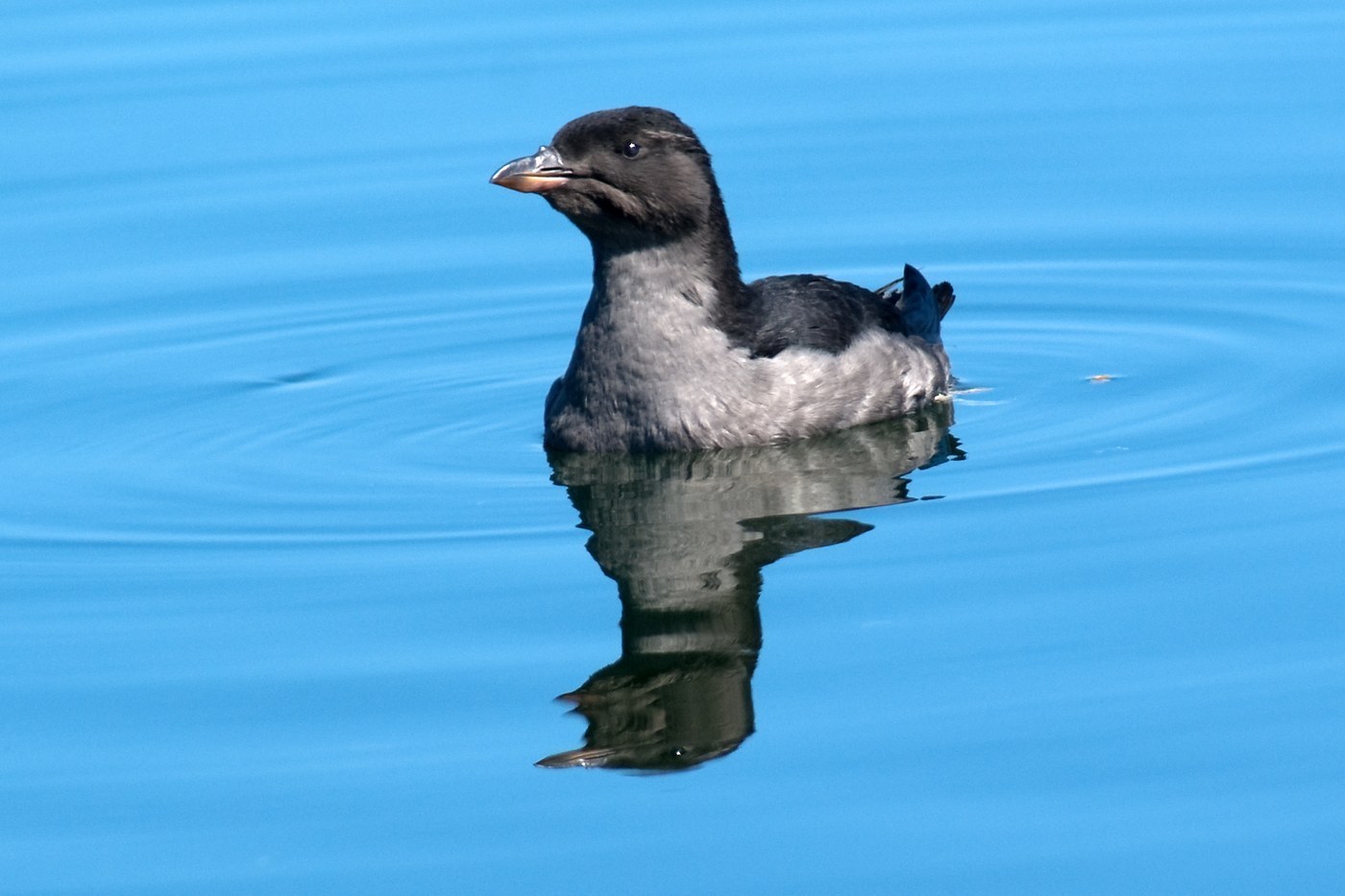
Rhinoceros Auklet
Cerorhinca monocerata
A dusky-brown North Pacific auk named for the pale horn-like projection on its bill that develops in breeding season.
- Size
- 35-39 cm (14-15 in) long, about 47-52 cm wingspan
- Habitat
- North Pacific coasts and burrow-nesting islands
- Type
- seabird
Spotted a bird like this?
Identify any bird from a photo, free.
Overview
The Rhinoceros Auklet is a stocky, dusky-brown seabird of the North Pacific, related to puffins despite its plainer overall coloring. Its most distinctive feature, and the source of its name, is a pale, upright horn-like projection at the base of the bill that develops during the breeding season, alongside two thin white plume-like feather tufts extending back from the eyes and gape. Outside the breeding season, the horn and plumes are shed, and the bird takes on a simpler, unadorned brownish appearance.
Despite the elaborate breeding ornaments, Rhinoceros Auklets are largely nocturnal at their colonies, coming and going from burrows under cover of darkness to avoid predation by gulls and other aerial predators.
How to identify it
Key field marks
- Overall dusky brown-grey plumage
- Pale, upright horn on the base of the bill in breeding adults
- Thin white plume feathers behind the eye and along the gape in breeding season
- Stout, deep orange-yellow bill
Similar species
- Cassin's Auklet is smaller, plainer, and lacks the bill horn and facial plumes.
- Tufted Puffin shares a chunky, dark-bodied look but has a much larger, brightly colored bill and long golden head tufts rather than a horn.
- Non-breeding Rhinoceros Auklets lose their ornaments and can appear relatively nondescript, requiring attention to overall shape and bill structure for identification.
Habitat & range
Rhinoceros Auklets breed in burrows on vegetated islands and coastal slopes around the North Pacific, from California north through British Columbia and Alaska, and across to Japan and the Russian Far East. They favor islands free of ground predators, where dense burrow colonies can form in suitable soil.
Outside the breeding season, birds disperse over nearshore and offshore North Pacific waters, with many wintering along the outer coasts of their breeding range or moving somewhat farther south.
Behavior & voice
Behavior
Adults visit their nesting colonies mainly at night to avoid predation by gulls, making the species largely nocturnal on land despite being active during the day at sea while foraging.
Voice
Low growling and moaning calls are given inside burrows; birds are generally silent at sea.
Feeding
Small schooling fish such as sand lance and anchovy, along with some invertebrates, are caught by pursuit-diving and carried back to the burrow crosswise in the bill, sometimes several at a time.
Nesting and breeding
Pairs dig long burrows, sometimes over a meter deep, in soft soil on breeding islands; a single egg is laid, and chicks are fed at night, fledging on their own after the parents cease provisioning.
Frequently asked questions
Why is it called the Rhinoceros Auklet?
Breeding adults grow a pale, upright horn-like projection at the base of the bill, resembling a rhinoceros horn, which is shed after the breeding season.
Where do Rhinoceros Auklets nest?
In burrows dug into soil on predator-free islands and coastal slopes around the North Pacific, from California to Alaska and across to Japan.
Why are Rhinoceros Auklets active at colonies mainly at night?
Visiting burrows after dark helps adults avoid predation by gulls and other aerial predators that hunt during the day.
Is the Rhinoceros Auklet related to puffins?
Yes, it belongs to the same family (Alcidae) and is closely related to puffins, though it lacks their brightly colored, oversized bill.
What does a Rhinoceros Auklet eat?
Mainly small schooling fish like sand lance and anchovy, caught by diving and swimming underwater.
Rhinoceros Auklet guides
In-depth guides for identifying, finding, and understanding Rhinoceros Auklet.
Other birds you may enjoy
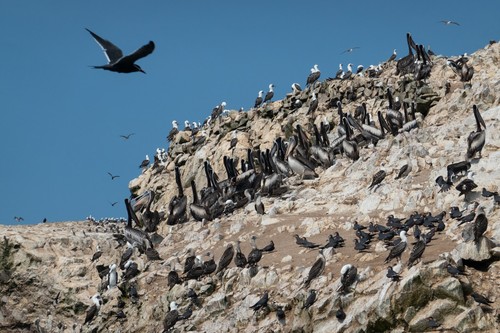
Peruvian Pelican
137-152 cm (54-60 in) long, up to 228 cm wingspan
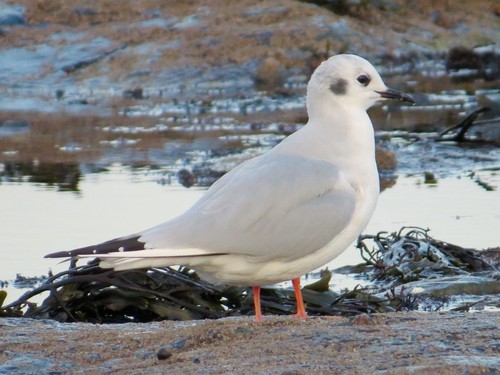
Bonaparte's Gull
28-33 cm (11-13 in) long, 76-84 cm wingspan
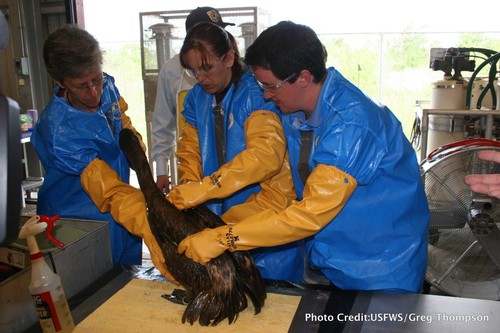
Brown Pelican
106-137 cm (42-54 in) long, 200-230 cm wingspan
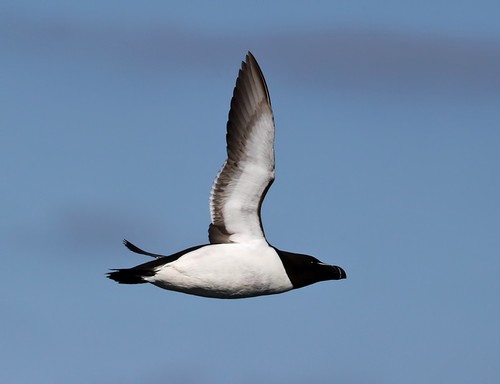
Razorbill
37-39 cm (15-15.5 in) long, 63-68 cm wingspan
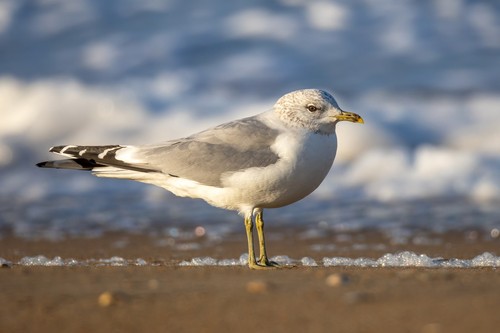
Common Gull
40-46 cm (16-18 in) long, 110-130 cm wingspan
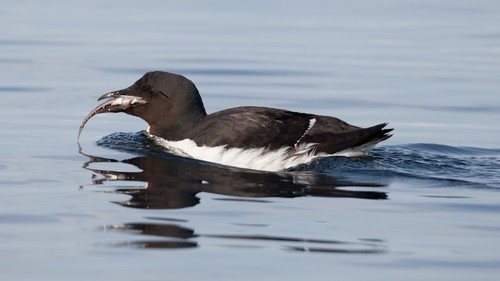
Thick-billed Murre
40-48 cm (16-19 in) long, 65-75 cm wingspan
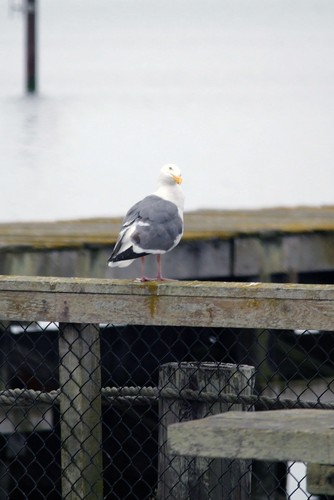
Western Gull
55-68 cm (22-27 in) long, 130-144 cm wingspan
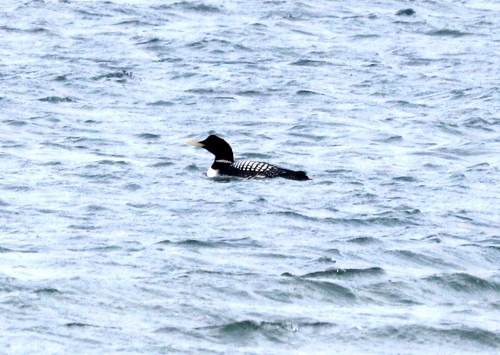
Yellow-billed Loon
76-97 cm (30-38 in) long, 135-152 cm wingspan
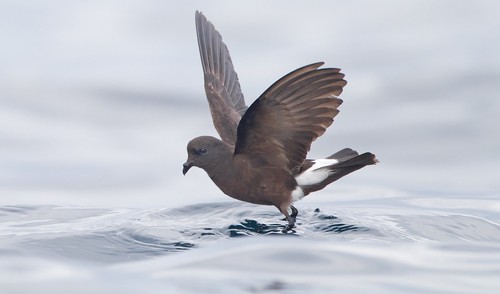
Wilson's Storm-Petrel
15-19 cm (6-7.5 in) long, wingspan 38-42 cm (15-16.5 in)
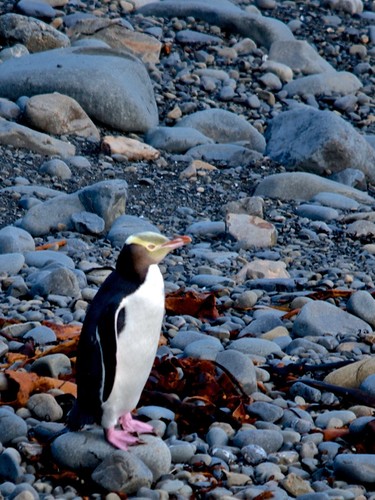
Yellow-eyed Penguin
62-79 cm (24-31 in) tall, 3-8.5 kg (6.6-18.7 lb)
Wandering Albatross
107-135 cm (42-53 in) long, wingspan up to 3.5 m (11.5 ft)

Tufted Puffin
35-41 cm (14-16 in) long, about 63-70 cm wingspan