
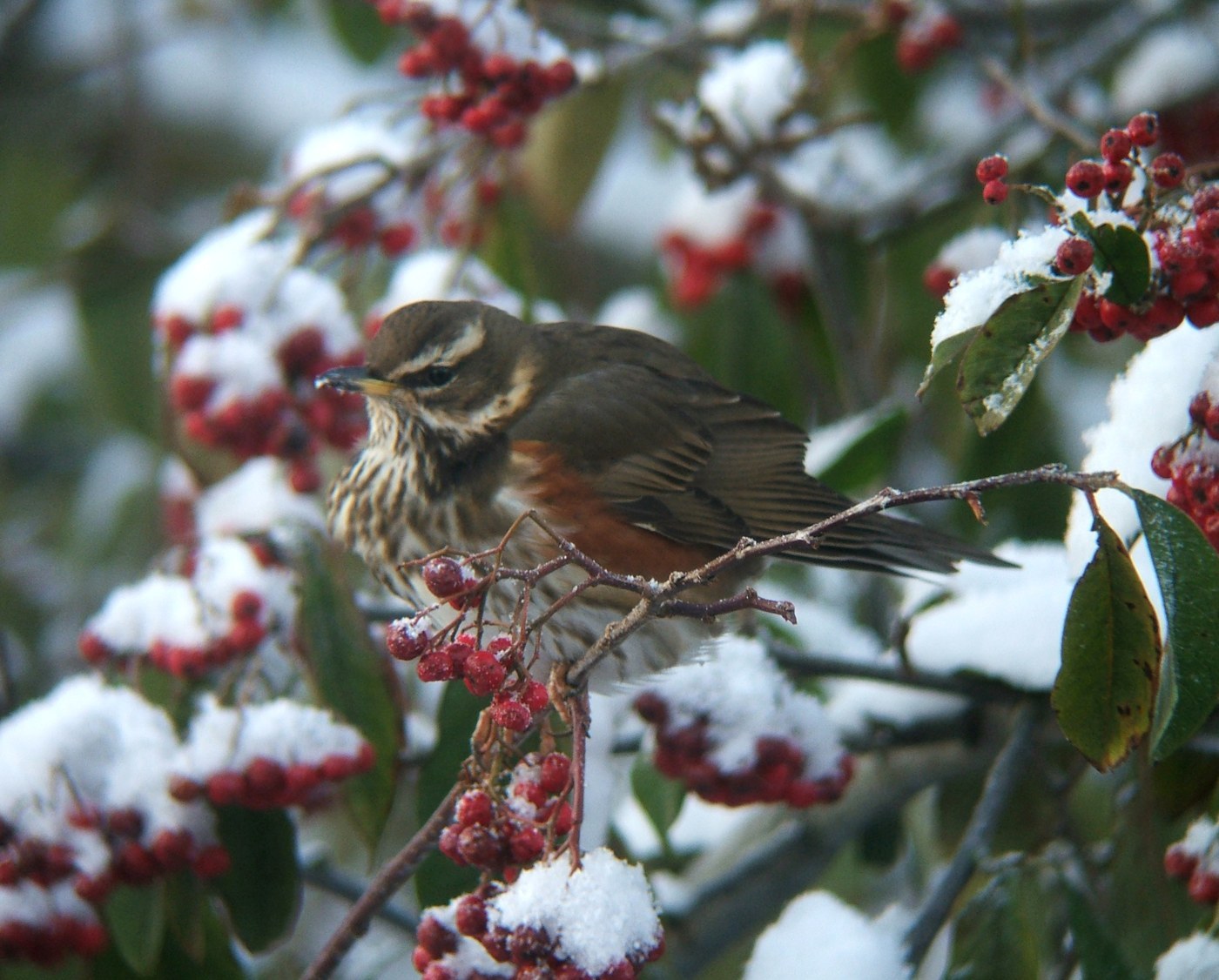
Redwing
Turdus iliacus
The smallest European thrush, easily told by its bold cream eyebrow stripe and warm red-orange flanks, arriving in large flocks each winter from the north.
- Size
- 19-23 cm (7.5-9 in) long, 33-34.5 cm wingspan
- Habitat
- breeds in northern birch and coniferous forest; winters in farmland, hedgerows, orchards, and gardens further south
- Type
- songbird
Spotted a bird like this?
Identify any bird from a photo, free.
Overview
The Redwing is the smallest of the regularly occurring European thrushes, a northern breeder that becomes a familiar winter visitor to farmland and gardens further south, often arriving in large, vocal flocks, frequently traveling and feeding alongside Fieldfares.
Appearance
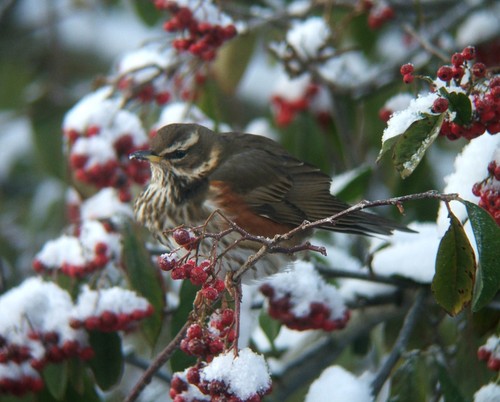
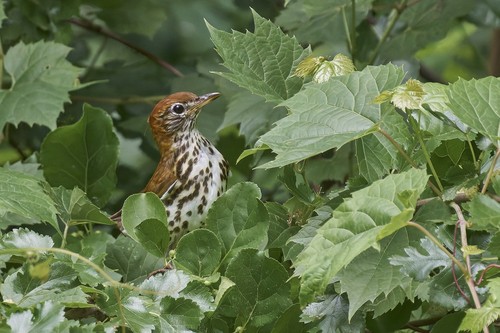
It has brown upperparts and a streaked, rather than spotted, buffy-white breast, with a bold, creamy-white supercilium (eyebrow stripe) that is the species' most distinctive field mark. The flanks and underwing coverts glow a warm rust-red to orange, giving the bird its common name.
How to identify it
Key Field Marks
- Bold, creamy-white supercilium above a dark cheek patch
- Red-orange flanks and underwing coverts
- Streaked (not spotted) buffy breast
- Smallest of the common European thrushes
Similar Species
Song Thrush lacks the bold pale eyebrow and red flanks, instead showing dense dark spotting and orange-buff underwings only. Fieldfare is much larger with a grey head and rump and chestnut back. The Redwing's small size, prominent eyebrow stripe, and rusty flanks are unmistakable with reasonable views.
Habitat & range
Habitat and Range
Redwings breed in birch woodland, scrubby taiga, and mixed forest across Iceland, Scandinavia, and much of northern Russia and Siberia. Outside the breeding season they winter widely across temperate Europe, favoring farmland with hedgerows, orchards, and berry-bearing shrubs, as well as gardens and parks, particularly in hard weather.
Migration
The species is strongly migratory, moving south and west in large numbers each autumn, often traveling at night — flight calls can frequently be heard overhead on clear autumn and winter nights as flocks pass over.
Behavior & voice
Behavior
Redwings are highly social outside the breeding season, forming large, often mixed flocks with Fieldfares that move together across farmland and hedgerows searching for berries and, when the ground is unfrozen, probing for earthworms and invertebrates.
Voice
The flight call, a thin, high-pitched "seeih," is distinctive and frequently heard from migrating flocks, including at night. The breeding song, heard on northern breeding grounds, is a simple, repetitive series of fluty notes.
Nesting and Breeding
Nests are built in birch, willow, or low conifers, sometimes on the ground in far northern areas, a cup of grass, moss, and mud. The female lays 4-6 eggs and incubates them for about 12-13 days; this stage is rarely witnessed away from the remote northern breeding range.
Frequently asked questions
What is the easiest way to identify a Redwing?
Look for its bold, creamy-white eyebrow stripe and warm red-orange flanks and underwing — the smallest European thrush with this combination of features.
Why do Redwings often travel with Fieldfares?
Both species are highly social winter visitors from the north that form large mixed flocks to forage together across farmland and berry-rich hedgerows, benefiting from shared vigilance and foraging efficiency.
Do Redwings migrate at night?
Yes, they commonly migrate at night, and their thin, high-pitched flight calls can often be heard from flocks passing overhead in darkness during autumn and winter.
Where do Redwings breed?
Across northern birch and coniferous forest and scrub in Iceland, Scandinavia, and much of northern Russia and Siberia.
Redwing guides
In-depth guides for identifying, finding, and understanding Redwing.
Other birds you may enjoy
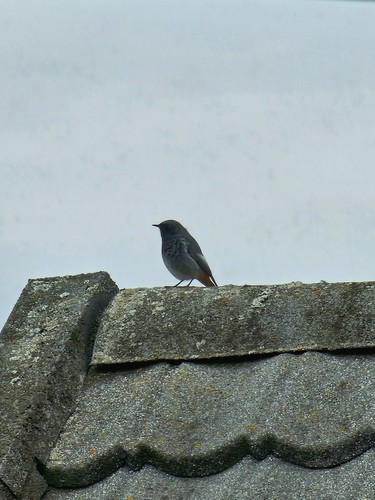
Black Redstart
13-14.5 cm (5.1-5.7 in) long, 23-26 cm wingspan
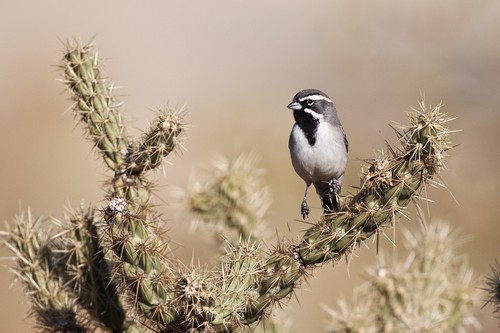
Black-throated Sparrow
12-14 cm (4.7-5.5 in) long, about 19-20 cm (7.5-8 in) wingspan
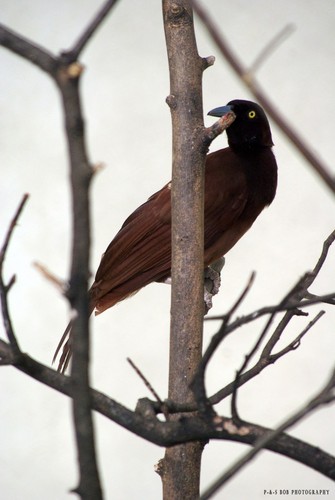
Greater Bird-of-paradise
Body about 43 cm; males with additional flank plumes up to 50 cm and long tail wires
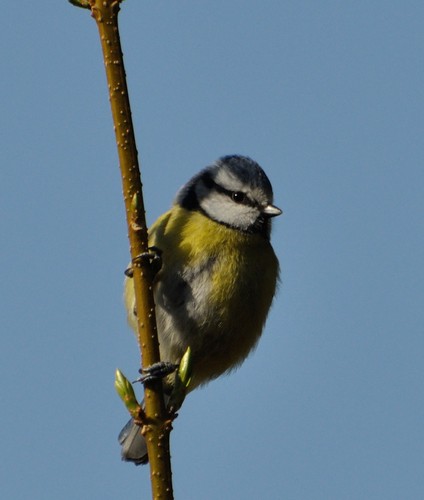
Blue Tit
11-12 cm (4.3-4.7 in) long, 17-20 cm wingspan
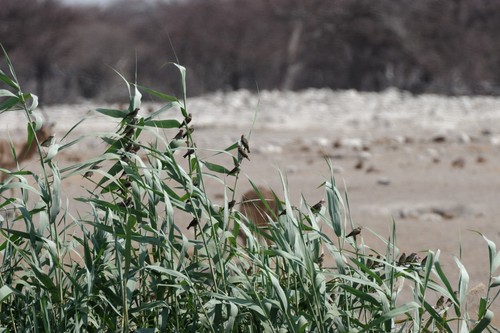
Red-billed Quelea
11.5–13 cm long, wingspan about 20–22 cm
White-plumed Antbird
13-14 cm (5-5.5 in) long
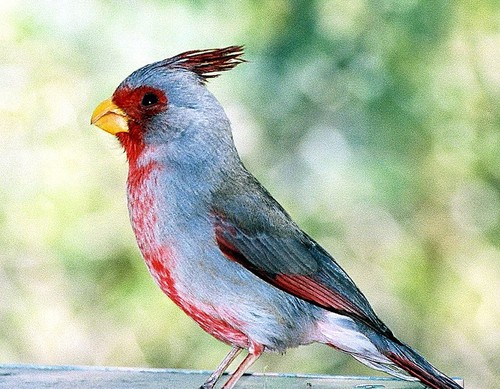
Pyrrhuloxia
19-22 cm (7.5-8.7 in) long, 30 cm wingspan
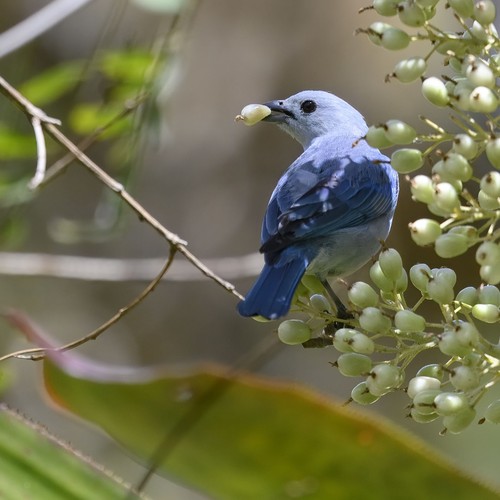
Blue-gray Tanager
16-18 cm (6-7 in) long
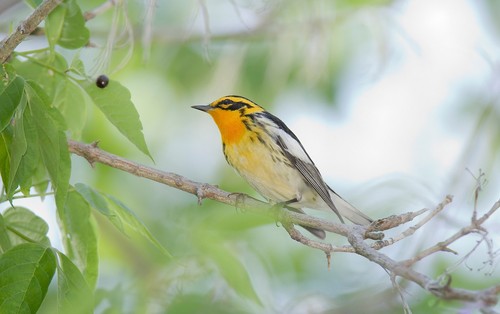
Blackburnian Warbler
11-13 cm (4.3-5.1 in) long, 20-22 cm wingspan
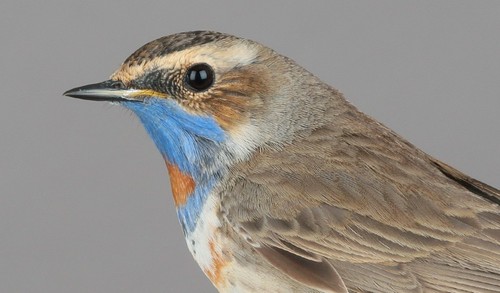
Bluethroat
13-14 cm (5.1-5.5 in) long, 20-22 cm wingspan
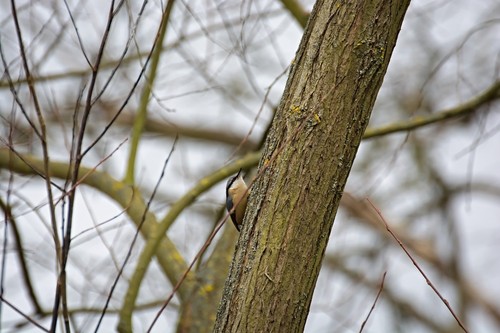
Eurasian Nuthatch
12-14.5 cm (4.7-5.7 in) long, 22.5-27 cm wingspan
Wood Thrush
19-21 cm (7.5-8.3 in) long, about 33 cm (13 in) wingspan