
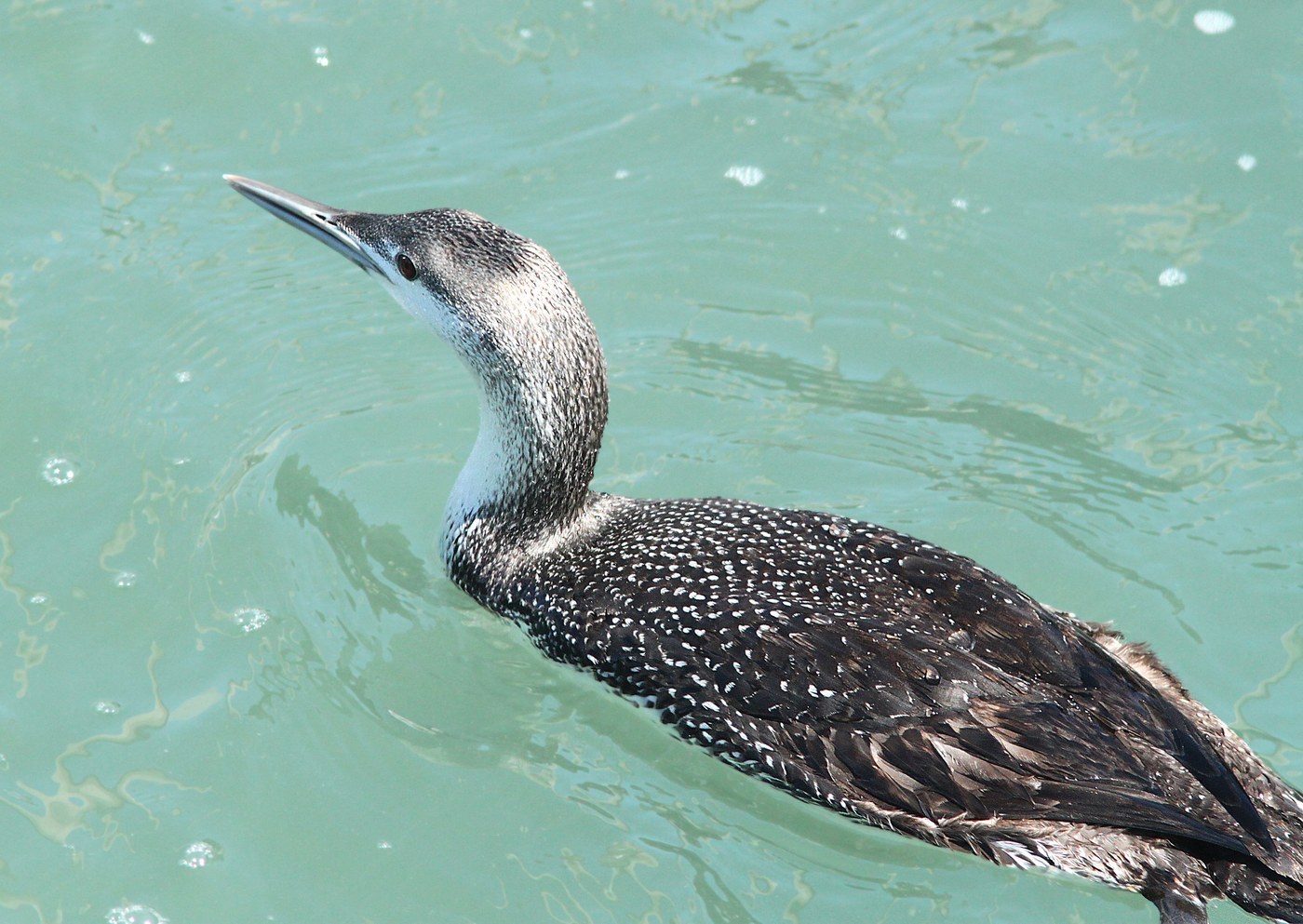
Red-throated Loon
Gavia stellata
The smallest and most lightly built loon, distinguished in summer by a wine-red throat patch and a habit of holding its bill tilted upward.
- Size
- 53-69 cm (21-27 in) long, 91-110 cm wingspan
- Habitat
- arctic tundra pools for breeding, coastal seas in winter
- Type
- seabird
Spotted a bird like this?
Identify any bird from a photo, free.
Overview
The Red-throated Loon is the smallest member of the loon family, with a slender build, thin neck, and a fine, slightly upturned bill. In breeding plumage it shows a pale grey head, a striking brick-red throat patch, and fine black-and-white streaking down the back of the neck, quite different from the bold checkerboard back patterns of larger loons. In winter it becomes largely grey above and white below, appearing paler overall than other loon species.
Because its legs are set even farther back than in other loons, it is the most agile in the air among loons and, unusually, can take off directly from land or small ponds without a long running start.
How to identify it
Key field marks
- Small size and slim build with a thin, slightly upturned bill
- Breeding: pale grey head, wine-red throat patch, streaked neck
- Non-breeding: pale grey-brown above, extensive white on the face and foreneck, giving a paler-headed look than other loons
- Habitually holds the bill angled upward
Similar species
- Pacific Loon and Arctic Loon are larger, straighter-billed, and darker-headed in winter.
- Common Loon is much bulkier with a heavier, straight bill.
- The upward-tilted bill posture is a useful clue even at a distance.
Habitat & range
Habitat
Breeds on small tundra pools and lakes, often ones too small to support other loon species; winters mainly on sheltered coastal seas and bays.
Range
Circumpolar breeder across the high Arctic of North America, Europe, and Asia; winters along temperate coastlines to the south.
Migration
A long-distance migrant, moving from Arctic breeding pools to milder coastal wintering waters.
Behavior & voice
Behavior
Often commutes between separate small breeding pools and larger feeding lakes or the sea, flying with rapid, shallow wingbeats.
Voice
Gives a distinctive wailing, goose-like call in flight and a rising and falling moaning duet near the nest.
Feeding
Dives for small fish and aquatic invertebrates, often foraging in different water bodies than where it nests.
Nesting
Builds a simple nest at the water's edge on small tundra pools; typically lays 2 olive-brown eggs.
Frequently asked questions
How do you identify a Red-throated Loon in winter?
Look for a small, slender loon with a pale, thin, slightly upturned bill and extensive white on the face, appearing noticeably paler-headed than other loon species.
Why is it called the Red-throated Loon?
Breeding adults develop a distinctive brick-red patch on the throat, though this color is absent outside the breeding season.
Can Red-throated Loons take off easily from water?
Yes, unlike other loons that need a long running start, Red-throated Loons can take off from small ponds or even directly from land with relatively little effort.
Where do Red-throated Loons breed?
They breed on small tundra pools and lakes across the high Arctic regions of North America, Europe, and Asia.
Red-throated Loon guides
In-depth guides for identifying, finding, and understanding Red-throated Loon.
Other birds you may enjoy
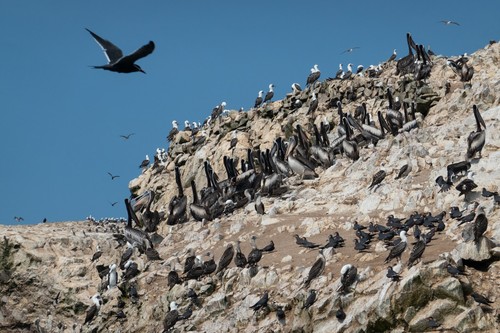
Peruvian Pelican
137-152 cm (54-60 in) long, up to 228 cm wingspan
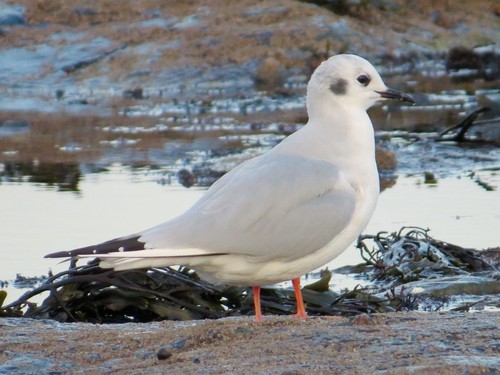
Bonaparte's Gull
28-33 cm (11-13 in) long, 76-84 cm wingspan
Brown Pelican
106-137 cm (42-54 in) long, 200-230 cm wingspan
Razorbill
37-39 cm (15-15.5 in) long, 63-68 cm wingspan
Common Gull
40-46 cm (16-18 in) long, 110-130 cm wingspan
Thick-billed Murre
40-48 cm (16-19 in) long, 65-75 cm wingspan
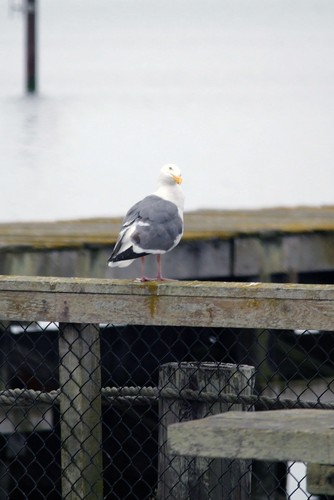
Western Gull
55-68 cm (22-27 in) long, 130-144 cm wingspan
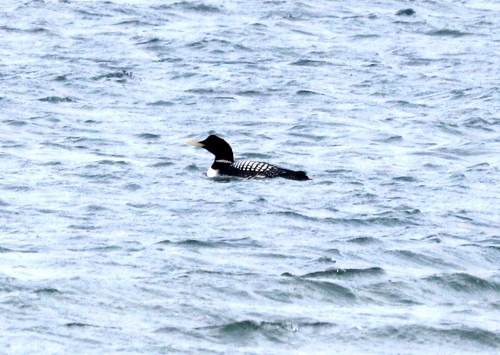
Yellow-billed Loon
76-97 cm (30-38 in) long, 135-152 cm wingspan
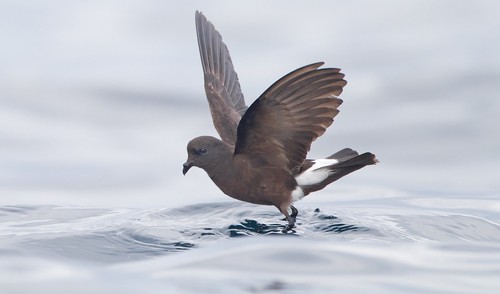
Wilson's Storm-Petrel
15-19 cm (6-7.5 in) long, wingspan 38-42 cm (15-16.5 in)
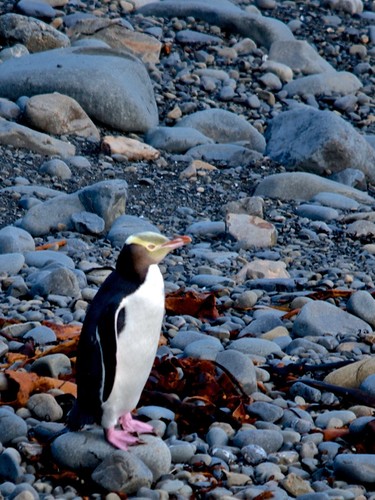
Yellow-eyed Penguin
62-79 cm (24-31 in) tall, 3-8.5 kg (6.6-18.7 lb)
Wandering Albatross
107-135 cm (42-53 in) long, wingspan up to 3.5 m (11.5 ft)
Tufted Puffin
35-41 cm (14-16 in) long, about 63-70 cm wingspan