
Red-throated Loon Identification Guide
The smallest and palest of the loons, with a thin, slightly upturned bill and, in breeding plumage, a rich red throat patch.
Read the full Red-throated Loon encyclopedia entry →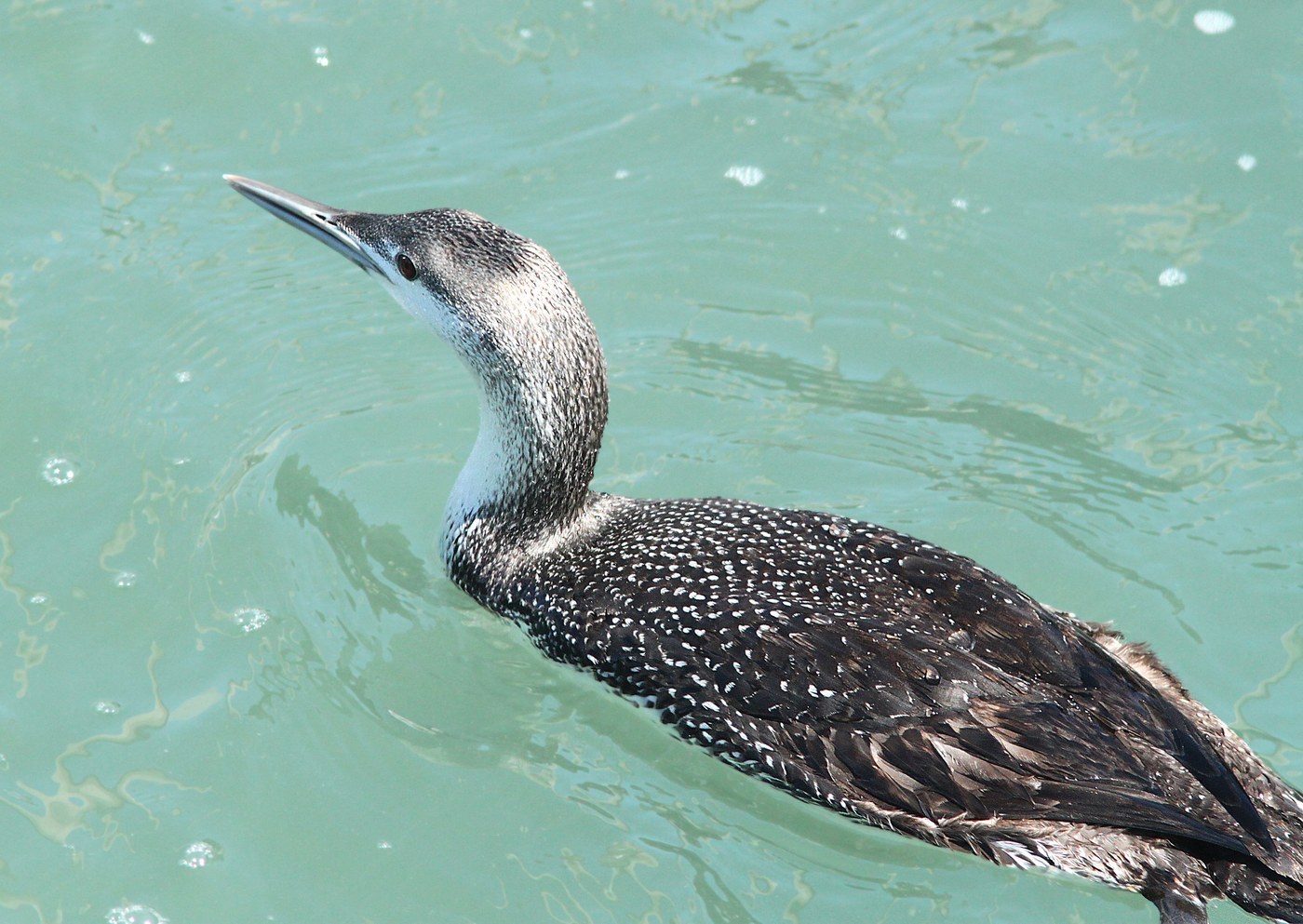
Key Field Marks
- Smallest loon species, with a slim build and a thin, straight-to-slightly-upturned bill often held tilted upward.
- Breeding adult: soft gray head and nape, a rich rust-red throat patch, and a dark back finely streaked with white (not boldly checkered like other loons).
- Nonbreeding/winter: pale gray-brown above with fine white speckling, a very white face and foreneck, and often the palest-headed of all loons at that season.
- In flight, shows a distinctive hunchbacked, drooped-neck silhouette with rapid, shallow wingbeats compared to other loons.
Separating It From Similar Species
- Pacific Loon: has a thicker, straighter bill held level (not upturned), more contrasting black-and-white winter plumage with a defined chin strap area, and a straighter-necked flight profile.
- Common Loon: much larger and heavier-billed, with a thick dagger-like bill and, in breeding plumage, a bold checkerboard back pattern rather than fine streaking.
- The thin, uptilted bill and drooped-neck flight silhouette are the quickest ways to pick out Red-throated Loon at a distance.
Habitat, Range & Season
- Breeds on small, shallow tundra ponds and lakes across the high Arctic of North America, Europe, and Asia, often using different water bodies for nesting and feeding.
- Winters along coastlines in sheltered bays, estuaries, and nearshore ocean waters, generally staying closer to shore than other loon species.
- Migrates in loose flocks, sometimes visible flying low over the ocean along coastal watch points in spring and fall.
Voice
- Utters wailing, goose-like cackling calls on the breeding grounds, along with a rapid "gak-gak-gak" alarm call; largely silent in winter.
Frequently asked questions
What is the easiest way to identify a Red-throated Loon in winter?
Look for its thin, slightly upturned bill, pale gray-brown speckled upperparts, and very white face — the palest-headed loon in winter plumage.
How do I tell a Red-throated Loon from a Pacific Loon?
Red-throated Loon has a thinner, upturned bill and a drooped-neck flight profile, while Pacific Loon has a thicker, straighter bill held level and flies with a straighter neck.
When does the Red-throated Loon show its red throat patch?
The rust-red throat patch appears only in breeding plumage, typically seen on Arctic breeding grounds or occasionally on birds still in transition during spring migration.
Where do Red-throated Loons spend the winter?
They winter along coastlines in sheltered bays and nearshore ocean waters, generally staying closer to shore than other loon species.