
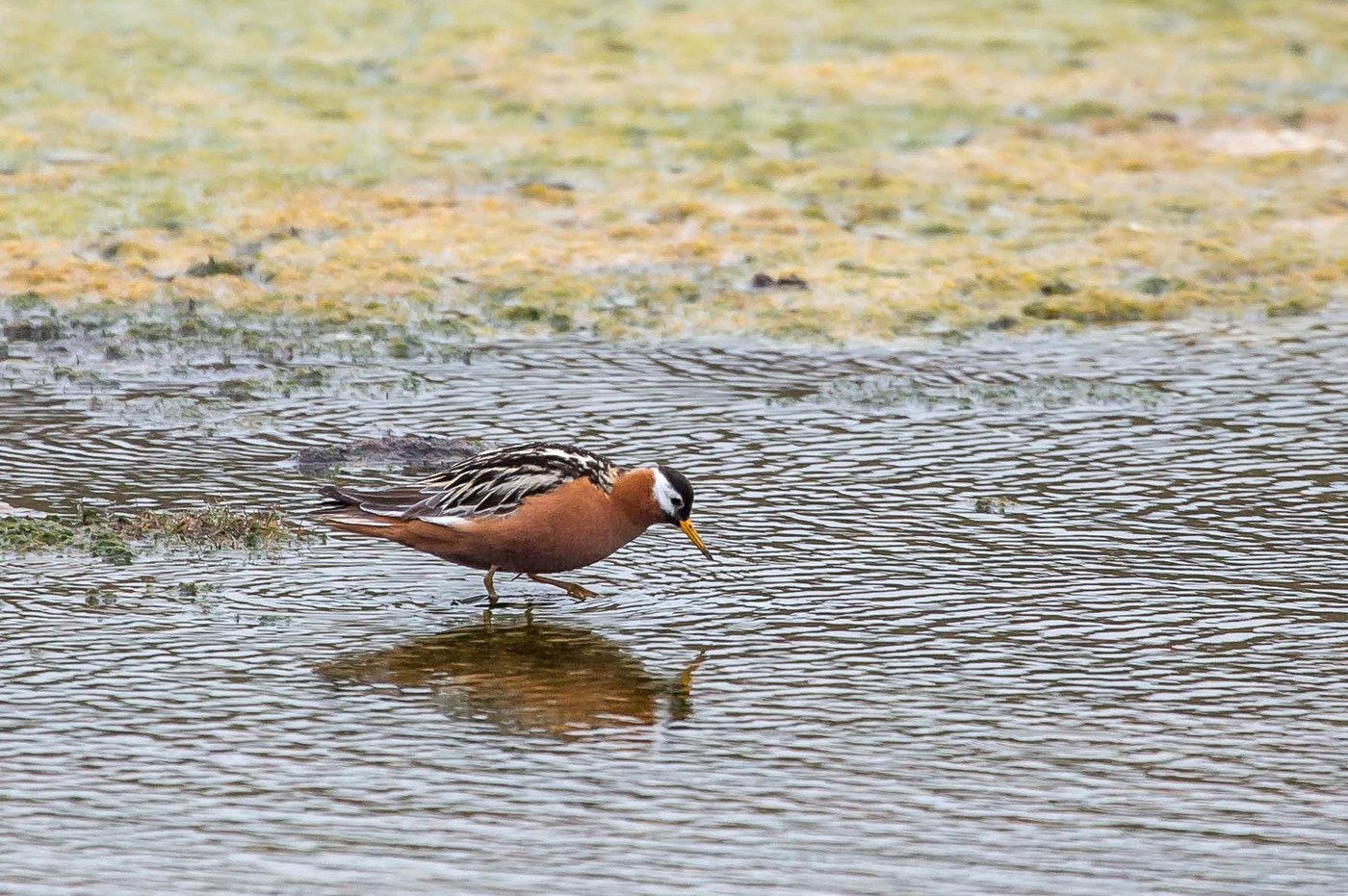
Red Phalarope
Phalaropus fulicarius
The most brightly colored and most pelagic of the three phalaropes, with brick-red breeding females that spend most of the year far out at sea.
- Size
- 20-22 cm (8-8.5 in) long, 37-40 cm wingspan
- Habitat
- Arctic tundra pools for breeding; open ocean the rest of the year
- Type
- shorebird
Spotted a bird like this?
Identify any bird from a photo, free.
Overview
The Red Phalarope, known as the Grey Phalarope in much of the Old World for its plain nonbreeding plumage, is the most strikingly colored of the three phalarope species during the breeding season and the most committed to life on the open ocean the rest of the year.
Breeding females show rich brick-red underparts and neck, a bold white patch on the face, and a dark cap, with a yellow bill tipped in black — the most colorful of the phalaropes, as is typical of the females in this sex-role-reversed family. Males show a duller, more mottled version of the same pattern. Nonbreeding birds of both sexes are pale gray above and white below, much like the other phalaropes, and are frequently seen far from land.
How to identify it
Key field marks
- Brick-red underparts and neck with a bold white face patch in breeding female plumage
- Yellow bill with a black tip — a useful mark distinguishing it from the all-dark bills of the other phalaropes
- Thicker bill than Red-necked Phalarope
- Plain pale gray upperparts, white underparts in nonbreeding plumage
- Often encountered far offshore, sometimes in loose flocks
Similar species
- Red-necked Phalarope: smaller, thinner all-dark bill, rufous confined to a neck patch rather than covering the underparts in breeding plumage.
- Wilson's Phalarope: larger, longer-necked, needle-thin bill, breeds inland rather than on Arctic tundra, far less pelagic in winter.
Habitat & range
Habitat
Red Phalaropes breed around shallow pools on Arctic tundra but spend the majority of the year far out at sea, often associated with areas of ocean upwelling where plankton and small invertebrates are abundant.
Range and migration
They breed in a circumpolar distribution across the high Arctic. Outside the breeding season, they are highly pelagic, wintering at sea off the coasts of South America, Africa, and other regions, occasionally being pushed toward shore during strong storms — an event birders call a "wreck."
Behavior & voice
Behavior
Red Phalaropes swim buoyantly and frequently spin in tight circles on the water surface to stir up prey, a behavior shared with the other phalarope species, and often forage in loose flocks over productive ocean waters.
Voice
Calls include a short, sharp "whit" or "kip," similar to calls of the other phalarope species, given both at breeding sites and occasionally at sea.
Feeding
They feed on small aquatic invertebrates and plankton, picked delicately from the water surface, often taking advantage of upwellings and prey concentrated near whales or other marine activity.
Nesting and breeding
As in the other phalaropes, sex roles are reversed: females are more brightly colored and compete for mates, then leave the male to incubate the eggs and raise the precocial young alone in a ground nest near Arctic tundra pools.
Frequently asked questions
Why is the Red Phalarope also called the Grey Phalarope?
In much of the Old World it is called Grey Phalarope, reflecting its plain pale gray nonbreeding plumage, which is how it is seen for most of the year outside the brief Arctic breeding season.
How do you tell a Red Phalarope from a Red-necked Phalarope?
Breeding female Red Phalaropes have brick-red underparts covering the whole body (not just a neck patch) and a thicker, yellow-and-black bill, compared to the smaller, thinner all-dark bill of the Red-necked Phalarope.
Where do Red Phalaropes spend most of the year?
Far out at sea, often over productive upwelling zones, making them the most pelagic of the three phalarope species.
What is a phalarope 'wreck'?
A term birders use for events when strong storms push large numbers of normally pelagic Red Phalaropes toward the coast or even inland.
Where does the Red Phalarope breed?
Around shallow pools on high Arctic tundra in a circumpolar distribution.
Red Phalarope guides
In-depth guides for identifying, finding, and understanding Red Phalarope.
Other birds you may enjoy
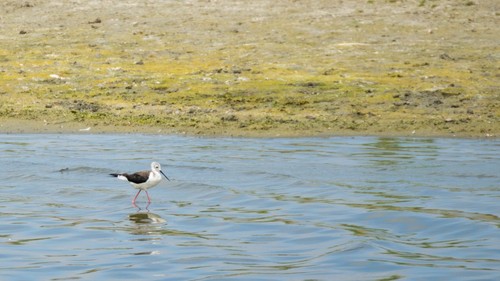
Black-winged Stilt
33-36 cm (13-14 in) long, wingspan 67-83 cm
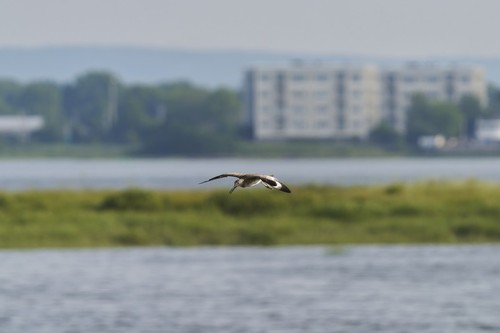
Willet
33-41 cm (13-16 in) long, 65-70 cm wingspan
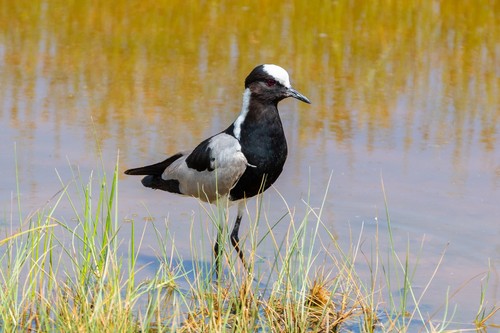
Blacksmith Lapwing
Body length about 30 cm; wingspan 55-65 cm
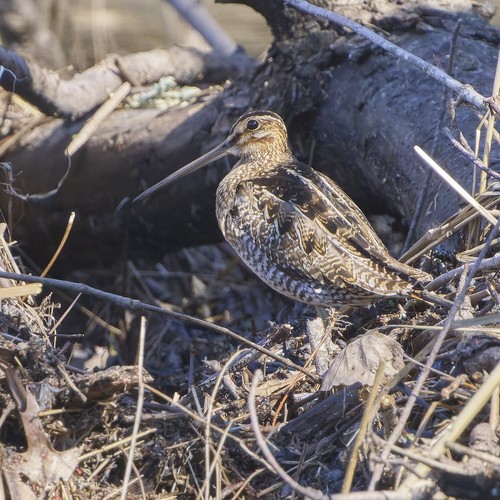
Wilson's Snipe
25-30 cm (10-12 in) long, 39-45 cm wingspan
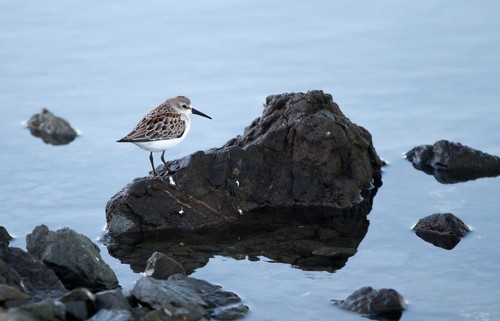
Western Sandpiper
14-17 cm (5.5-6.7 in) long, 28-37 cm wingspan
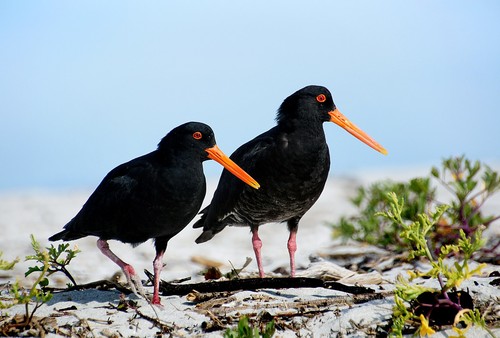
Variable Oystercatcher
46-49 cm (18-19 in) long
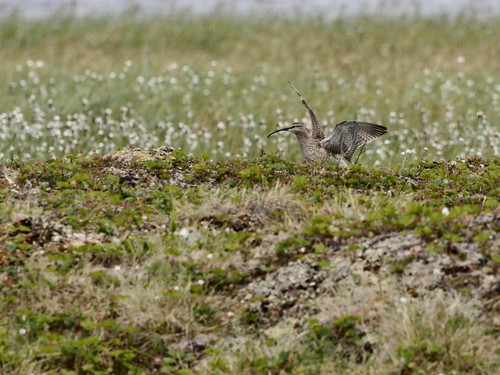
Whimbrel
40-46 cm (16-18 in) long, 76-89 cm wingspan
Wilson's Phalarope
22-24 cm (8.5-9.5 in) long, 37-43 cm wingspan
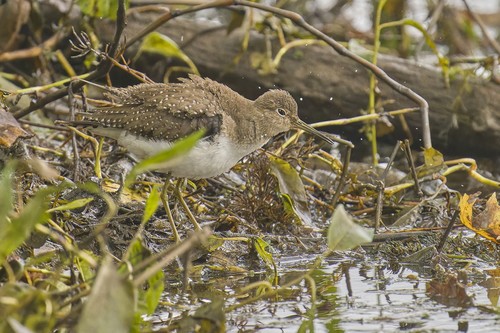
Solitary Sandpiper
19-23 cm (7.5-9 in) long, 50-56 cm wingspan
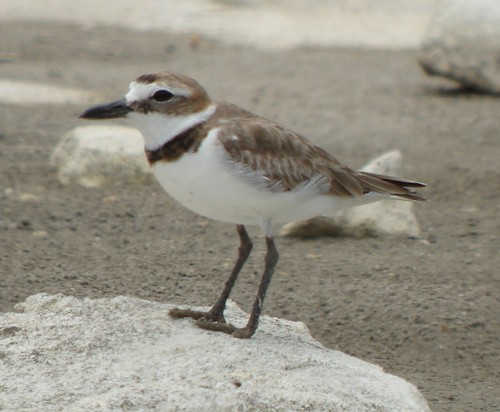
Wilson's Plover
17-19 cm (6.7-7.5 in) long, 45-50 cm wingspan
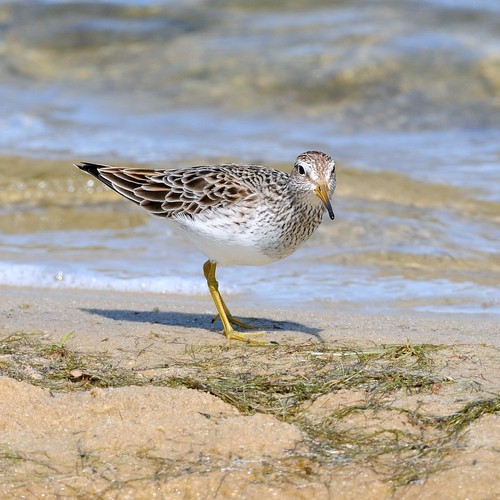
Pectoral Sandpiper
19-23 cm (7.5-9 in) long, 43-49 cm wingspan
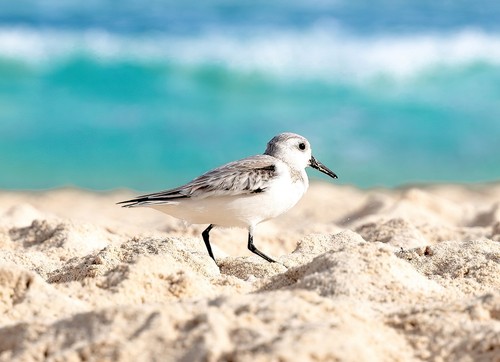
Sanderling
18-20 cm (7-8 in) long, 40-43 cm wingspan