
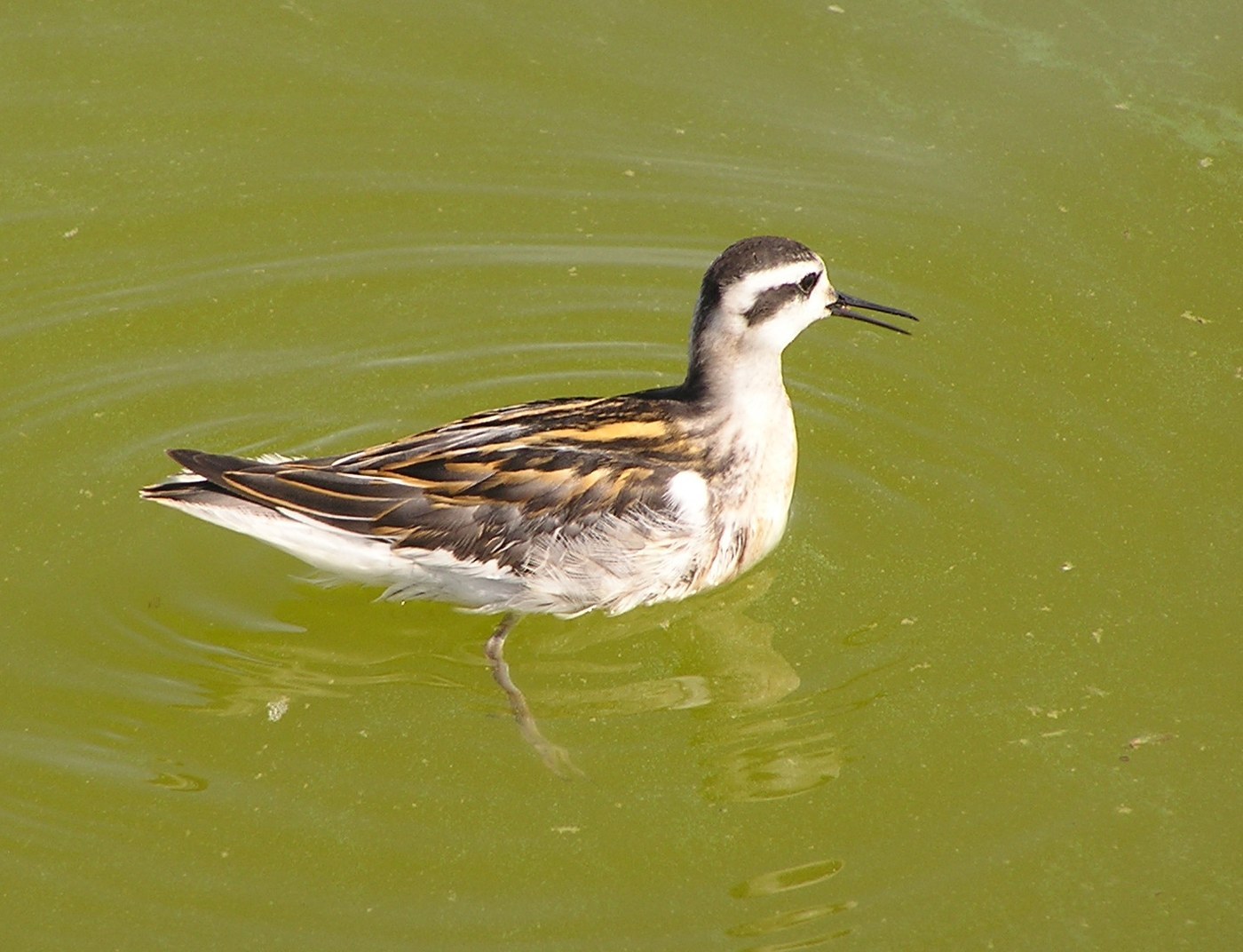
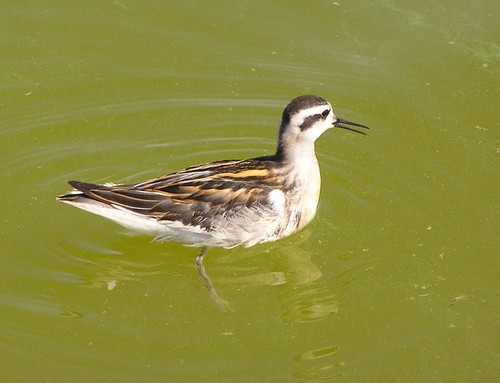
Red-necked Phalarope
Phalaropus lobatus
A small, needle-billed shorebird that spins in tight circles on the water to stir up food, with brighter-plumaged females and a largely oceanic lifestyle outside the breeding season.
- Size
- 18-19 cm (7-7.5 in) long, 32-41 cm wingspan
- Habitat
- Arctic tundra pools for breeding; open ocean the rest of the year
- Type
- shorebird
Spotted a bird like this?
Identify any bird from a photo, free.
Overview
The Red-necked Phalarope is a small, elegant shorebird that spends much of its life swimming on open water rather than walking along shores like most of its relatives — an adaptation reflected in its lobed toes, which act like small paddles.
The species shows a reversal of typical bird sex roles: breeding females are more brightly colored than males, with a dark slate-gray head and neck, white throat, and a bold rufous-orange patch along the sides of the neck, while males show a duller, more muted version of the same pattern. Nonbreeding birds of both sexes are plain gray above and white below.
Outside the breeding season, Red-necked Phalaropes become highly pelagic, spending months far out at sea, often in areas of ocean upwelling rich in plankton.
How to identify it
Key field marks
- Small size with a thin, needle-like black bill
- Females brighter than males: dark gray head, white throat, bold rufous-orange neck patch (breeding plumage)
- Plain gray upperparts, white underparts in nonbreeding plumage
- Lobed toes for swimming (visible at close range)
- Frequent spinning behavior while swimming on water
Similar species
- Red Phalarope: stockier build, thicker bill, brick-red underparts (not just neck patch) in breeding plumage.
- Wilson's Phalarope: larger, longer-necked, longer thin bill, breeds inland rather than on Arctic tundra.
Habitat & range
Habitat
Red-necked Phalaropes breed around shallow pools and wetlands on Arctic tundra, but for most of the year they are found far offshore on the open ocean, often associated with productive upwelling zones.
Range and migration
They breed in a circumpolar distribution across the Arctic regions of North America, Europe, and Asia. After breeding, they migrate to spend the winter at sea in tropical and subtropical waters, making them one of the most pelagic of all shorebirds.
Behavior & voice
Behavior
Red-necked Phalaropes swim frequently, often spinning rapidly in tight circles on the water surface, a behavior that creates a small vortex bringing prey items closer to the surface where they can be picked off.
Voice
Calls include a short, sharp "kit" or "whit," given both on the breeding grounds and in flight.
Feeding
They feed on small aquatic invertebrates and plankton, picking prey delicately from the water surface while swimming, often while spinning to stir food upward.
Nesting and breeding
In a reversal of typical shorebird roles, females compete for mates and, after laying the eggs, leave incubation and chick-rearing entirely to the male, who alone tends the ground nest near tundra pools and cares for the precocial young.
Frequently asked questions
Why do Red-necked Phalaropes spin on the water?
Spinning in tight circles creates a small vortex that draws small invertebrates and plankton up toward the surface, making them easier to pick off with the bill.
Why are female Red-necked Phalaropes more colorful than males?
The species has reversed sex roles: females compete for mates and leave all incubation and chick-rearing to the males, so females have evolved the brighter breeding plumage typically seen in males of most bird species.
Where do Red-necked Phalaropes spend the winter?
Far out at sea in tropical and subtropical ocean waters, often near productive upwelling zones, making them one of the most pelagic shorebirds.
Where does the Red-necked Phalarope breed?
Around shallow tundra pools in a circumpolar Arctic distribution across North America, Europe, and Asia.
What does a Red-necked Phalarope eat?
Small aquatic invertebrates and plankton, picked delicately from the water surface while swimming.
Red-necked Phalarope guides
In-depth guides for identifying, finding, and understanding Red-necked Phalarope.
Other birds you may enjoy
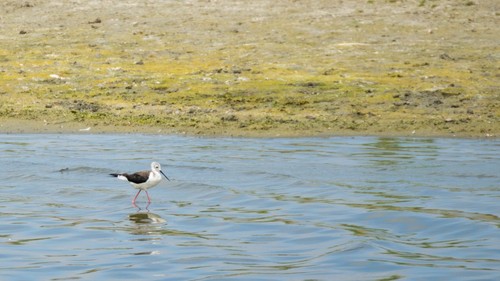
Black-winged Stilt
33-36 cm (13-14 in) long, wingspan 67-83 cm
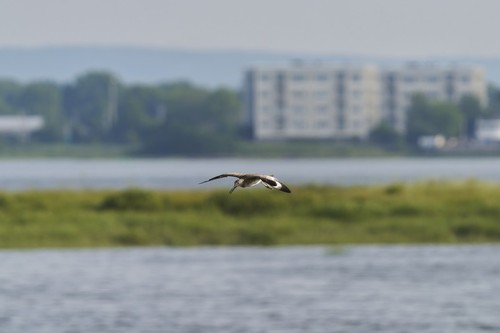
Willet
33-41 cm (13-16 in) long, 65-70 cm wingspan
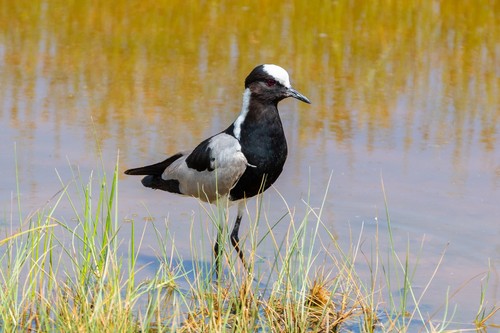
Blacksmith Lapwing
Body length about 30 cm; wingspan 55-65 cm
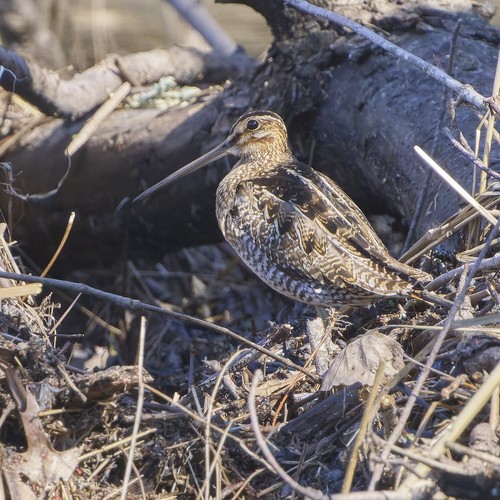
Wilson's Snipe
25-30 cm (10-12 in) long, 39-45 cm wingspan
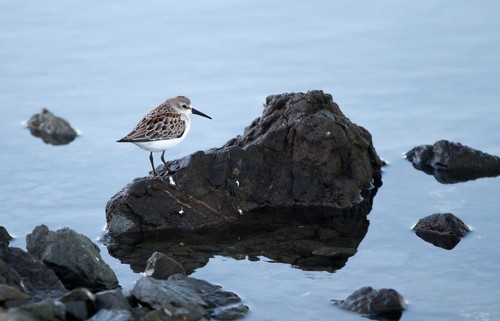
Western Sandpiper
14-17 cm (5.5-6.7 in) long, 28-37 cm wingspan
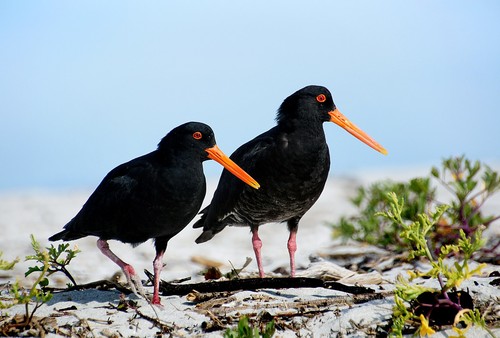
Variable Oystercatcher
46-49 cm (18-19 in) long
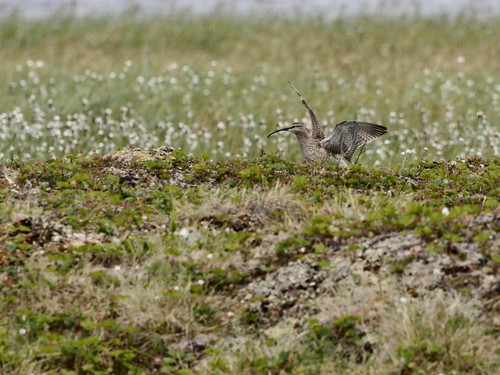
Whimbrel
40-46 cm (16-18 in) long, 76-89 cm wingspan
Wilson's Phalarope
22-24 cm (8.5-9.5 in) long, 37-43 cm wingspan
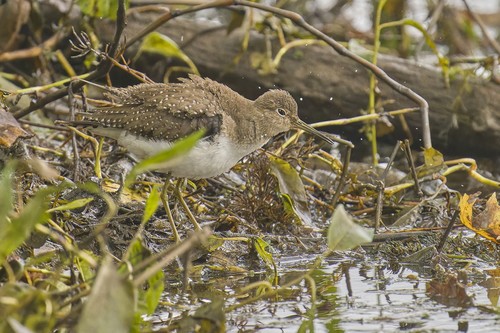
Solitary Sandpiper
19-23 cm (7.5-9 in) long, 50-56 cm wingspan
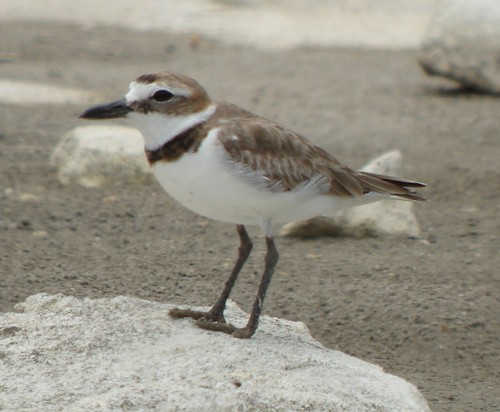
Wilson's Plover
17-19 cm (6.7-7.5 in) long, 45-50 cm wingspan
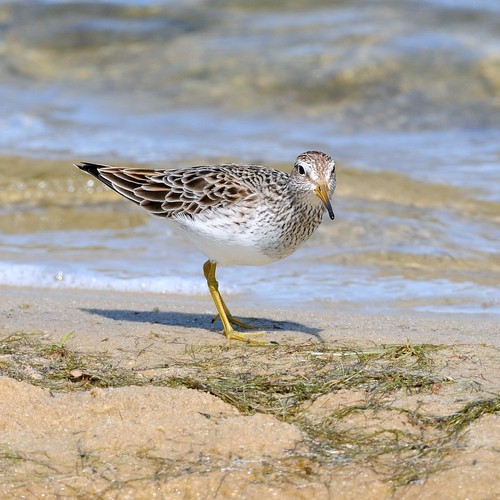
Pectoral Sandpiper
19-23 cm (7.5-9 in) long, 43-49 cm wingspan
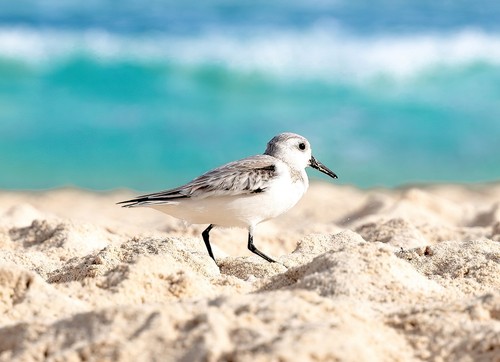
Sanderling
18-20 cm (7-8 in) long, 40-43 cm wingspan