
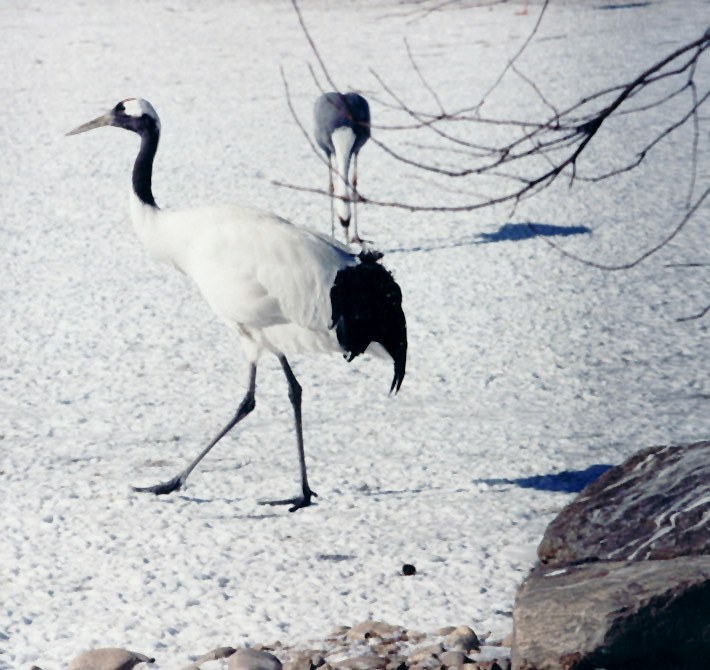
Red-crowned Crane
Grus japonensis
A rare, exceptionally elegant East Asian crane with mostly white plumage, a black neck, and a small patch of bare red skin on the crown, revered as a symbol of luck and longevity.
- Size
- 150-158 cm (59-62 in) long, 220-250 cm wingspan
- Habitat
- wetlands, marshes, and rivers of East Asia
- Type
- wading-bird
Spotted a bird like this?
Identify any bird from a photo, free.
Overview
The Red-crowned Crane is among the rarest crane species in the world and is widely regarded as one of the most beautiful, with predominantly white plumage, a black neck and secondary flight feathers, and a small patch of bare red skin on the crown that gives the species its name.
Deeply significant in Japanese and Chinese culture, it is a traditional symbol of luck, longevity, and fidelity, frequently depicted in art. It is sometimes called the Japanese Crane or, in Japan, 'Tancho.'
How to identify it
Key field marks
- Predominantly white body plumage
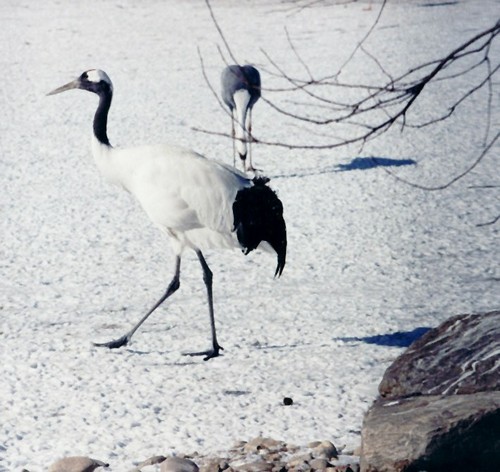
- Black neck and black secondary flight feathers (which appear as a black 'tail' when the bird is standing, though the true tail is white and short)
- Small bare red patch on the crown
- Long, dark legs
Similar species
The Whooping Crane of North America is similarly white but has black primaries (visible mainly in flight) rather than a black neck, and does not overlap in range. The Siberian Crane also has white plumage but lacks the black neck, showing instead a red face and bill with black only on the wingtips.
Habitat & range
Red-crowned Cranes breed in wetlands and marshes in a few disjunct populations: a largely non-migratory population resident on Hokkaido, Japan, and a migratory continental population breeding in far eastern Russia and northeastern China, including the Amur River basin, and wintering along the Korean Demilitarized Zone and in eastern China.
The species' total population remains small and fragmented, and it depends heavily on protected wetlands and, in Hokkaido, supplemental winter feeding programs that have helped stabilize numbers after the species nearly went extinct in Japan in the early 20th century.
Behavior & voice
Red-crowned Cranes forage in shallow wetlands and rivers for fish, aquatic invertebrates, and plant material, and in Hokkaido also readily take supplemental grain provided at winter feeding stations.
They are famous for their elaborate, synchronized courtship dances, involving bowing, leaping, wing-spreading, and loud duet calling, which have inspired traditional dance and art across East Asia. Pairs generally mate for life. Nests are built on the ground in marshes, usually with two eggs, and both parents share incubation and chick-rearing duties, with chicks taking around three months to fledge.
Frequently asked questions
Why is the Red-crowned Crane culturally important?
It is a long-standing symbol of luck, longevity, and fidelity in Japanese and Chinese culture, frequently depicted in art, and known in Japan as the 'Tancho.'
Where can Red-crowned Cranes be seen?
A resident population lives year-round on Hokkaido, Japan, especially around Kushiro Marsh, while a separate migratory population breeds in the Russian Far East and northeastern China and winters in the Korean DMZ area and eastern China.
Is the Red-crowned Crane endangered?
Yes, it is classified as Endangered, with a small, fragmented global population that depends on protected wetlands and, in Japan, supplemental winter feeding.
How is the Red-crowned Crane different from the Whooping Crane?
The Red-crowned Crane has a black neck, while the Whooping Crane has a white neck with black only on the wingtips; the two species occur on different continents.
Red-crowned Crane guides
In-depth guides for identifying, finding, and understanding Red-crowned Crane.
Other birds you may enjoy
Demoiselle Crane
85-100 cm (33-39 in) long, 155-180 cm wingspan
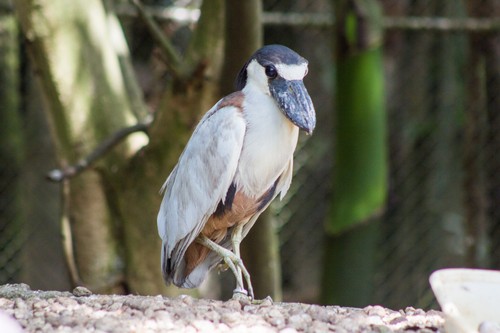
Boat-billed Heron
41-56 cm (16-22 in) long
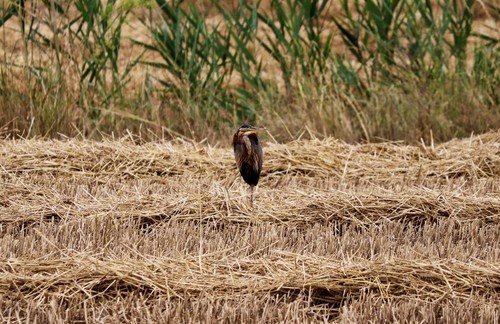
Purple Heron
78-90 cm (31-35 in) long, 120-152 cm wingspan
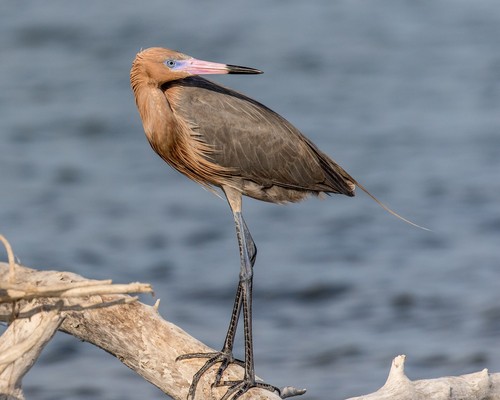
Reddish Egret
68-82 cm (27-32 in) long, 116-125 cm wingspan
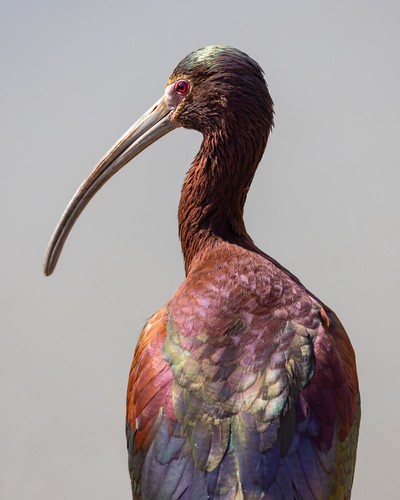
White-faced Ibis
46-56 cm (18-22 in) long, 88-93 cm wingspan
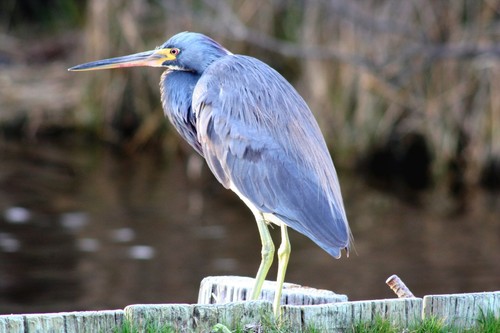
Tricolored Heron
61-76 cm (24-30 in) long, about 96 cm wingspan
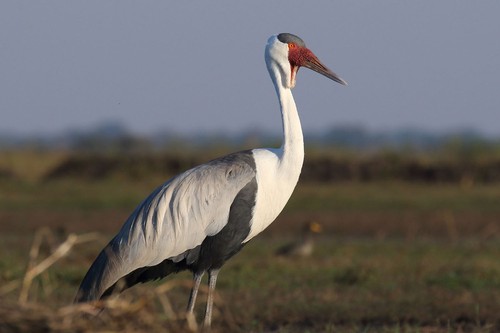
Wattled Crane
120-175 cm (47-69 in) tall, one of the tallest cranes, wingspan up to about 230 cm (7.5 ft)
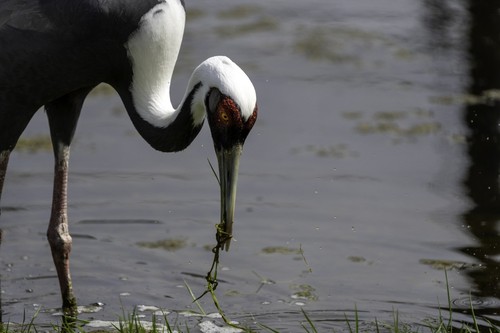
White-naped Crane
112-125 cm (44-49 in) long, 195-210 cm wingspan
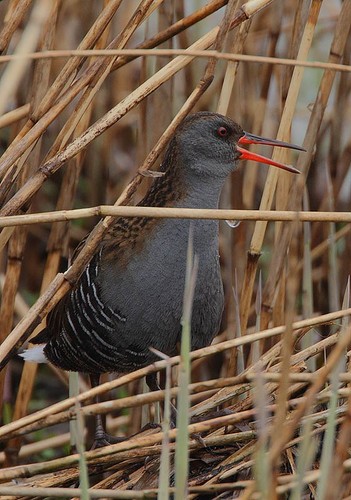
Water Rail
23-28 cm (9-11 in) long, wingspan 38-45 cm
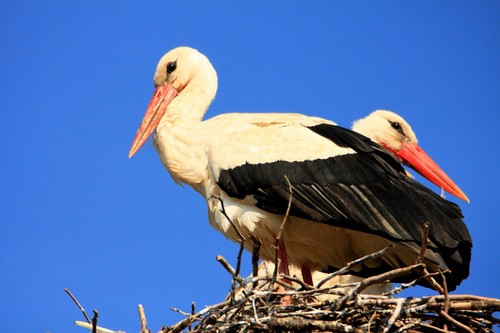
White Stork
100-125 cm (39-49 in) long, 155-215 cm wingspan
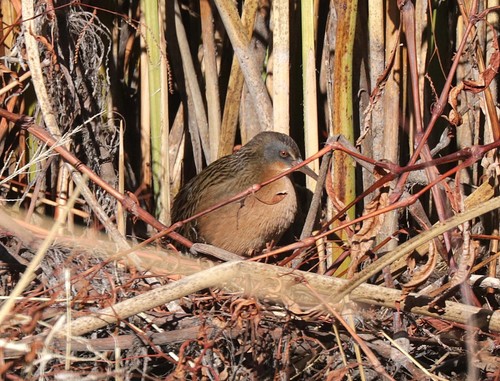
Virginia Rail
20-27 cm (8-11 in) long, wingspan 32-38 cm
Wattled Jacana
17-23 cm (7-9 in) long