
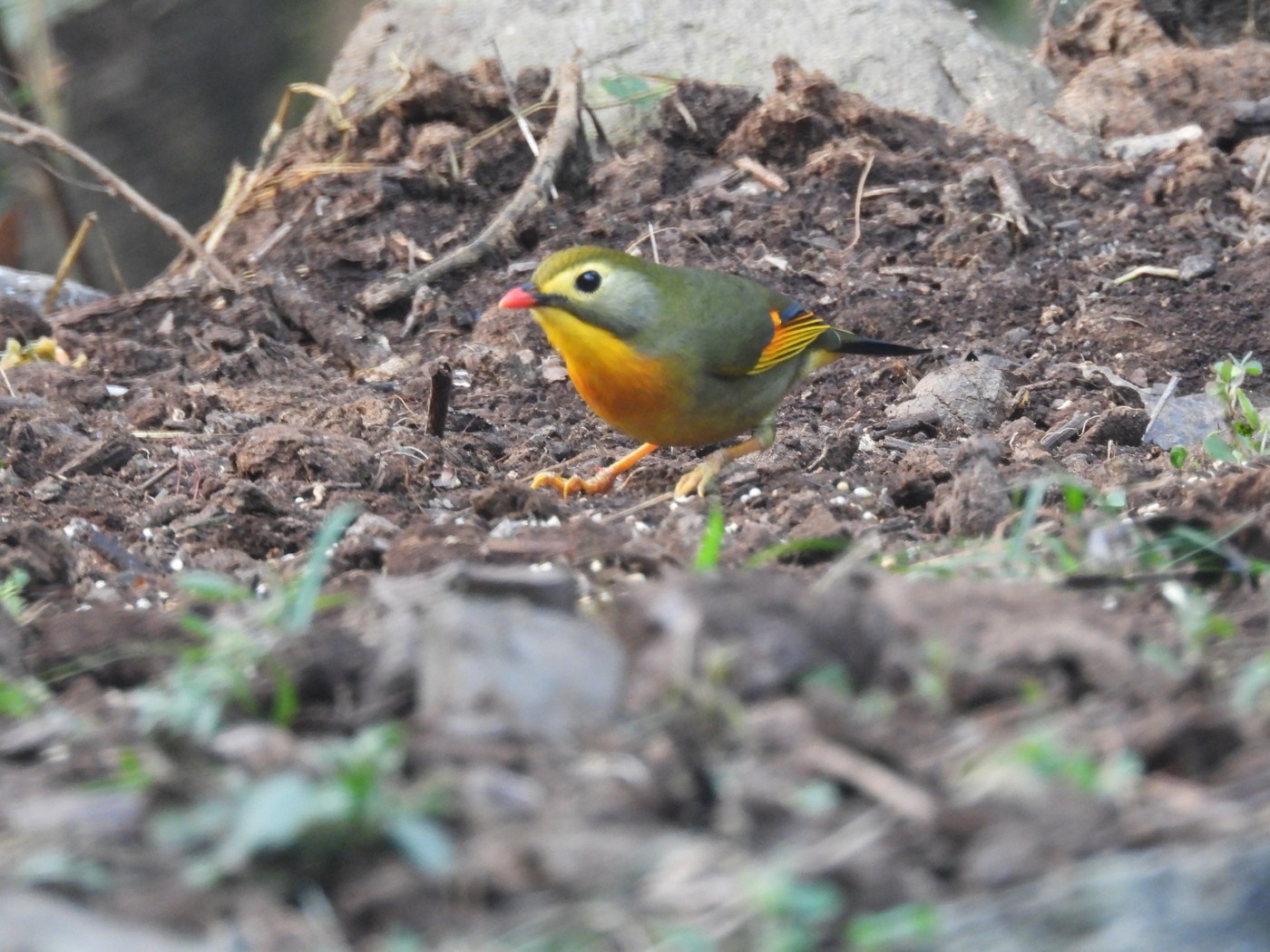
Red-billed Leiothrix
Leiothrix lutea
A vividly colored, red-billed songbird nicknamed the Pekin Robin, olive-green above with orange-yellow throat and colorful wing patches.
- Size
- 13-15 cm (5-6 in) long
- Habitat
- dense forest undergrowth, thickets, and forest edge in the Himalayas and hill forests of Asia
- Type
- songbird
Spotted a bird like this?
Identify any bird from a photo, free.
Overview
The Red-billed Leiothrix, popularly known as the Pekin Robin, is a small, brightly colored songbird native to forested hills of the Himalayas, southern China, and parts of Southeast Asia. It has olive-green upperparts, a bright orange-yellow throat and breast, a pale eye-ring, and a distinctive coral-red bill. The wings show striking patches of red, yellow, and black, adding further color to an already vivid bird.
Because of its attractive appearance and pleasant song, the species has historically been popular in the cage-bird trade, leading to introduced, self-sustaining feral populations in parts of Europe (such as Hawaii and areas of France/Italy) far outside its native Asian range.
How to identify it
Key field marks
- Olive-green upperparts, orange-yellow throat and breast
- Coral-red bill; pale eye-ring
- Colorful wing patches combining red, yellow, and black
- Short tail with a shallow notch, often held slightly cocked
Similar species
Few other birds within its native range share this precise combination of a red bill, orange throat, and multicolored wing patches, making the Red-billed Leiothrix relatively easy to identify where it occurs. Its overall shape and habits recall babblers and small thrushes, though its colorful pattern is distinctive.
Habitat & range
The Red-billed Leiothrix is native to the forested foothills and mid-elevations of the Himalayas, from northern Pakistan and India through Nepal and Bhutan, and eastward across southern China and into parts of Myanmar and Vietnam. It favors dense undergrowth, thickets, bamboo, and forest edges, typically in hill and mountain forest rather than lowland habitats.
Introduced feral populations exist in parts of Hawaii and Western Europe as a result of escaped or released cage birds, where the species has become established outside its native range.
Behavior & voice
Voice
A rich, melodious, varied song of clear whistled phrases, historically one of the reasons for the species' popularity as a cage bird; calls include soft chattering contact notes within flocks.
Feeding
Red-billed Leiothrix forage in dense low vegetation and undergrowth, gleaning insects from leaves and branches and also eating berries and soft fruit, often moving in small active flocks.
Nesting and breeding
The nest is a compact cup built low in dense shrubbery or thickets, woven from grass, leaves, and moss. Both parents typically help incubate the eggs and feed the chicks, and the species can be quite vocal and social even outside the breeding season, often forming small foraging flocks.
Frequently asked questions
Why is the Red-billed Leiothrix called the Pekin Robin?
It earned the nickname historically through the cage-bird trade, referencing its colorful, robin-like appearance despite not being a true robin.
Where is the Red-billed Leiothrix originally from?
It is native to Himalayan foothill forests and hill forests across southern China and parts of Southeast Asia.
Why are there Red-billed Leiothrix populations in Hawaii and Europe?
Escaped or released cage birds established self-sustaining feral populations in these regions, well outside the species' native Asian range.
What does a Red-billed Leiothrix eat?
Mainly insects gleaned from vegetation, along with berries and soft fruit.
Red-billed Leiothrix guides
In-depth guides for identifying, finding, and understanding Red-billed Leiothrix.
Other birds you may enjoy
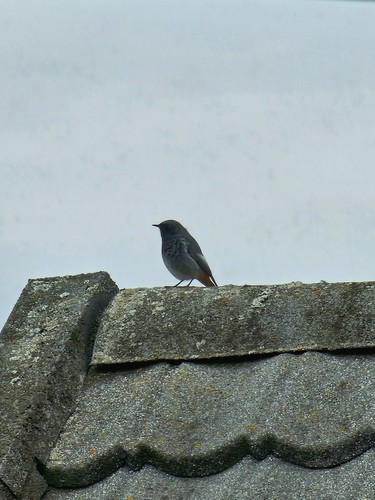
Black Redstart
13-14.5 cm (5.1-5.7 in) long, 23-26 cm wingspan
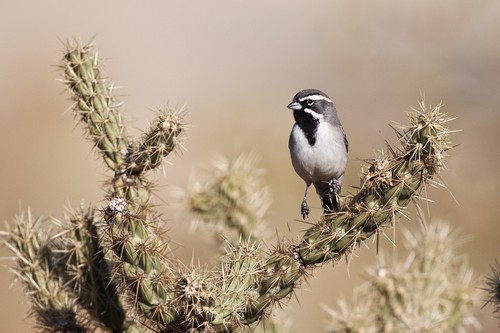
Black-throated Sparrow
12-14 cm (4.7-5.5 in) long, about 19-20 cm (7.5-8 in) wingspan
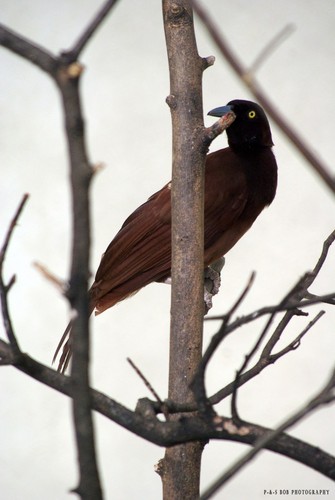
Greater Bird-of-paradise
Body about 43 cm; males with additional flank plumes up to 50 cm and long tail wires
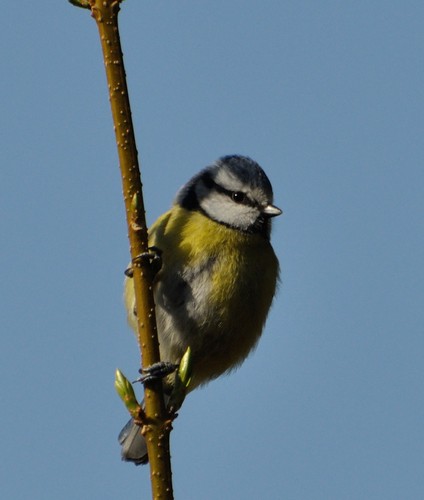
Blue Tit
11-12 cm (4.3-4.7 in) long, 17-20 cm wingspan
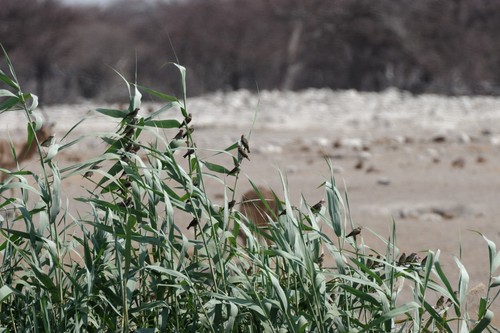
Red-billed Quelea
11.5–13 cm long, wingspan about 20–22 cm
White-plumed Antbird
13-14 cm (5-5.5 in) long
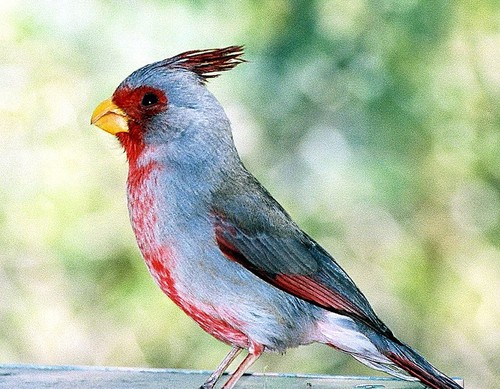
Pyrrhuloxia
19-22 cm (7.5-8.7 in) long, 30 cm wingspan
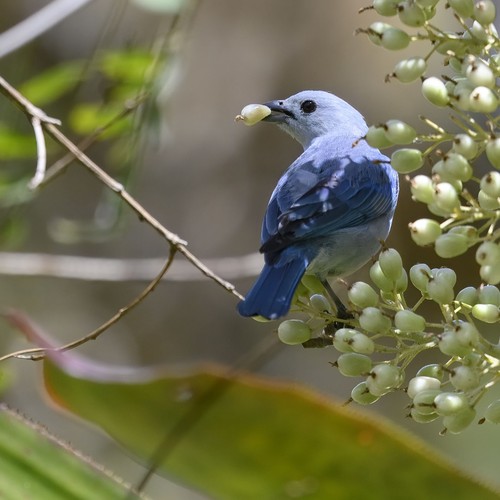
Blue-gray Tanager
16-18 cm (6-7 in) long
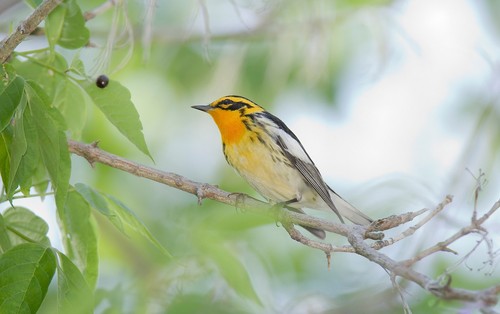
Blackburnian Warbler
11-13 cm (4.3-5.1 in) long, 20-22 cm wingspan
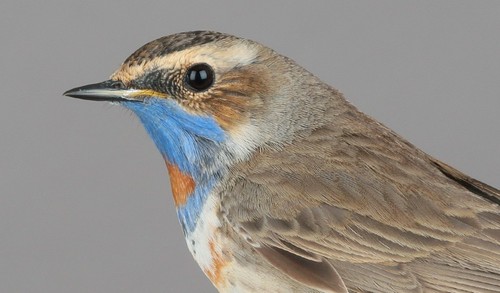
Bluethroat
13-14 cm (5.1-5.5 in) long, 20-22 cm wingspan
Eurasian Nuthatch
12-14.5 cm (4.7-5.7 in) long, 22.5-27 cm wingspan
Wood Thrush
19-21 cm (7.5-8.3 in) long, about 33 cm (13 in) wingspan