
Red-backed Fairywren
Malurus melanocephalus
The smallest fairywren, with breeding males a striking combination of jet black plumage and a vivid scarlet back patch.
- Size
- 10-11 cm (4-4.3 in) long
- Habitat
- tall grass, savanna woodland, and grassy understory across northern and eastern Australia
- Type
- songbird
Spotted a bird like this?
Identify any bird from a photo, free.
Overview
The Red-backed Fairywren is the smallest species in the fairywren family and, in breeding male plumage, one of the most simply but boldly patterned: an entirely glossy black body offset by a bright scarlet-to-orange patch across the back and rump. This high-contrast pattern makes displaying males easy to pick out as they move through grass tussocks and low shrubbery.
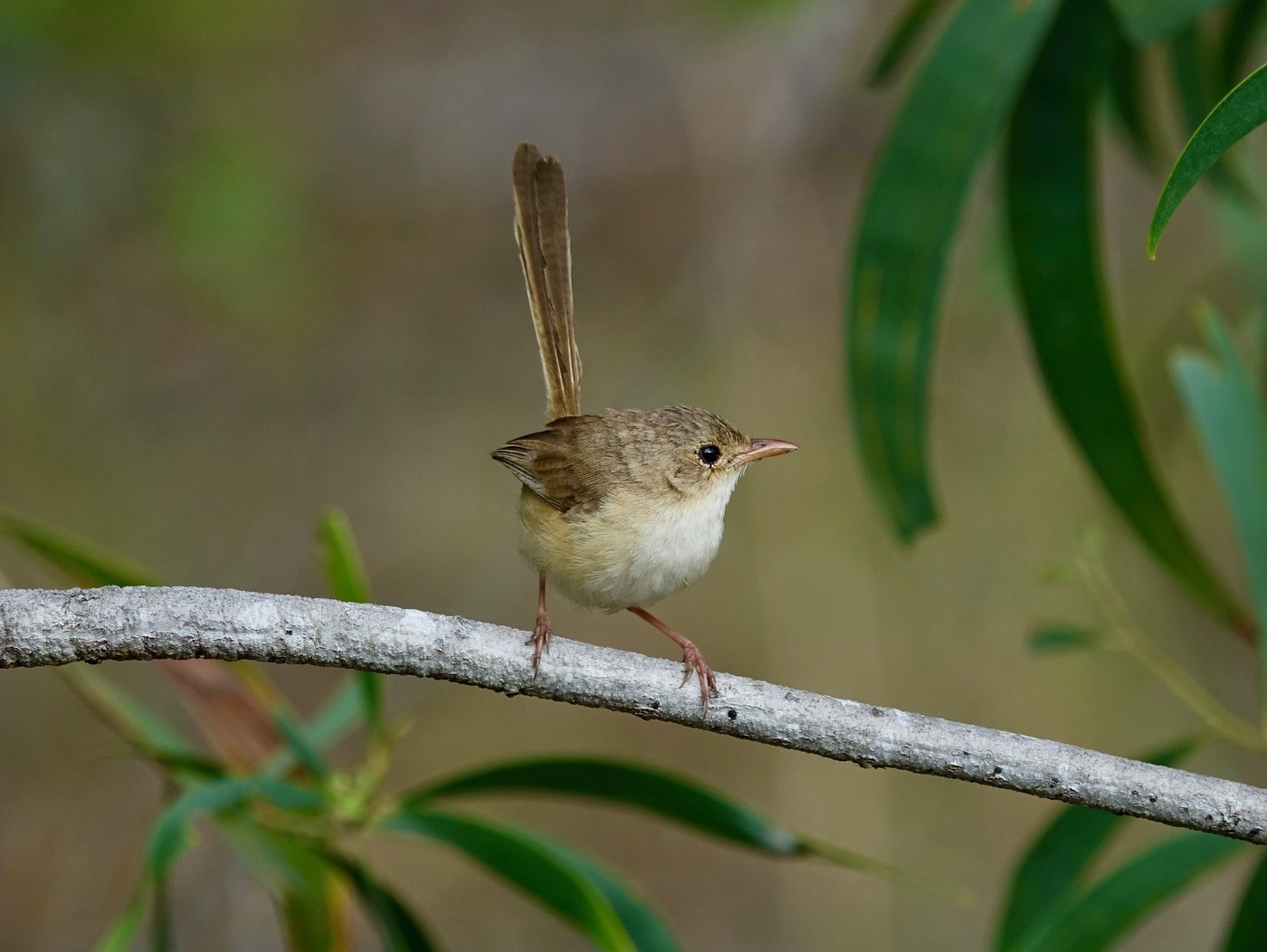
Females and non-breeding males are plain warm brown above and paler buff below, lacking any black or red, and are best told from other small brown birds by their long, frequently cocked tail and characteristic fairywren behavior of moving in small active groups.
How to identify it
Key field marks
- Breeding male: glossy black body with a bright red-to-orange back and rump patch
- Female/non-breeding male: plain warm brown, paler below, no red or black
- Smallest fairywren species, with a proportionately long tail
- Found in grassy habitats, often taller and rougher than typical fairywren habitat further south
Similar species
- Variegated Fairywren: breeding male is blue and black with a chestnut shoulder patch, not an all-black body with a red back.
- Female Red-backed Fairywrens closely resemble other female fairywrens; habitat (tall grass/savanna) and range help narrow identification.
Habitat & range
Habitat
Red-backed Fairywrens favor tall grass, savanna woodland understory, cane grass, and rank grassy areas along watercourses, generally in warmer, grassier habitat than other fairywren species.
Range
The species occurs across northern and eastern Australia, from the Kimberley region of Western Australia across the Top End and Cape York, south through Queensland into northeastern New South Wales.
Migration
Mostly sedentary, though some local movement may occur linked to grass growth and seasonal conditions, especially in the monsoonal tropics.
Behavior & voice
Behavior
Red-backed Fairywrens live in small social groups and forage low in grass and shrubs, frequently hopping across open ground between patches of cover, with males performing conspicuous display flights showing off the red back patch.
Voice
The song is a fast, high-pitched trill typical of fairywrens, along with soft contact calls used to keep the group together in dense grass.
Feeding
Diet consists mainly of small insects and spiders gleaned from grass stems and the ground, with occasional small seeds.
Nesting and breeding
Nests are small domed structures built low in grass tussocks or shrubs, made of grass and spider web. Clutches typically contain three eggs, incubated by the female, with cooperative helpers from the family group assisting in feeding chicks.
Frequently asked questions
What does a breeding male Red-backed Fairywren look like?
It is glossy black overall with a bright red-to-orange patch across the back and rump, making it one of the most distinctively colored fairywrens.
How big is a Red-backed Fairywren?
It is the smallest fairywren species, only about 10-11 cm long, including its long tail.
Where do Red-backed Fairywrens live?
They are found in tall grass and savanna woodland understory across northern and eastern Australia.
What do Red-backed Fairywrens eat?
Mostly small insects and spiders gleaned from grass and the ground, with occasional small seeds.
Red-backed Fairywren guides
In-depth guides for identifying, finding, and understanding Red-backed Fairywren.
Other birds you may enjoy

Black Redstart
13-14.5 cm (5.1-5.7 in) long, 23-26 cm wingspan

Black-throated Sparrow
12-14 cm (4.7-5.5 in) long, about 19-20 cm (7.5-8 in) wingspan

Greater Bird-of-paradise
Body about 43 cm; males with additional flank plumes up to 50 cm and long tail wires

Blue Tit
11-12 cm (4.3-4.7 in) long, 17-20 cm wingspan

Red-billed Quelea
11.5–13 cm long, wingspan about 20–22 cm
White-plumed Antbird
13-14 cm (5-5.5 in) long

Pyrrhuloxia
19-22 cm (7.5-8.7 in) long, 30 cm wingspan

Blue-gray Tanager
16-18 cm (6-7 in) long

Blackburnian Warbler
11-13 cm (4.3-5.1 in) long, 20-22 cm wingspan

Bluethroat
13-14 cm (5.1-5.5 in) long, 20-22 cm wingspan

Eurasian Nuthatch
12-14.5 cm (4.7-5.7 in) long, 22.5-27 cm wingspan

Wood Thrush
19-21 cm (7.5-8.3 in) long, about 33 cm (13 in) wingspan