
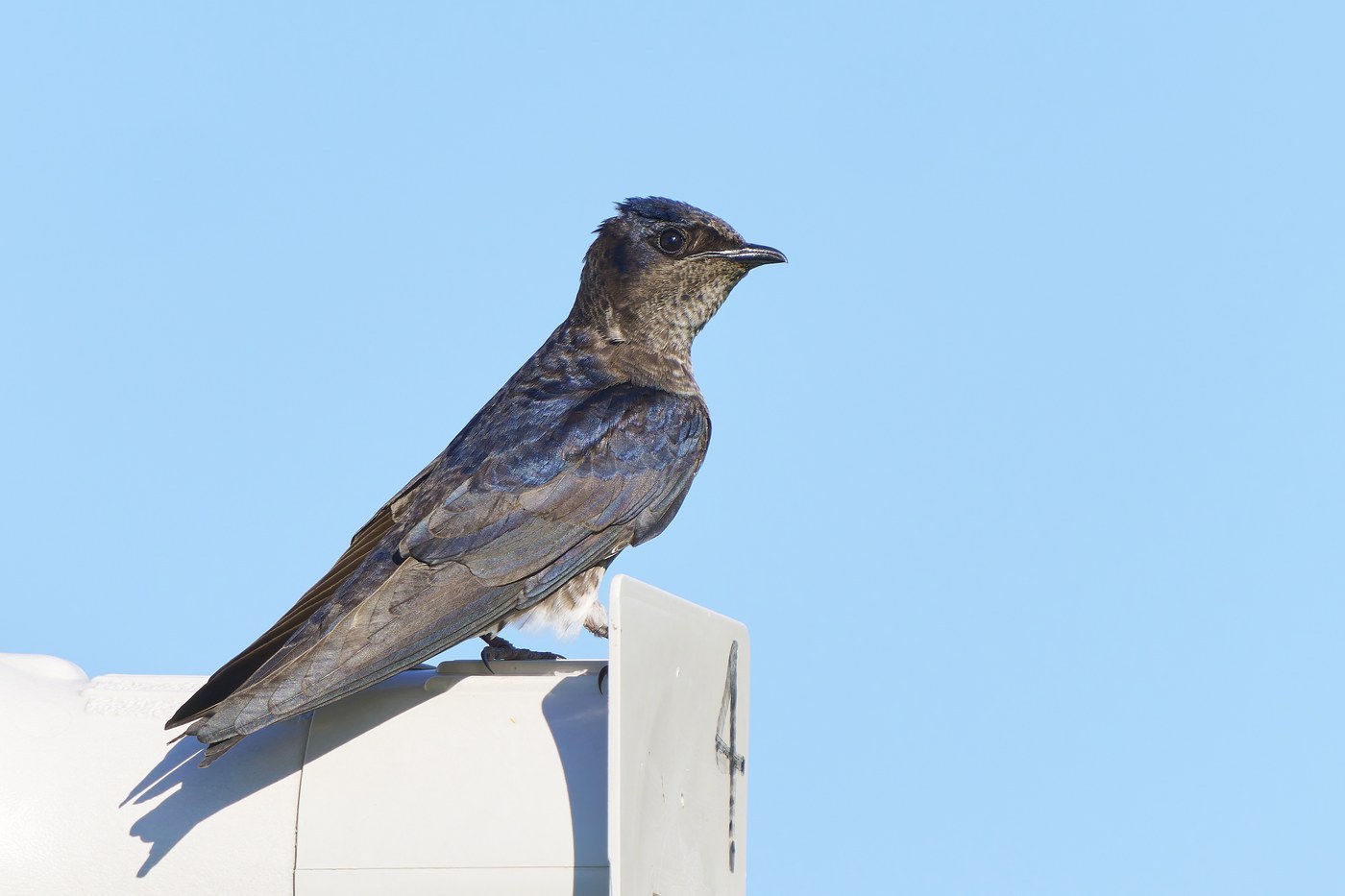
Purple Martin
Progne subis
North America's largest swallow, a glossy blue-black aerial insectivore whose eastern population now nests almost entirely in birdhouses provided by people.
- Size
- 18-22 cm (7-8.5 in) long, about 40-42 cm (16-16.5 in) wingspan
- Habitat
- open areas near water; nests almost entirely in human-provided martin houses and gourds in the eastern range
- Type
- songbird
Spotted a bird like this?
Identify any bird from a photo, free.
Overview
The Purple Martin is the largest swallow in North America, a graceful, highly aerial bird long associated with human-provided housing across much of its eastern range, a relationship with deep roots in Indigenous and later European American tradition of hanging hollow gourds to attract nesting martins.
Adult males are entirely glossy, iridescent blue-black, appearing almost purple in good light, giving the species its name. Females and immature birds are considerably duller, grayish-brown above with a paler, mottled gray breast and a pale forehead and collar, lacking the male's uniform gloss.
East of the Rocky Mountains, the species has become so dependent on artificial martin houses and gourd clusters that natural tree-cavity nesting is now rare; western populations, by contrast, still nest largely in natural cavities and tend to be more solitary.
How to identify it
Key Field Marks
- Large size, clearly the biggest swallow in North America
- Adult male: entirely glossy blue-black/purple, no contrasting markings
- Female/immature: grayish-brown above, paler mottled gray below, with a pale forehead and collar
- Broad-chested, robust swallow shape with a slightly forked tail
Similar Species
- Tree Swallow: much smaller, with clean white underparts contrasting sharply with a glossy blue-green back, lacking the Purple Martin's bulkier build
- European Starling: superficially similarly dark and glossy but has a shorter tail, longer pointed bill, and a very different flight style (direct rather than the martin's graceful soaring glides)
Overall size and the male's uniform blue-black gloss without white underparts are the most reliable distinguishing features from other swallows.
Habitat & range
Purple Martins favor open areas near water, including fields, marshes, and towns, where they have abundant airspace for foraging on flying insects. In the eastern United States and Canada, the species breeds almost exclusively in colonies at human-provided martin houses (multi-compartment birdhouses) and clusters of hollow gourds, a practice with roots in Native American tradition that was later adopted widely by European settlers.
Western populations, found more locally across parts of the Pacific coast, the Rockies, and the desert Southwest, still rely largely on natural cavities, such as old woodpecker holes in dead trees or saguaro cacti, and tend to nest as isolated pairs rather than in large colonies.
Purple Martins winter in South America, primarily in the Amazon basin of Brazil, and form spectacular pre-migration communal roosts, sometimes numbering in the tens of thousands of birds, at staging areas in the southeastern United States before departing for the tropics.
Behavior & voice
Behavior
Purple Martins are highly aerial, spending much of the day foraging in flight, and eastern populations are strongly colonial, nesting in clusters of dozens of pairs at a single martin house complex.
Voice
The song is a rich, gurgling, chortling series of notes; a variety of calls, including a distinctive 'cher-cher' and other chattering notes, are given throughout the day, especially around the nesting colony at dawn.
Feeding
Diet consists entirely of flying insects, caught on the wing during graceful, soaring flight; martins forage at varying heights depending on insect activity and weather.
Nesting and Breeding
Eastern populations nest almost exclusively in colonies at human-provided martin houses or gourd racks, while western populations more often use natural tree cavities or old woodpecker holes, typically as solitary or loosely associated pairs. Clutches usually contain 3-6 white eggs, and pairs are highly attentive to nest defense against competitors such as European Starlings and House Sparrows.
Frequently asked questions
Why do Purple Martins nest in birdhouses?
In the eastern United States and Canada, the species has become so reliant on human-provided martin houses and hollow gourds, a tradition dating back to Indigenous peoples, that natural tree-cavity nesting is now rare in that region.
What does a Purple Martin look like?
Adult males are entirely glossy blue-black, while females and immatures are duller grayish-brown above with a paler, mottled gray breast.
Where do Purple Martins spend the winter?
They winter in South America, primarily in the Amazon basin of Brazil, forming large communal roosts.
What do Purple Martins eat?
They eat flying insects exclusively, caught in flight during graceful aerial foraging.
Do all Purple Martins nest in birdhouses?
No, western populations still primarily use natural cavities such as old woodpecker holes and tend to nest as solitary pairs rather than in large colonies.
Purple Martin guides
In-depth guides for identifying, finding, and understanding Purple Martin.
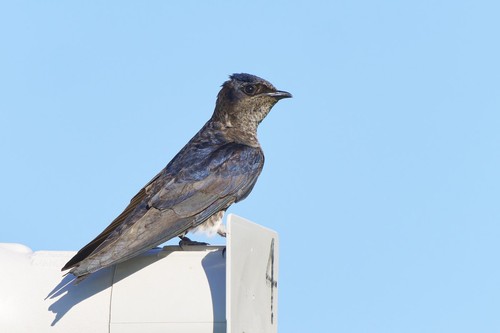
Purple Martin identified by the community
Real birds identified with Bird Identifier.
Other birds you may enjoy
Black Redstart
13-14.5 cm (5.1-5.7 in) long, 23-26 cm wingspan
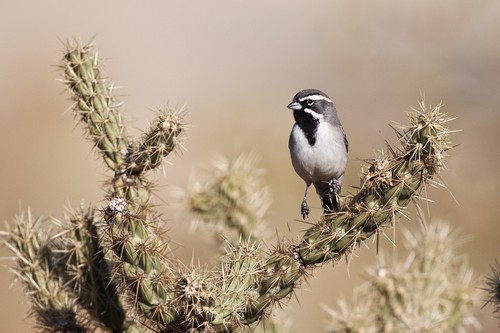
Black-throated Sparrow
12-14 cm (4.7-5.5 in) long, about 19-20 cm (7.5-8 in) wingspan
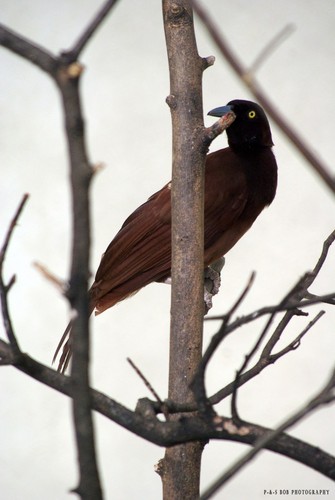
Greater Bird-of-paradise
Body about 43 cm; males with additional flank plumes up to 50 cm and long tail wires
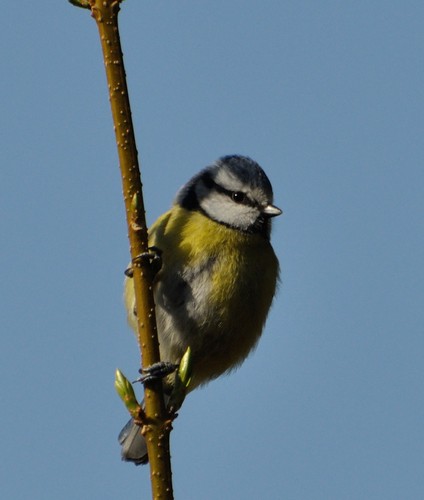
Blue Tit
11-12 cm (4.3-4.7 in) long, 17-20 cm wingspan
Red-billed Quelea
11.5–13 cm long, wingspan about 20–22 cm
White-plumed Antbird
13-14 cm (5-5.5 in) long
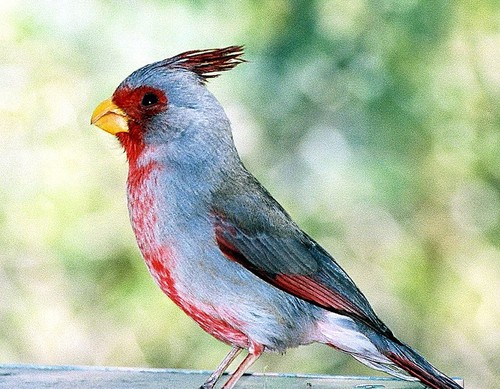
Pyrrhuloxia
19-22 cm (7.5-8.7 in) long, 30 cm wingspan
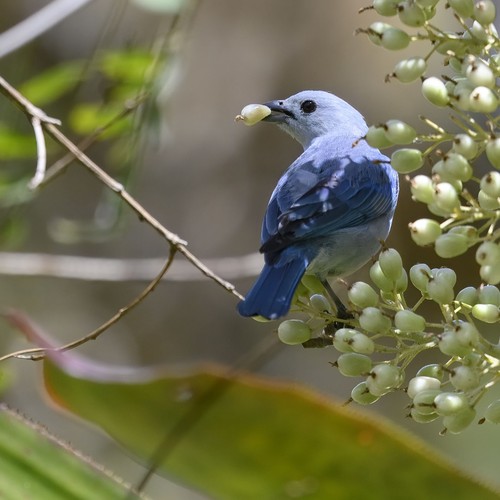
Blue-gray Tanager
16-18 cm (6-7 in) long
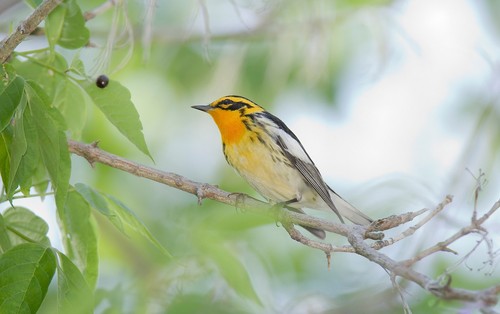
Blackburnian Warbler
11-13 cm (4.3-5.1 in) long, 20-22 cm wingspan
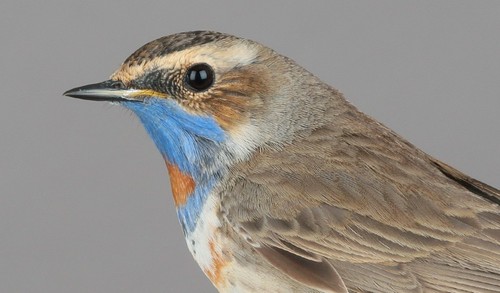
Bluethroat
13-14 cm (5.1-5.5 in) long, 20-22 cm wingspan
Eurasian Nuthatch
12-14.5 cm (4.7-5.7 in) long, 22.5-27 cm wingspan
Wood Thrush
19-21 cm (7.5-8.3 in) long, about 33 cm (13 in) wingspan