
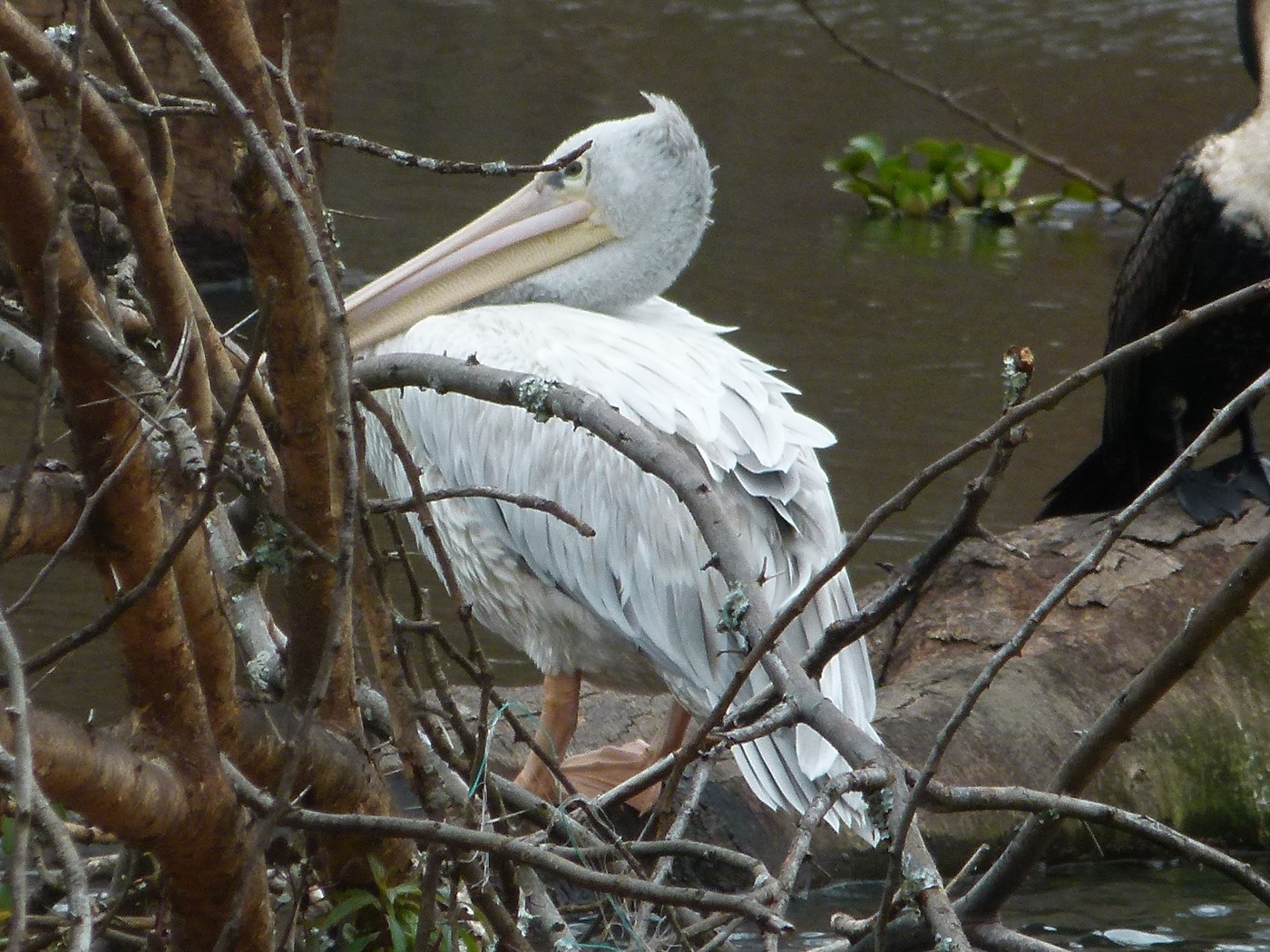
Pink-backed Pelican
Pelecanus rufescens
A relatively small, drab greyish pelican of African wetlands, named for a subtle pink tinge on the back that is often difficult to see in the field.
- Size
- 125-155 cm (49-61 in) long, 210-290 cm wingspan
- Habitat
- freshwater lakes, rivers, and swamps of sub-Saharan Africa
- Type
- seabird
Spotted a bird like this?
Identify any bird from a photo, free.
Overview
The Pink-backed Pelican is a modestly sized member of the pelican family found across sub-Saharan Africa and parts of southwestern Arabia. It is generally less conspicuous than larger pelican species, with duller plumage overall.
Appearance
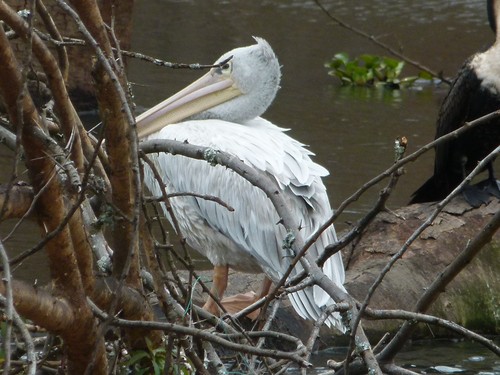
Adults are greyish-white with a subtle pinkish tinge visible on the back at close range, a shaggy crest on the nape, and a yellowish-grey bill and pouch that can appear more colorful during the breeding season.
How to identify it
Key field marks
- Smaller and greyer overall than the Great White Pelican
- Subtle pink tinge on the back, often hard to see except at close range
- Shaggy crest on the nape
- Yellowish-grey bill and pouch, less brightly colored than other pelican species
Similar species
Compared to the larger, whiter Great White Pelican, the Pink-backed Pelican looks smaller, greyer, and duller overall, with a less massive bill and a shaggier crest.
Habitat & range
Habitat and range
Pink-backed Pelicans inhabit freshwater lakes, rivers, swamps, and coastal lagoons across sub-Saharan Africa, with a small population also found in southwestern Arabia. The species is largely resident, though local movements occur in response to changing water levels.
They often roost and breed in trees near water, unlike some other pelican species that nest primarily on the ground.
Behavior & voice
Behavior
Pink-backed Pelicans forage individually or in small groups, swimming and scooping fish into their pouches; they are generally less prone to the large coordinated group-fishing behavior seen in Great White Pelicans.
Voice
Adults are largely silent, with occasional low grunts near breeding colonies.
Nesting and breeding
They typically nest in trees near water, building stick platform nests, often in mixed colonies with herons, storks, or cormorants. Usually two eggs are laid, and breeding can occur at various times of year depending on local water conditions.
Frequently asked questions
Why is it called the Pink-backed Pelican?
It has a subtle pinkish tinge on its back feathers, though this is often difficult to see except at close range or in good light.
How is the Pink-backed Pelican different from the Great White Pelican?
It is smaller, greyer, and duller overall, with a less massive bill and a shaggier nape crest than the larger, whiter Great White Pelican.
Where does the Pink-backed Pelican nest?
In trees near freshwater lakes, rivers, and swamps, often alongside herons, storks, or cormorants in mixed colonies.
Where is the Pink-backed Pelican found?
Across sub-Saharan Africa, with a small additional population in southwestern Arabia.
Pink-backed Pelican guides
In-depth guides for identifying, finding, and understanding Pink-backed Pelican.
Other birds you may enjoy
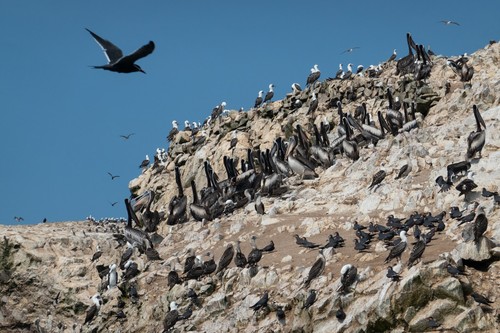
Peruvian Pelican
137-152 cm (54-60 in) long, up to 228 cm wingspan
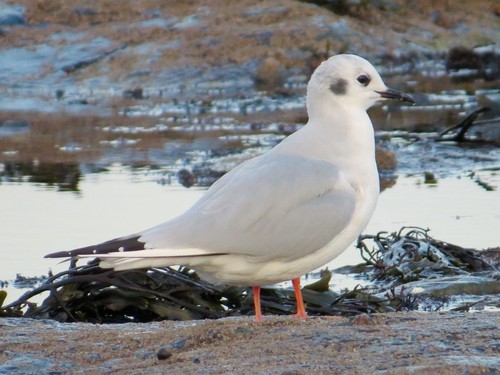
Bonaparte's Gull
28-33 cm (11-13 in) long, 76-84 cm wingspan
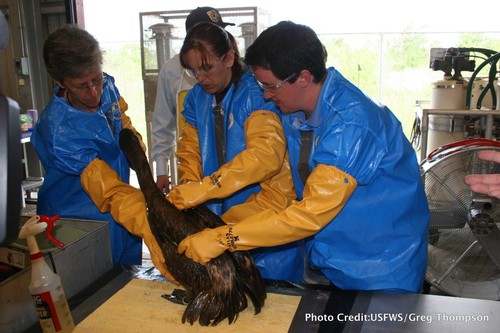
Brown Pelican
106-137 cm (42-54 in) long, 200-230 cm wingspan
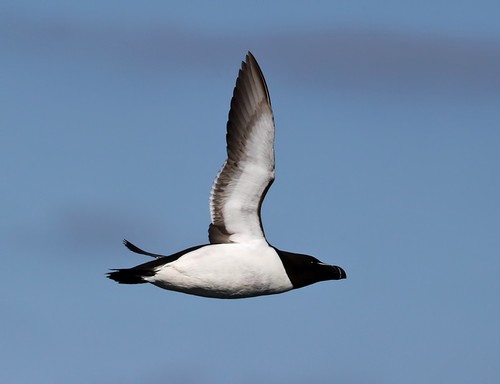
Razorbill
37-39 cm (15-15.5 in) long, 63-68 cm wingspan
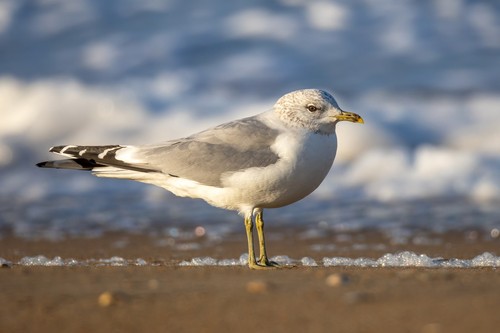
Common Gull
40-46 cm (16-18 in) long, 110-130 cm wingspan
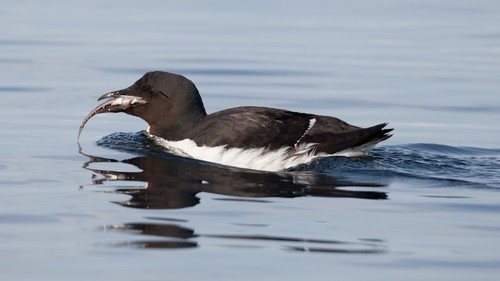
Thick-billed Murre
40-48 cm (16-19 in) long, 65-75 cm wingspan
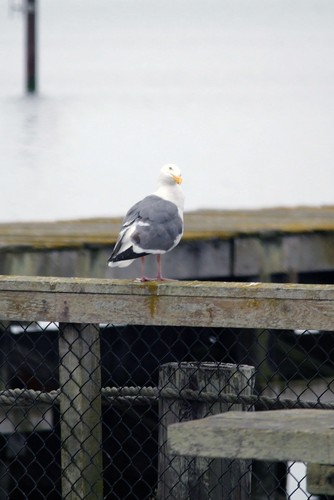
Western Gull
55-68 cm (22-27 in) long, 130-144 cm wingspan
Yellow-billed Loon
76-97 cm (30-38 in) long, 135-152 cm wingspan
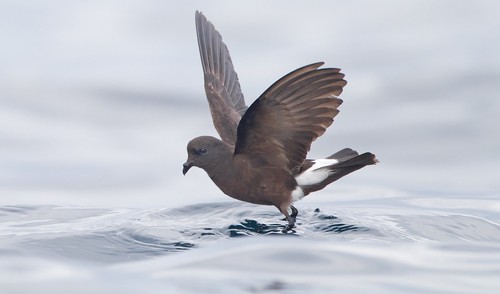
Wilson's Storm-Petrel
15-19 cm (6-7.5 in) long, wingspan 38-42 cm (15-16.5 in)
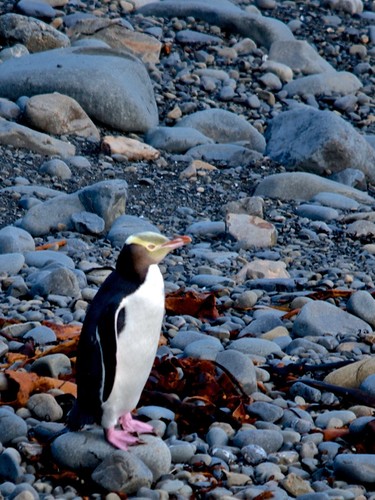
Yellow-eyed Penguin
62-79 cm (24-31 in) tall, 3-8.5 kg (6.6-18.7 lb)
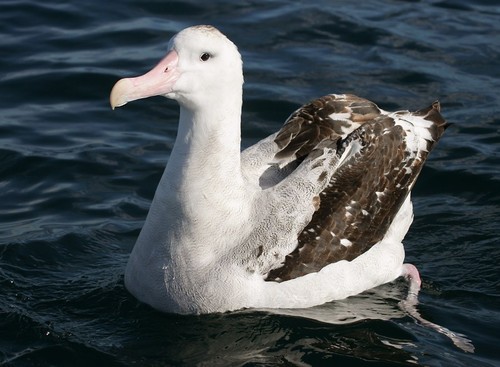
Wandering Albatross
107-135 cm (42-53 in) long, wingspan up to 3.5 m (11.5 ft)
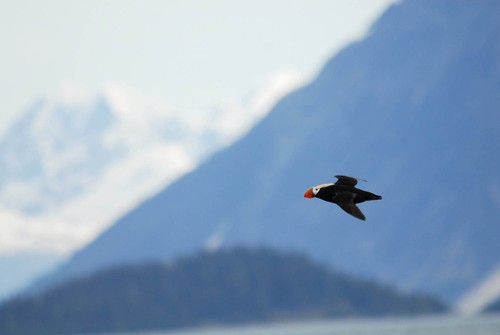
Tufted Puffin
35-41 cm (14-16 in) long, about 63-70 cm wingspan