
Pink-backed Pelican Identification Guide
A medium-sized African pelican with pale grey plumage, a subtle pink flush on the back, a shaggy rear crest, and a greyish-yellow bill pouch.
Read the full Pink-backed Pelican encyclopedia entry →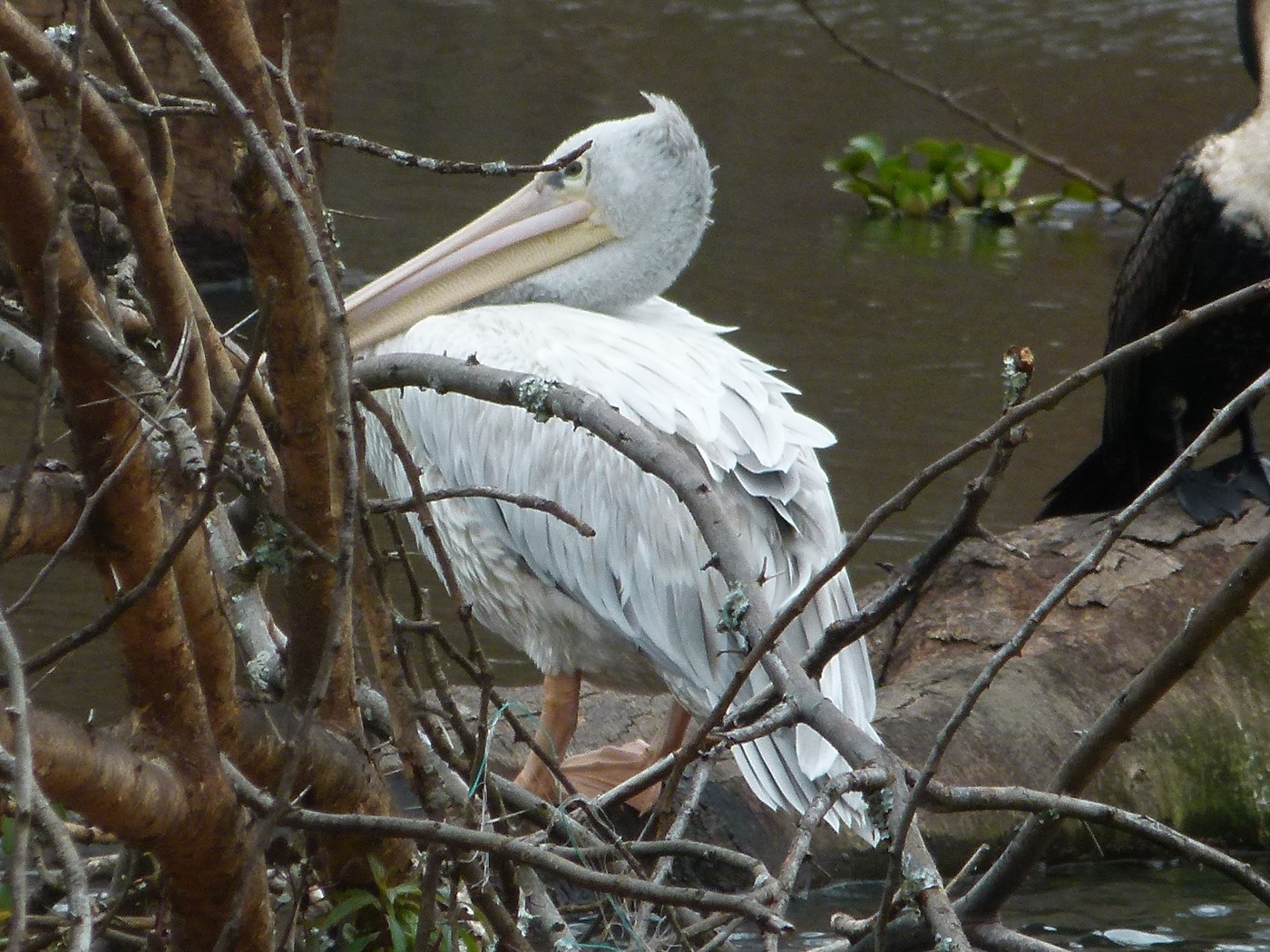
Key Field Marks
- Size: A medium-sized pelican, notably smaller and slighter than the Great White Pelican, with which its range broadly overlaps.
- Plumage: Pale grey to greyish-white overall, with a soft pinkish tinge visible on the back and wing coverts at close range or in good light, especially during the breeding season.
- Head: A shaggy, somewhat unkempt-looking crest of feathers at the back of the crown/nape, giving a slightly disheveled appearance compared to other pelicans.
- Bill & pouch: Grey bill with a pale yellowish to greyish pouch, lacking the bright pink bare facial skin that breeding Great White Pelicans show.
- Legs: Yellowish-grey.
How to Tell It From Similar Species
- Great White Pelican: Larger and whiter overall, with contrasting black flight feathers, bright pink bare facial skin, and (in breeding condition) a stronger pink flush; Great White also tends to gather in much larger flocks and thermal-soars more conspicuously.
- Overall build: Pink-backed Pelican looks smaller-headed, greyer, and less bulky than Great White Pelican when the two are seen together, which happens regularly at shared wetlands.
Habitat & Range
Widespread across sub-Saharan Africa, with a smaller range extending into parts of the Arabian Peninsula and historically southwestern Asia. It favors freshwater and brackish wetlands — lakes, rivers, swamps, estuaries, and mangroves — and often nests colonially in trees, sometimes alongside herons and storks.
Voice
Generally silent away from breeding colonies; at nesting colonies adults give low grunting and croaking calls, and chicks are noisier, but vocalizations play a minor role in field identification compared to plumage and structure.
Frequently asked questions
How do you tell a Pink-backed Pelican from a Great White Pelican?
Pink-backed Pelican is smaller and greyer overall without the black flight feathers or bright pink facial skin of the Great White Pelican, and it typically occurs in smaller, less conspicuous groups.
Why is it called "pink-backed" if it looks mostly grey?
The pink is a subtle flush on the back and wing coverts, most visible at close range or in good light and strongest during the breeding season — it's not the dominant color of the bird.
Where do Pink-backed Pelicans live?
They are found across sub-Saharan Africa and locally in the Arabian Peninsula, on freshwater and brackish wetlands such as lakes, rivers, and mangroves.
Do Pink-backed Pelicans nest in colonies?
Yes, they typically nest colonially in trees, often near water and sometimes alongside herons, storks, or other waterbirds.