
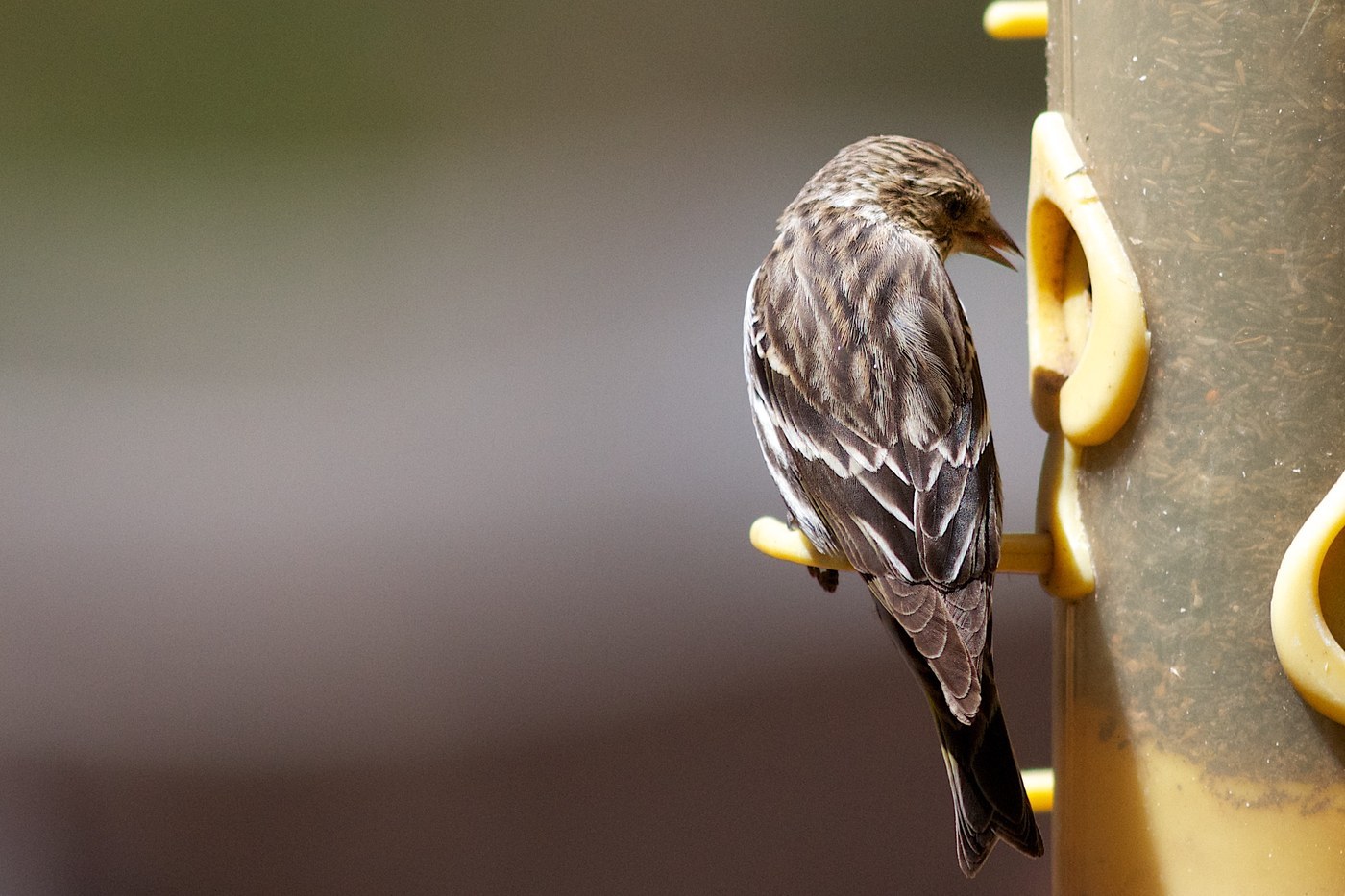
Pine Siskin
Spinus pinus
A small, heavily streaked brown finch with sharp yellow wing and tail markings, notorious for unpredictable winter irruptions.
- Size
- 11-14 cm (4.3-5.5 in) long, 18-22 cm wingspan
- Habitat
- coniferous and mixed forests; irruptive visitor to feeders and weedy fields in winter
- Type
- songbird
Spotted a bird like this?
Identify any bird from a photo, free.
Overview
The Pine Siskin is a small, slender finch, heavily streaked overall in brown and buff, that can look almost sparrow-like at first glance until it flashes bright yellow patches at the base of the wings and tail. The bill is notably thin and sharply pointed compared to most other finches, an adaptation for extracting seeds from conifer cones and thistle heads.
The amount of yellow in the plumage is variable between individuals, with some birds showing extensive yellow in the wings while others show very little, but the overall streaky brown pattern and small, active, acrobatic behavior are consistent.
How to identify it
Key field marks
- Small size with heavy brown streaking overall
- Thin, sharply pointed bill (unlike the stubbier bill of most finches)
- Yellow patches at the base of the flight feathers and tail, most visible in flight
- Notched tail and relatively short wings
Similar species
- Female and immature American Goldfinches are also streaky and yellowish but have a stouter, conical bill and lack the siskin's fine overall streaking.
- Female House Finches are larger, plainer brown, and lack the yellow wing and tail flashes.
Habitat & range
Pine Siskins breed across the boreal forest of Canada and Alaska, the Pacific coast ranges, and higher-elevation coniferous forests farther south in the western mountains and Appalachians. They favor conifer-dominated woodlands but also use mixed and deciduous woods.
The species is a classic irruptive migrant: in years when conifer seed crops fail across the boreal forest, large numbers move far south of their usual winter range in search of food, sometimes reaching the Gulf Coast, while in years of good cone crops they may stay largely in the north.
Behavior & voice
Pine Siskins are highly social and acrobatic, often feeding in tight, twittering flocks that cling to cone tips and hang upside-down while extracting seeds, much like a small parrot. They readily mix with goldfinches and redpolls at feeders, showing a strong preference for nyjer/thistle seed.
The voice includes a distinctive rising, buzzy "zzzreeeee" call unlike that of any other common feeder finch, along with twittering chatter given by flocks in flight. Diet is dominated by conifer and other small seeds, supplemented by insects, especially when feeding young. Nests are shallow cups built well out on a horizontal conifer branch, often in loose colonies, with three to five pale, lightly spotted eggs per clutch.
Frequently asked questions
How do you identify a Pine Siskin?
Look for a small, heavily brown-streaked finch with a thin, sharply pointed bill and yellow patches at the base of the wings and tail, most visible in flight.
Why do Pine Siskins show up in huge numbers some winters and not others?
They are irruptive migrants whose movements track conifer seed crop failures in the boreal forest; poor cone crops push large numbers south in search of food, while good crops keep them farther north.
What does a Pine Siskin sound like?
A distinctive rising, buzzy 'zzzreeeee' call, along with twittering chatter, especially from flocks in flight.
What do Pine Siskins eat?
Mainly small seeds, especially from conifers, thistle, and other plants, plus insects during the breeding season; at feeders they strongly favor nyjer/thistle seed.
Are Pine Siskins related to goldfinches?
Yes, they are in the same genus as the American Goldfinch and often flock together, sharing similar feeding habits and undulating flight.
Pine Siskin guides
In-depth guides for identifying, finding, and understanding Pine Siskin.
Other birds you may enjoy
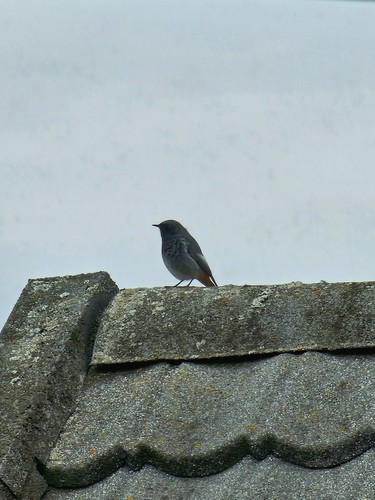
Black Redstart
13-14.5 cm (5.1-5.7 in) long, 23-26 cm wingspan
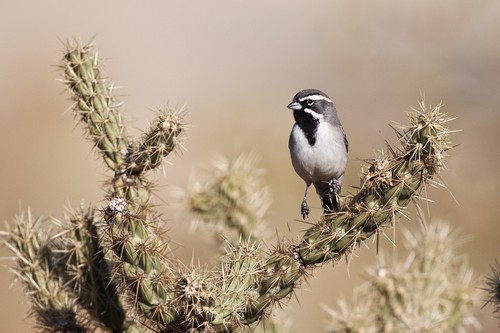
Black-throated Sparrow
12-14 cm (4.7-5.5 in) long, about 19-20 cm (7.5-8 in) wingspan
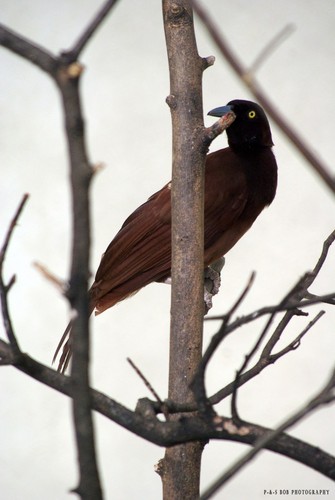
Greater Bird-of-paradise
Body about 43 cm; males with additional flank plumes up to 50 cm and long tail wires
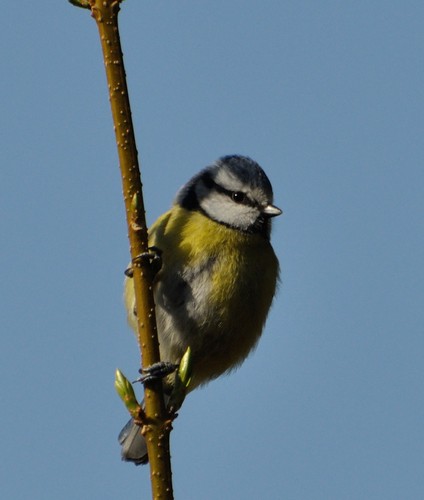
Blue Tit
11-12 cm (4.3-4.7 in) long, 17-20 cm wingspan
Red-billed Quelea
11.5–13 cm long, wingspan about 20–22 cm
White-plumed Antbird
13-14 cm (5-5.5 in) long
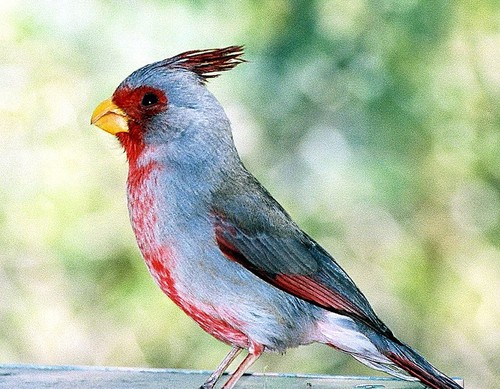
Pyrrhuloxia
19-22 cm (7.5-8.7 in) long, 30 cm wingspan
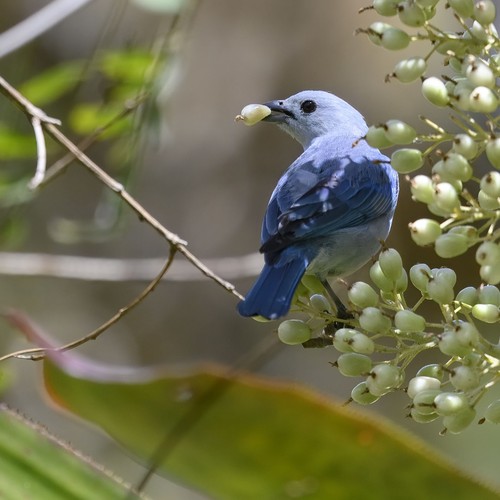
Blue-gray Tanager
16-18 cm (6-7 in) long
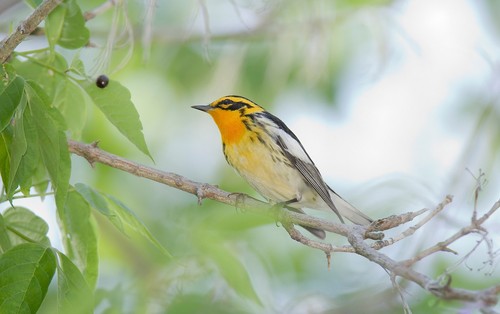
Blackburnian Warbler
11-13 cm (4.3-5.1 in) long, 20-22 cm wingspan
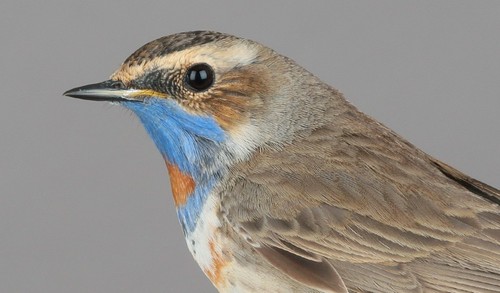
Bluethroat
13-14 cm (5.1-5.5 in) long, 20-22 cm wingspan
Eurasian Nuthatch
12-14.5 cm (4.7-5.7 in) long, 22.5-27 cm wingspan
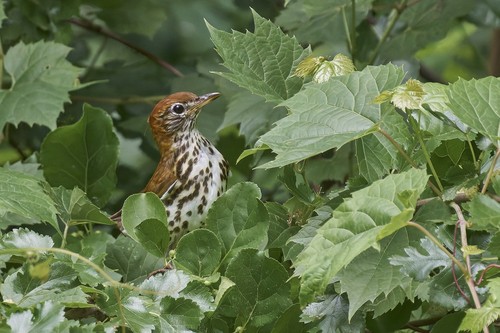
Wood Thrush
19-21 cm (7.5-8.3 in) long, about 33 cm (13 in) wingspan