
Pine Siskin Identification Guide
A tiny, heavily streaked finch with a thin pointed bill and flashes of yellow in the wings and tail, often seen in noisy, irruptive flocks at thistle feeders.
Read the full Pine Siskin encyclopedia entry →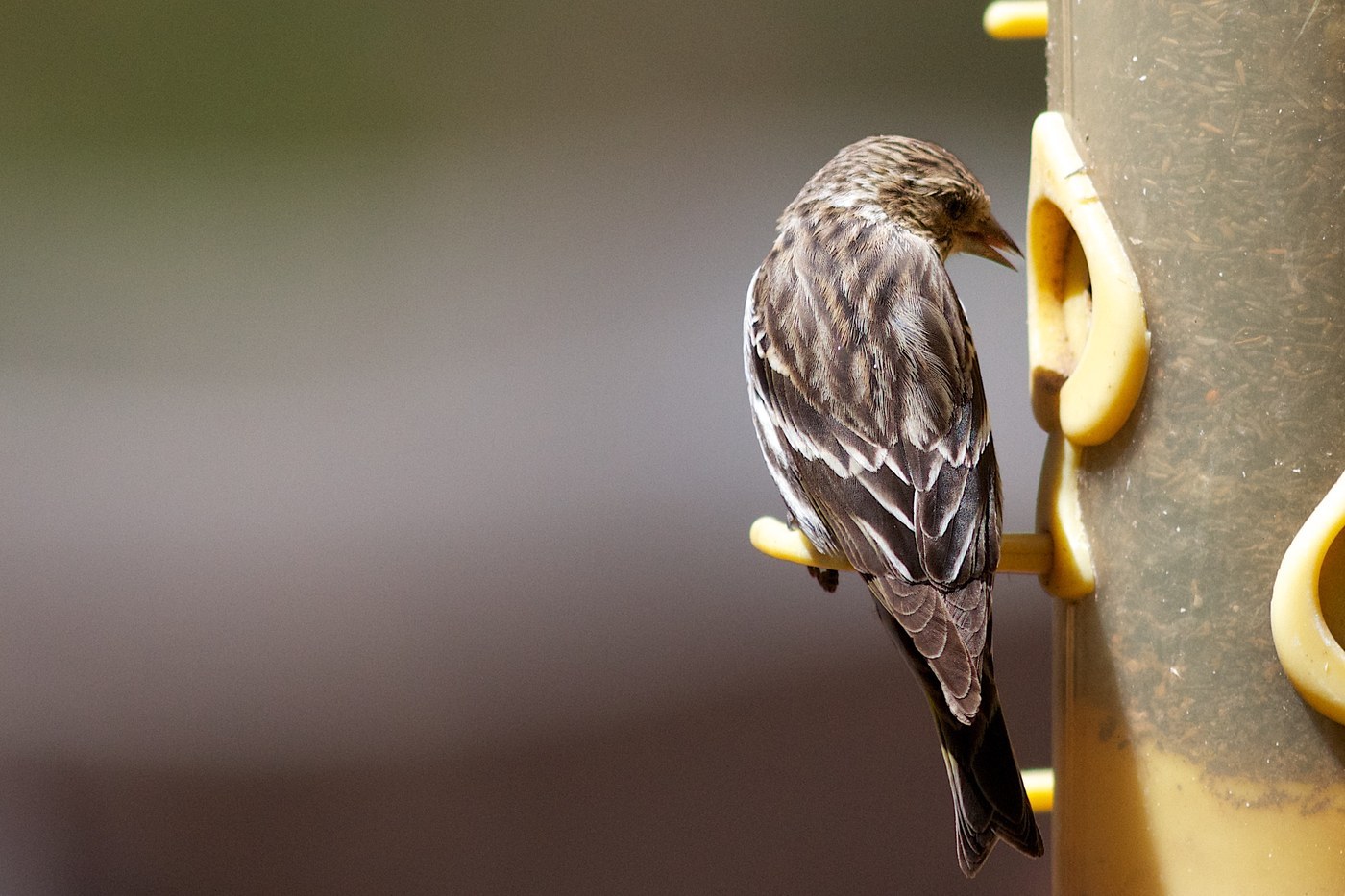
Key Field Marks
- Size & shape: Very small, about 11–12 cm (4.5 in), with a slim body, notched tail, and a thin, sharply pointed bill (finer than a goldfinch's).
- Plumage: Overall brown to buffy-brown with heavy, blurry dark streaking covering the head, back, and underparts — streakier than almost any other small finch.
- Yellow highlights: Pale to bright yellow patches at the base of the flight feathers and at the base of the tail, most obvious in flight or when the wings are spread; can be subtle or nearly absent on some individuals.
- Bill shape: Notably slender and pointed, more needle-like than the stubbier bills of redpolls or House Finches.
Behavior
Highly gregarious, Pine Siskins move in tight, twittering flocks, cling acrobatically to branch tips and feeders (especially nyjer/thistle socks), and are prone to large-scale irruptive movements — in years of poor conifer seed crops, flocks push far south of their normal range, then may be nearly absent the following winter.
How to Tell It From Similar Species
- Common/Hoary Redpoll: Redpolls show a small red cap and (in males) a pink wash on the breast, plus a black chin patch, features Pine Siskin lacks; redpolls also show less yellow in the wing.
- Female/immature House Finch: Larger overall with a noticeably thicker, more conical bill and less crisp streaking; lacks yellow in the wings and tail.
- American Goldfinch (winter/female): Goldfinches are plumper, lack heavy streaking, and have a stubbier, more conical bill.
Habitat & Range
Breeds across the boreal forest of Canada and Alaska and in coniferous forests of the western mountains and parts of the northern U.S. In winter, numbers shift unpredictably (irruptively) across much of North America depending on food supply, sometimes flooding into backyard feeders far from typical range, other years being scarce even within it.
Voice
The most distinctive call is a rising, buzzy "zzzreeee," quite unlike the calls of other finches and often the first clue to a flock's presence overhead. Flocks also give sharp, chattering twitters constantly while feeding.
Frequently asked questions
How do I tell a Pine Siskin from a redpoll?
Redpolls show a small red cap and black chin patch that Pine Siskin lacks; Pine Siskin instead shows more yellow at the base of the wing and tail feathers.
Why do Pine Siskins suddenly show up in huge numbers some winters?
They are irruptive migrants — when conifer seed crops fail across the boreal forest, large flocks push much farther south than usual in search of food, leading to "irruption years" with abundant siskins.
What is the easiest way to identify a Pine Siskin at a feeder?
Look for a very small, heavily streaked brown finch with a thin pointed bill and yellow edging on the wings and tail, usually in a noisy, active flock.
Do Pine Siskins always show yellow in the wings?
Not always obviously — the amount of yellow varies between individuals and can be subtle at rest, becoming much more visible when the bird flies or spreads its wings.