
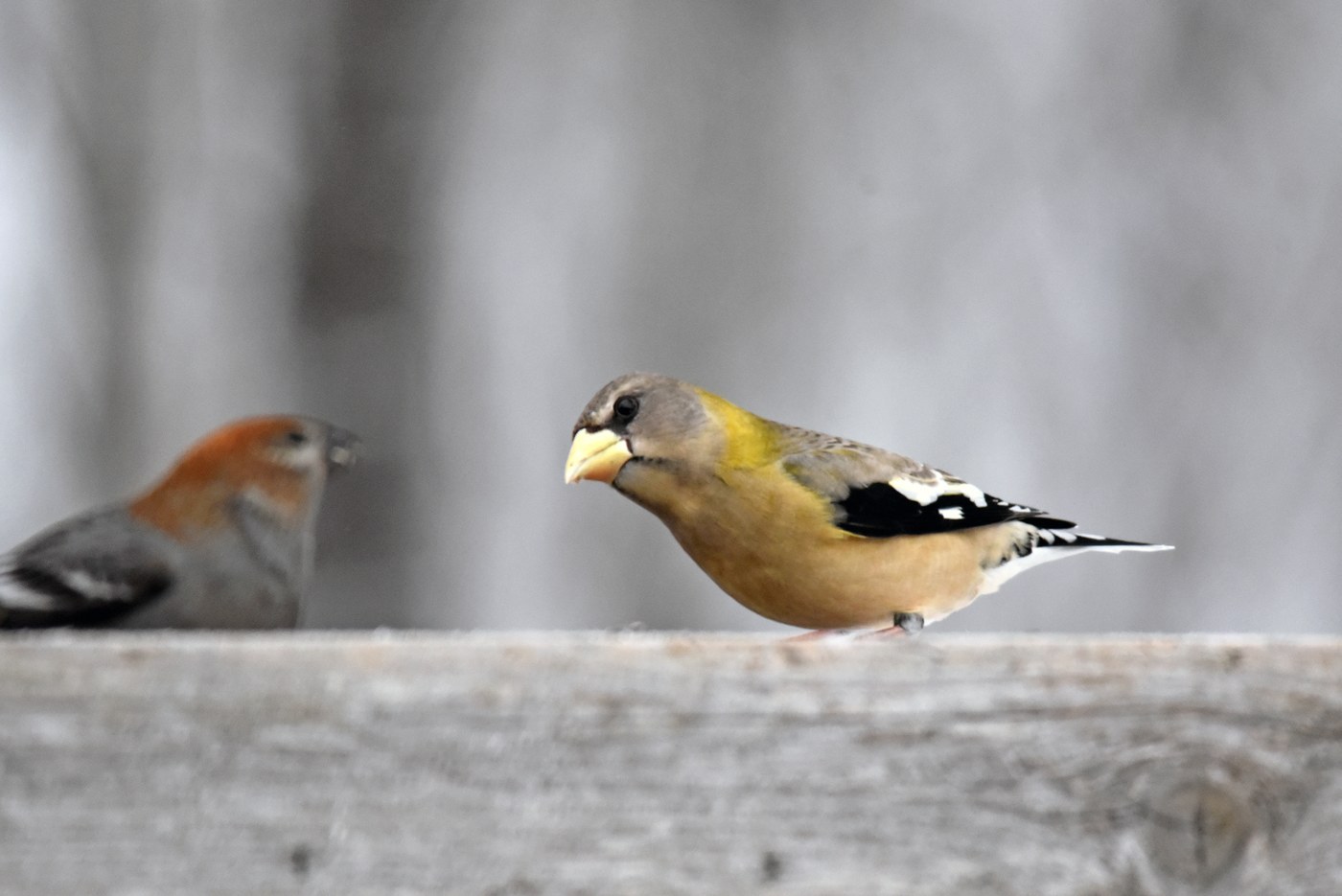
Pine Grosbeak
Pinicola enucleator
A large, gentle, slow-moving finch of northern conifer forests, with rosy-red males and mustard-gray females.
- Size
- 20-25.5 cm (8-10 in) long, 30-36 cm wingspan
- Habitat
- boreal and subalpine coniferous forests across the northern hemisphere
- Type
- songbird
Spotted a bird like this?
Identify any bird from a photo, free.
Overview
The Pine Grosbeak is the largest finch in North America, a plump, long-tailed bird with a stubby, curved black bill well suited to crushing seeds and buds. Adult males are dusky rose-red to raspberry over most of the body with gray flanks and two white wing bars, while females and immature males are soft gray-olive with a mustard-yellow to russet wash on the head and rump. Juveniles resemble females.
Pine Grosbeaks breed in remote boreal and subalpine spruce-fir forests across Canada, Alaska, and mountainous parts of the western United States, as well as across northern Eurasia. They are famously tame and unhurried, often allowing close approach as they methodically pluck buds and seeds from trees and shrubs.
How to identify it
Key Field Marks
- Large, chunky finch with a long notched tail
- Short, thick, curved black bill
- Two crisp white wing bars on dark wings
- Males: dusky rosy-red body with gray belly and flanks
- Females/immatures: gray body with yellow-olive to russet head, nape, and rump
Similar Species
- Purple Finch and House Finch: both much smaller with slimmer bills and less extensive color wash.
- Red Crossbill: similarly reddish in males but has distinctively crossed mandibles and lacks white wing bars.
- Common Redpoll: much smaller with a red cap and black chin, unlike the grosbeak's uniformly colored head.
Habitat & range
Habitat
Pine Grosbeaks favor open coniferous and mixed boreal forest, subalpine spruce-fir stands, and forest edges, often near berry-producing shrubs like mountain ash.
Range
The species has a circumpolar distribution, breeding across the boreal zone of Canada and Alaska, in the mountainous West of the United States, and across Scandinavia, Russia, and Siberia.
Migration
Most populations are short-distance or irruptive migrants, wandering irregularly southward in winter when cone and berry crops fail farther north, sometimes appearing well south of the usual range in flocks feeding on ornamental fruit trees.
Behavior & voice
Behavior
Pine Grosbeaks are notably tame and deliberate, moving slowly through trees and shrubs while feeding, often in small flocks. They are far less flighty than many other finches and can sometimes be approached quite closely.
Voice
The call is a clear, whistled "pui-pui-pui" or musical warble; the song is a rich, slow warbling similar to that of a Purple Finch but softer and less hurried.
Feeding
Diet consists mainly of buds, seeds, and berries of conifers, mountain ash, crabapple, and other trees, along with some insects fed to nestlings.
Nesting
Nests are shallow cups of twigs and rootlets, often built low in a conifer near the trunk. Females lay 2-5 eggs and incubate alone, while both parents help feed the young once hatched.
Frequently asked questions
Why are Pine Grosbeaks so tame?
They breed in remote, sparsely populated boreal forests with little exposure to humans, so they have not developed the wariness typical of birds in more settled areas.
What color are female Pine Grosbeaks?
Females are gray overall with a yellow-olive to russet wash on the head, nape, and rump, quite different from the rosy-red males.
Where do Pine Grosbeaks go in winter?
Many remain in northern forests, but when conifer seed or berry crops are poor, flocks irrupt southward, sometimes reaching feeders and fruit trees well outside their usual range.
What is the largest finch in North America?
The Pine Grosbeak holds that title, noticeably larger and bulkier than House Finches, Purple Finches, or crossbills.
What does a Pine Grosbeak eat?
Mostly buds, seeds, and berries from conifers, mountain ash, and other trees and shrubs, with insects added to the diet during the breeding season.
Pine Grosbeak guides
In-depth guides for identifying, finding, and understanding Pine Grosbeak.
Other birds you may enjoy
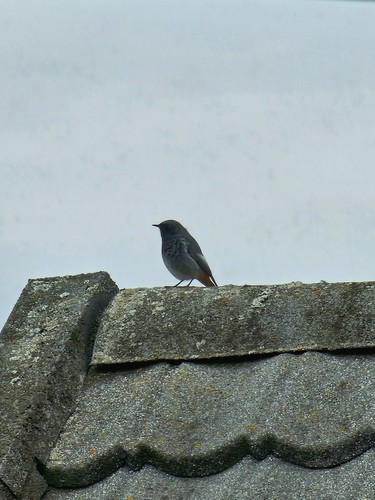
Black Redstart
13-14.5 cm (5.1-5.7 in) long, 23-26 cm wingspan
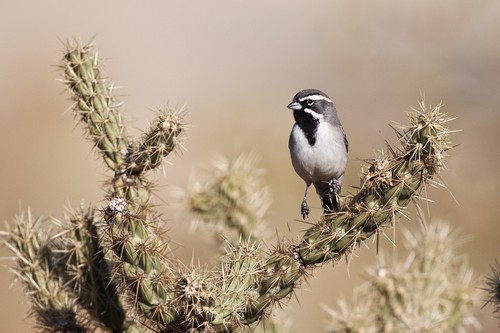
Black-throated Sparrow
12-14 cm (4.7-5.5 in) long, about 19-20 cm (7.5-8 in) wingspan
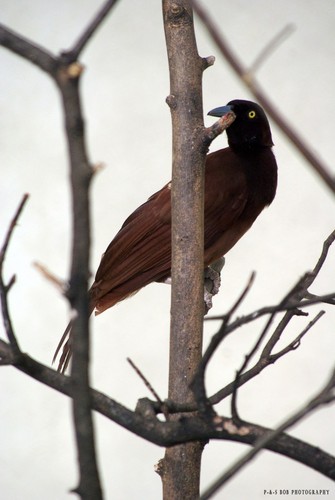
Greater Bird-of-paradise
Body about 43 cm; males with additional flank plumes up to 50 cm and long tail wires
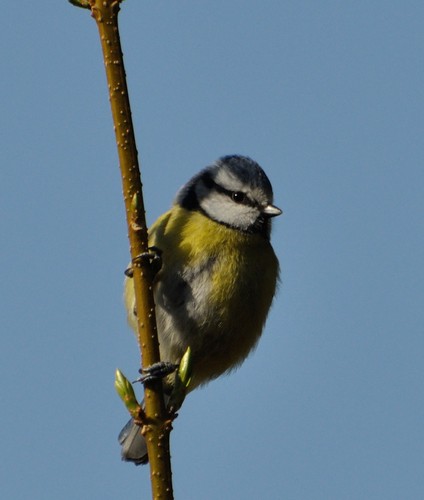
Blue Tit
11-12 cm (4.3-4.7 in) long, 17-20 cm wingspan
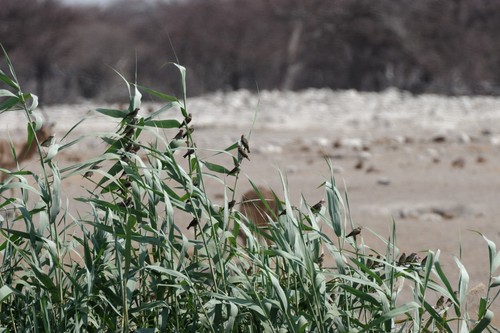
Red-billed Quelea
11.5–13 cm long, wingspan about 20–22 cm
White-plumed Antbird
13-14 cm (5-5.5 in) long
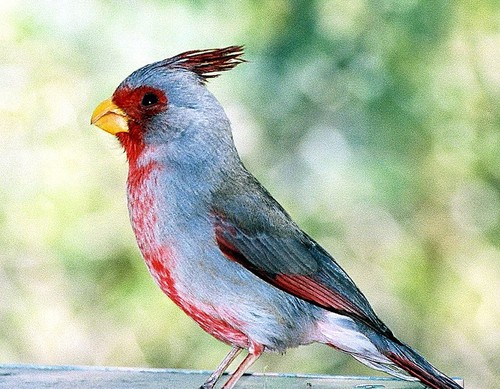
Pyrrhuloxia
19-22 cm (7.5-8.7 in) long, 30 cm wingspan
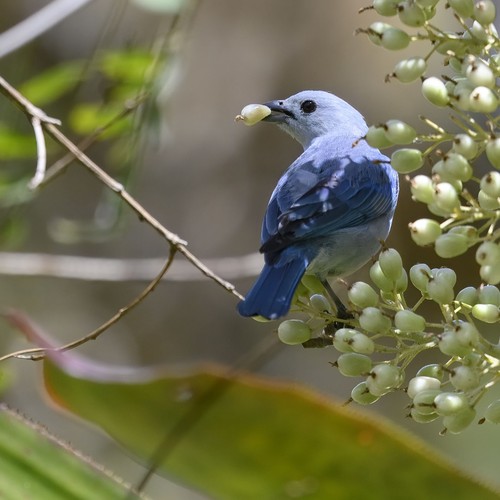
Blue-gray Tanager
16-18 cm (6-7 in) long
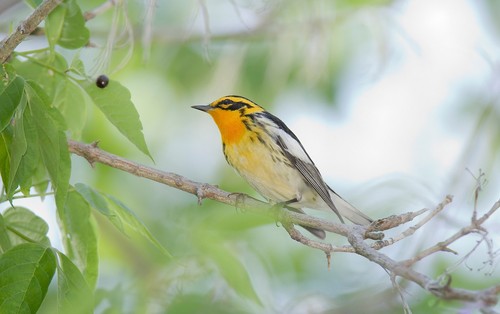
Blackburnian Warbler
11-13 cm (4.3-5.1 in) long, 20-22 cm wingspan
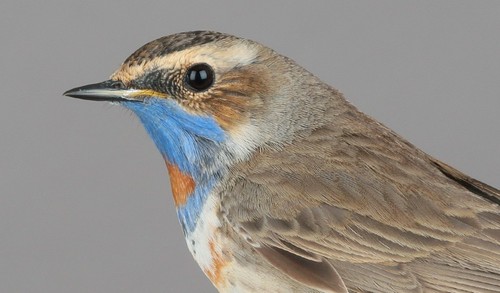
Bluethroat
13-14 cm (5.1-5.5 in) long, 20-22 cm wingspan
Eurasian Nuthatch
12-14.5 cm (4.7-5.7 in) long, 22.5-27 cm wingspan
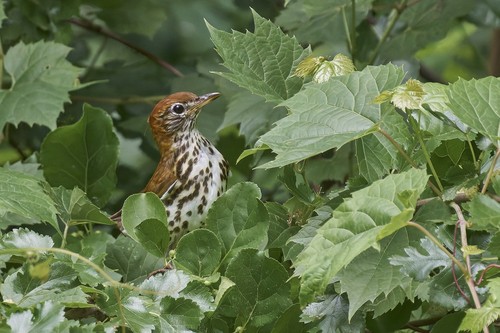
Wood Thrush
19-21 cm (7.5-8.3 in) long, about 33 cm (13 in) wingspan