
Pigeon Guillemot
Cepphus columba
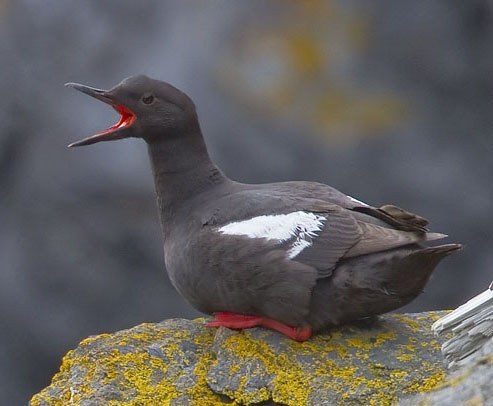
A dark sooty-black North Pacific auk with a white wing patch crossed by a dark wedge, and bright red feet.
- Size
- 30-37 cm (12-14.5 in) long, about 58 cm wingspan
- Habitat
- rocky North Pacific coasts, nearshore waters
- Type
- seabird
Spotted a bird like this?
Identify any bird from a photo, free.
Overview
The Pigeon Guillemot is a distinctive small auk of the rocky North Pacific coastline, closely related to the Atlantic's Black Guillemot but distinguished by a dark wedge or bar interrupting the white patch on its wing. In breeding plumage, the body is overall sooty black, offset by bright coral-red legs and feet and a matching red mouth lining. In winter, plumage lightens to mottled grey and white, though the diagnostic wing pattern remains visible.
Often seen bobbing close to rocky shorelines or perched on nearshore rocks, the Pigeon Guillemot is a familiar sight along the Pacific coast of North America and adjacent Asian coastlines.
How to identify it
Key field marks
- Sooty black body in breeding plumage
- White wing patch interrupted by a dark diagonal wedge or bar
- Bright red legs and feet
- Red mouth lining, visible during calls and displays
Similar species
- Black Guillemot has an unbroken white wing patch and occurs in the Atlantic and Arctic rather than the Pacific.
- Rhinoceros Auklet and Cassin's Auklet are duller brownish-grey overall, lacking the bold white wing patch of the Pigeon Guillemot.
- Winter birds are mottled grey-white but retain the interrupted wing patch, the most reliable identification feature year-round.
Habitat & range
Pigeon Guillemots breed along rocky coastlines, cliffs, and offshore islets of the North Pacific, from California north through Washington, British Columbia, and Alaska, and west to the Russian Far East and Japan. They favor shallow nearshore waters, kelp beds, and rocky shorelines for feeding, generally staying close to the coast rather than venturing far offshore.
Most populations remain relatively close to their breeding areas year-round, though some birds move to more open coastal waters in winter, particularly in the northern parts of the range where sea ice can form.
Behavior & voice
Behavior
Pigeon Guillemots forage by diving from the surface into shallow, nearshore waters, using their wings to swim after prey close to the rocky seafloor.
Voice
High, thin whistling calls are given at the colony, along with softer twittering notes during social interactions.
Feeding
Small fish such as sculpins and gunnels, along with crustaceans and other invertebrates, are taken from shallow rocky habitats close to shore.
Nesting and breeding
Nests are placed in rock crevices, burrows, or under debris on rocky shorelines and cliffs; typically two eggs are laid, and both parents take turns incubating and provisioning the chicks with fish carried singly in the bill.
Frequently asked questions
How do you tell a Pigeon Guillemot from a Black Guillemot?
The Pigeon Guillemot's white wing patch is broken by a dark wedge, while the Black Guillemot's is solid white; the two species also live in different oceans (Pacific versus Atlantic).
Where does the Pigeon Guillemot live?
Along rocky North Pacific coastlines from California to Alaska and across to the Russian Far East and Japan.
What does a Pigeon Guillemot eat?
Small fish like sculpins and gunnels, plus crustaceans and other invertebrates, found in shallow nearshore waters.
Where do Pigeon Guillemots nest?
In rock crevices, burrows, or under debris on rocky coastlines and cliffs, usually close to the shoreline.
What color are a Pigeon Guillemot's feet?
Bright coral red, matching the red lining of its mouth, both visible during breeding displays.
Pigeon Guillemot guides
In-depth guides for identifying, finding, and understanding Pigeon Guillemot.
Other birds you may enjoy
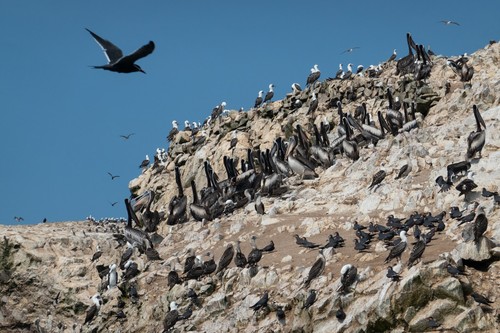
Peruvian Pelican
137-152 cm (54-60 in) long, up to 228 cm wingspan
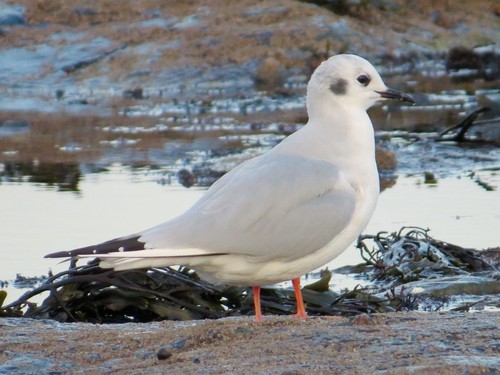
Bonaparte's Gull
28-33 cm (11-13 in) long, 76-84 cm wingspan
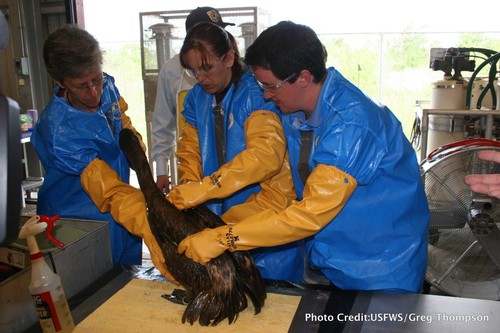
Brown Pelican
106-137 cm (42-54 in) long, 200-230 cm wingspan
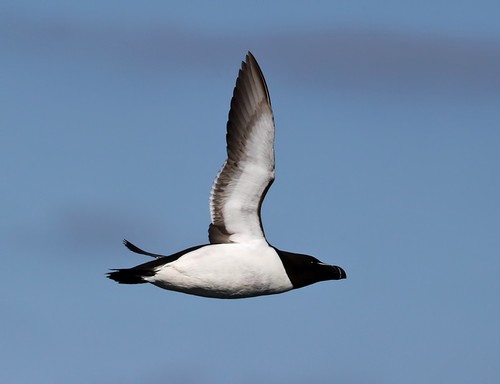
Razorbill
37-39 cm (15-15.5 in) long, 63-68 cm wingspan
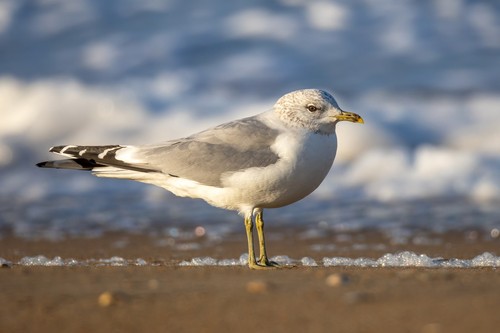
Common Gull
40-46 cm (16-18 in) long, 110-130 cm wingspan
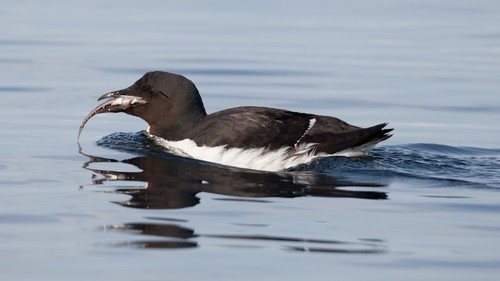
Thick-billed Murre
40-48 cm (16-19 in) long, 65-75 cm wingspan
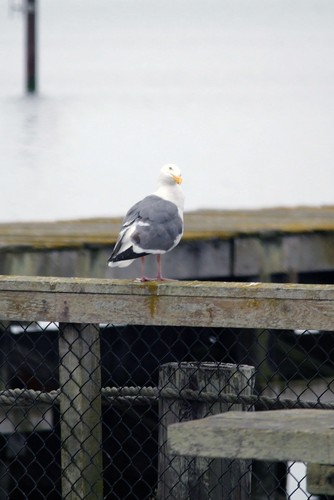
Western Gull
55-68 cm (22-27 in) long, 130-144 cm wingspan
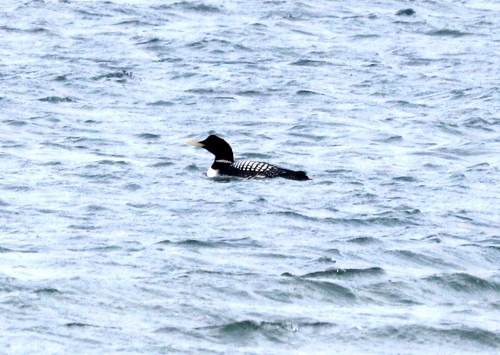
Yellow-billed Loon
76-97 cm (30-38 in) long, 135-152 cm wingspan
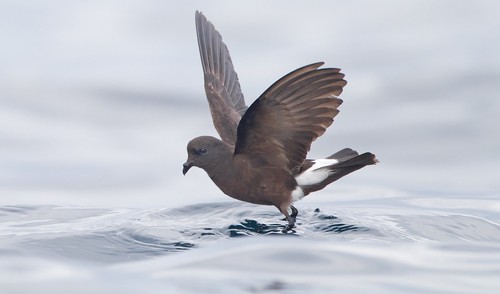
Wilson's Storm-Petrel
15-19 cm (6-7.5 in) long, wingspan 38-42 cm (15-16.5 in)
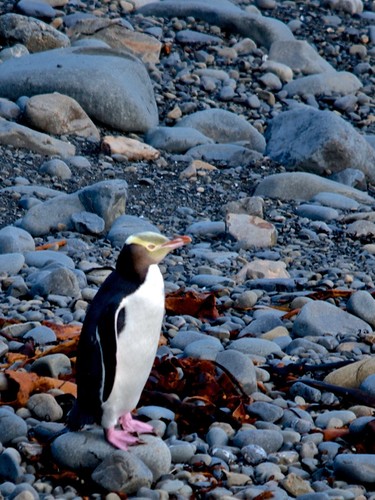
Yellow-eyed Penguin
62-79 cm (24-31 in) tall, 3-8.5 kg (6.6-18.7 lb)
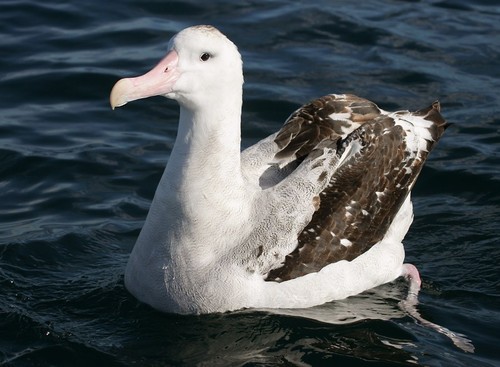
Wandering Albatross
107-135 cm (42-53 in) long, wingspan up to 3.5 m (11.5 ft)
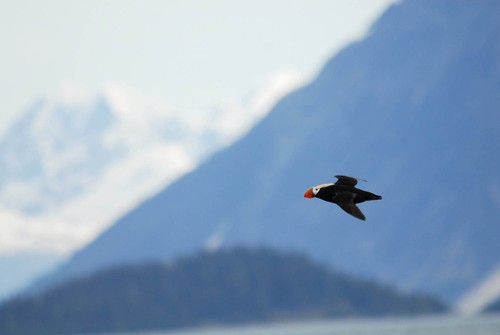
Tufted Puffin
35-41 cm (14-16 in) long, about 63-70 cm wingspan