
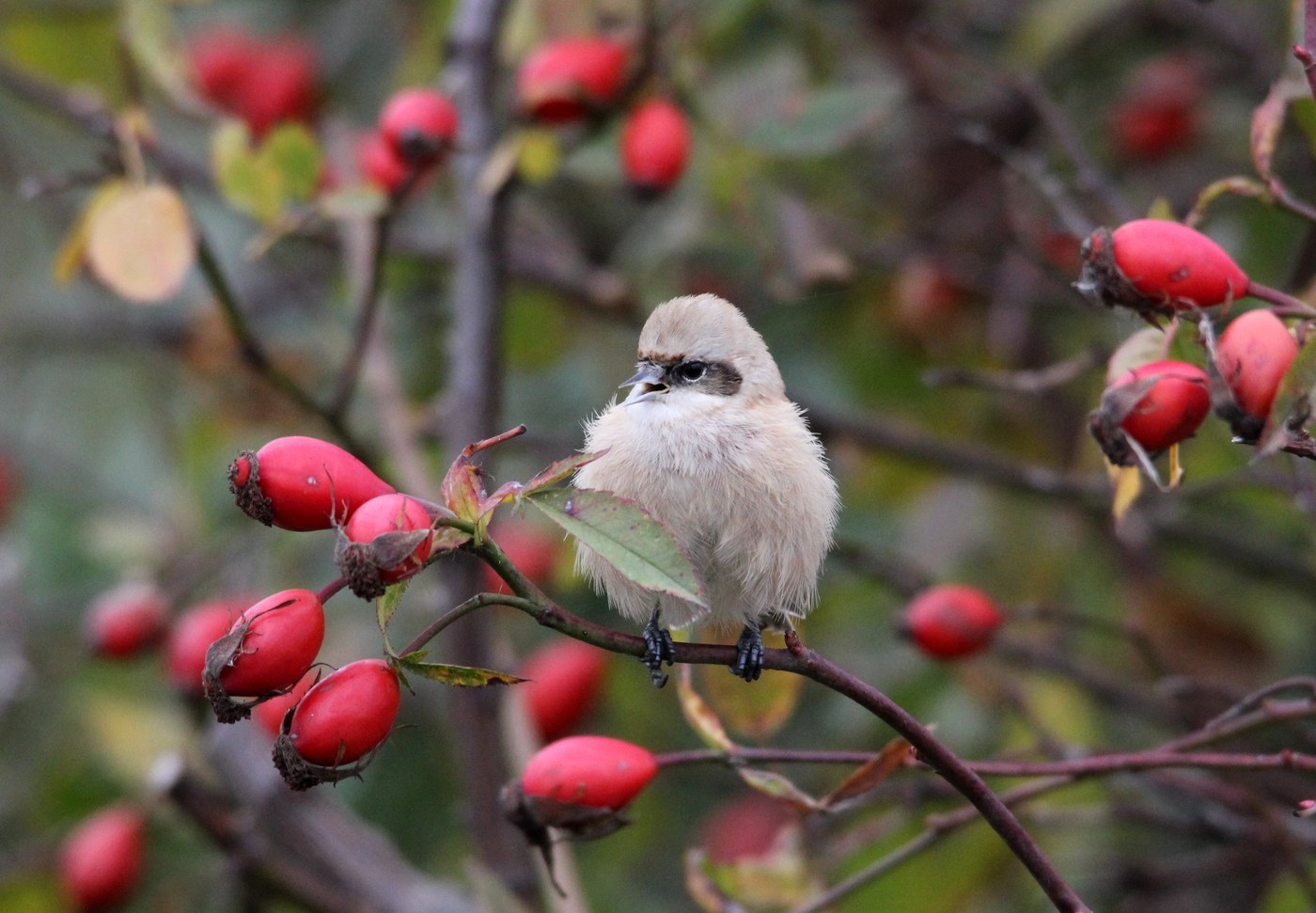
Penduline Tit
Remiz pendulinus
A tiny wetland songbird famed for weaving an elaborate, purse-shaped hanging nest, with a grey head and black eye-mask.
- Size
- 10-11.5 cm (4-4.5 in) long, 16-17.5 cm wingspan
- Habitat
- wetlands, reedbeds, and riverine trees near water
- Type
- songbird
Spotted a bird like this?
Identify any bird from a photo, free.
Overview
The Penduline Tit is a diminutive songbird of wetland edges, best known not for its subtle plumage but for its remarkable nest-building skill. Adults have a soft grey head, a black mask through the eye, a chestnut-brown back, and buffy underparts, giving an overall soft, understated appearance quite different from true tits.
Its claim to fame is the elaborate, purse-like hanging nest it weaves from plant down and fibers, suspended from the tip of a slender branch over or near water -- one of the most intricate nest structures built by any European bird.
How to identify it
Key field marks
- Small size, grey head with a black mask through the eye
- Chestnut-brown back and wings, buffy-white underparts
- Thin, pointed bill adapted for fine nest-weaving and insect gleaning
- Often located by its thin, whistling call from waterside trees or reeds
Similar species
No other small European songbird combines the grey head, black mask, and chestnut back; its association with waterside willows and reeds along with its unmistakable hanging nest further separate it from true tits.
Habitat & range
Range
Breeds patchily across Europe and temperate Asia, generally in lowland wetland habitats; some populations are resident while northern and eastern birds move south for winter.
Habitat
Associated with waterside vegetation -- willows, poplars, and reedbeds along rivers, lakes, and marshes -- where it both feeds and builds its distinctive nest.
Migration
Partially migratory; populations in milder parts of the range are resident, while others move south or disperse more widely outside the breeding season.
Behavior & voice
Behavior
Active and acrobatic, gleaning insects from twigs and reed stems, often in pairs or small family groups after breeding.
Voice
A thin, plaintive, whistling "tseeu" call, often the first indication of its presence among waterside trees.
Feeding
Feeds mainly on small insects and other invertebrates gleaned from vegetation, supplementing with seeds, especially reed and willow seeds, in colder months.
Nesting and breeding
Builds an extraordinary enclosed, purse-shaped nest woven from plant down, fine grass, and spider silk, with a tubular side entrance, suspended from a slender drooping branch. Lays 5-8 eggs; males sometimes build multiple nests and may practice polygamy.
Frequently asked questions
What is special about the Penduline Tit's nest?
It weaves an elaborate, purse-shaped hanging nest from plant down and fibers, with a tubular entrance, suspended from a slender branch over or near water.
Is the Penduline Tit a true tit?
It is only distantly related to true tits (family Paridae) and is placed in its own family, Remizidae.
Where does the Penduline Tit live?
It favors wetland edges with willows, poplars, and reeds along rivers, lakes, and marshes across Europe and temperate Asia.
What does the Penduline Tit eat?
Mainly small insects gleaned from vegetation, with seeds becoming more important in winter.
Penduline Tit guides
In-depth guides for identifying, finding, and understanding Penduline Tit.
Other birds you may enjoy

Black Redstart
13-14.5 cm (5.1-5.7 in) long, 23-26 cm wingspan

Black-throated Sparrow
12-14 cm (4.7-5.5 in) long, about 19-20 cm (7.5-8 in) wingspan

Greater Bird-of-paradise
Body about 43 cm; males with additional flank plumes up to 50 cm and long tail wires

Blue Tit
11-12 cm (4.3-4.7 in) long, 17-20 cm wingspan

Red-billed Quelea
11.5–13 cm long, wingspan about 20–22 cm
White-plumed Antbird
13-14 cm (5-5.5 in) long

Pyrrhuloxia
19-22 cm (7.5-8.7 in) long, 30 cm wingspan

Blue-gray Tanager
16-18 cm (6-7 in) long

Blackburnian Warbler
11-13 cm (4.3-5.1 in) long, 20-22 cm wingspan

Bluethroat
13-14 cm (5.1-5.5 in) long, 20-22 cm wingspan

Eurasian Nuthatch
12-14.5 cm (4.7-5.7 in) long, 22.5-27 cm wingspan

Wood Thrush
19-21 cm (7.5-8.3 in) long, about 33 cm (13 in) wingspan