
Penduline Tit Identification Guide
A tiny reed- and riverside-loving Eurasian bird with a black facial mask, chestnut back, and a famous hanging, bag-shaped woven nest.
Read the full Penduline Tit encyclopedia entry →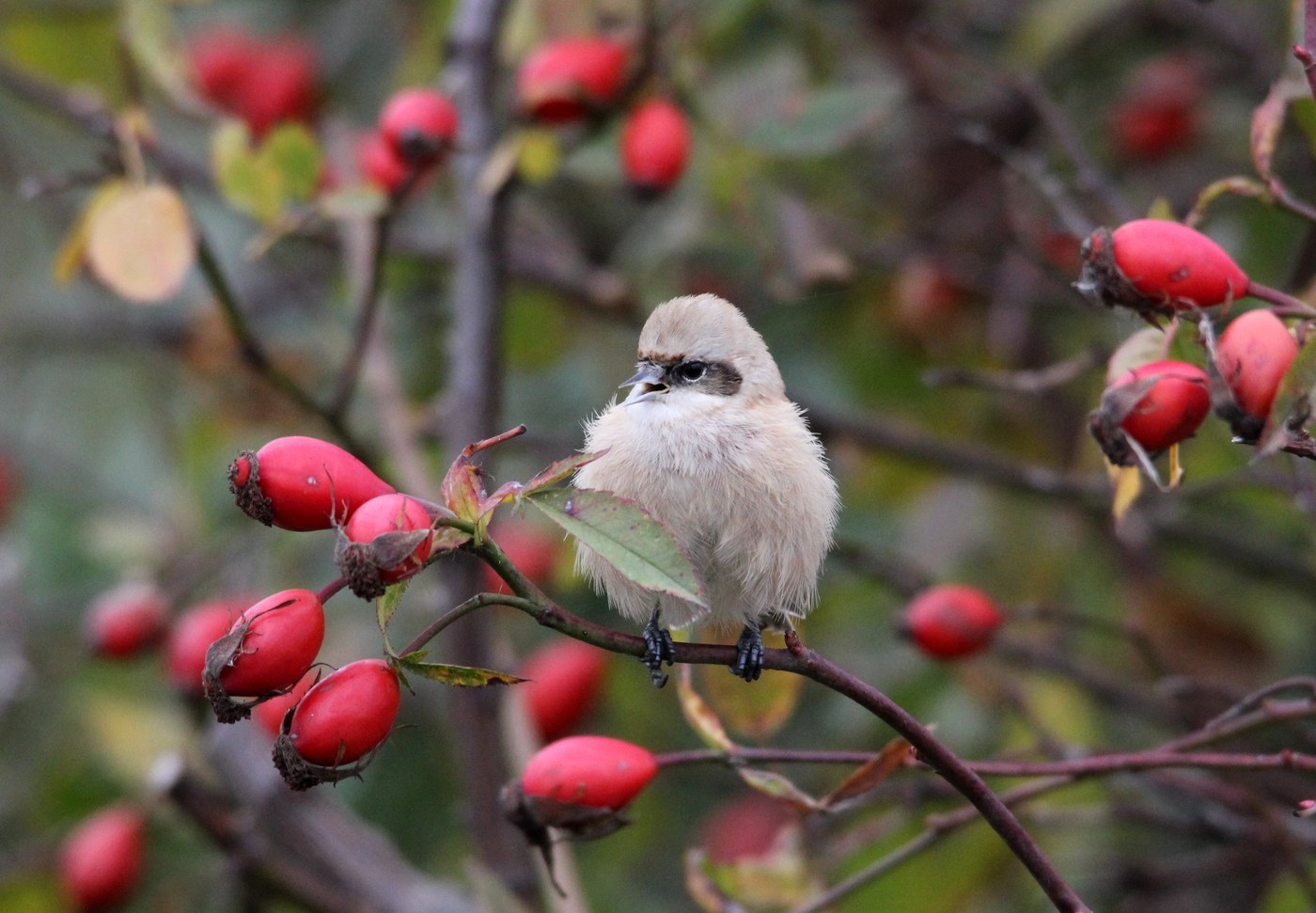
Key Field Marks
- Size and shape: Very small (about 10–11 cm), slim-bodied with a fine, pointed, conical bill unlike the stubby bills of true tits (Paridae).
- Plumage: Gray head, black mask through the eye (broader and blacker in males, narrower and duller in females and immatures), rich chestnut back, and pale buffy-white underparts with a warm wash on the flanks.
- Bill shape is the single best structural clue: pointed and finch-like rather than the short, thick bill of chickadees and tits.
- Juveniles lack the black mask entirely and look plain sandy-brown, which can cause confusion, but the slim bill and habitat are still useful clues.
Separating It From Similar Species
- Not closely related to true tits despite the name; the pointed bill and slimmer build separate it from Blue, Great, or Willow Tits at a glance.
- Female/immature birds lacking the mask can suggest a small warbler, but the proportionally large head, short tail, and undulating flight recall a tit rather than a warbler.
- The pendulous woven nest, when present, is essentially unmistakable and confirms identification even without seeing the bird well.
Where and When to See It
Breeds in wetlands with scattered trees — reedbeds, riverside willows, poplars, and tamarisk thickets — across much of Europe and central Asia. Northern and eastern populations are migratory, moving south to winter around the Mediterranean, the Middle East, and parts of south-central Asia; southern European populations are largely resident. Look for the distinctive hanging, bag-like nest woven from plant down, suspended from thin outer branches over or near water — a strong clue to the species' presence even before the bird itself is spotted.
Behavior
Active and acrobatic, gleaning insects and seeds from reed heads, catkins, and thin twigs, often hanging upside down. Frequently detected first by voice as small flocks move through waterside vegetation.
Voice
A thin, plaintive, slightly nasal "seeu" or "psiuu" whistle, often given in flight or as a contact call between flock members — quite distinctive once learned.
Frequently asked questions
How can I tell a Penduline Tit isn't a true tit (Paridae)?
Check the bill: Penduline Tit has a fine, pointed, almost warbler- or finch-like bill, while true tits have short, thick, blunt bills.
What does the Penduline Tit's nest look like?
A remarkable pendulous, purse- or bag-shaped structure woven from plant down and fibers, hung from thin outer twigs of a tree over or near water — a strong identification clue in itself.
Do male and female Penduline Tits look different?
Yes, males show a broader, blacker facial mask and grayer head, while females and immatures have a narrower, duller mask and can lack it almost entirely when young.
Where is the best habitat to look for Penduline Tits?
Wetland edges with scattered willows, poplars, or reeds — riverbanks, marshes, and lake margins with waterside trees are prime habitat.