
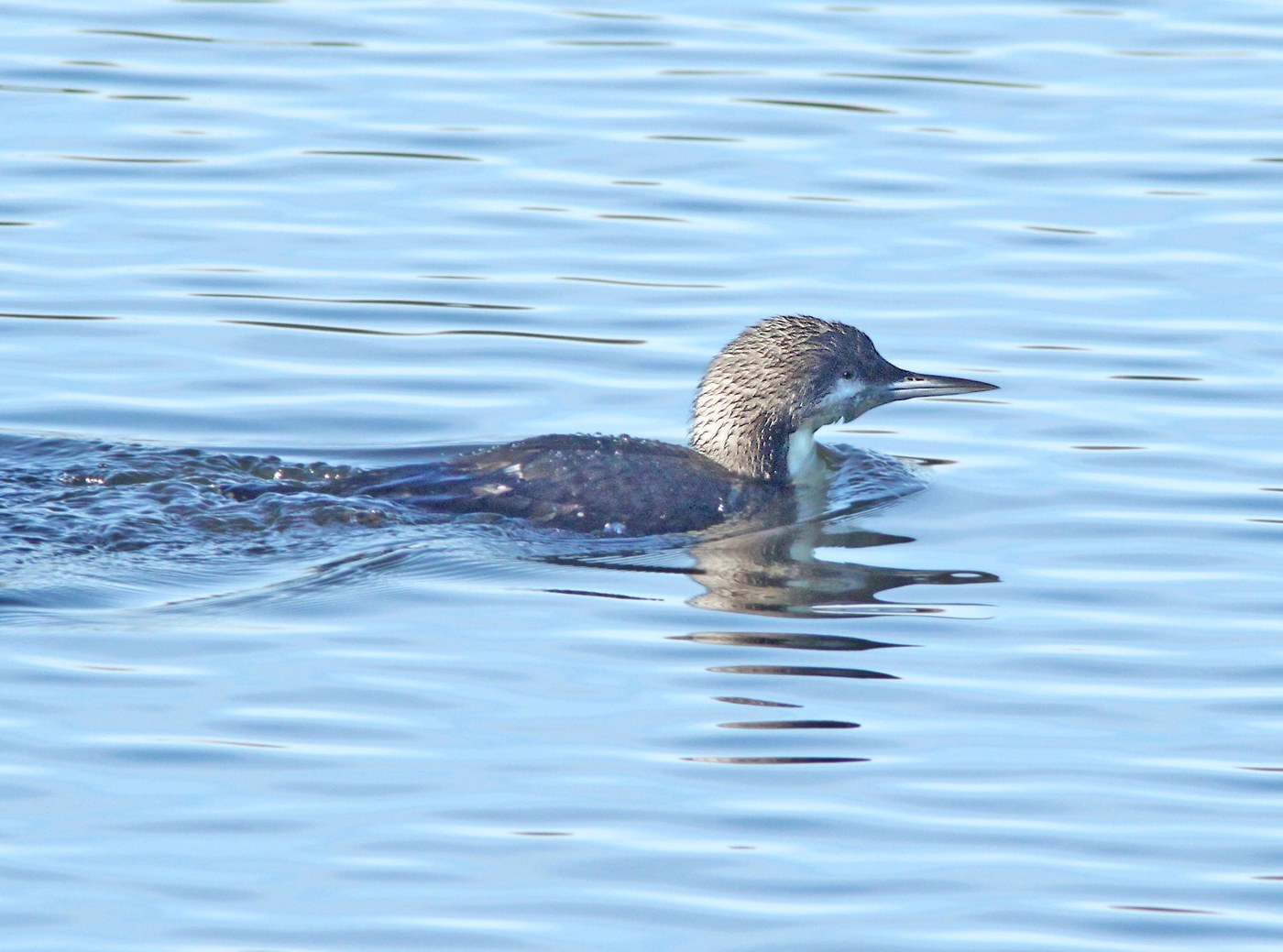
Pacific Loon
Gavia pacifica
A mid-sized loon with a smooth pale grey nape and a crisp black chin strap, common along the Pacific coast in winter.
- Size
- 58-74 cm (23-29 in) long, 110-128 cm wingspan
- Habitat
- arctic and subarctic tundra lakes for breeding, coastal pacific waters in winter
- Type
- seabird
Spotted a bird like this?
Identify any bird from a photo, free.
Overview
The Pacific Loon is a medium-sized, elegantly proportioned loon best known for its clean pale grey crown and nape in breeding plumage, contrasting with a black throat marked by a narrow chin strap and vertical white striping on the neck. It is slightly smaller and more delicately built than the Common Loon, with a straighter, thinner bill typically held level rather than angled up.
Outside the breeding season it becomes largely dark grey above and white below, often showing a sharply demarcated "necklace" line between the dark hindneck and white foreneck that aids identification.
How to identify it
Key field marks
- Breeding: pale silvery-grey crown and nape, black throat with a thin chin strap, vertical white neck stripes
- Non-breeding: dark grey-brown upperparts, white underparts, and a sharp contrast line between dark and white on the neck
- Straight, slender bill held level
Similar species
- Arctic Loon is extremely similar and best separated by range and, in breeding plumage, a whiter flank patch visible at rest.
- Red-throated Loon is smaller with an upturned bill and paler overall in winter.
- Common Loon is larger and bulkier with a heavier bill.
Habitat & range
Habitat
Breeds on tundra and taiga lakes; winters almost exclusively on nearshore marine waters, often in large rafts.
Range
Breeds across Arctic and subarctic North America and easternmost Siberia; winters along the Pacific coast from Alaska to Mexico.
Migration
Migrates in large, sometimes spectacular flocks along the Pacific coast between breeding and wintering grounds.
Behavior & voice
Behavior
Often the most gregarious loon in winter, forming large rafts and migrating flocks numbering in the thousands along the Pacific coast.
Voice
Gives a variety of wails, croaks, and yelping calls, mostly on the breeding grounds; largely silent in winter.
Feeding
Dives to catch small fish and aquatic invertebrates in both fresh and salt water.
Nesting
Builds a simple nest of vegetation close to the water's edge on tundra lakes; typically lays 2 olive-brown eggs.
Frequently asked questions
How do you tell a Pacific Loon from an Arctic Loon?
The two species are very similar; Pacific Loons are found in North America and eastern Siberia, while Arctic Loons occur across Eurasia, and breeding Arctic Loons show a more extensive white flank patch.
Where do Pacific Loons spend the winter?
They winter primarily along the Pacific coast from Alaska south to Mexico, often gathering in large flocks just offshore.
What does a Pacific Loon look like in breeding plumage?
It has a pale silvery-grey crown and nape, a black throat with a thin chin strap, and bold vertical white stripes on the neck.
Do Pacific Loons migrate in flocks?
Yes, they are known for forming large, dense migratory flocks along the Pacific coastline, sometimes numbering in the thousands.
Pacific Loon guides
In-depth guides for identifying, finding, and understanding Pacific Loon.
Other birds you may enjoy
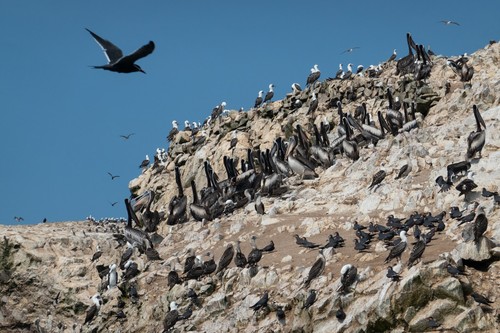
Peruvian Pelican
137-152 cm (54-60 in) long, up to 228 cm wingspan
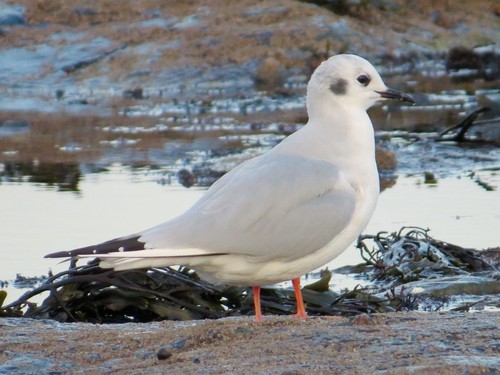
Bonaparte's Gull
28-33 cm (11-13 in) long, 76-84 cm wingspan
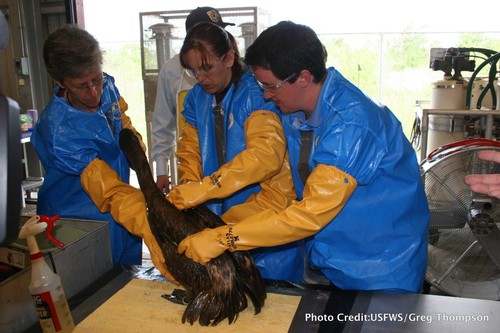
Brown Pelican
106-137 cm (42-54 in) long, 200-230 cm wingspan
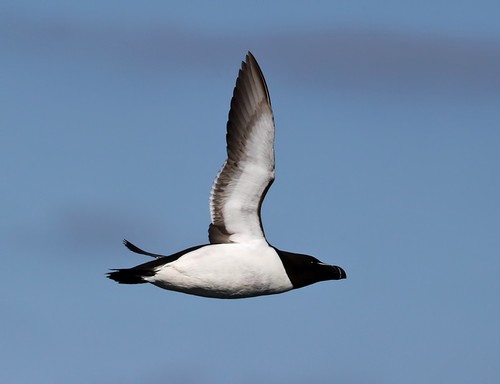
Razorbill
37-39 cm (15-15.5 in) long, 63-68 cm wingspan
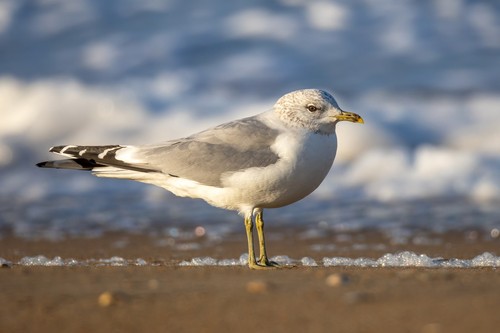
Common Gull
40-46 cm (16-18 in) long, 110-130 cm wingspan
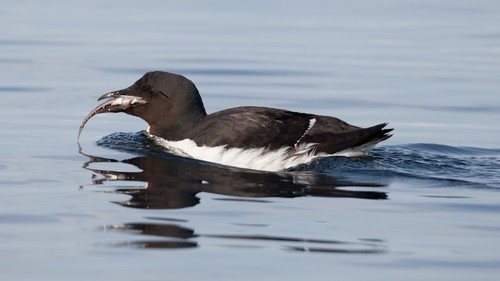
Thick-billed Murre
40-48 cm (16-19 in) long, 65-75 cm wingspan
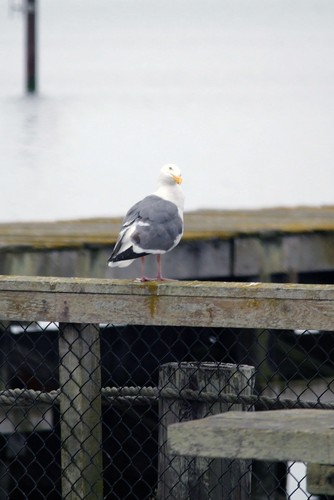
Western Gull
55-68 cm (22-27 in) long, 130-144 cm wingspan
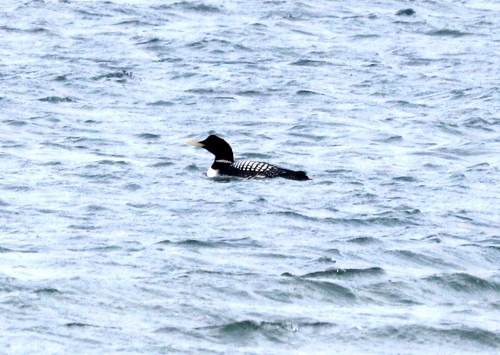
Yellow-billed Loon
76-97 cm (30-38 in) long, 135-152 cm wingspan
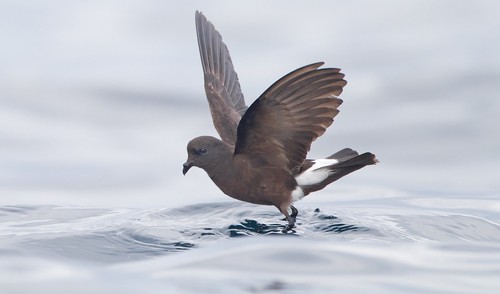
Wilson's Storm-Petrel
15-19 cm (6-7.5 in) long, wingspan 38-42 cm (15-16.5 in)
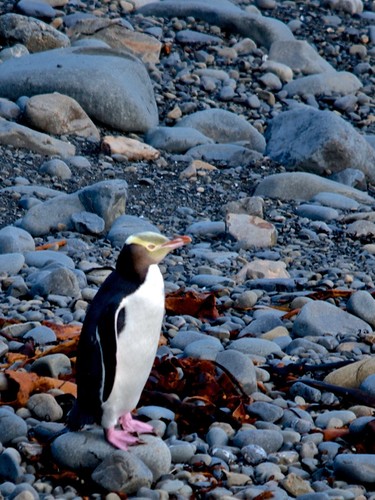
Yellow-eyed Penguin
62-79 cm (24-31 in) tall, 3-8.5 kg (6.6-18.7 lb)
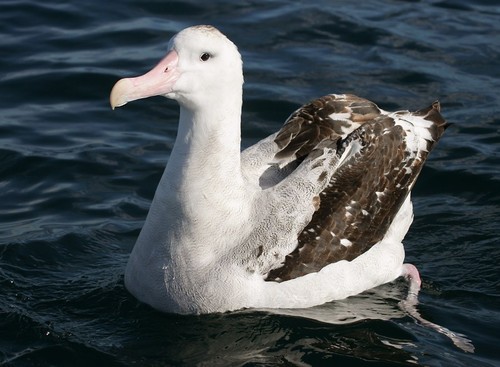
Wandering Albatross
107-135 cm (42-53 in) long, wingspan up to 3.5 m (11.5 ft)
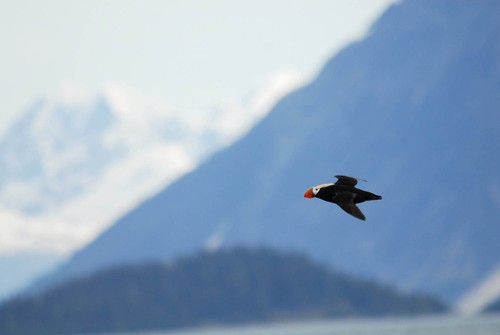
Tufted Puffin
35-41 cm (14-16 in) long, about 63-70 cm wingspan