
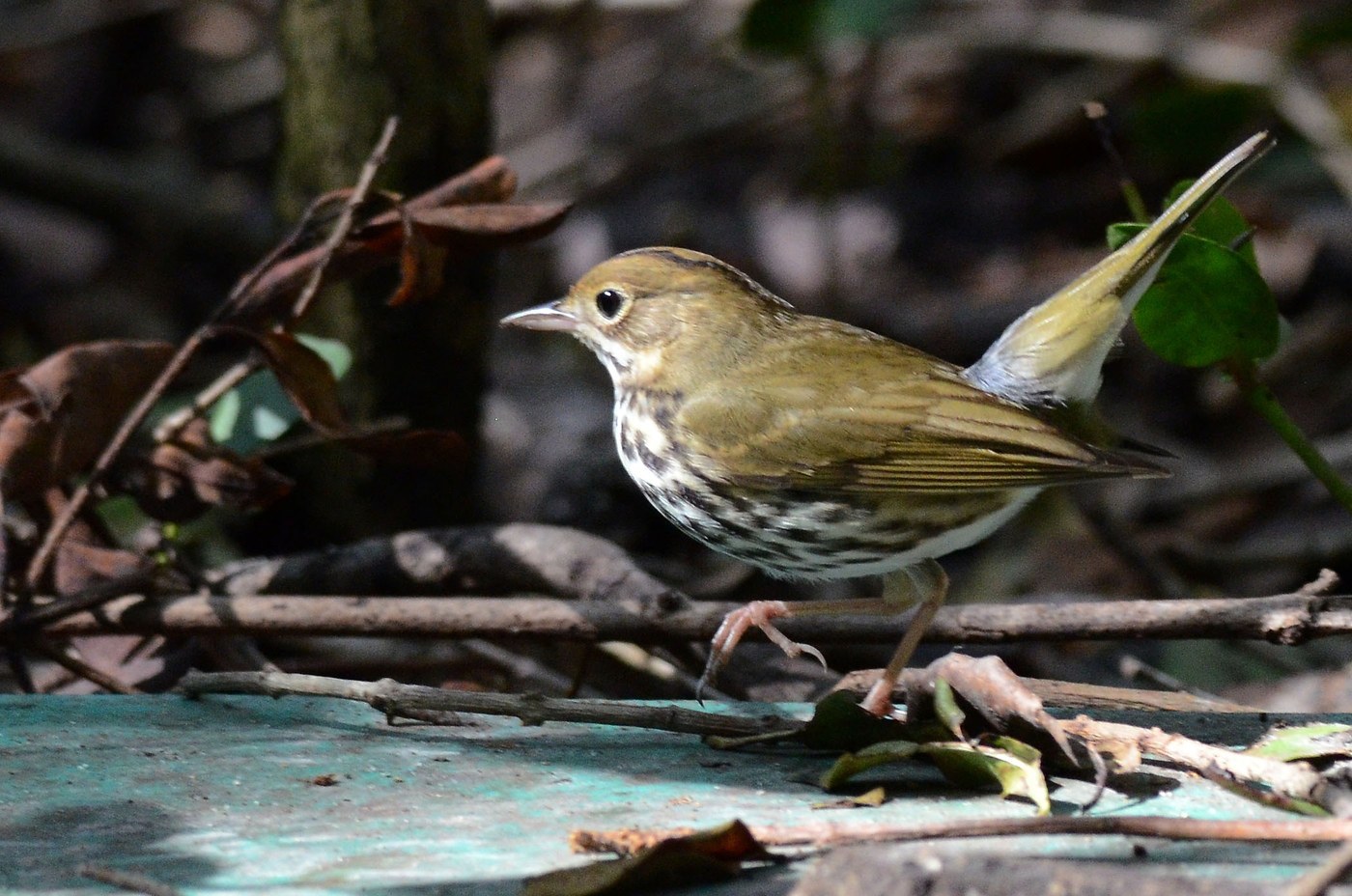
Ovenbird
Seiurus aurocapilla
A plump, ground-walking warbler of mature forest interior, named for its domed, oven-shaped nest and famous for its loud 'teacher-teacher-teacher' song.
- Size
- 14-17 cm (5.5-6.7 in) long, 21-27 cm wingspan
- Habitat
- mature deciduous and mixed forest interior with a well-developed leaf litter layer
- Type
- songbird
Spotted a bird like this?
Identify any bird from a photo, free.
Overview
The Ovenbird is an unusual warbler that behaves more like a small thrush, walking deliberately across the forest floor rather than flitting through foliage. Its plumage is olive-brown above and white below with bold dark spotting on the breast, closely resembling a diminutive thrush at first glance.
Its most distinctive feature is a bright orange crown stripe bordered by black lines, often raised slightly when the bird is agitated. The name 'Ovenbird' comes from its unique domed, oven-shaped nest built directly on the forest floor, with a side entrance resembling an old clay oven. Though its plumage is subtle, this species is famous for its loud, ringing 'teacher-teacher-teacher' song that carries throughout the forest interior.
How to identify it
Key Field Marks
- Olive-brown upperparts, white underparts with bold dark breast spotting
- Bright orange crown stripe bordered by black lateral stripes
- Bold white eye-ring
- Pink legs
- Walks (rather than hops) deliberately across the forest floor, often with tail cocked
Similar Species
Northern Waterthrush and Louisiana Waterthrush share the streaked underparts and ground-walking habit but lack the Ovenbird's orange crown stripe, instead showing a plain brown crown and a bold pale eyebrow stripe rather than an eye-ring. The Ovenbird's orange crown patch is the most reliable distinguishing feature.
Habitat & range
Habitat
Ovenbirds require mature deciduous or mixed forest interior with a well-developed leaf litter layer and relatively closed canopy, and are sensitive to forest fragmentation.
Range
This species breeds across a broad swath of Canada and the eastern United States, extending into some parts of the West. It winters from Florida, Mexico, and the Caribbean south through Central America and into northern South America.
Migration
Ovenbirds are long-distance nocturnal migrants, traveling to Neotropical wintering grounds and returning to the same forest interior breeding territories in subsequent years.
Behavior & voice
Behavior
Rather than hopping like most songbirds, Ovenbirds walk with a deliberate, high-stepping gait across the forest floor, frequently bobbing the tail, and are more often heard than seen due to their camouflaged plumage and shy nature.
Voice
The song is a loud, emphatic, repeated 'teacher-TEACHER-TEACHER-TEACHER,' increasing in volume, one of the most recognizable sounds of eastern forest interior in summer. The call is a sharp 'chip.'
Feeding
It forages entirely on the ground, walking through leaf litter to find insects, spiders, snails, and other invertebrates.
Nesting & Breeding
The female builds a distinctive domed nest of dead leaves and grass directly on the forest floor, with a side entrance resembling a small clay oven, from which the species gets its name. She lays 3-6 eggs, and the well-hidden nest is vulnerable to predation and cowbird parasitism.
Frequently asked questions
Why is it called an Ovenbird?
It builds a domed, ground-level nest of leaves with a side entrance that resembles an old-fashioned clay oven, giving the species its name.
What does an Ovenbird sound like?
Its loud, ringing song is often rendered as 'teacher-TEACHER-TEACHER-TEACHER,' typically increasing in volume and audible throughout forest interior.
How do you identify an Ovenbird?
Look for an olive-brown, thrush-like bird with bold breast spotting, a bright orange crown stripe bordered in black, and a habit of walking rather than hopping on the forest floor.
What does an Ovenbird eat?
It eats insects, spiders, snails, and other invertebrates found by walking through leaf litter on the forest floor.
Why do Ovenbirds need mature forest?
They depend on a well-developed leaf litter layer and relatively closed canopy for foraging and nesting, making them sensitive to forest fragmentation and disturbance.
Ovenbird guides
In-depth guides for identifying, finding, and understanding Ovenbird.
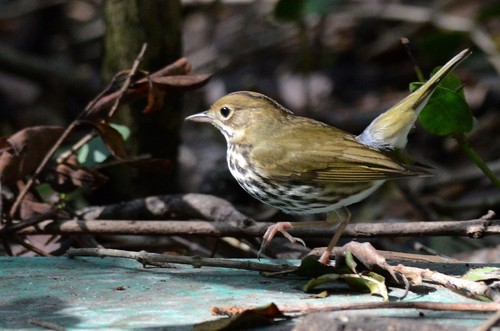
Ovenbird identified by the community
Real birds identified with Bird Identifier.
Other birds you may enjoy
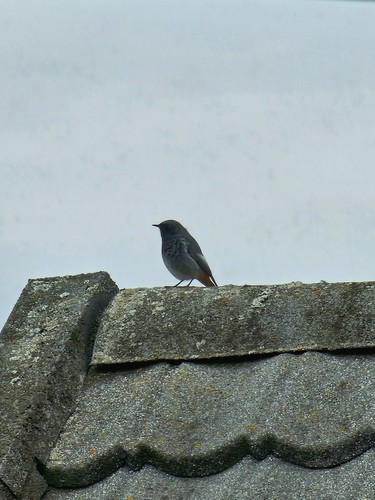
Black Redstart
13-14.5 cm (5.1-5.7 in) long, 23-26 cm wingspan
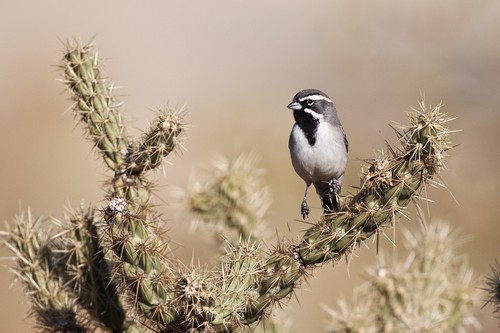
Black-throated Sparrow
12-14 cm (4.7-5.5 in) long, about 19-20 cm (7.5-8 in) wingspan
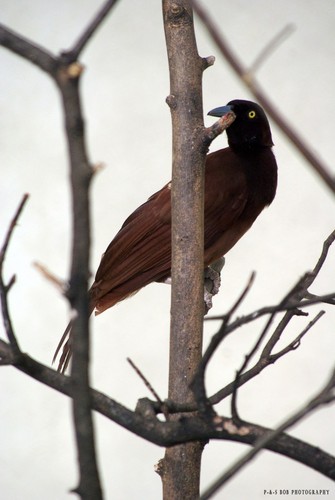
Greater Bird-of-paradise
Body about 43 cm; males with additional flank plumes up to 50 cm and long tail wires
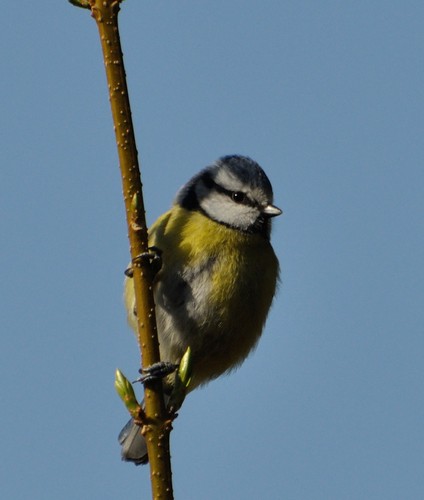
Blue Tit
11-12 cm (4.3-4.7 in) long, 17-20 cm wingspan
Red-billed Quelea
11.5–13 cm long, wingspan about 20–22 cm
White-plumed Antbird
13-14 cm (5-5.5 in) long
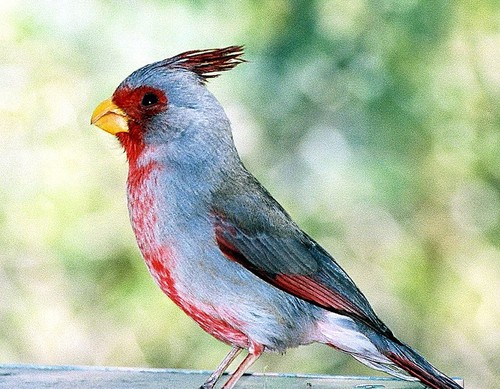
Pyrrhuloxia
19-22 cm (7.5-8.7 in) long, 30 cm wingspan
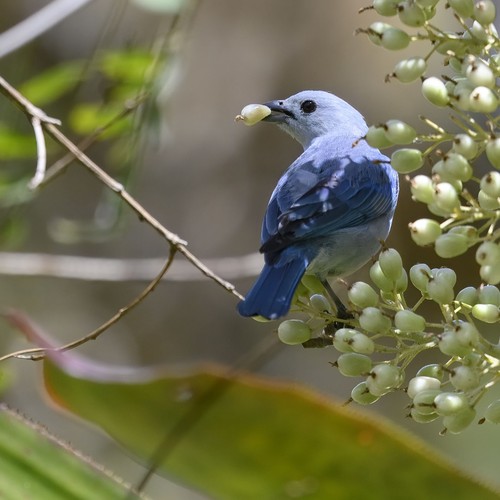
Blue-gray Tanager
16-18 cm (6-7 in) long
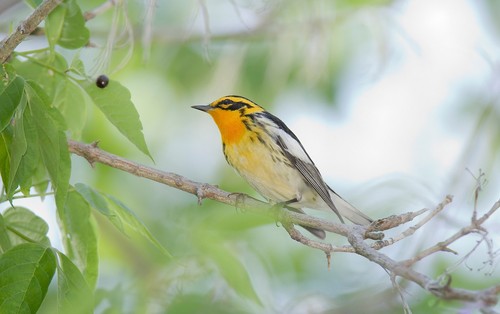
Blackburnian Warbler
11-13 cm (4.3-5.1 in) long, 20-22 cm wingspan
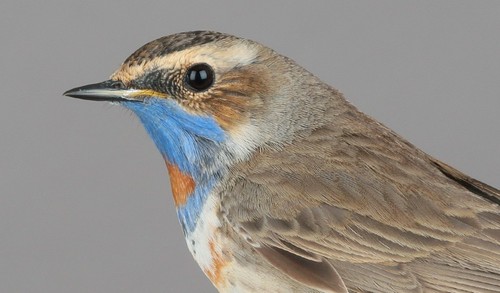
Bluethroat
13-14 cm (5.1-5.5 in) long, 20-22 cm wingspan
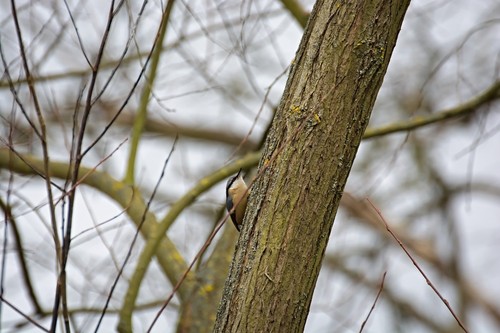
Eurasian Nuthatch
12-14.5 cm (4.7-5.7 in) long, 22.5-27 cm wingspan
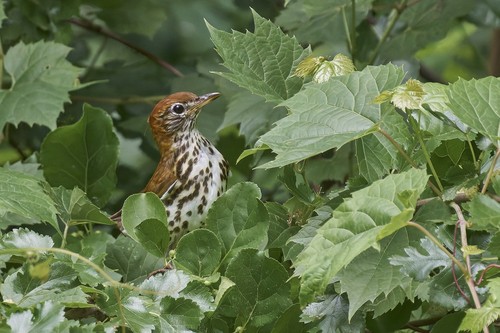
Wood Thrush
19-21 cm (7.5-8.3 in) long, about 33 cm (13 in) wingspan