
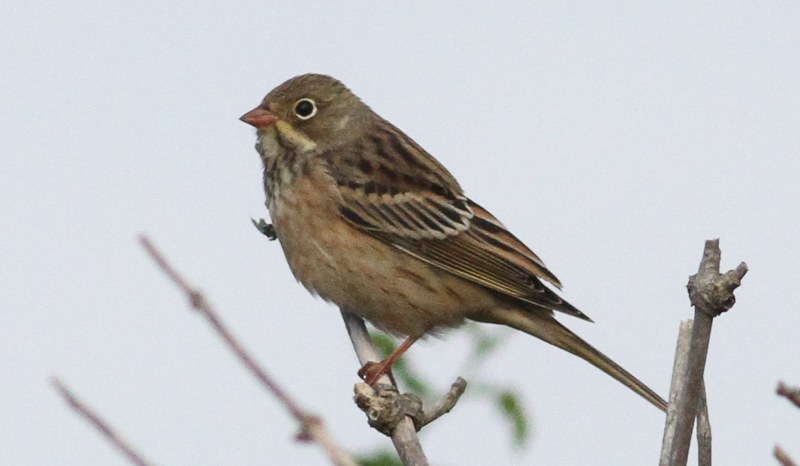
Ortolan Bunting
Emberiza hortulana
A warm-toned migratory bunting with a grey-green head, yellow throat, and pink-buff underparts, breeding across open, sun-baked farmland of Europe.
- Size
- 16-17 cm (6.3-6.7 in) long, 23-29 cm wingspan
- Habitat
- open farmland, dry stony slopes, vineyards, and orchards in warm climates
- Type
- songbird
Spotted a bird like this?
Identify any bird from a photo, free.
Overview
The Ortolan Bunting is a subtly elegant, warm-colored bunting that breeds across open, dry, sunny farmland in scattered pockets from Iberia to Scandinavia and eastward into Asia, wintering in sub-Saharan Africa. Its numbers have declined across much of western Europe in recent decades.
Appearance
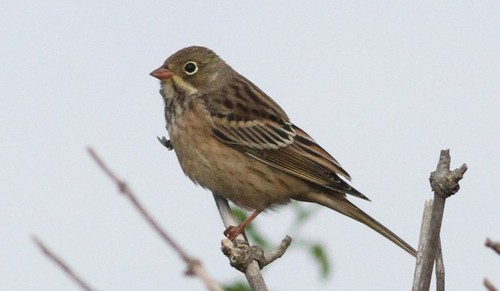
Adults show a soft grey-green head and breast, a bright yellow throat and narrow eye-ring, and warm pinkish-buff underparts, with a streaked brown back and a pale pinkish bill. Females and immatures are duller and more streaked but retain the characteristic yellow throat and pale eye-ring.
How to identify it
Key Field Marks
- Grey-green head and breast contrasting with a bright yellow throat
- Pale, complete eye-ring
- Pinkish-buff belly and flanks
- Pale pinkish (not dark) conical bill
- Streaked brown back, chestnut-tinged rump
Similar Species
Cretzschmar's Bunting, found around the eastern Mediterranean, is very similar but has a blue-grey (not yellow) throat and a rustier orange breast wash. Yellowhammer has a much brighter overall yellow plumage without the grey head/breast contrast. The Ortolan's combination of grey head, yellow throat, and pink-buff underparts is distinctive with a good view.
Habitat & range
Habitat
Ortolan Buntings favor warm, open, and often quite arid farmland — cereal fields, vineyards, orchards, and dry stony hillsides with scattered trees or bushes for song perches, typically in sunnier climates than most other European buntings.
Range and Migration
The species breeds in a patchy distribution from Iberia and France across central and northern Europe into Scandinavia, and eastward across much of temperate Asia. It is a long-distance migrant, wintering in the Sahel zone of sub-Saharan Africa, and populations in many parts of western and northern Europe have declined sharply or disappeared in recent decades.
Behavior & voice
Behavior
Ortolan Buntings are often fairly unobtrusive outside the breeding season, foraging on the ground in open fields, but singing males perch conspicuously on wires, low trees, or bushes within their territory.
Voice
The song is a simple, unhurried series of similar, slightly descending, fluty notes, often rendered as "tsi-tsi-tsi-tsi-tsu-tsu," quite distinct from the faster, rattling songs of some other buntings.
Nesting and Breeding
The nest is built on or near the ground, hidden among crops or low vegetation, a cup of grass and rootlets. The female lays 4-6 eggs with fine dark markings and incubates them for about 11-12 days.
Frequently asked questions
What does an Ortolan Bunting look like?
It has a soft grey-green head and breast, a bright yellow throat, a pale complete eye-ring, and warm pinkish-buff underparts, with a pale pinkish bill.
Where does the Ortolan Bunting spend the winter?
It migrates long distances to winter in the Sahel region of sub-Saharan Africa, returning to Europe and Asia to breed in spring.
How is the Ortolan Bunting different from a Yellowhammer?
The Ortolan has a grey-green head contrasting with a yellow throat and pinkish-buff body, while the Yellowhammer is much more uniformly bright yellow on the head and underparts.
Has the Ortolan Bunting declined in Europe?
Yes, populations in many parts of western and northern Europe have fallen sharply over recent decades, and the species has disappeared as a breeder from some former range areas.
Ortolan Bunting guides
In-depth guides for identifying, finding, and understanding Ortolan Bunting.
Other birds you may enjoy
Black Redstart
13-14.5 cm (5.1-5.7 in) long, 23-26 cm wingspan
Black-throated Sparrow
12-14 cm (4.7-5.5 in) long, about 19-20 cm (7.5-8 in) wingspan
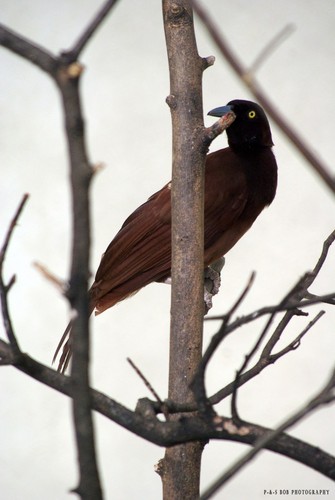
Greater Bird-of-paradise
Body about 43 cm; males with additional flank plumes up to 50 cm and long tail wires
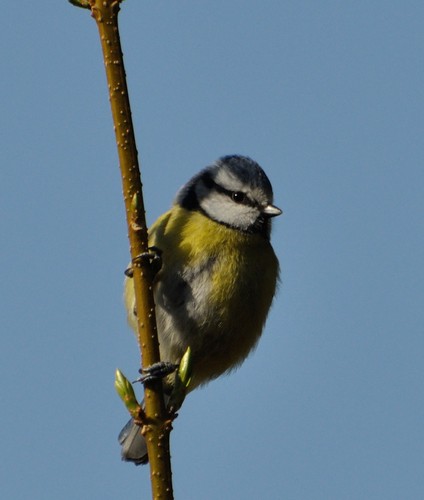
Blue Tit
11-12 cm (4.3-4.7 in) long, 17-20 cm wingspan
Red-billed Quelea
11.5–13 cm long, wingspan about 20–22 cm
White-plumed Antbird
13-14 cm (5-5.5 in) long
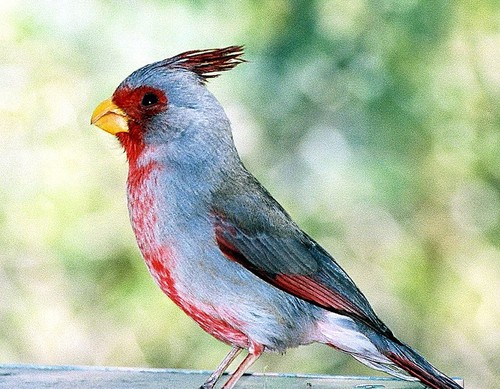
Pyrrhuloxia
19-22 cm (7.5-8.7 in) long, 30 cm wingspan
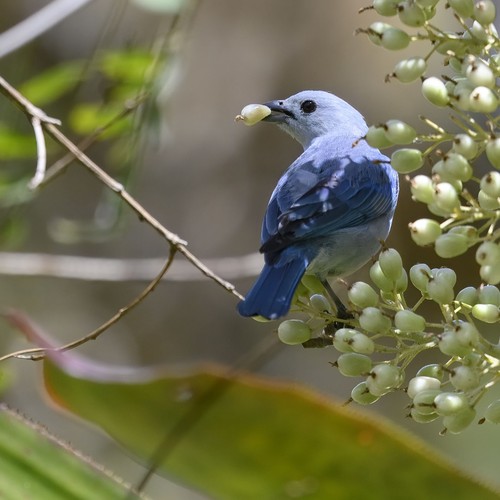
Blue-gray Tanager
16-18 cm (6-7 in) long
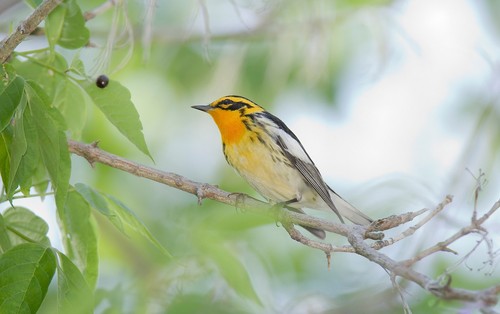
Blackburnian Warbler
11-13 cm (4.3-5.1 in) long, 20-22 cm wingspan
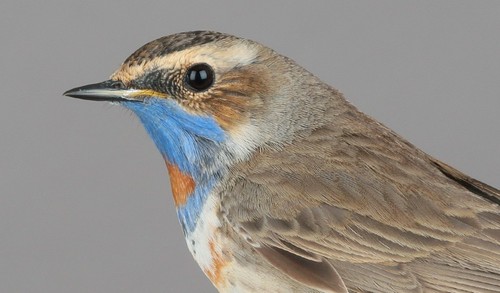
Bluethroat
13-14 cm (5.1-5.5 in) long, 20-22 cm wingspan
Eurasian Nuthatch
12-14.5 cm (4.7-5.7 in) long, 22.5-27 cm wingspan
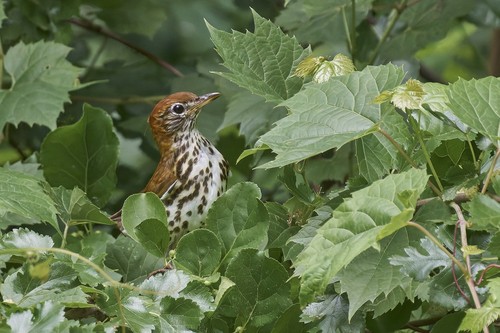
Wood Thrush
19-21 cm (7.5-8.3 in) long, about 33 cm (13 in) wingspan