
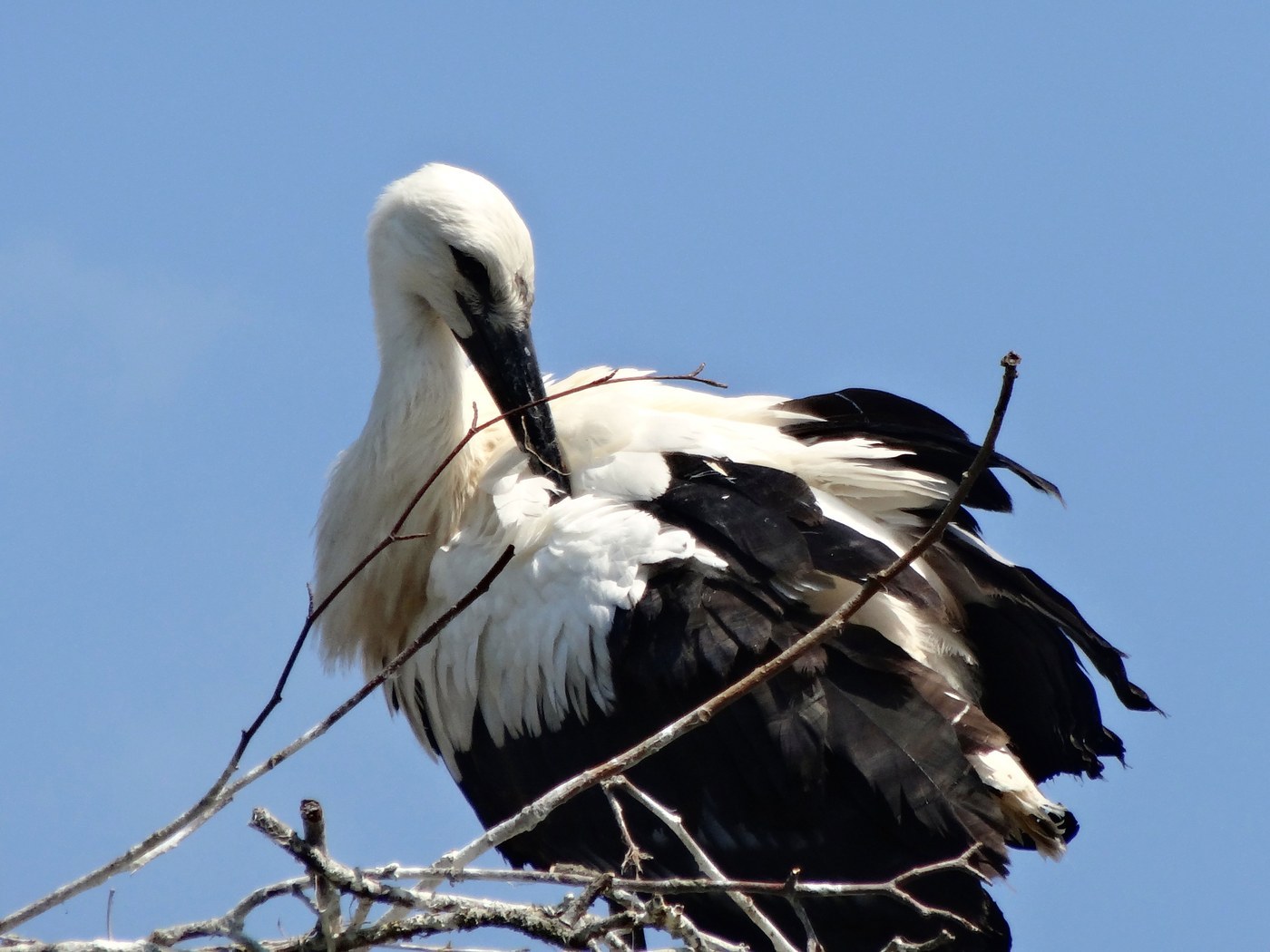
Oriental Stork
Ciconia boyciana
A large East Asian stork closely related to the White Stork, distinguished by its black bill and endangered status due to wetland habitat loss.
- Size
- 110-115 cm (43-45 in) long, 195-220 cm wingspan
- Habitat
- freshwater wetlands, rice paddies, and marshes of East Asia
- Type
- wading-bird
Spotted a bird like this?
Identify any bird from a photo, free.
Overview
The Oriental Stork closely resembles the familiar White Stork of Europe but is slightly larger and has a black, rather than red, bill, along with a patch of bare red skin around the eye. Its body plumage is predominantly white with black flight feathers, and its legs are red.
Once widespread across East Asia, the species suffered severe declines through the 20th century due to wetland drainage, pesticide use, and loss of nesting trees, and it is now classified as Endangered, though conservation programs in Japan, China, and Russia have supported some recovery.
How to identify it
Key field marks
- Large white-bodied stork with black flight feathers
- Black bill (distinguishing it from the red-billed White Stork)
- Red skin patch around the eye
- Red legs
Similar species
The White Stork is nearly identical in shape and pattern but has a red bill instead of black, and the two species' ranges barely overlap. The Black Stork has predominantly black plumage rather than white, easily separating the two.
Habitat & range
Oriental Storks breed in wetlands of the Russian Far East and northeastern China, favoring marshes, floodplains, and rice paddies with tall trees or artificial platforms for nesting. They winter mainly in eastern China, with smaller numbers in Japan and the Korean Peninsula.
Habitat loss from wetland drainage and agricultural conversion has been the primary driver of the species' decline, and much of its remaining range now depends on protected wetlands and reintroduction programs, notably in Japan (Hyogo Prefecture) and South Korea, where captive-bred birds have been released to reestablish wild populations.
Behavior & voice
Oriental Storks forage by wading through shallow wetlands and rice paddies, catching fish, amphibians, and insects with quick strikes of the bill, similar to the closely related White Stork.
They communicate mainly through bill-clattering displays rather than vocal calls. Pairs build large stick nests in tall trees or on artificial nest platforms erected specifically for conservation purposes, and typically raise 2-4 chicks per season with both parents sharing incubation and feeding duties. International conservation efforts, including habitat protection, captive breeding, and reintroduction, have been central to preventing the species' extinction.
Frequently asked questions
How is the Oriental Stork different from the White Stork?
The Oriental Stork has a black bill rather than red, is slightly larger, and shows a patch of bare red skin around the eye; the two species occupy largely separate ranges in Europe/West Asia versus East Asia.
Why is the Oriental Stork endangered?
Extensive wetland drainage, agricultural conversion, and loss of large nesting trees across East Asia caused severe population declines through the 20th century.
Where can Oriental Storks be seen today?
Remaining wild breeding populations occur in the Russian Far East and northeastern China, with reintroduced populations established in Japan and South Korea, and wintering birds concentrated in eastern China.
Are conservation programs helping the Oriental Stork recover?
Yes, habitat protection, artificial nest platforms, and captive breeding and release programs, particularly in Japan and South Korea, have helped stabilize and slowly grow some populations.
Oriental Stork guides
In-depth guides for identifying, finding, and understanding Oriental Stork.
Other birds you may enjoy
Demoiselle Crane
85-100 cm (33-39 in) long, 155-180 cm wingspan
Boat-billed Heron
41-56 cm (16-22 in) long
Purple Heron
78-90 cm (31-35 in) long, 120-152 cm wingspan
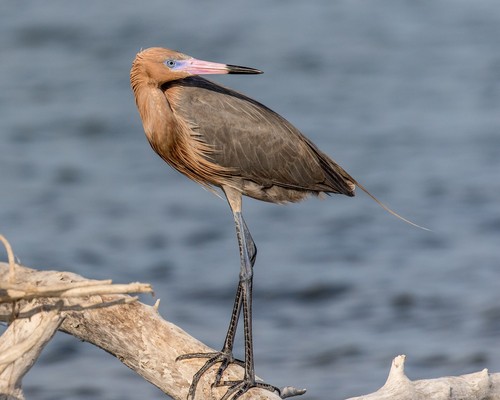
Reddish Egret
68-82 cm (27-32 in) long, 116-125 cm wingspan
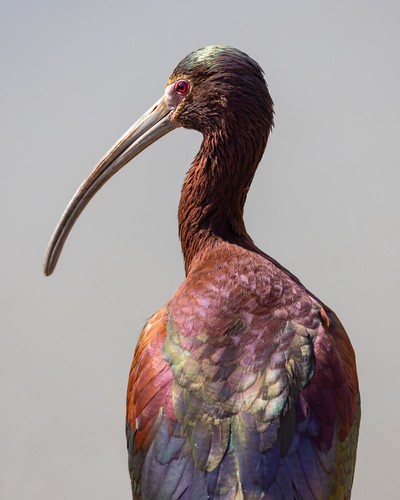
White-faced Ibis
46-56 cm (18-22 in) long, 88-93 cm wingspan
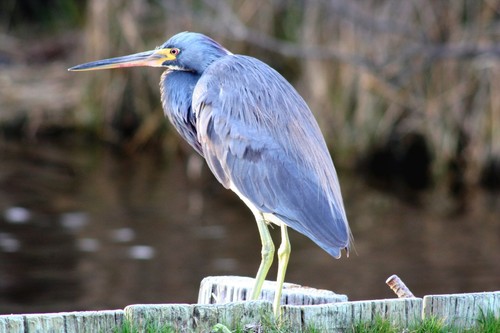
Tricolored Heron
61-76 cm (24-30 in) long, about 96 cm wingspan
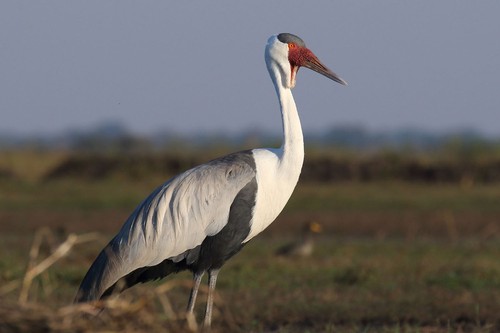
Wattled Crane
120-175 cm (47-69 in) tall, one of the tallest cranes, wingspan up to about 230 cm (7.5 ft)
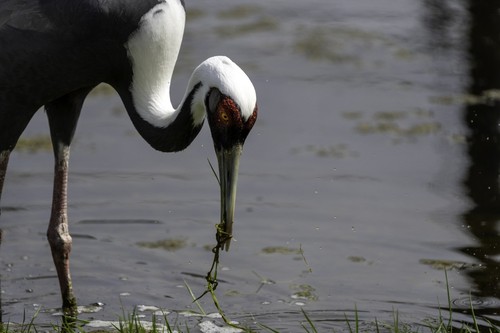
White-naped Crane
112-125 cm (44-49 in) long, 195-210 cm wingspan
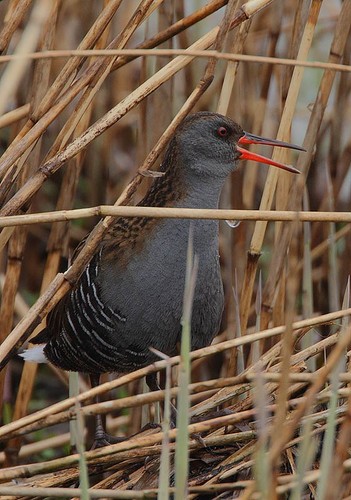
Water Rail
23-28 cm (9-11 in) long, wingspan 38-45 cm
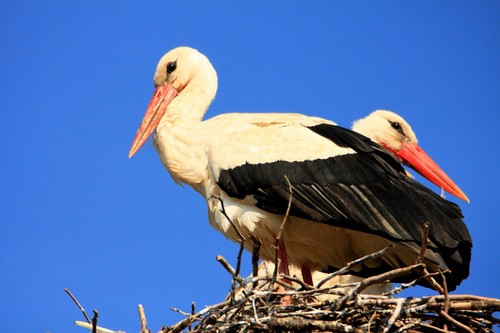
White Stork
100-125 cm (39-49 in) long, 155-215 cm wingspan
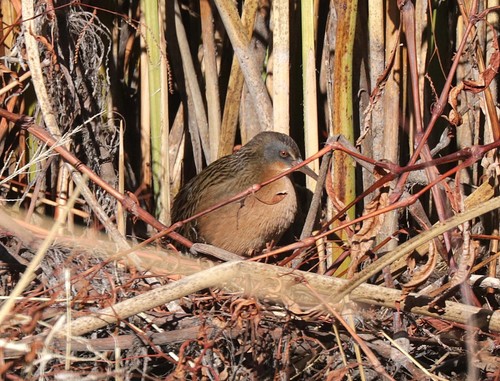
Virginia Rail
20-27 cm (8-11 in) long, wingspan 32-38 cm
Wattled Jacana
17-23 cm (7-9 in) long