
Oriental Stork Identification Guide
A very large, endangered black-and-white stork of East Asia, distinguished from the similar White Stork by its black (not red) bill and pale eye.
Read the full Oriental Stork encyclopedia entry →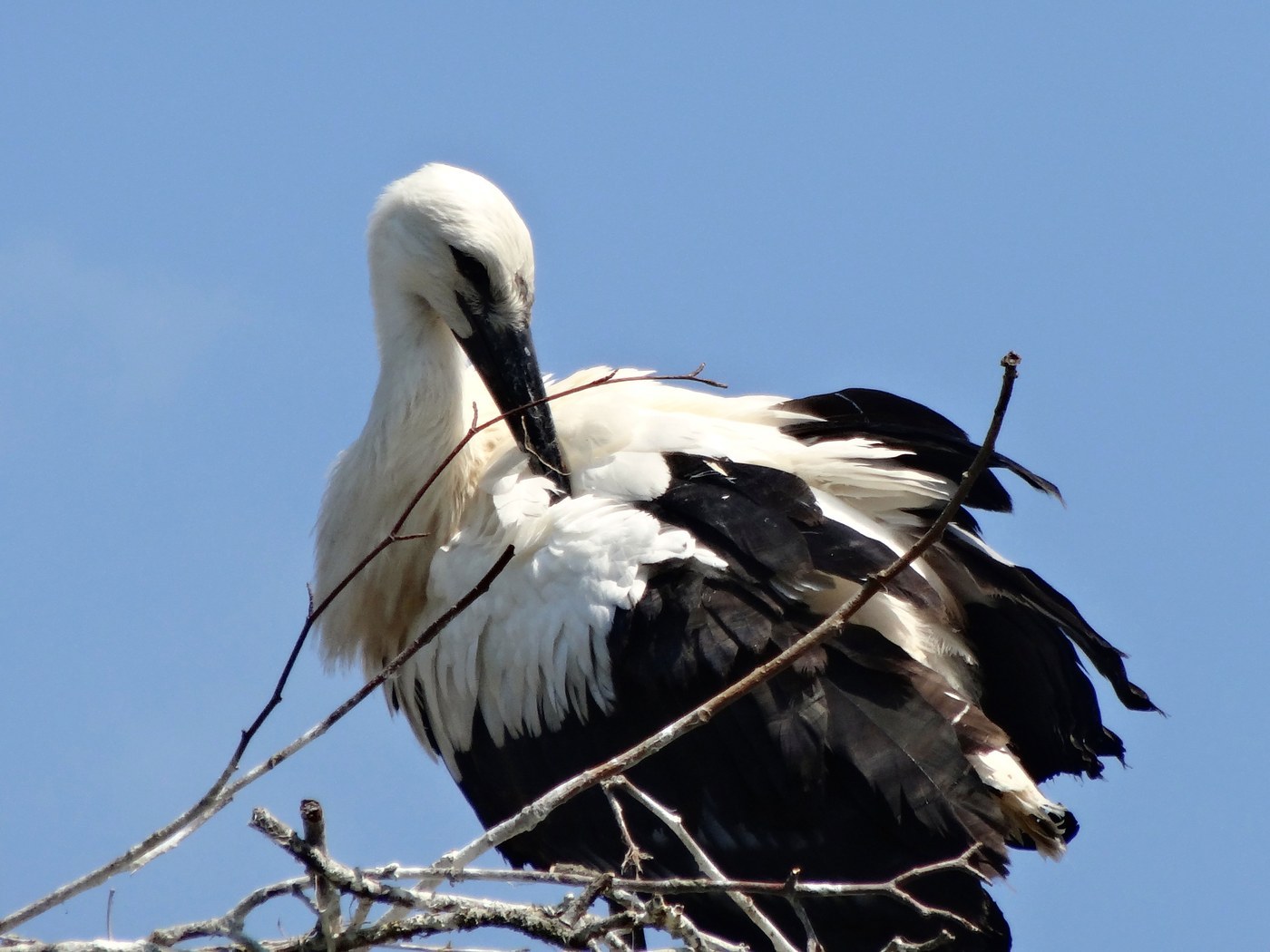
Key Field Marks
- Size & shape: A huge wading bird, roughly 110–115 cm (43–45 in) tall with a wingspan approaching 2.2 m (7 ft), among the largest of all storks, with long legs, a long neck, and a heavy, straight bill held level in flight.
- Plumage: Predominantly white body with black flight feathers (primaries and secondaries) visible on the folded wing and conspicuous in flight, closely resembling the pattern of the White Stork.
- Bill: Long, thick, black bill — the single most reliable mark separating it from the very similar White Stork, which has a bright red-orange bill.
- Facial skin & eye: Bare red-pink skin around the eye contrasts with a pale, whitish-yellow iris, giving a distinctive staring expression at close range.
- Legs: Long, dark red to pinkish-red legs, trailing straight behind in flight.
- Behavior: Forages by walking slowly through wetlands, rice paddies, and marshes, probing for fish, frogs, and other prey; often silent apart from loud bill-clattering displays at the nest, since adult storks largely lack a functional voice.
Separating It From Similar Species
- White Stork: Nearly identical in overall shape and pattern but has a bright red bill and red legs, versus the Oriental Stork's black bill and duller red legs; the black bill is the key distinguishing feature.
- Black Stork: Shows a mostly black body with white underparts and belly only, a completely different pattern from the largely white body of the Oriental Stork.
- Size, structure, and habitat overlap heavily with White Stork, so always check bill color first when separating these two species.
Habitat & Range
Breeds in far eastern Russia and northeastern China, historically also in Japan and the Korean Peninsula, in wetlands, floodplains, and adjacent tall trees used for large stick nests. It winters mainly in eastern China, with smaller numbers in Japan and the Korean Peninsula, using rice paddies, marshes, rivers, and other wetland habitats. The species is classified as Endangered, with a small and historically declining global population due to wetland loss, though conservation and reintroduction efforts (notably in Japan and South Korea) have helped stabilize or slowly increase some populations.
Voice
Essentially voiceless as an adult, like other true storks; communicates primarily through loud, rhythmic bill-clattering at the nest and during courtship and greeting displays, rather than vocal calls.
Frequently asked questions
How can you tell an Oriental Stork from a White Stork?
The most reliable mark is bill color: Oriental Stork has an all-black bill, while White Stork has a bright red-orange bill; Oriental Stork's legs are also a duller red.
Is the Oriental Stork rare?
Yes, it is classified as Endangered, with a relatively small global population concentrated in far eastern Russia, northeastern China, and wintering areas in eastern China, Japan, and the Korean Peninsula.
What kind of sounds does an Oriental Stork make?
Adults are essentially voiceless; they communicate mainly through loud bill-clattering displays rather than calls, similar to other storks in the genus Ciconia.
What habitat should I search for Oriental Storks?
Look in wetlands, floodplains, marshes, and rice paddies within its breeding range in far eastern Russia and northeastern China, or wintering grounds in eastern China, Japan, and Korea.