
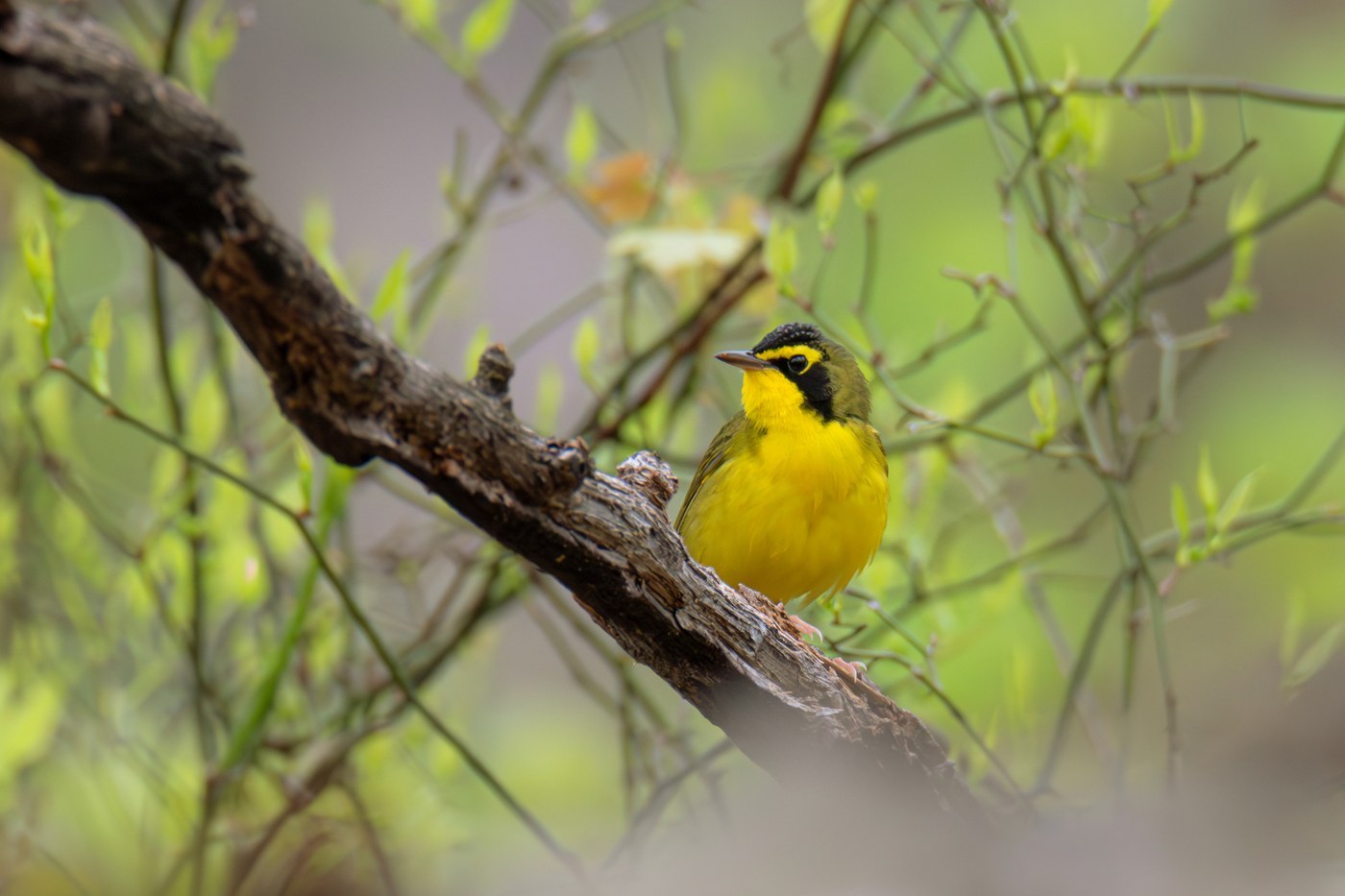
Orange-crowned Warbler
Leiothlypis celata
A plain, drab olive warbler with a faint eyeline and blurry streaking below, whose namesake orange crown patch is usually hidden from view.
- Size
- 12-14 cm (4.7-5.5 in) long, 17-21 cm wingspan
- Habitat
- shrubby thickets, chaparral, riparian tangles, and forest undergrowth
- Type
- songbird
Spotted a bird like this?
Identify any bird from a photo, free.
Overview
The Orange-crowned Warbler is often described as the plainest of all warblers, an unstreaked (or only faintly streaked) olive-gray to olive-yellow bird with no bold wingbars or facial pattern to grab the eye. Its name refers to a small patch of orange feathers on the crown that is usually concealed beneath the surrounding olive feathers and only becomes visible when the bird raises its crown feathers, such as during agitation or display.
Plumage varies geographically, with western populations often brighter yellow and eastern/interior populations grayer and duller, but all share the same understated, unassuming look that makes careful study of shape and subtle marks essential for identification.
How to identify it
Key field marks
- Overall dull olive to olive-yellow plumage with no wingbars
- Faint, blurry streaking on the breast and sides
- Thin, indistinct broken eyering and faint dark eyeline
- Yellow (not white) undertail coverts
- Sharply pointed bill and fairly long tail
Similar species
Fall Tennessee Warblers are the classic confusion species: Tennessee shows cleaner, unstreaked white underparts and white undertail coverts, while Orange-crowned shows blurry streaking and yellow undertail coverts. Warbling Vireo is superficially similar but larger, with a heavier bill and more deliberate movements.
Habitat & range
Orange-crowned Warblers breed across an enormous range, from Alaska and much of Canada south through the western mountains into California, favoring dense shrubby understory, riparian thickets, and chaparral rather than tall forest canopy. In migration and winter they are one of the hardiest warblers, with many individuals wintering farther north than most other warbler species, including the southern United States, coastal areas, and Mexico.
They are frequently the only warbler present at winter feeding stations and brushy edges in the southern U.S. during the colder months.
Behavior & voice
Behavior and voice
Orange-crowned Warblers forage low and deliberately in dense shrubs and tangles, gleaning insects and spiders, and they supplement their diet with berries, tree sap (sometimes visiting sapsucker wells), and nectar, particularly in winter.
The song is a flat, dry trill that commonly changes pitch or speed partway through, often dropping or accelerating toward the end, quite different from the more musical, varied songs of many other warblers.
Nesting
Nests are built on or very near the ground, hidden in a shrub base, grass clump, or bank, and consist of a cup of grass, bark strips, and leaves. Clutches usually contain 4-5 eggs.
Frequently asked questions
Can you actually see the orange crown on an Orange-crowned Warbler?
Rarely. The orange patch is usually concealed beneath the surrounding olive crown feathers and is only visible when the bird raises its crown feathers, such as during aggressive encounters.
How do you tell an Orange-crowned Warbler from a Tennessee Warbler?
Orange-crowned Warblers show blurry streaking on the underparts and yellow undertail coverts, while Tennessee Warblers are cleaner and whiter below with white undertail coverts.
Why does the Orange-crowned Warbler look different across its range?
Plumage varies geographically; western coastal populations tend to be brighter yellow-green, while interior and eastern populations are duller and grayer.
Do Orange-crowned Warblers stay north in winter?
Many do winter farther north than most warblers, including the southern and coastal United States, making them one of the more cold-hardy warbler species.
What does an Orange-crowned Warbler eat besides insects?
It supplements its insect and spider diet with berries, tree sap from sapsucker wells, and flower nectar, especially outside the breeding season.
Orange-crowned Warbler guides
In-depth guides for identifying, finding, and understanding Orange-crowned Warbler.
Other birds you may enjoy

Black Redstart
13-14.5 cm (5.1-5.7 in) long, 23-26 cm wingspan

Black-throated Sparrow
12-14 cm (4.7-5.5 in) long, about 19-20 cm (7.5-8 in) wingspan

Greater Bird-of-paradise
Body about 43 cm; males with additional flank plumes up to 50 cm and long tail wires

Blue Tit
11-12 cm (4.3-4.7 in) long, 17-20 cm wingspan

Red-billed Quelea
11.5–13 cm long, wingspan about 20–22 cm
White-plumed Antbird
13-14 cm (5-5.5 in) long

Pyrrhuloxia
19-22 cm (7.5-8.7 in) long, 30 cm wingspan

Blue-gray Tanager
16-18 cm (6-7 in) long

Blackburnian Warbler
11-13 cm (4.3-5.1 in) long, 20-22 cm wingspan

Bluethroat
13-14 cm (5.1-5.5 in) long, 20-22 cm wingspan

Eurasian Nuthatch
12-14.5 cm (4.7-5.7 in) long, 22.5-27 cm wingspan

Wood Thrush
19-21 cm (7.5-8.3 in) long, about 33 cm (13 in) wingspan