
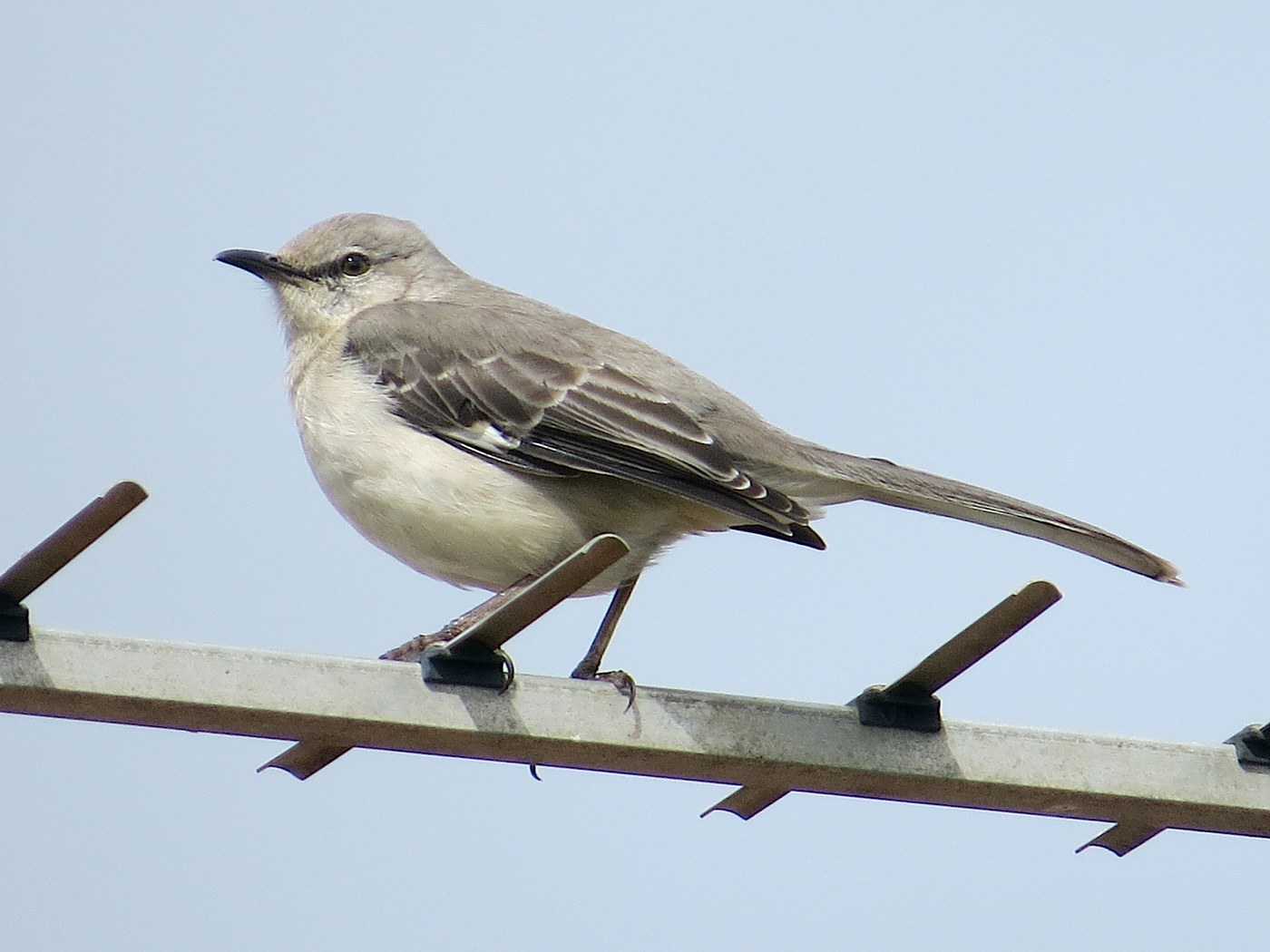
Northern Mockingbird
Mimus polyglottos
A slender gray songbird famous for endlessly mimicking the songs and calls of other birds, with bold white wing patches visible in flight.
- Size
- 21-26 cm (8-10 in) long, 31-38 cm (12-15 in) wingspan
- Habitat
- open areas with scattered shrubs, parks, gardens, and suburban yards
- Type
- songbird
Spotted a bird like this?
Identify any bird from a photo, free.
Overview
The Northern Mockingbird is a slim, long-tailed songbird with plain gray upperparts and paler gray underparts, best known not for its coloring but for its extraordinary vocal talent. It has a fairly long, dark bill, a long tail often held cocked or flicked open, and bold white patches on the wings and outer tail feathers that flash conspicuously in flight or during territorial displays.
As its scientific name ("many-tongued mimic") suggests, the mockingbird can learn and imitate the songs and calls of dozens of other bird species, as well as mechanical sounds, weaving them into long, varied singing bouts, particularly from prominent, exposed perches.
How to identify it
Key Field Marks
- Plain gray upperparts and pale gray underparts
- Long tail, often cocked, with white outer tail feathers
- Bold white patches on the wings, especially visible in flight
- Long, thin, slightly downcurved dark bill
Similar Species
- Loggerhead Shrike: similar gray-and-white pattern, but has a black mask through the eye and a stouter, hooked bill, and behaves very differently, perching upright and hunting like a small raptor.
- Gray Catbird: plain slate-gray overall without white wing patches, and has a black cap and rusty undertail patch, distinguishing it from the mockingbird.
- Northern Shrike: winter visitor in the north, also gray with a black mask, but larger and with more contrasting black wings.
Habitat & range
Habitat
Northern Mockingbirds favor open areas with scattered shrubs and small trees, including parks, gardens, hedgerows, farmland, and suburban and urban yards.
Range
They are resident across most of the United States, Mexico, and parts of southern Canada, and the species has expanded its range northward over recent decades.
Migration
Most Northern Mockingbirds are non-migratory, defending year-round territories, though some individuals at the northern edge of the range may shift short distances in winter.
Behavior & voice
Behavior
Mockingbirds are bold and territorial, often seen chasing other birds, cats, or even people away from their territory, and males frequently sing from prominent perches, sometimes through the night, especially unmated males in spring.
Voice
Mockingbirds are renowned mimics, incorporating phrases from dozens of other bird species' songs and calls, as well as mechanical sounds, into long, varied singing bouts, often repeating each phrase two to six times before moving to the next.
Feeding
Diet shifts seasonally: insects dominate in the breeding season, while fruit and berries become more important in fall and winter; mockingbirds often defend productive fruiting shrubs as a food resource.
Nesting & Breeding
Pairs build an open cup nest in dense shrubs or small trees, and both sexes can be highly aggressive in defending the nest against intruders. They typically lay 2-6 eggs and may raise two or three broods per season.
Frequently asked questions
How many songs can a Northern Mockingbird imitate?
An individual mockingbird can learn and mimic dozens, sometimes over a hundred, different sounds over its lifetime, including the songs and calls of other bird species as well as mechanical noises like car alarms.
Why do mockingbirds sing at night?
Unmated male mockingbirds, in particular, often sing at night during spring, likely to attract a mate; moonlight and artificial lighting can also prompt nighttime singing.
Are Northern Mockingbirds aggressive?
Yes, they are known for vigorously defending their territory and nest, sometimes dive-bombing cats, dogs, or even people who venture too close.
Do Northern Mockingbirds migrate?
Most are non-migratory residents that hold territories year-round, though a few individuals near the northern range edge may move short distances in winter.
What do Northern Mockingbirds eat?
They eat insects, especially during the breeding season, and rely more on fruit and berries in fall and winter.
Northern Mockingbird guides
In-depth guides for identifying, finding, and understanding Northern Mockingbird.
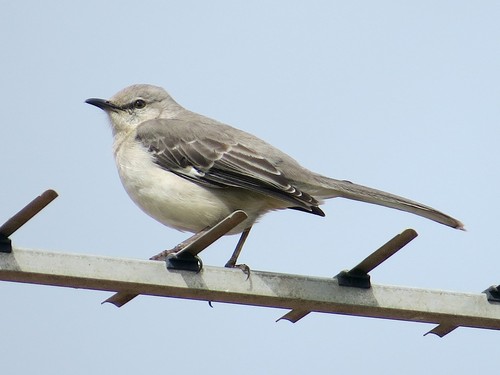
Northern Mockingbird identified by the community
Real birds identified with Bird Identifier.

Other birds you may enjoy

Black Redstart
13-14.5 cm (5.1-5.7 in) long, 23-26 cm wingspan

Black-throated Sparrow
12-14 cm (4.7-5.5 in) long, about 19-20 cm (7.5-8 in) wingspan

Greater Bird-of-paradise
Body about 43 cm; males with additional flank plumes up to 50 cm and long tail wires

Blue Tit
11-12 cm (4.3-4.7 in) long, 17-20 cm wingspan

Red-billed Quelea
11.5–13 cm long, wingspan about 20–22 cm
White-plumed Antbird
13-14 cm (5-5.5 in) long

Pyrrhuloxia
19-22 cm (7.5-8.7 in) long, 30 cm wingspan

Blue-gray Tanager
16-18 cm (6-7 in) long

Blackburnian Warbler
11-13 cm (4.3-5.1 in) long, 20-22 cm wingspan

Bluethroat
13-14 cm (5.1-5.5 in) long, 20-22 cm wingspan

Eurasian Nuthatch
12-14.5 cm (4.7-5.7 in) long, 22.5-27 cm wingspan

Wood Thrush
19-21 cm (7.5-8.3 in) long, about 33 cm (13 in) wingspan