Northern Mockingbird Identification Guide
A slim, long-tailed gray songbird famous for its nonstop, endlessly varied singing, in which it mimics the songs and sounds of dozens of other species.
Read the full Northern Mockingbird encyclopedia entry →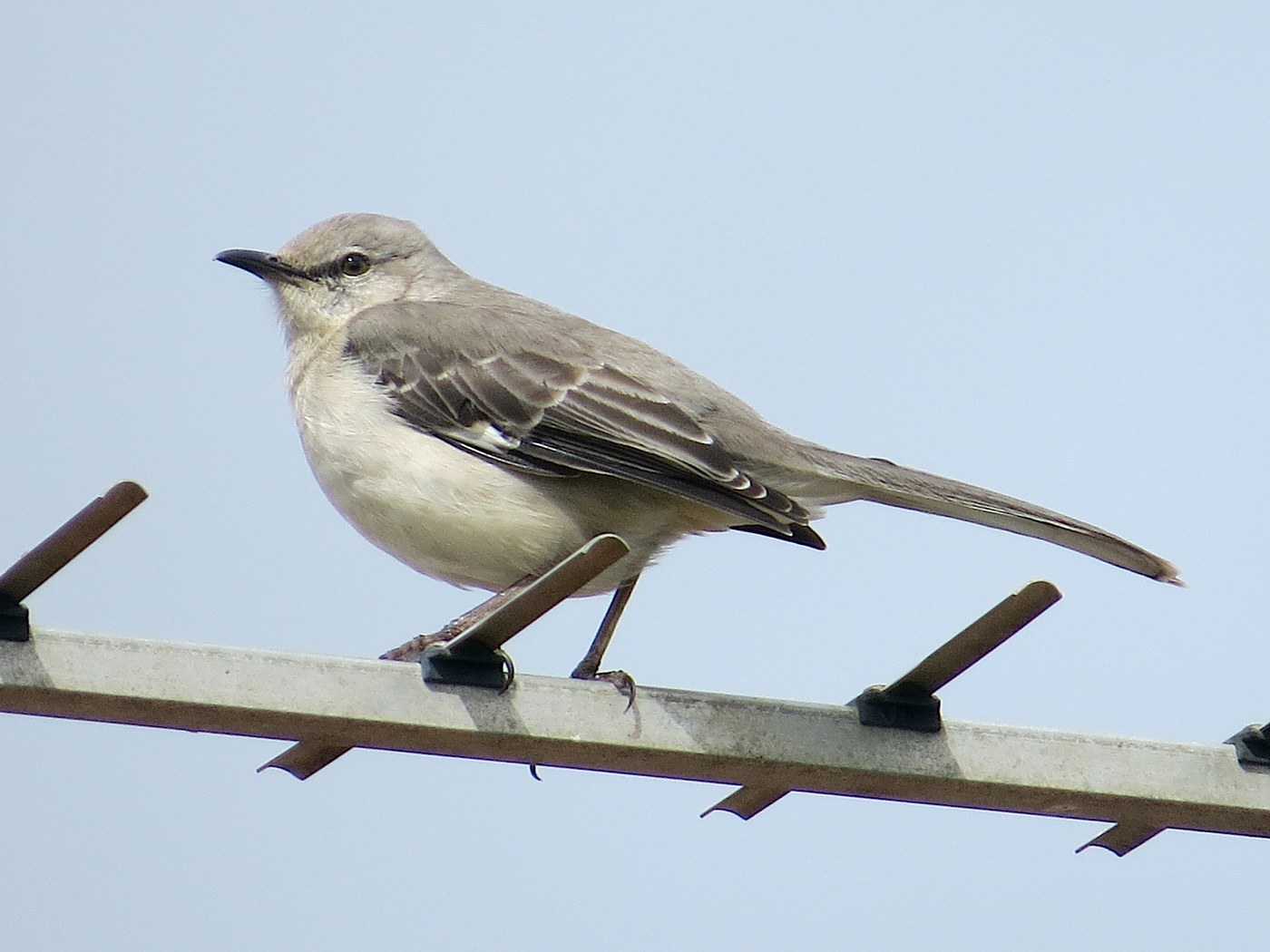
Overview
The Northern Mockingbird (Mimus polyglottos) is a common, conspicuous songbird of gardens, parks, and open scrub across the United States, Mexico, and southern Canada. It is best known for its extraordinary vocal repertoire, endlessly repeating and mimicking sounds from other birds, insects, and even mechanical noises.
Key Field Marks
- Size & shape: A slim, medium-sized songbird about 9–10 inches long, with a long tail, a fairly long, slightly downcurved bill, and an upright, alert posture.
- Plumage: Overall soft gray above and pale grayish-white below, with no strong markings — a plain-looking bird whose behavior is often more distinctive than its plumage.
- Wing pattern: Two bold white wing bars and large white patches on the wings, flashed conspicuously in flight and during wing-flashing displays.
- Tail: Long, dark tail edged with white outer tail feathers that flash brightly in flight.
- Behavior: Frequently perches in the open on wires, fences, or shrub tops; performs a distinctive "wing flash" display, raising the wings in jerky stages to reveal the white patches, possibly to startle insect prey; extremely territorial and will aggressively chase off intruders, including cats, dogs, and humans, near the nest.
Similar Species
- Loggerhead Shrike is similarly gray with white wing patches but is stockier, has a hooked bill and a black facial mask, and a shorter tail.
- Gray Catbird is slate-gray overall but lacks the mockingbird's white wing patches and white tail edges, and has a black cap and rusty undertail patch instead.
- Northern Shrike is larger, has a strongly hooked bill and black mask, and different, patchier white wing markings.
Where & When to Find One
Northern Mockingbirds are year-round residents across most of the southern two-thirds of the U.S., Mexico, and increasingly the southern edge of Canada, favoring open scrub, hedgerows, lawns, parks, and suburban gardens with scattered shrubs. They do not truly migrate but some northern populations shift short distances in winter. Because they are non-migratory in most of their range and vocalize year-round (including sometimes at night, especially unmated males under streetlights), they can be found and heard in almost any season.
Voice
One of the most impressive singers in North America: males sing long, continuous strings of phrases, each repeated several times before switching to a new one, often mimicking the songs of other bird species, car alarms, and other ambient sounds; unmated males may sing persistently through the night, especially in spring under artificial lighting.
Frequently asked questions
How can I identify a Northern Mockingbird?
Look for a slim gray songbird with a long dark tail edged in white, bold white wing patches visible in flight, and a habit of perching in the open while singing varied, repeated phrases.
Why does a mockingbird sing so many different songs?
It mimics the calls and songs of dozens of other bird species as well as mechanical sounds, stringing them together into long, continuously varied performances, a behavior reflected in its scientific name 'polyglottos' (many-tongued).
What is the mockingbird doing when it flashes its wings open?
It performs a jerky 'wing flash' display, raising its wings in stages to reveal white patches, a behavior thought to startle insects out of hiding or to signal territory ownership.
How is a Northern Mockingbird different from a Gray Catbird?
The mockingbird shows bold white wing patches and white outer tail feathers that the plain slate-gray catbird lacks; the catbird instead has a black cap and a rusty patch under the tail.
Why do mockingbirds sometimes sing at night?
Unmated males, especially in spring, may sing persistently through the night to attract a mate, often stimulated by artificial streetlights.
Northern Mockingbird identified by the community
Recent Northern Mockingbird sightings identified with Bird Identifier.