
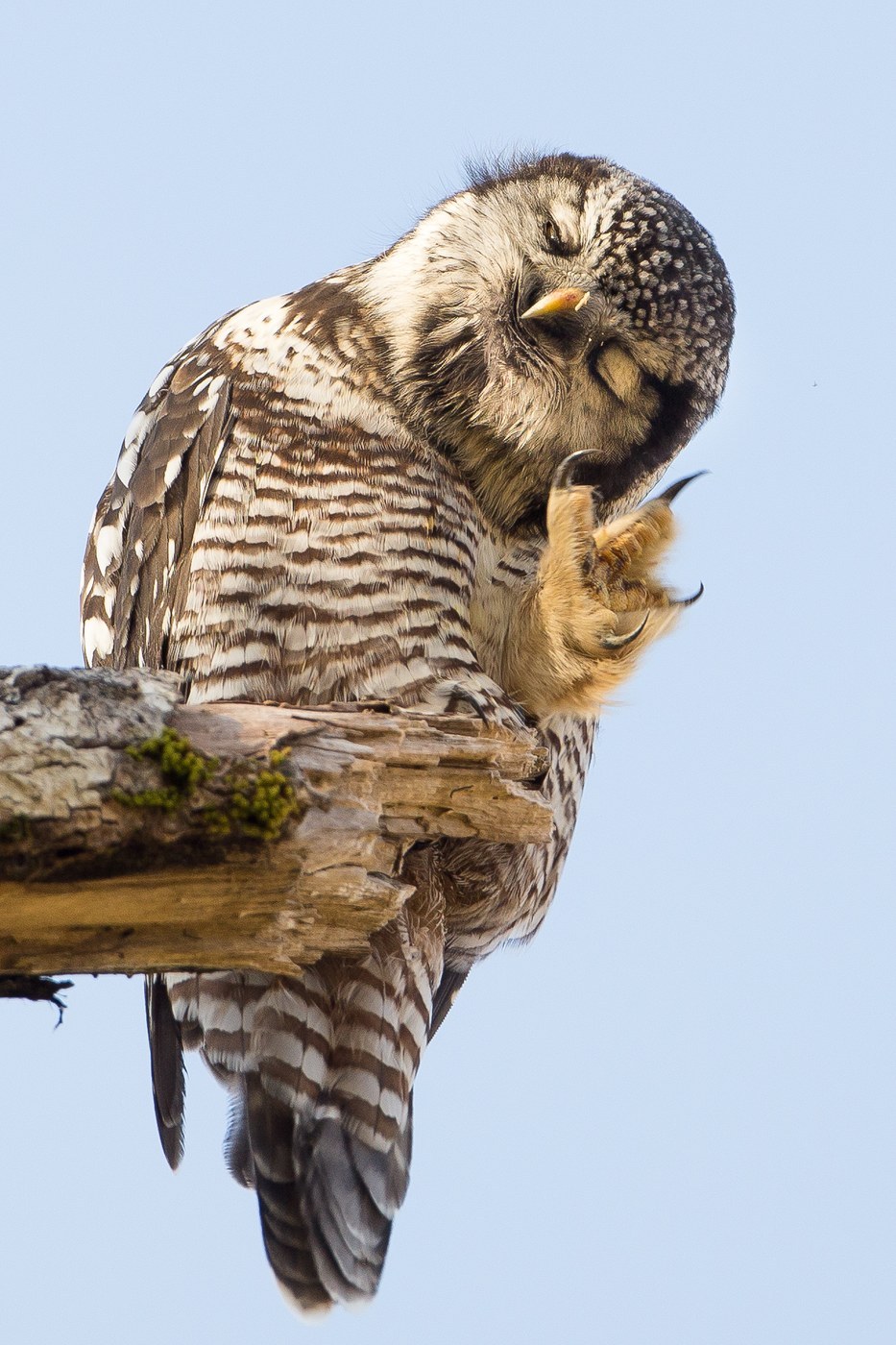
Northern Hawk Owl
Surnia ulula
A long-tailed, falcon-shaped boreal owl that hunts by day from exposed treetop perches like a hawk.
- Size
- 36-42 cm (14-17 in) long, 74-81 cm wingspan
- Habitat
- open boreal forest, forest edges, and burned or logged clearings
- Type
- owl
Spotted a bird like this?
Identify any bird from a photo, free.
Overview
The Northern Hawk Owl is a distinctive, medium-sized owl with a body shape and behavior that recall a falcon or accipiter more than a typical owl. It has a long tail, pointed wings in flight, and a habit of perching boldly atop the highest spire of a spruce tree scanning the surrounding open country.
Adults are grayish-brown above with white spotting, and the underparts are finely barred with dark brown on white, unlike the streaking seen in many other owls. The facial disc is pale gray-white bordered by bold black sideburn-like markings, and the eyes are yellow.
This boldly diurnal owl of the far north is a striking and sought-after find for birders, often perching conspicuously and flying with a fast, direct, hawk-like flight low over open ground before pulling up to a high perch.
How to identify it
Key Field Marks
- Long tail, often held at an angle in flight, giving a falcon-like silhouette
- Bold black "sideburns" bordering a pale gray facial disc
- Finely barred underparts (not streaked)
- Habit of perching conspicuously atop spruce spires and hunting by day
Similar Species
- Cooper's Hawk and other accipiters share a long-tailed, fast-flying shape but lack the owl's facial disc and have a different flight style with quicker wingbeats.
- Boreal Owl and other forest owls are shorter-tailed, strictly nocturnal, and lack the barred underparts and bold facial markings.
Habitat & range
Northern Hawk Owls inhabit open boreal forest, muskeg, burned areas, and forest-tundra transition zones across the circumpolar north, including Alaska, Canada, Scandinavia, and Siberia. They favor semi-open habitat with scattered tall trees for hunting perches.
Most individuals are resident, but the species is prone to irregular southward irruptions in winters following vole population crashes, occasionally appearing well south of the normal breeding range.
Behavior & voice
Behavior
Unlike most owls, the Northern Hawk Owl is almost entirely diurnal, hunting actively in daylight and perching openly at the tops of trees, often pumping its long tail up and down like a shrike or kestrel.
Voice
The male's territorial song is a long, rolling, whistled trill, while both sexes give sharp, shrieking alarm calls when defending the nest, sometimes aggressively diving at intruders including humans.
Feeding
Voles and other small rodents form the core diet, supplemented by birds; the owl hunts by scanning from a high open perch and diving to seize prey, sometimes pursuing birds in fast, agile flight.
Nesting & Breeding
Hawk Owls nest in natural tree cavities, broken snags, or old stick nests, laying 3-9 eggs depending on prey abundance. Parents, especially the female, defend the nest fiercely against intruders.
Frequently asked questions
Is the Northern Hawk Owl active during the day?
Yes, it is one of the most strictly diurnal owls, hunting in full daylight and perching conspicuously atop trees rather than hiding by day like most owls.
Why is it called a hawk owl?
Its long tail, pointed-wing flight silhouette, and daytime hunting habits closely resemble a hawk or falcon, though it is a true owl with a facial disc and owl-like features.
Where can you find a Northern Hawk Owl?
It breeds in open boreal forest and burned or logged clearings across the far north of North America, Europe, and Asia, and occasionally irrupts farther south in winters of vole scarcity.
What does a Northern Hawk Owl eat?
Mainly voles and other small rodents, along with birds, captured by diving from a high, exposed perch.
Northern Hawk Owl guides
In-depth guides for identifying, finding, and understanding Northern Hawk Owl.
Other birds you may enjoy
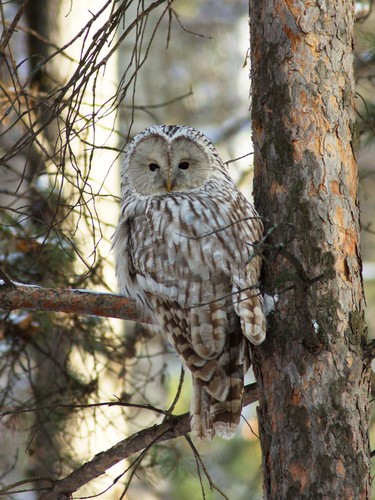
Ural Owl
50-62 cm long, wingspan about 1.0-1.3 m
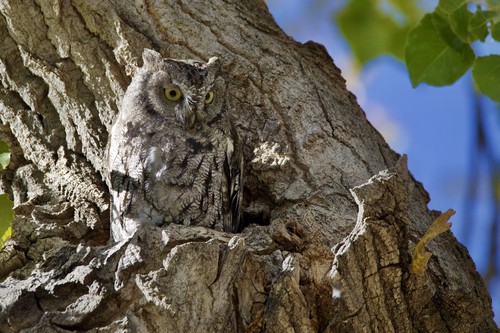
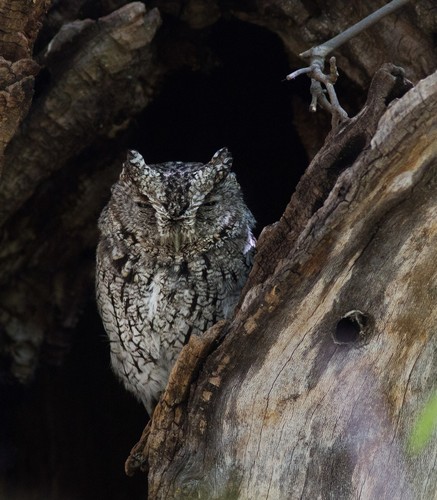
Western Screech-Owl
19-25 cm (7.5-10 in) long, about 55 cm (21.5 in) wingspan
Whiskered Screech-Owl
17-19 cm (6.7-7.5 in) long, 43 cm wingspan
Tawny Owl
37-43 cm (15-17 in) long, 81-96 cm wingspan
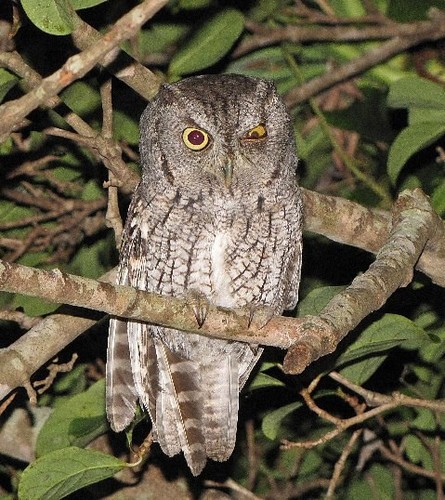
Screech Owl
16-25 cm long, wingspan about 46-61 cm
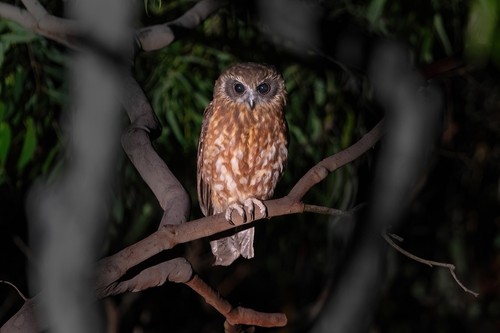
Southern Boobook
27-36 cm (11-14 in) long
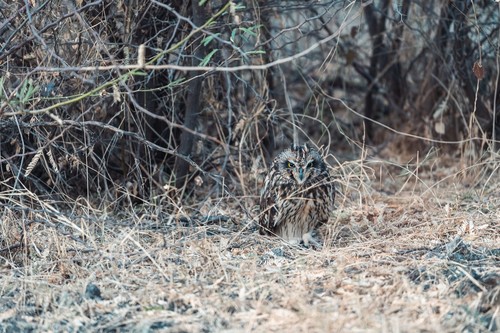
Short-eared Owl
34-42 cm (13-17 in) long, 85-110 cm wingspan
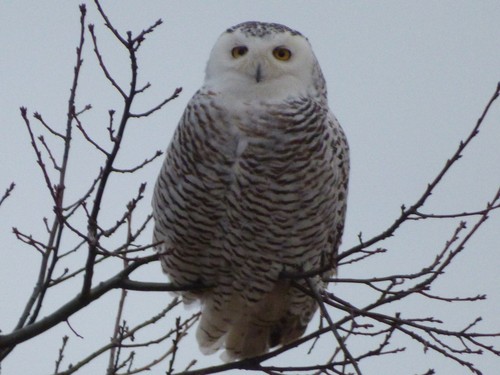
Snowy Owl
52-71 cm (20-28 in) long, 125-150 cm (49-59 in) wingspan
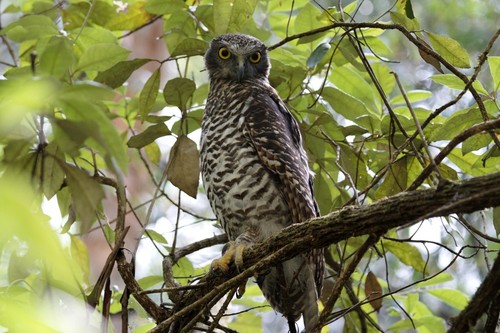
Powerful Owl
60-65 cm (24-26 in) long, 112-135 cm (44-53 in) wingspan
Northern Saw-whet Owl
18-21 cm (7-8.5 in) long, 42-56 cm (17-22 in) wingspan
Northern Pygmy-Owl
16-18 cm (6.3-7.1 in) long, 35-39 cm wingspan
Spotted Owl
43-48 cm (17-19 in) long, 100-114 cm wingspan