
Northern Gannet
Morus bassanus
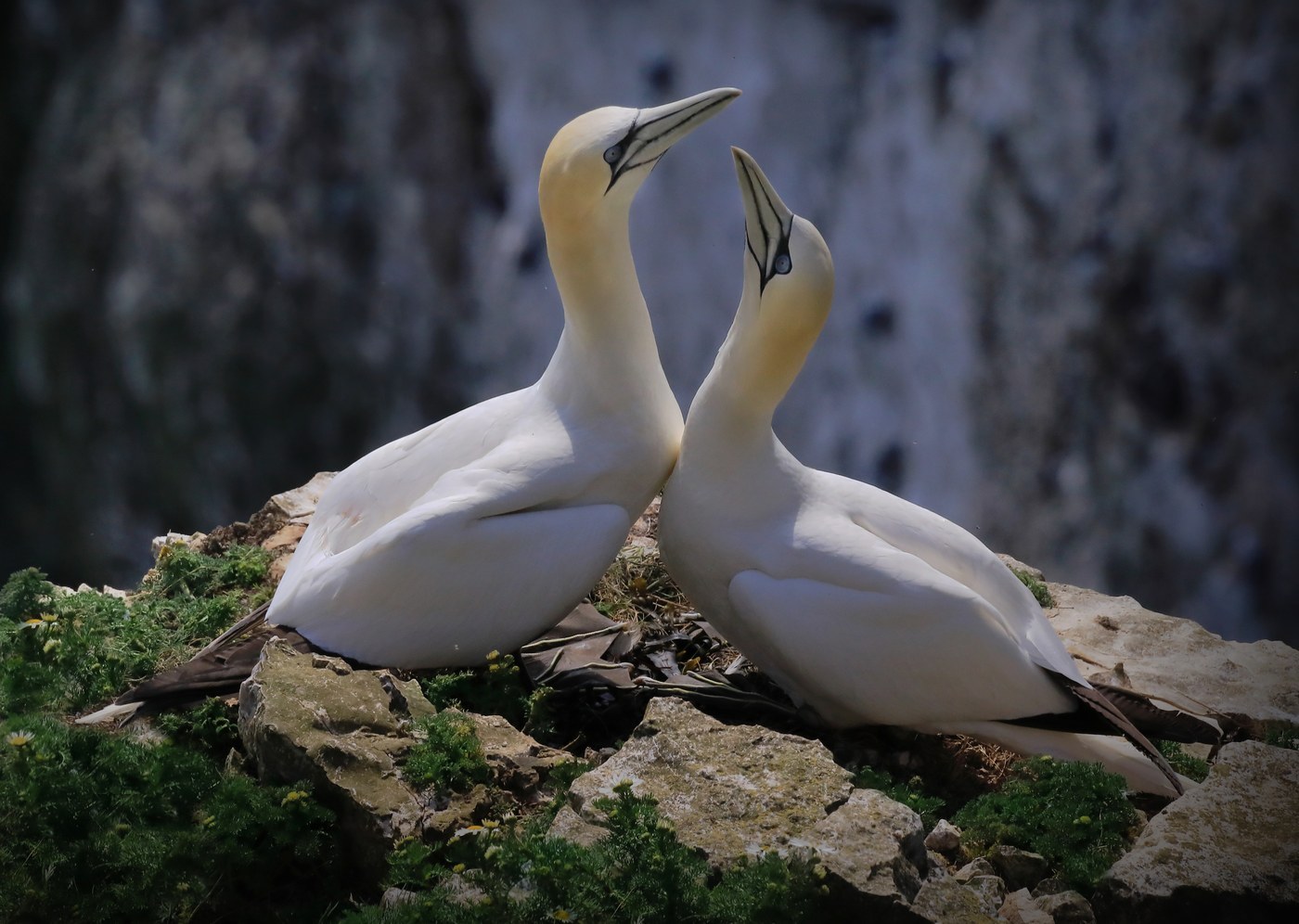
The largest seabird in the North Atlantic, gleaming white with black wingtips and a golden-buff wash on the head, famous for spectacular high-speed plunge dives after fish.
- Size
- 87-100 cm (34-39 in) long, wingspan 165-180 cm (65-71 in)
- Habitat
- open North Atlantic waters, breeding in large colonies on coastal cliffs and islands
- Type
- seabird
Spotted a bird like this?
Identify any bird from a photo, free.
Overview
The Northern Gannet is the largest seabird found in the North Atlantic, a striking, torpedo-shaped bird with brilliant white plumage, sharply contrasting black wingtips, and a warm buff-yellow wash across the head and nape. Its long, dagger-like, pale blue-grey bill and piercing pale eyes, ringed with bare blue skin, give it a distinctive, almost regal expression.
Gannets are supremely adapted for high-speed plunge-diving, folding their wings back at the last moment before hitting the water at speeds that can exceed 100 km/h (60 mph), aided by internal air sacs that cushion the impact and a bill lacking external nostrils to prevent water from rushing in.
The species breeds in some of the largest and most spectacular seabird colonies in the Northern Hemisphere, with tens of thousands of pairs packed onto cliff ledges and flat-topped rock stacks, filling the air with constant activity and noise.
How to identify it
Key field marks
- Large size with a brilliant white body and black wingtips
- Buff-yellow wash on the head and nape
- Long, pointed, pale blue-grey bill and pale eyes with blue bare skin around them
- Cigar-shaped body and long, pointed wings and tail in flight
Similar species
- Cape Gannet and Australasian Gannet, close relatives found in other regions, differ subtly in the extent of black on the tail and facial stripe pattern, but do not overlap in range with the Northern Gannet.
- Immature Northern Gannets are mottled dark brown, gradually becoming whiter over several years, and can be confused with other large dark seabirds until the adult plumage is reached.
Habitat & range
Northern Gannets breed in large colonies on steep cliffs, rocky islands, and stacks around the North Atlantic, with major colonies in the British Isles, Iceland, the Faroe Islands, Norway, and eastern Canada, including the famous colony at Bonaventure Island in Quebec.
Outside the breeding season, gannets disperse widely across the North Atlantic and adjoining seas, with many birds migrating south to winter off the coasts of western Africa, while others remain closer to breeding waters.
Behavior & voice
Voice
At breeding colonies, Northern Gannets give loud, harsh, rhythmic "arrah" calls used in greeting displays, territorial disputes, and pair-bonding rituals, contributing to the constant noise of a large colony.
Feeding
They feed primarily on fish such as herring and mackerel, spotted from the air and caught by spectacular high-speed plunge-dives from heights of up to 30 meters (100 ft), sometimes pursuing prey further underwater using their wings and feet.
Nesting and breeding
Pairs build substantial nests of seaweed, mud, and debris on crowded cliff ledges, engaging in elaborate greeting displays involving bill-fencing and head-shaking each time a partner returns to the nest. A single egg is laid, and both parents share incubation and feeding duties over the breeding season.
Frequently asked questions
How fast can a Northern Gannet dive?
It can plunge-dive into the water at speeds exceeding 100 km/h (60 mph) when hunting fish.
How can you identify a Northern Gannet?
Look for its large size, brilliant white body, black wingtips, and a warm buff-yellow wash across the head and nape.
Where does the Northern Gannet breed?
It nests in large colonies on cliffs and rocky islands around the North Atlantic, including major sites in the British Isles, Iceland, and eastern Canada.
How does the Northern Gannet avoid injury when diving?
It has internal air sacs beneath its skin that cushion the impact, along with a streamlined body and a bill without external nostrils to keep water out.
What does the Northern Gannet eat?
It eats fish such as herring and mackerel, caught through spectacular high-speed plunge-dives.
Northern Gannet guides
In-depth guides for identifying, finding, and understanding Northern Gannet.
Other birds you may enjoy
Peruvian Pelican
137-152 cm (54-60 in) long, up to 228 cm wingspan
Bonaparte's Gull
28-33 cm (11-13 in) long, 76-84 cm wingspan
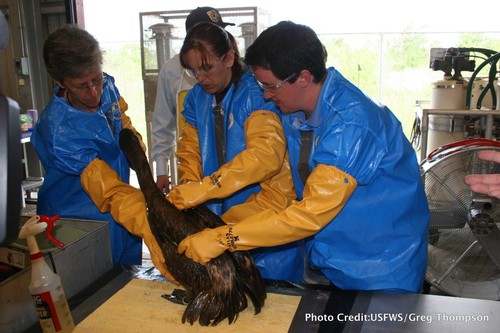
Brown Pelican
106-137 cm (42-54 in) long, 200-230 cm wingspan
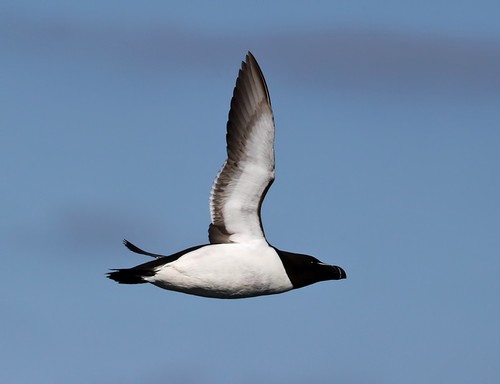
Razorbill
37-39 cm (15-15.5 in) long, 63-68 cm wingspan
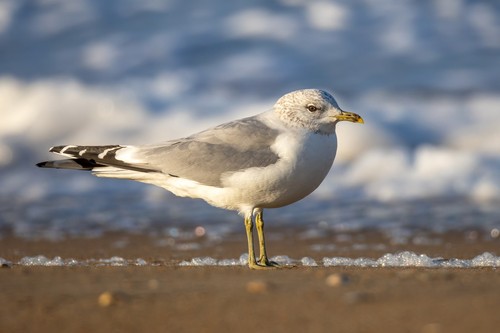
Common Gull
40-46 cm (16-18 in) long, 110-130 cm wingspan
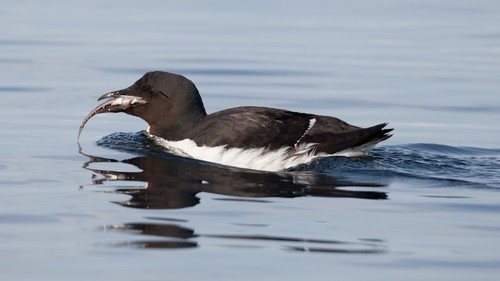
Thick-billed Murre
40-48 cm (16-19 in) long, 65-75 cm wingspan
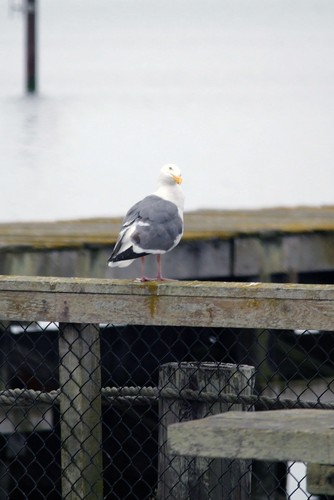
Western Gull
55-68 cm (22-27 in) long, 130-144 cm wingspan
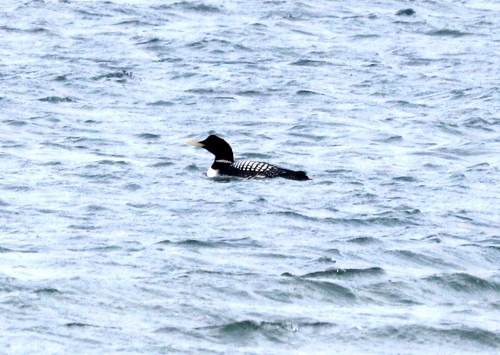
Yellow-billed Loon
76-97 cm (30-38 in) long, 135-152 cm wingspan
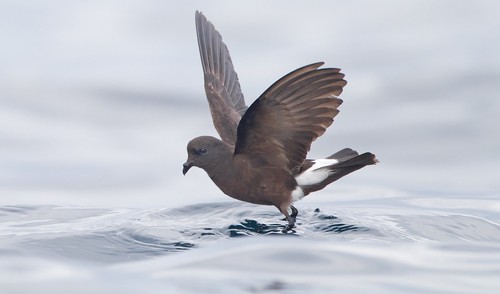
Wilson's Storm-Petrel
15-19 cm (6-7.5 in) long, wingspan 38-42 cm (15-16.5 in)
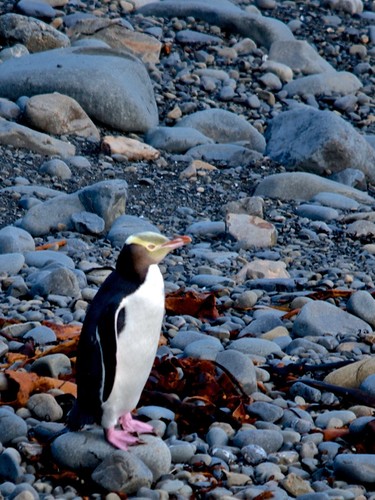
Yellow-eyed Penguin
62-79 cm (24-31 in) tall, 3-8.5 kg (6.6-18.7 lb)
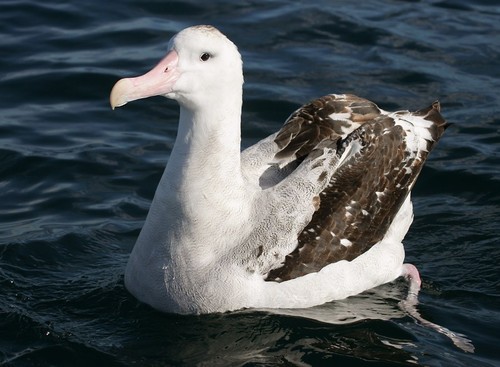
Wandering Albatross
107-135 cm (42-53 in) long, wingspan up to 3.5 m (11.5 ft)
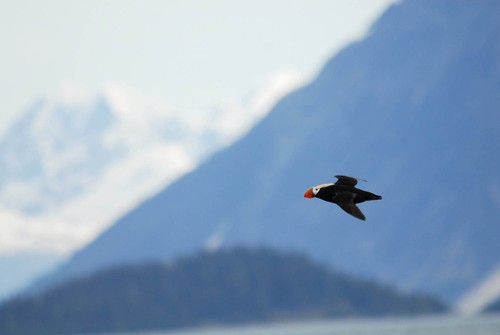
Tufted Puffin
35-41 cm (14-16 in) long, about 63-70 cm wingspan