
Northern Gannet Identification Guide
A large, brilliant white seabird with black wingtips and a dagger-like bill, famous for spectacular vertical dives from great height into the ocean to catch fish.
Read the full Northern Gannet encyclopedia entry →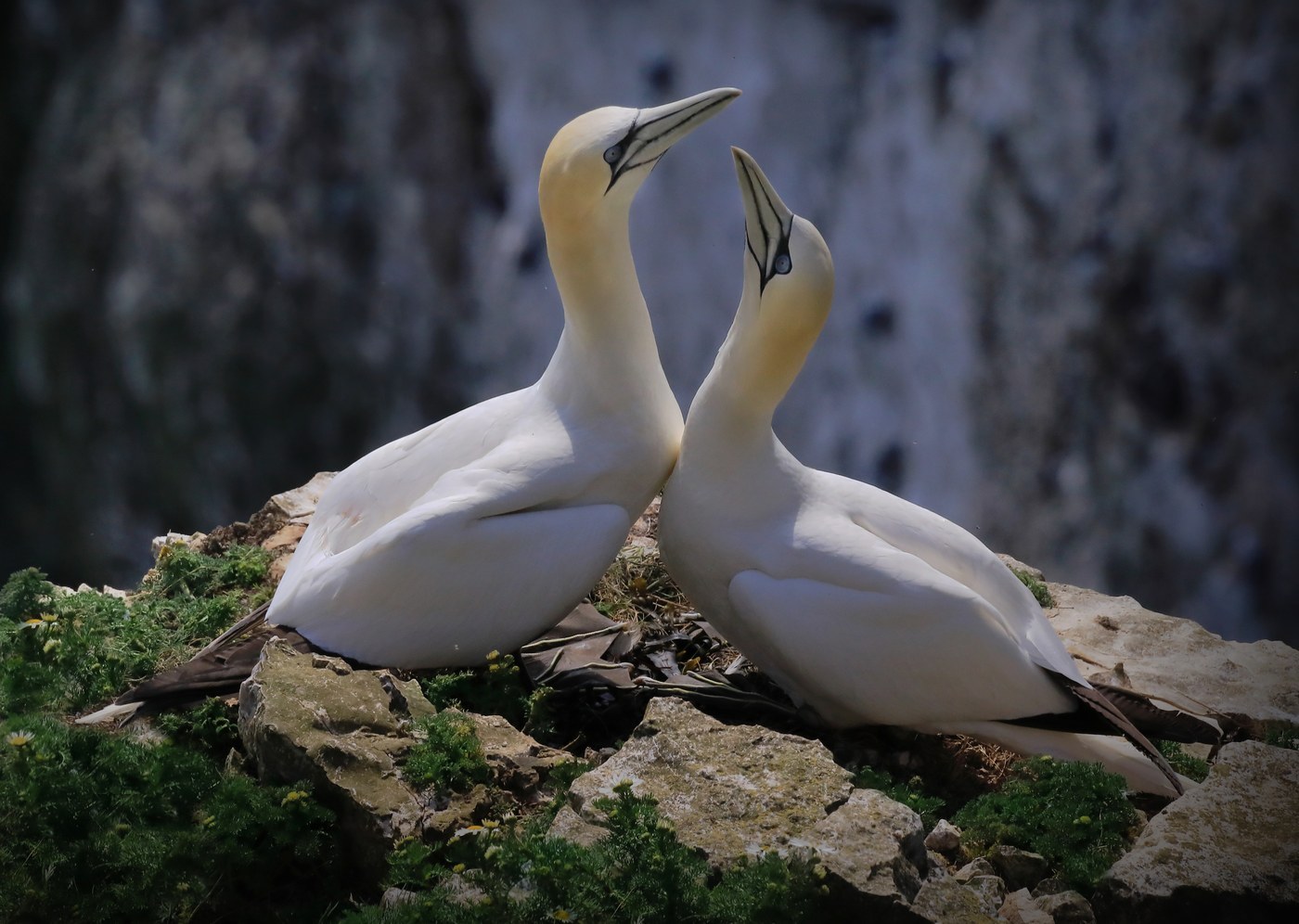
Overview
The Northern Gannet (Morus bassanus) is the largest seabird of the North Atlantic, breeding in dense colonies on isolated cliffs and islands and spending the rest of the year over open water. Its plunge-diving hunting style, executed from heights of up to 100 feet, is one of the most dramatic sights in North American and European birding.
Key Field Marks
- Size & shape: A large, cigar-shaped seabird with long, narrow, pointed wings spanning up to 6 feet, a long neck, and a long, straight, dagger-like bill.
- Adult plumage: Brilliant white overall with black wingtips (visible as a black trailing border along the outer primaries) and a warm buffy-yellow wash on the head and nape.
- Bill and face: Pale bluish-gray bill and bare, dark blue-gray skin around the eye giving a masked appearance.
- Juvenile plumage: Entirely dark brownish-gray with fine white speckling, gradually molting to adult white plumage over about four to five years through a series of increasingly white-and-brown intermediate plumages.
- Behavior: Flies with steady, powerful, deep wingbeats interspersed with glides low over the water; feeds by plunge-diving nearly vertically from high in the air, folding wings back at the last moment to knife into the water.
Similar Species
- Brown Booby and other boobies are smaller, with brown (not black-and-white) plumage patterns and a different bill/face color; boobies are also primarily tropical/subtropical while gannets favor colder Atlantic waters.
- Gulls lack the gannet's long pointed wings, dagger bill, and plunge-diving behavior.
- Immature gannets can be confused with immature boobies, but overall structure (larger size, longer wings and bill) and Atlantic range help confirm gannet identity.
Where & When to Find One
Northern Gannets breed in a small number of huge, dense colonies on cliffs and rocky islands in the North Atlantic, including sites in eastern Canada (such as Bonaventure Island and the Gaspé), Iceland, and the British Isles. Outside the breeding season they range widely over the North Atlantic and can be seen migrating along the U.S. Atlantic coast, often in impressive numbers, from fall through spring, with many wintering as far south as the Gulf of Mexico. They are best observed from coastal headlands, beaches, and pelagic boat trips, especially in fall migration.
Voice
Mostly silent away from colonies, but at breeding sites gannets give loud, harsh, repeated calls often rendered as "arrah-arrah-arrah" during greeting and territorial displays between mates and neighbors.
Frequently asked questions
How do I identify an adult Northern Gannet?
Look for a large, brilliant white seabird with black wingtips, a buffy-yellow head, a long pale bill, and long narrow pointed wings, often seen plunge-diving into the ocean.
Why do juvenile Northern Gannets look so different from adults?
Juveniles are entirely dark brown with white speckling and take about four to five years to molt through progressively whiter plumages before reaching the clean white adult plumage.
What is distinctive about how a Northern Gannet feeds?
It plunge-dives from heights up to 100 feet, folding its wings back just before impact to spear into the water at high speed after fish, a behavior that helps distinguish it from other large seabirds even at a distance.
Where is the best place to see a Northern Gannet in North America?
Large breeding colonies occur on cliffs in eastern Canada, and migrating and wintering birds can be seen along the U.S. Atlantic coast from fall through spring, often from headlands or pelagic trips.
How can I tell a Northern Gannet from a booby?
Gannets are larger with longer wings and a longer bill than boobies, show a black-and-white (not brown-and-white) adult pattern, and are found in cooler North Atlantic waters rather than tropical seas.