
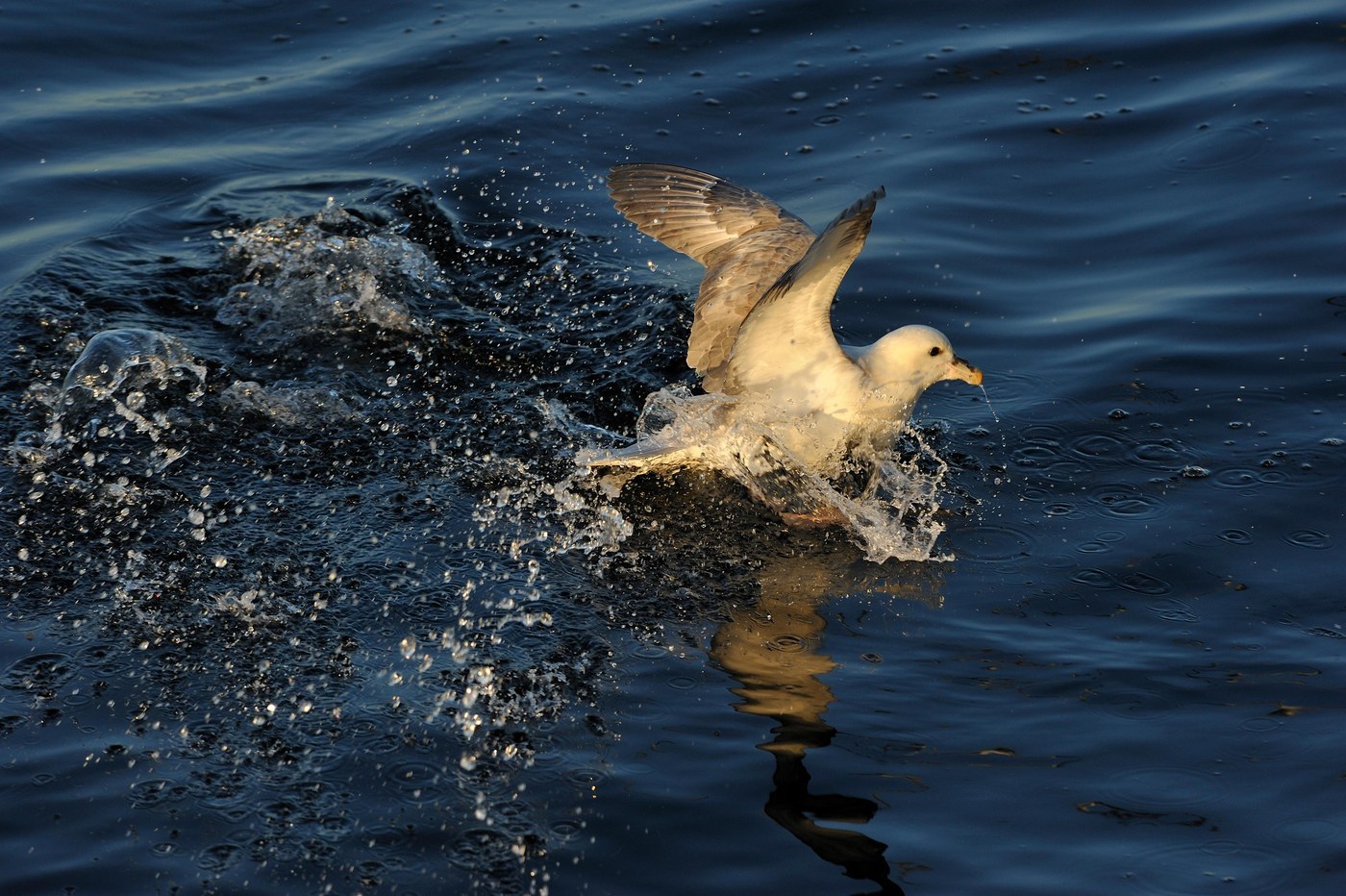
Northern Fulmar
Fulmarus glacialis
A stocky, gull-like tube-nosed seabird of northern oceans, recognized by its stiff, straight-winged gliding flight low over the waves.
- Size
- 43-52 cm (17-20 in) long, wingspan 101-117 cm (40-46 in)
- Habitat
- open North Atlantic and North Pacific waters, breeding on sea cliffs
- Type
- seabird
Spotted a bird like this?
Identify any bird from a photo, free.
Overview
The Northern Fulmar is a thickset, gull-like seabird found across the cold waters of the North Atlantic and North Pacific. It occurs in two main color forms: a pale morph with a grey back, white head and underparts, and a smaller dark morph, more common in Arctic and Pacific populations, that is uniformly grey-brown.
Although it resembles a gull at a glance, the Northern Fulmar belongs to the tubenose family, related to albatrosses and petrels, and shares their tube-shaped nostrils atop a thick, yellow bill used partly for excreting excess salt.
A defining feature of the species is its flight style: stiff, straight wings held out flat as it glides low and fast over wave troughs, alternating with short bursts of shallow, rapid wingbeats, quite different from the more flexible, buoyant flight of true gulls.
How to identify it
Key field marks
- Stocky, gull-like body with stiff, straight-held wings in flight
- Thick, yellowish tube-nosed bill
- Pale grey back and white head in the light morph; uniform grey-brown in the dark morph
- Dark eye patch giving a slightly "beady-eyed" look
Similar species
- Gulls have more flexible, bowed wingbeats and lack the thick tube-nosed bill of the fulmar.
- Shearwaters are typically slimmer-billed and longer-winged, with a more effortless, banking flight low over the water, and lack the fulmar's stocky, thick-necked profile.
Habitat & range
Northern Fulmars breed on sea cliffs and rocky ledges across the North Atlantic and North Pacific, including Arctic coastlines, the British Isles, Iceland, and Alaska. Populations have expanded significantly southward in the North Atlantic over the past two centuries.
Outside the breeding season, fulmars range widely over open ocean waters, often far from land, and are frequently seen following fishing vessels in northern seas.
Behavior & voice
Voice
At breeding cliffs, Northern Fulmars give a range of harsh, guttural cackling and grunting calls, especially during disputes over nest sites.
Feeding
They feed on fish, squid, crustaceans, and offal, often taken from the surface, and are notorious for gathering in large numbers behind fishing boats to scavenge discards.
Nesting and breeding
Pairs nest on narrow cliff ledges, laying a single egg directly on bare rock or a scant scrape. Chicks and adults famously defend the nest by spitting a foul-smelling stomach oil at intruders, a distinctive defense mechanism among tubenose seabirds.
Frequently asked questions
How can you tell a Northern Fulmar from a gull?
Fulmars fly with stiffer, straighter wings and a thick, yellowish tube-nosed bill, while gulls have more flexible wingbeats and lack the tubed bill.
What are the two color forms of the Northern Fulmar?
There is a pale morph with a grey back and white head, and a dark morph that is uniformly grey-brown, more common in Arctic and Pacific populations.
Where do Northern Fulmars breed?
They nest on sea cliffs across the North Atlantic and North Pacific, including Iceland, the British Isles, and Alaska.
How do Northern Fulmars defend their nests?
They spit a foul-smelling stomach oil at intruders, a defense used by both adults and chicks.
What do Northern Fulmars eat?
They eat fish, squid, crustaceans, and offal, and frequently scavenge behind fishing boats.
Northern Fulmar guides
In-depth guides for identifying, finding, and understanding Northern Fulmar.
Other birds you may enjoy
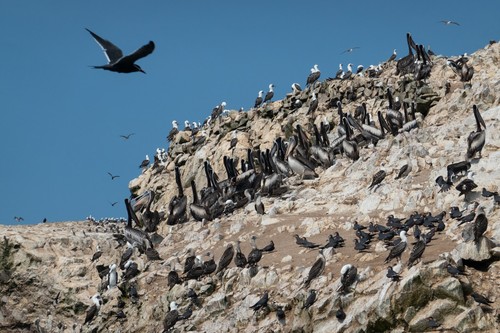
Peruvian Pelican
137-152 cm (54-60 in) long, up to 228 cm wingspan
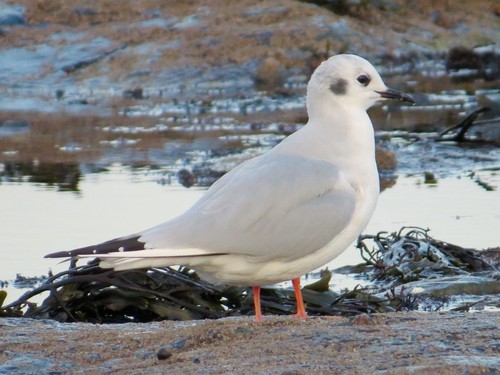
Bonaparte's Gull
28-33 cm (11-13 in) long, 76-84 cm wingspan
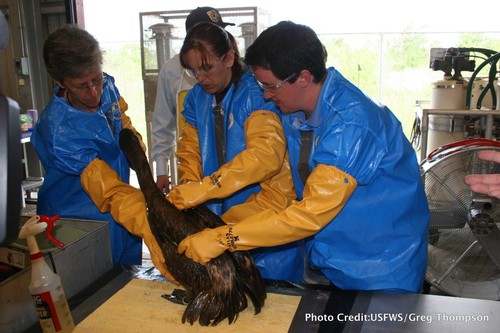
Brown Pelican
106-137 cm (42-54 in) long, 200-230 cm wingspan
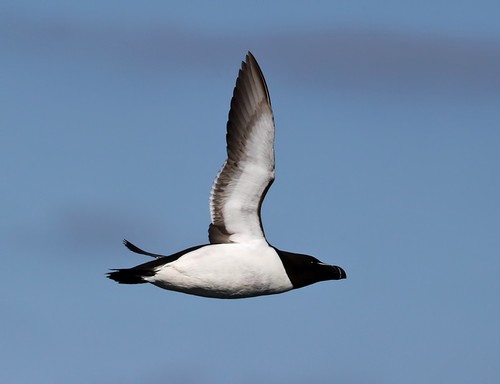
Razorbill
37-39 cm (15-15.5 in) long, 63-68 cm wingspan
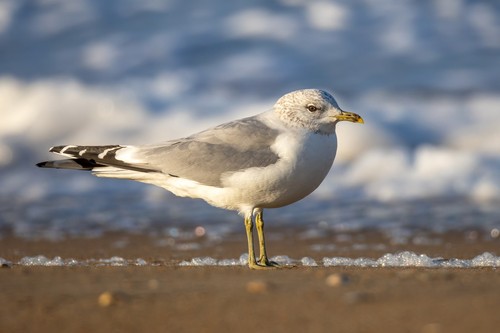
Common Gull
40-46 cm (16-18 in) long, 110-130 cm wingspan
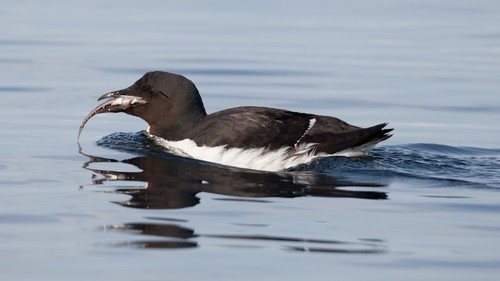
Thick-billed Murre
40-48 cm (16-19 in) long, 65-75 cm wingspan
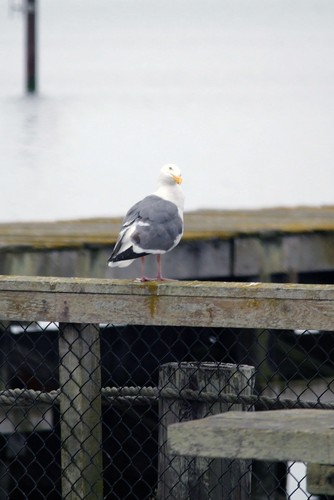
Western Gull
55-68 cm (22-27 in) long, 130-144 cm wingspan
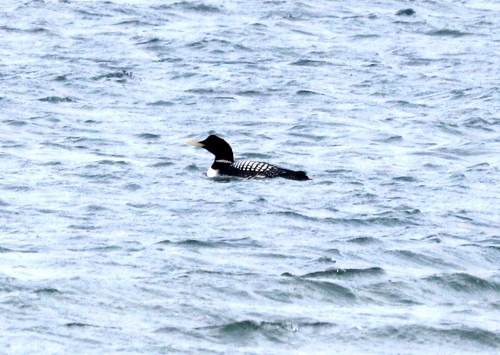
Yellow-billed Loon
76-97 cm (30-38 in) long, 135-152 cm wingspan
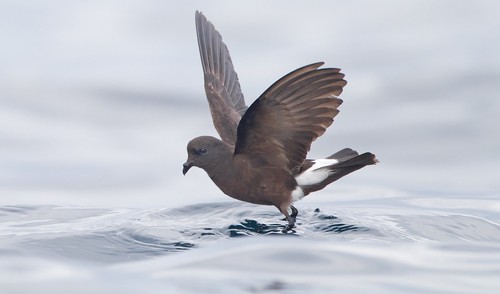
Wilson's Storm-Petrel
15-19 cm (6-7.5 in) long, wingspan 38-42 cm (15-16.5 in)
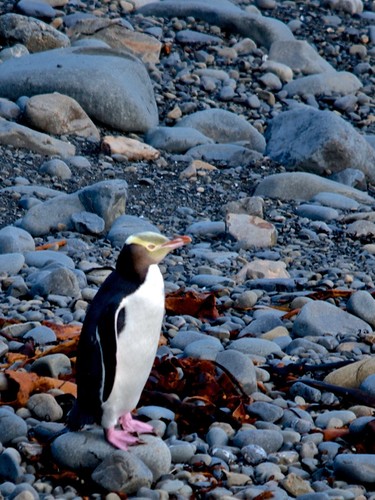
Yellow-eyed Penguin
62-79 cm (24-31 in) tall, 3-8.5 kg (6.6-18.7 lb)
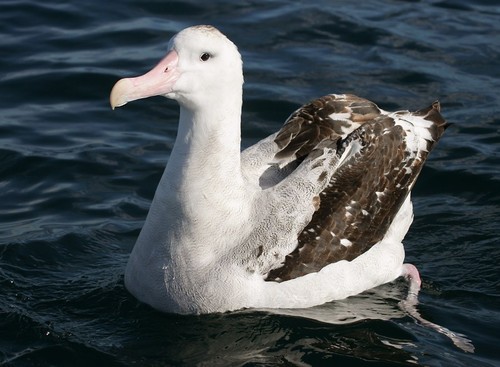
Wandering Albatross
107-135 cm (42-53 in) long, wingspan up to 3.5 m (11.5 ft)
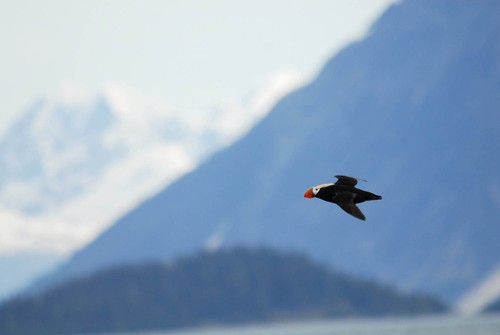
Tufted Puffin
35-41 cm (14-16 in) long, about 63-70 cm wingspan