
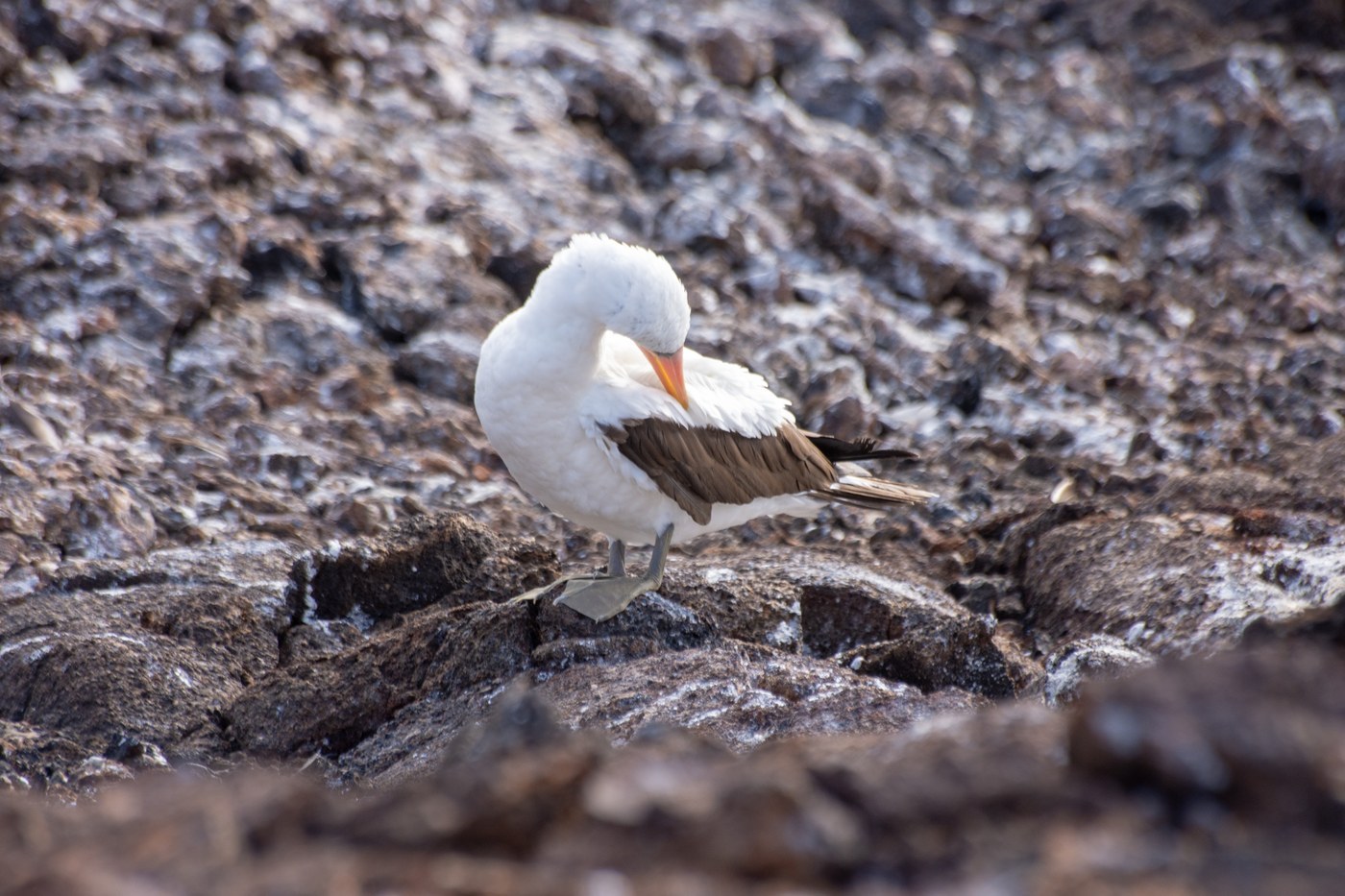
Nazca Booby
Sula granti
A large white booby of the eastern Pacific closely related to the Masked Booby, distinguished by its bright orange-pink bill.
- Size
- 81-92 cm (32-36 in) long, about 152 cm wingspan
- Habitat
- Galápagos Islands and other eastern tropical Pacific islands, open ocean
- Type
- seabird
Spotted a bird like this?
Identify any bird from a photo, free.
Overview
The Nazca Booby is a large, white-bodied booby of the eastern tropical Pacific, most familiar to visitors of the Galápagos Islands, where it is one of the most conspicuous breeding seabirds. It was formerly classified as a subspecies of the Masked Booby but is now recognized as a full species based on differences in appearance, voice, and genetics.
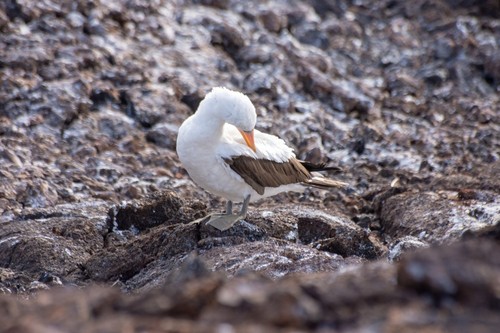
Adults are crisp white with black flight feathers and tail, similar to the Masked Booby, but the standout feature is the bright orange to salmon-pink bill, which contrasts with the dark facial skin and gives the species its most reliable field mark.
How to identify it
Key field marks
- Large white body with black flight feathers and tail
- Bright orange-pink bill (versus yellow in Masked Booby)
- Dark facial skin around the eyes
- Robust, heavy build similar to Masked Booby
Similar species
- Masked Booby is nearly identical in pattern but has a yellow bill rather than orange-pink, and the two species' ranges overlap only marginally.
- Blue-footed Booby shares Galápagos habitat but has brown upperparts and blue feet, quite different from the white-and-black Nazca Booby.
- Juveniles are mottled brown, gradually whitening with age, and can be confused with young Masked Boobies where ranges meet.
Habitat & range
Nazca Boobies breed primarily in the Galápagos Islands, with additional colonies on other eastern tropical Pacific islands such as Malpelo and the Revillagigedo Islands off Mexico. They favor open, rocky or sparsely vegetated ground on islands with cliff edges suitable for their reliance on wind for takeoff.
Outside the breeding season, birds forage over the nutrient-rich waters of the eastern tropical Pacific, closely tied to the productive currents that support the Galápagos marine ecosystem.
Behavior & voice
Behavior
Like other boobies, Nazca Boobies are agile plunge-divers, often foraging over schools of fish pushed to the surface by predatory fish or dolphins, and are frequently seen soaring on updrafts along cliff faces.
Voice
Birds give deep, trumpeting honks and whistles at the colony during courtship and territorial disputes; the calls differ subtly from those of the Masked Booby, supporting their status as separate species.
Feeding
Sardines, flying fish, and squid are the primary prey, captured through steep dives from considerable height.
Nesting and breeding
Two eggs are typically laid in a ground scrape, but as in the Masked Booby, the first chick to hatch nearly always kills its younger sibling, a well-documented case of obligate siblicide that has made Nazca Boobies an important study species for evolutionary biologists.
Frequently asked questions
Is the Nazca Booby the same as the Masked Booby?
They were once considered the same species, but Nazca Booby is now recognized as distinct, differing in bill color, voice, and genetics.
Where do Nazca Boobies live?
They breed mainly in the Galápagos Islands, with smaller colonies on other eastern tropical Pacific islands.
How do you identify a Nazca Booby?
Look for a large white body with black wingtips and tail, and especially an orange-pink bill, which distinguishes it from the yellow-billed Masked Booby.
Why do Nazca Booby chicks fight each other?
Two eggs are usually laid, but the first-hatched chick nearly always kills or evicts its younger sibling, ensuring parents can successfully raise one strong chick.
What do Nazca Boobies eat?
Mainly sardines, flying fish, and squid, caught by plunge-diving into schools near the surface.
Nazca Booby guides
In-depth guides for identifying, finding, and understanding Nazca Booby.
Other birds you may enjoy
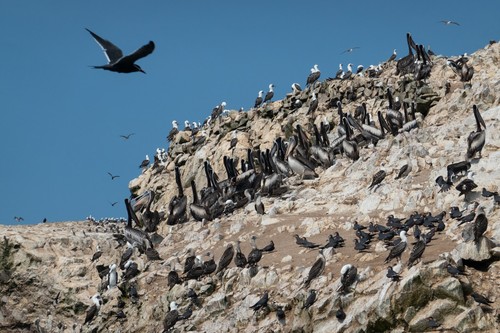
Peruvian Pelican
137-152 cm (54-60 in) long, up to 228 cm wingspan
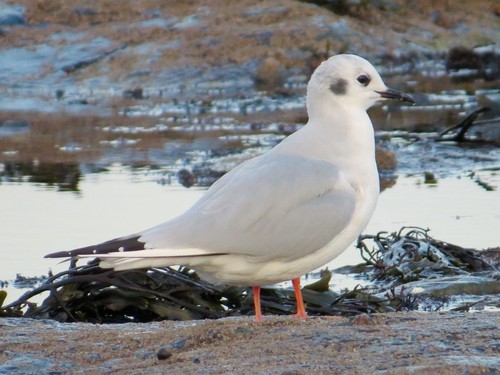
Bonaparte's Gull
28-33 cm (11-13 in) long, 76-84 cm wingspan
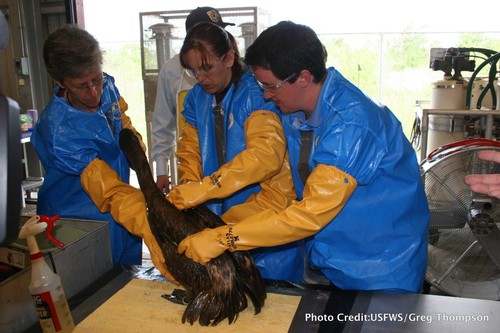
Brown Pelican
106-137 cm (42-54 in) long, 200-230 cm wingspan
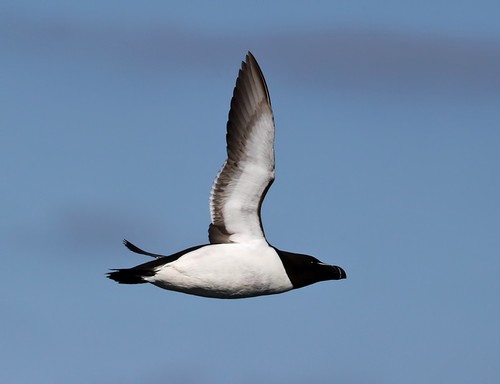
Razorbill
37-39 cm (15-15.5 in) long, 63-68 cm wingspan
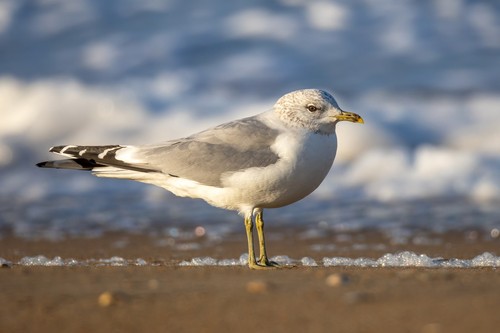
Common Gull
40-46 cm (16-18 in) long, 110-130 cm wingspan
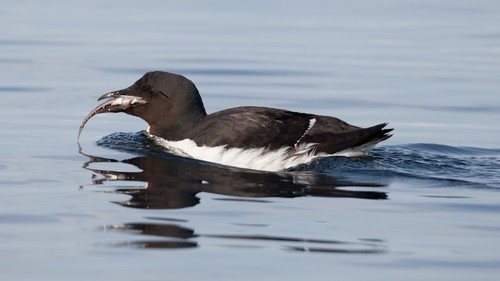
Thick-billed Murre
40-48 cm (16-19 in) long, 65-75 cm wingspan
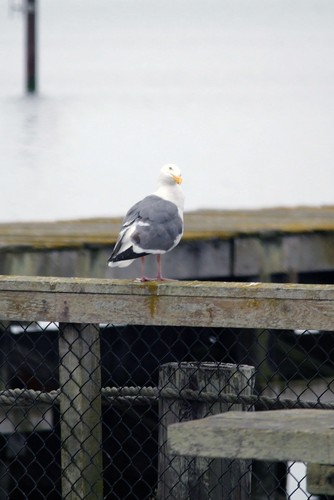
Western Gull
55-68 cm (22-27 in) long, 130-144 cm wingspan
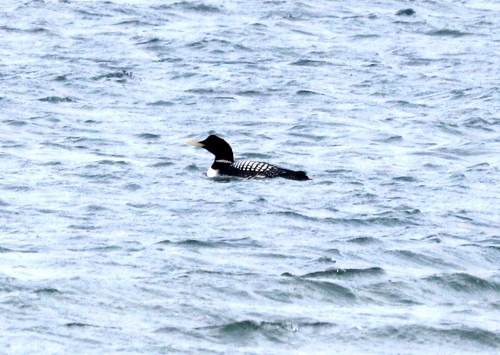
Yellow-billed Loon
76-97 cm (30-38 in) long, 135-152 cm wingspan
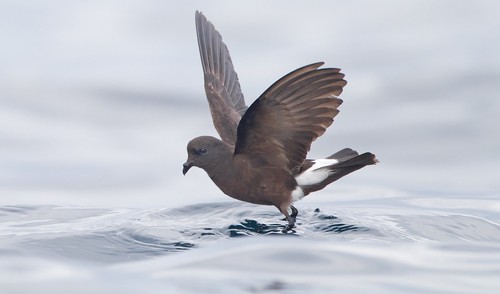
Wilson's Storm-Petrel
15-19 cm (6-7.5 in) long, wingspan 38-42 cm (15-16.5 in)
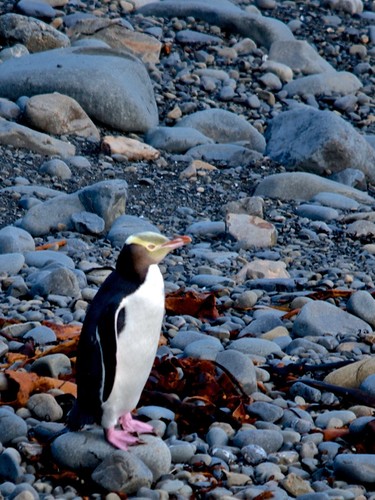
Yellow-eyed Penguin
62-79 cm (24-31 in) tall, 3-8.5 kg (6.6-18.7 lb)
Wandering Albatross
107-135 cm (42-53 in) long, wingspan up to 3.5 m (11.5 ft)

Tufted Puffin
35-41 cm (14-16 in) long, about 63-70 cm wingspan