
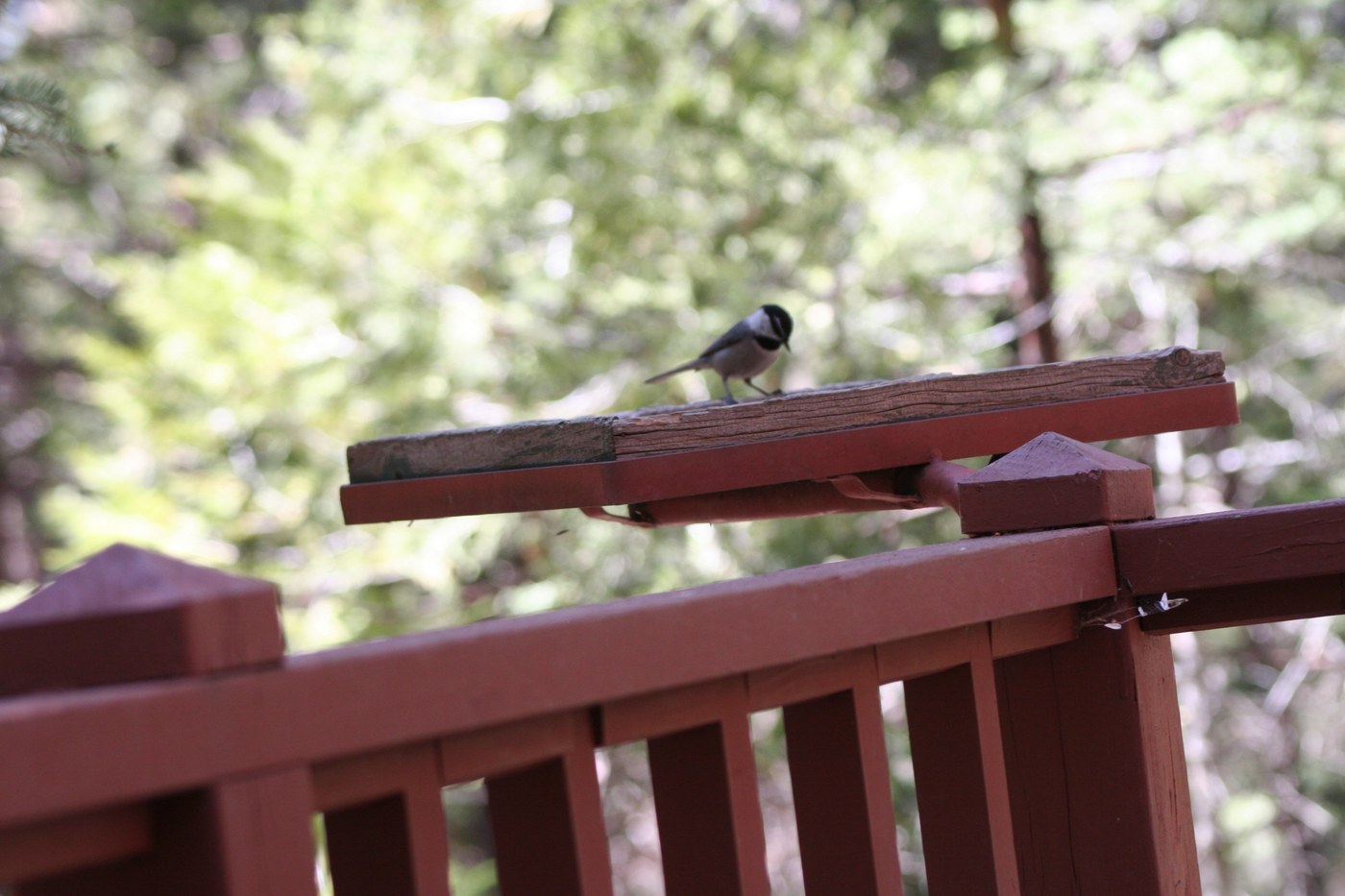
Mountain Chickadee
Poecile gambeli
A gray-and-black chickadee of western mountain conifer forests, distinguished by a bold white eyebrow stripe.
- Size
- 12-14 cm (4.7-5.5 in) long, 20-22 cm wingspan
- Habitat
- montane coniferous forests of the western United States and Canada
- Type
- songbird
Spotted a bird like this?
Identify any bird from a photo, free.
Overview
The Mountain Chickadee is a hardy, active small songbird of western coniferous forests, closely resembling the more widespread Black-capped Chickadee but readily told apart by a crisp white stripe over each eye that cuts through the black cap. The body is soft gray above and paler gray-white below, with the same cheerful, energetic chickadee demeanor familiar from its relatives.
This species is a year-round resident through much of its range, well adapted to cold montane winters, and like other chickadees it caches food and possesses excellent spatial memory to relocate thousands of hidden seed caches months later.
How to identify it
Key Field Marks
- Black cap broken by a bold white eyebrow stripe — the key diagnostic mark
- Black bib/throat patch
- White cheek patch
- Gray back, wings, and tail; pale gray-white underparts
Similar Species
- Black-capped Chickadee: lacks the white eyebrow stripe, showing a solid black cap down to the eye.
- Chestnut-backed Chickadee: has a chestnut-brown back and flanks, quite different from the Mountain Chickadee's plain gray.
- Boreal Chickadee: has a brown (not black) cap and brownish flanks, without a white eyebrow.
Habitat & range
Habitat
Mountain Chickadees inhabit open coniferous and mixed forests in mountainous terrain, especially ponderosa pine, fir, and spruce stands, and readily visit backyard feeders in mountain communities.
Range
The species ranges through the mountains of the western United States and southwestern Canada, from the Rockies and Cascades south through the Sierra Nevada and interior ranges of the Great Basin and Southwest.
Migration
Most populations are resident year-round, though some birds move to lower elevations in winter when high-elevation food becomes scarce or snow depth increases.
Behavior & voice
Behavior
Mountain Chickadees are active, acrobatic foragers, often hanging upside down from twigs and cones while gleaning insects and seeds, typically in small flocks, sometimes joined by nuthatches and kinglets.
Voice
The song is a clear, whistled "fee-bee-bay" (three notes, descending), distinct from the two-note song of the Black-capped Chickadee; the call is a husky "chick-a-dee-dee" similar to relatives but slightly harsher.
Feeding
Diet is a mix of insects and spiders in summer and conifer seeds in winter; like other chickadees, they cache food items in bark crevices for later retrieval.
Nesting
Nests are built in tree cavities, either natural or old woodpecker holes, sometimes excavated by the chickadees themselves in soft, decayed wood. Clutches typically number 5-9 eggs.
Frequently asked questions
How do I tell a Mountain Chickadee from a Black-capped Chickadee?
Look for the bold white eyebrow stripe cutting through the black cap — Mountain Chickadees have it, Black-capped Chickadees do not.
Where does the Mountain Chickadee live?
In coniferous forests throughout the mountains of the western United States and southwestern Canada, generally at higher elevations.
Does the Mountain Chickadee migrate?
Most are year-round residents, though some descend to lower elevations in winter when snow and cold make high-elevation foraging difficult.
What does the Mountain Chickadee eat?
Insects and spiders during the breeding season, shifting to conifer seeds and cached food in winter.
How good is a chickadee's memory for cached food?
Chickadees, including the Mountain Chickadee, have excellent spatial memory and can relocate thousands of individually hidden food caches, aided by seasonal growth in the brain's memory center.
Mountain Chickadee guides
In-depth guides for identifying, finding, and understanding Mountain Chickadee.
Other birds you may enjoy
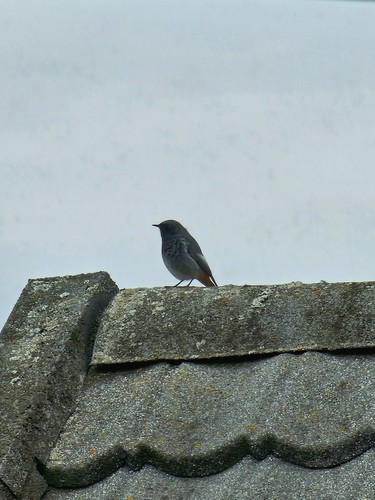
Black Redstart
13-14.5 cm (5.1-5.7 in) long, 23-26 cm wingspan
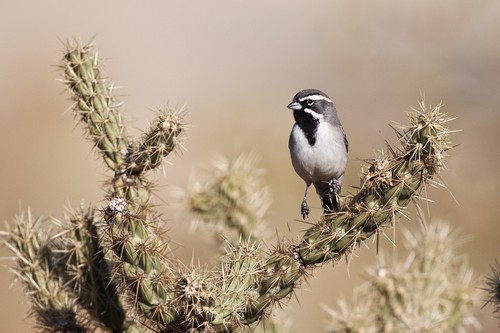
Black-throated Sparrow
12-14 cm (4.7-5.5 in) long, about 19-20 cm (7.5-8 in) wingspan
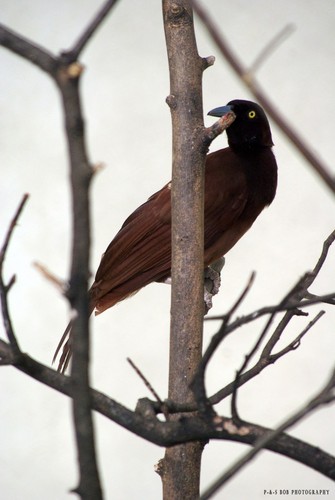
Greater Bird-of-paradise
Body about 43 cm; males with additional flank plumes up to 50 cm and long tail wires
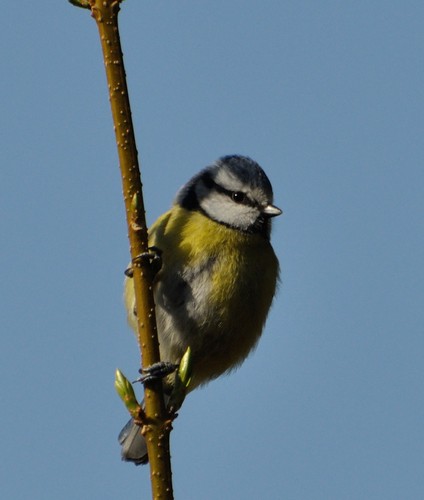
Blue Tit
11-12 cm (4.3-4.7 in) long, 17-20 cm wingspan
Red-billed Quelea
11.5–13 cm long, wingspan about 20–22 cm
White-plumed Antbird
13-14 cm (5-5.5 in) long
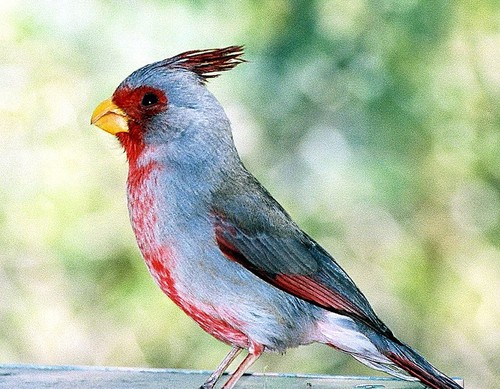
Pyrrhuloxia
19-22 cm (7.5-8.7 in) long, 30 cm wingspan
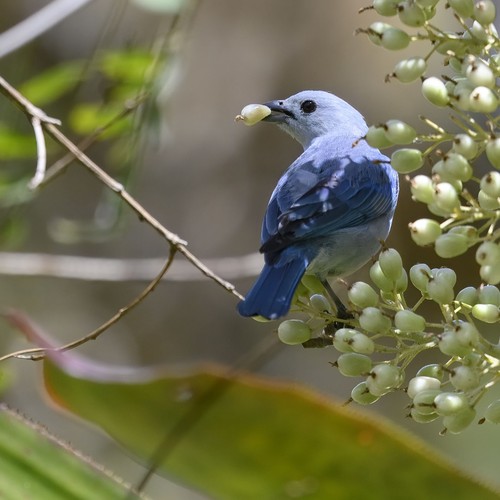
Blue-gray Tanager
16-18 cm (6-7 in) long
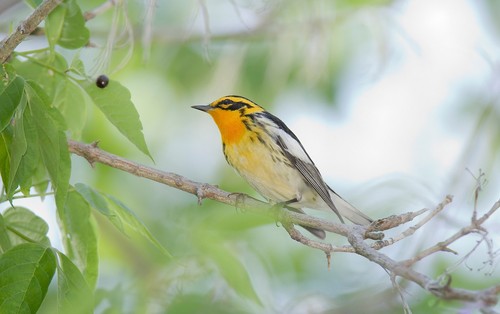
Blackburnian Warbler
11-13 cm (4.3-5.1 in) long, 20-22 cm wingspan
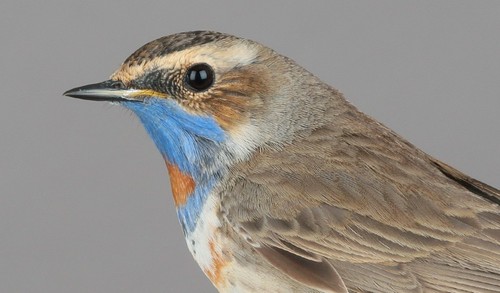
Bluethroat
13-14 cm (5.1-5.5 in) long, 20-22 cm wingspan
Eurasian Nuthatch
12-14.5 cm (4.7-5.7 in) long, 22.5-27 cm wingspan
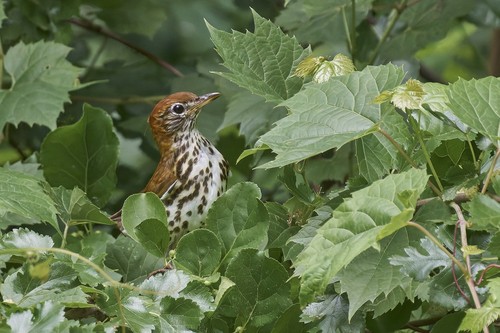
Wood Thrush
19-21 cm (7.5-8.3 in) long, about 33 cm (13 in) wingspan