
Mountain Chickadee Identification Guide
A small, active chickadee of western coniferous forests, told from the Black-capped Chickadee by a bold white eyebrow stripe cutting through its black cap.
Read the full Mountain Chickadee encyclopedia entry →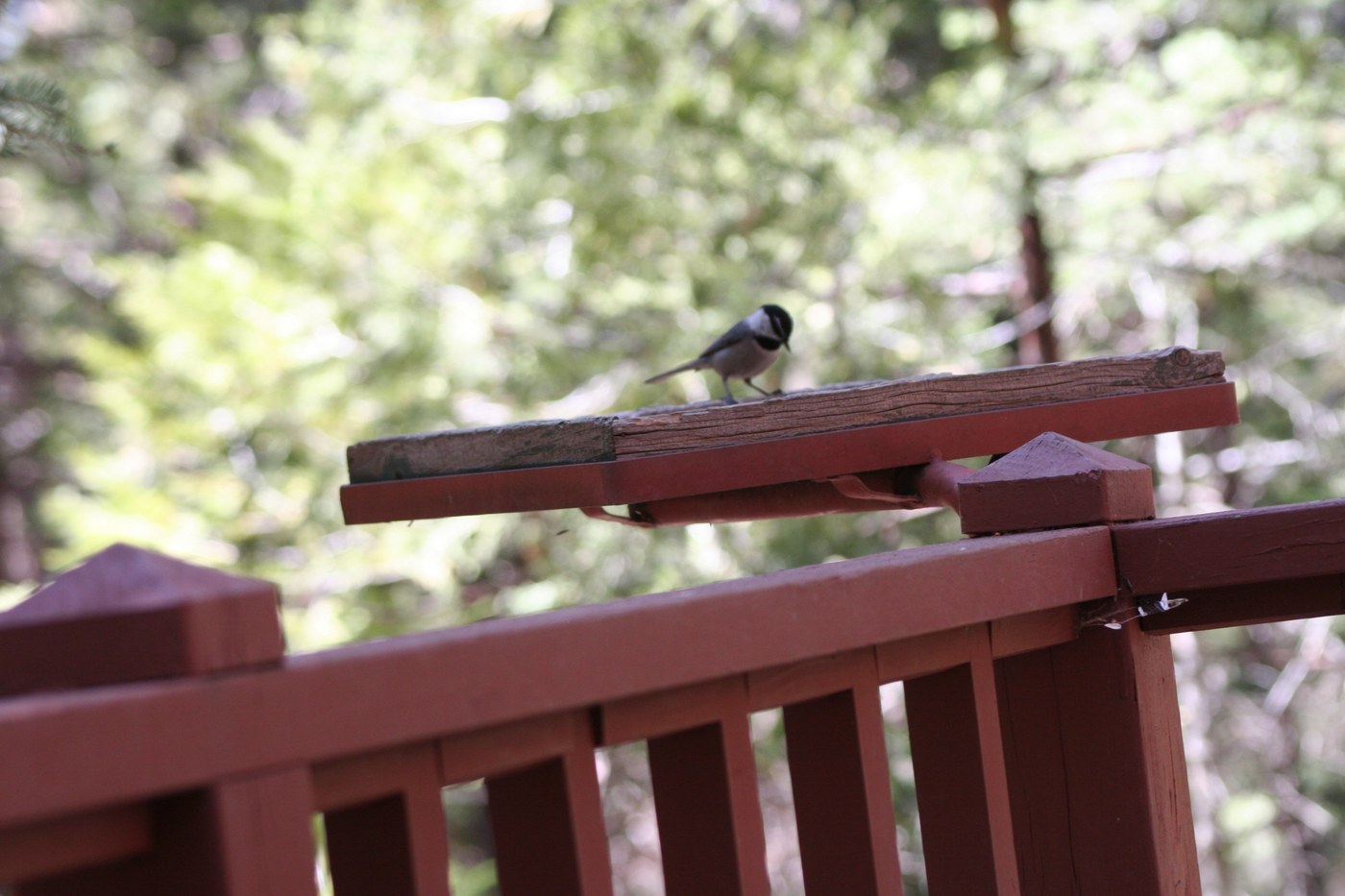
Key Field Marks
- Small chickadee, about 13 cm (5 in), with gray upperparts and whitish underparts washed with gray along the flanks.
- Black cap and black bib, similar at a glance to Black-capped Chickadee, but with a bold white eyebrow stripe (supercilium) splitting the black cap — the definitive field mark for this species.
- Overall grayer and less buffy on the flanks compared to Black-capped Chickadee.
Separating It From Similar Species
Black-capped Chickadee
- Lacks any white eyebrow stripe, has a more solidly black cap, and typically shows buffier flanks; also tends to favor lower-elevation, more deciduous or mixed habitat compared to Mountain Chickadee's conifer preference.
Chestnut-backed Chickadee
- Shows a rich chestnut back and flanks, quite different from the plain gray Mountain Chickadee, and is restricted mainly to coastal and humid forest habitats.
Boreal Chickadee
- Has a brown, not black, cap, and occurs in boreal forest habitat well to the north, generally not overlapping with Mountain Chickadee's range.
Behavior & Voice
- Acrobatic and active, constantly foraging through conifer branches gleaning insects and seeds, and hanging upside down on twigs and cones.
- Caches seeds for later retrieval and readily joins mixed-species foraging flocks in winter, along with kinglets, nuthatches, and other small songbirds.
- Regular visitor to feeders in mountain and foothill neighborhoods within its range.
- Song is a whistled, slightly husky "fee-bee-bee" (often three or four notes, descending), distinguishable from the clearer, simpler two-note "fee-bee" song of Black-capped Chickadee. Call is a scratchy "chick-a-dee-dee," harsher and buzzier than Black-capped Chickadee's call.
Habitat, Range & Season
- Resident in coniferous and mixed conifer forest throughout mountainous western North America, including the Rocky Mountains, Cascades, Sierra Nevada, and Great Basin ranges.
- Largely non-migratory, though some individuals move to lower elevations in winter when snow and cold restrict food availability at higher altitudes.
Frequently asked questions
What is the single best field mark for Mountain Chickadee?
A bold white eyebrow stripe cutting through the black cap, a feature not shown by Black-capped Chickadee or other similar chickadees.
How does the Mountain Chickadee's song differ from the Black-capped Chickadee's?
Mountain Chickadee sings a husky, descending three- or four-note 'fee-bee-bee,' while Black-capped Chickadee gives a clearer, simpler two-note 'fee-bee' whistle.
What habitat is best for finding Mountain Chickadees?
Coniferous and mixed conifer forest in mountainous parts of western North America, including pine, fir, and spruce stands.
Do Mountain Chickadees migrate?
They are largely resident year-round, though some individuals shift to lower elevations during harsh winter conditions.